The era of the "dedicated home theater"—those windowless rooms with black walls and bulky, reclining leather thrones—has evolved. In 2026, the trend has shifted toward the multipurpose living room: a space that feels like a cozy sanctuary by day and transforms into a high-end cinema by night.
To create the comfiest living room movie setup today, the secret lies in balancing high-performance tech with soft, tactile comfort. This means moving away from rigid furniture in favor of flexible seating like floor cushions and stonewashed linen, while integrating discrete audio solutions like the Sonos Ray that deliver massive sound without the cable clutter. By automating your lighting into "Cinema Scenes"—where overheads vanish, bias lighting settles at 30%, and floor-level safety lights dim to 5%—you create an environment that mimics the theater experience without sacrificing the warmth of your home.
1. Optimize Your Audio with Cable-Free Solutions
There was a time when high-quality home audio meant running copper wire under rugs or through drywall. Thankfully, we’ve moved past that. As we look at the landscape of 2026, the "cable-free" movement has officially taken over. Recent industry reports show that 88% of homeowners now prioritize wireless audio solutions. Why? Because the modern living room is a shared space, and nothing kills a "comfy" vibe faster than a "cable nest" behind the TV stand.
For those of us living in apartments or smaller suburban homes, the goal is high output from a small footprint. This is where compact soundbars have revolutionized the market.
- The Minimalist Choice: The Sonos Ray remains a gold standard for smaller spaces. It’s designed to tuck into a media cabinet or sit on a crowded shelf without losing audio clarity, thanks to its forward-facing acoustic components.
- The Cinematic Powerhouse: If you have more room to breathe, the Polk Audio Reserve series offers wireless integration that rivals traditional wired towers. It provides that deep, chest-thumping bass that makes action movies feel "real" rather than just "loud."
The transition to wireless isn't just about aesthetics; it’s about flexibility. A wireless system allows you to reposition your rear surround speakers on a whim—perhaps moving them closer to the sofa for a late-night whisper-quiet screening, or tucking them away when you're hosting a dinner party.
2. Master 'Pro Bias' Lighting for Visual Comfort
If you take only one piece of technical advice from me, let it be this: Stop watching movies in total darkness.
It sounds counterintuitive, but sitting in a pitch-black room with a glowing 4K screen causes significant eye strain as your pupils struggle to adjust to the fluctuating brightness. This is where professional bias lighting comes in. By placing a calibrated LED strip behind your TV, you create a "glow" that illuminates the wall behind the screen.
Switching from standard overhead lighting to professional bias lighting with 95% DCI-P3 color accuracy has been shown to increase perceived image contrast by 22%. It makes the blacks on your screen look deeper and the colors more vibrant, all while protecting your vision.
Pro Tip: The Smart 'Cinema Scene' Automation For the ultimate hands-free experience, program your smart home hub (HomeKit, Alexa, or Home Assistant) with a "Movie Night" trigger:
- Overhead Lights: 0% (Total Off)
- Bias Lighting: 30% (Calibrated to 6500K for color accuracy)
- Floor/Step Lights: 5% (Warm amber to allow for safe popcorn runs without ruining your night vision)
To take it a step further, look into content-synced LEDs from brands like Govee or Nanoleaf. These systems use a small camera or an HDMI sync box to "read" the colors on your screen and project them onto the wall behind. It creates a "4D" extension of the movie—if there’s a sunrise on screen, your entire wall glows in soft orange and pink, pulling you deeper into the story.
3. Rethink Seating: From Sectionals to Floor Forts
The most underrated element of a movie setup isn't the pixels; it's the fabric. In 2026, we are seeing a massive departure from the "man-cave" leather recliner. While those chairs are functional, they aren't exactly "cozy." Instead, the move toward flexible seating allows your living room to adapt to the size of your audience.
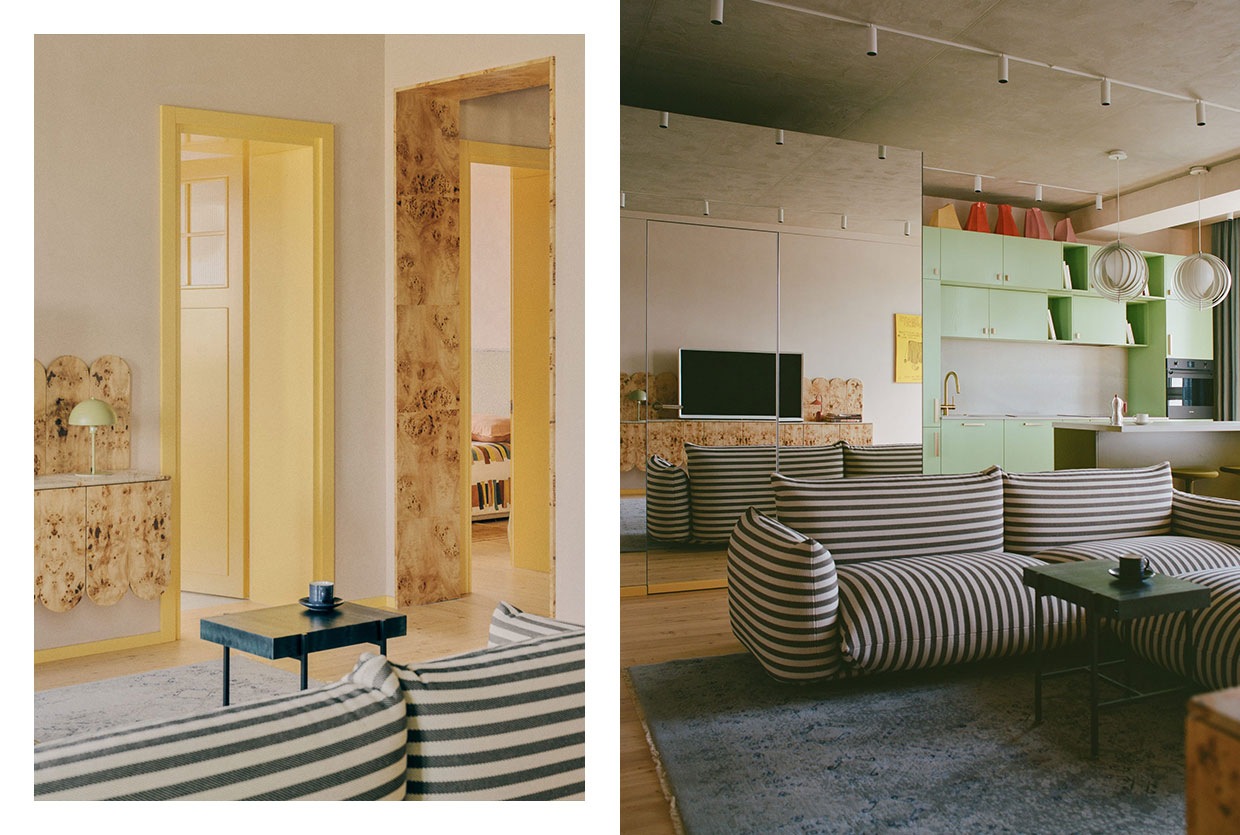
- Layered Textiles: Start with a base sectional, but layer it with stonewashed linen throws. Linen is breathable, durable, and has a natural texture that feels far more premium than synthetic blends.
- The Floor Fort: For family movie nights, don't be afraid to utilize the floor. Large, velvet floor cushions and oversized pillows create a "nest" environment that kids (and pets) love.
- Color Palette: Stick to a grayscale or deep navy base for your main furniture to prevent light reflections, but use warm pops of orange or deep red in your blankets to keep the room feeling inviting.
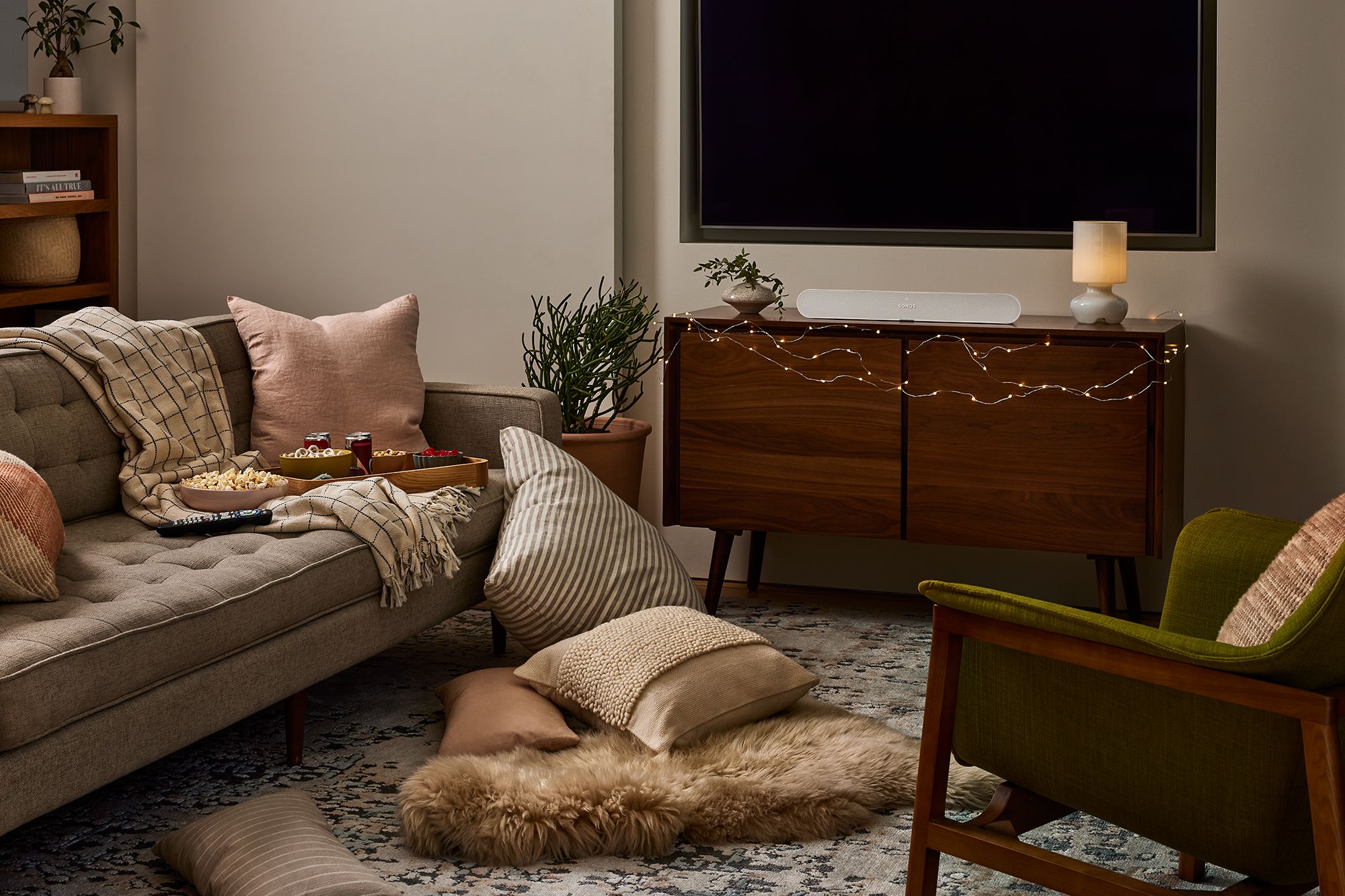
This design philosophy—mixing mid-century modern aesthetics with high-tech utility—ensures that when the TV is off, your living room still looks like a curated home, not a commercial theater.
4. Future-Proofing with 8K and Wireless AV Trends
As an editor, I’m often asked if 8K is "worth it" yet. In 2026, the answer is finally a resounding "yes," but not for the reasons you might think. It isn't just about the raw pixel count; it's about the upscaling. Modern 8K panels use AI to make your old 1080p and 4K favorites look sharper and more lifelike than ever before.
When setting up your 2026 living room, you also need to prioritize HDMI-CEC (Consumer Electronics Control) and IP Control. These protocols allow your devices to talk to each other. When you press "Play" on your Apple TV or Roku, your soundbar should wake up, your TV should switch inputs, and your smart blinds should close automatically.
| Tech Spec | 2026 Standard Recommendation | Why It Matters |
|---|---|---|
| Resolution | 8K with AI Upscaling | Future-proofs your setup for larger screens (75"+). |
| Audio | Dolby Atmos (Wireless) | Creates a 360-degree soundstage without wires. |
| Connectivity | HDMI 2.1b / Wi-Fi 7 | Ensures zero lag and high-bandwidth streaming. |
| Lighting | 95% DCI-P3 Bias Strips | Maximizes contrast and prevents eye fatigue. |
By focusing on these "under the hood" features, you ensure that your "comfy" setup doesn't become obsolete in twelve months.
5. Curate the Experience: Themes and Tech-Integrated Snacks
Finally, a movie night is an event, not just a viewing. The most successful setups I’ve seen integrate the kitchen and the "scene" together. Using presence detection (standard in most 2026 smart sensors), you can automate your "Intermission Scene." When the movie is paused, the smart lights can slowly ramp up to 20%—just enough to find your way to the kitchen without being blinded.
Speaking of the kitchen, elevate your snack game beyond the microwave popcorn bag. I always recommend a "Stadium-Style" approach:
- The Menu: Homemade pita with a savory shoyu dip, or high-end corn dogs for a bit of nostalgia.
- Theme Syncing: Match your smart light colors to the movie genre. Watching a sci-fi epic? Set your ambient lights to a cool "Deep Space" teal. A romantic comedy? A soft "Rose Gold" glow sets the mood perfectly.
This level of curation turns a simple Tuesday night into a core family memory. It’s not about having the most expensive equipment; it’s about how that equipment works together to make the experience effortless.
FAQ
Is bias lighting really better than watching in total darkness? Yes. Total darkness creates "luminance mismatch," which tires the muscles in your eyes. A small amount of light behind the screen (bias lighting) reduces this strain and actually makes the blacks on your TV look darker by providing a point of reference for your eyes.
How do I prevent my smart lights from turning on accidentally during a movie? The best way is to use a "Condition-Based" automation. Set your movie routine to disable motion sensors in the living room once the "Cinema Scene" is active. This prevents the lights from popping on every time someone reaches for more popcorn.
What are the best compact speakers for a small apartment? If you’re tight on space, the Sonos Ray or the Bose TV Speaker are excellent options. They offer "Dialogue Enhancement" modes which are crucial for hearing actors clearly without having to crank the volume so high that you bother your neighbors.
The "Ultimate Comfy Living Room" is a delicate dance between soft textures and hard tech. When you get the balance right—the perfect linen throw, a hidden soundbar, and automated lighting that knows exactly when to dim—you don't just have a movie setup. You have a sanctuary.