High above the pulsing arteries of Amsterdam’s Zuidas district, a new architectural benchmark has quietly taken shape. Far from the sterile, glass-and-steel cliches of traditional high-rise living, this 3,229-square-foot residence on the 19th floor is a masterclass in what we call "Organic Modernism." Designed by the visionaries at i29 design studio, this apartment doesn't just offer a place to stay; it offers a curated experience that balances the breathtaking scale of the skyline with the intimate warmth of a woodland retreat.
What defines the i29 Amsterdam apartment's design? At its heart, it is a residence defined by a delicate equilibrium between openness and intimacy. By utilizing expansive wood surfaces, a muted color palette, and bespoke cabinetry, i29 has transformed a cavernous penthouse into a series of serene, interconnected sanctuaries. It’s a design language that speaks to the future—specifically the organic modern design trends of 2026—where luxury is measured by tactile comfort and psychological well-being rather than mere opulence.
1. The Art of Seamless Zonation: Openness vs. Intimacy
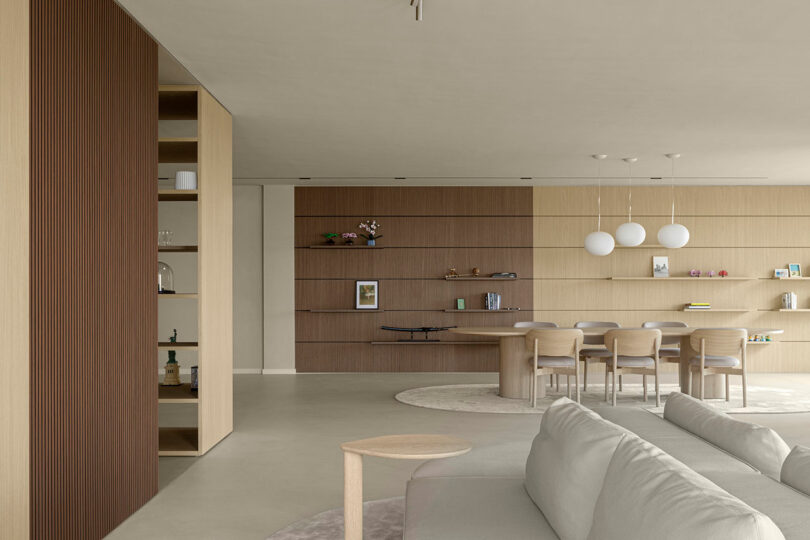
In many high-rise apartments, the "open plan" often feels like a missed opportunity—a vast, echoing space that lacks a sense of home. The i29 team solved this by replacing traditional drywall with a sophisticated system of bespoke cabinetry. This 100% bespoke integration of functional zones allows the apartment to breathe while maintaining clear boundaries.
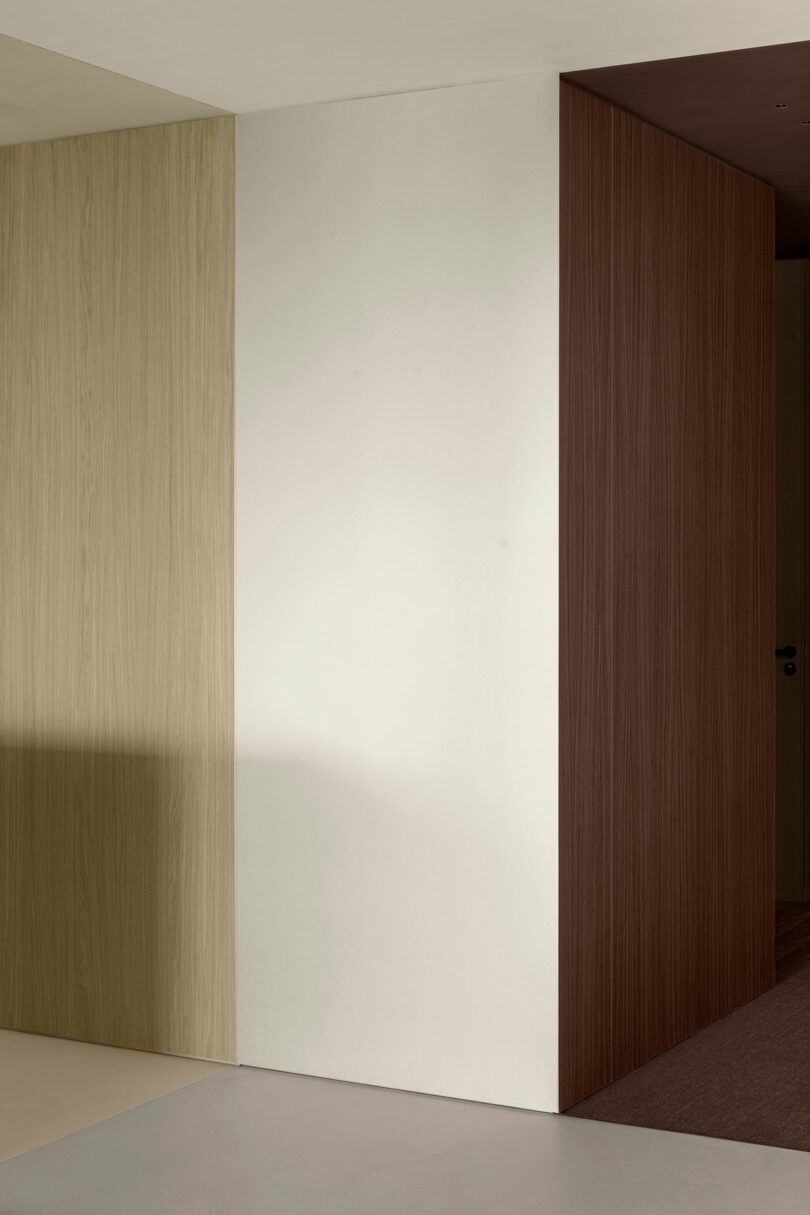
We see a brilliant "tri-color wall division" strategy here. The entryway and transition zones are often rendered in darker, more grounding tones, creating a sense of enclosure and security as you move through the home. As you transition into the main living areas, the palette lightens, drawing the eye toward the floor-to-ceiling glass facades. This journey from shadow to light is a hallmark of minimalist penthouse interior design, ensuring that the 19th-floor altitude feels exhilarating rather than exposed.
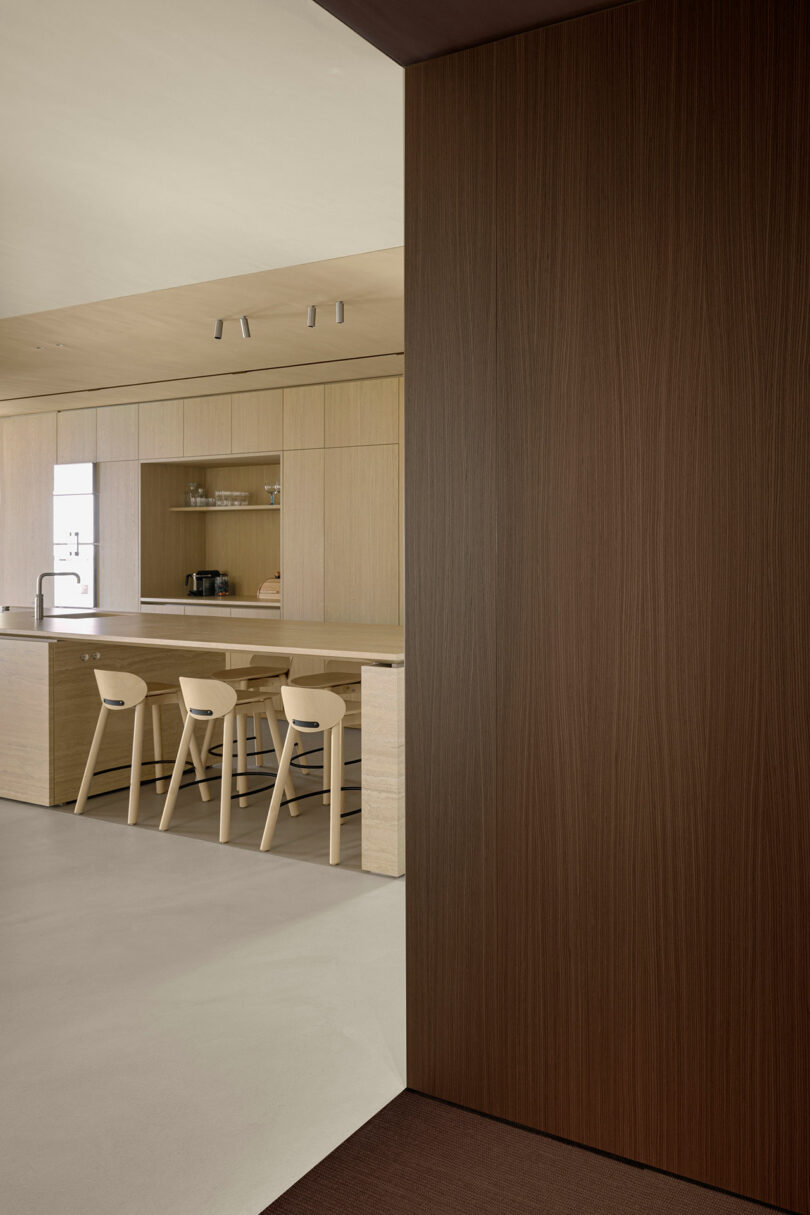
The cabinetry itself is a marvel of multi-functional engineering. It hides storage, integrates kitchen appliances, and even conceals private doorways, allowing the walls to remain uncluttered and sculptural. By removing the visual noise of "stuff," the focus remains entirely on the architectural lines and the view beyond.
2. Organic Modernity: The 2026 Materiality Shift
As we look toward the design landscape of 2026, we are seeing a significant shift away from the "hard minimalism" of the last decade. The i29 Amsterdam apartment is a vanguard of this movement, prioritizing "sensorial immersion." Instead of cold marble and polished chrome, this residence utilizes expansive wood surfaces and tactile finishes to ground the high-altitude experience.
The use of natural timber is ubiquitous, yet never overwhelming. It wraps around corners, climbs up walls, and flows across the floors, creating a seamless envelope of warmth. This is the essence of organic modern design trends 2026: a focus on materials that age gracefully and feel good to the touch.
Design Insight: The secret to making a large space feel cozy is the "Tactile Ratio." By ensuring that every surface within arm's reach—from the grain of the oak cabinetry to the matte finish of the kitchen island—has a natural, organic texture, the designers have successfully mitigated the "cold" feeling often associated with modern high-rises.
3. Curated Designer Elegance: A Global Brand Portfolio
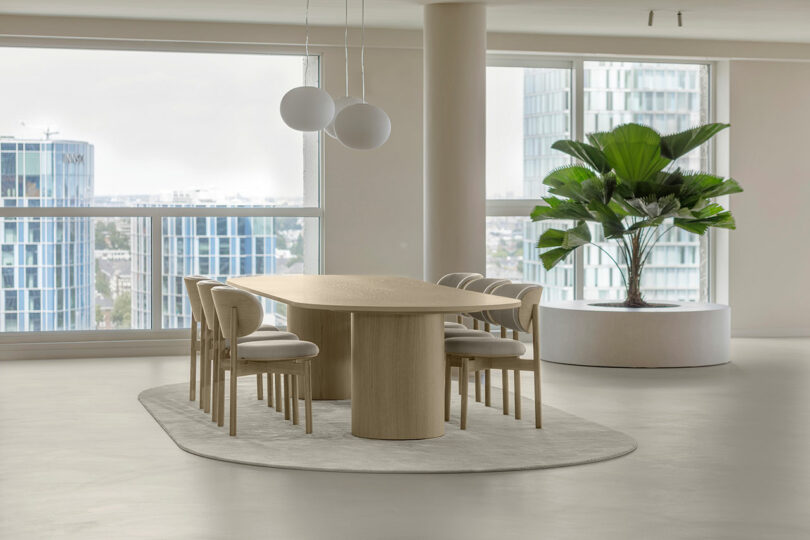
A home of this caliber requires furniture that can hold its own against such powerful architecture. The apartment features a curated selection of contemporary furniture that reflects a global yet distinctly European sensibility. Rather than cluttering the space with "trophy pieces," the designers chose items that complement the custom-crafted cabinetry.
Which luxury brands are featured in the Amsterdam high-rise? The residence showcases a sophisticated blend of Dutch craftsmanship and Italian innovation:
- Arco: Known for their masterful woodwork, Arco tables provide a grounding center for the dining area.
- Hay: These pieces add a layer of playful, contemporary comfort, bridging the gap between high design and daily livability.
- Dum: Their furniture adds a uniquely Dutch flair, focusing on bold silhouettes and functional elegance.
- Flos: Lighting is treated as functional art throughout the space. Italian brand Flos provides sleek, architectural lighting solutions that highlight the textures of the wood and the depth of the vistas without ever creating glare on the glass.
The kitchen, in particular, demonstrates the seamless integration of these brands. It’s a space where the bespoke cabinetry meets high-end finishes, creating a laboratory for living that is as beautiful as it is functional.
4. Sustainable Sophistication and the Hybrid Future
One cannot discuss luxury living in Amsterdam Zuidas without addressing environmental responsibility. This apartment is part of a broader movement toward sustainable high-rise construction, exemplified by buildings like HAUT Amsterdam. The use of Cross-Laminated Timber (CLT) and other eco-mindful materials isn't just a trend; it's a necessity for the future.
This residence achieves a BREEAM Outstanding-level of environmental responsibility. By utilizing timber as a primary structural and decorative element, the apartment effectively stores CO2, turning the very walls of the home into a carbon sink. But the sustainability here isn't just about carbon; it’s about durability. The 100% bespoke integration of functional zones means the layout is timeless, reducing the need for future renovations that generate waste.
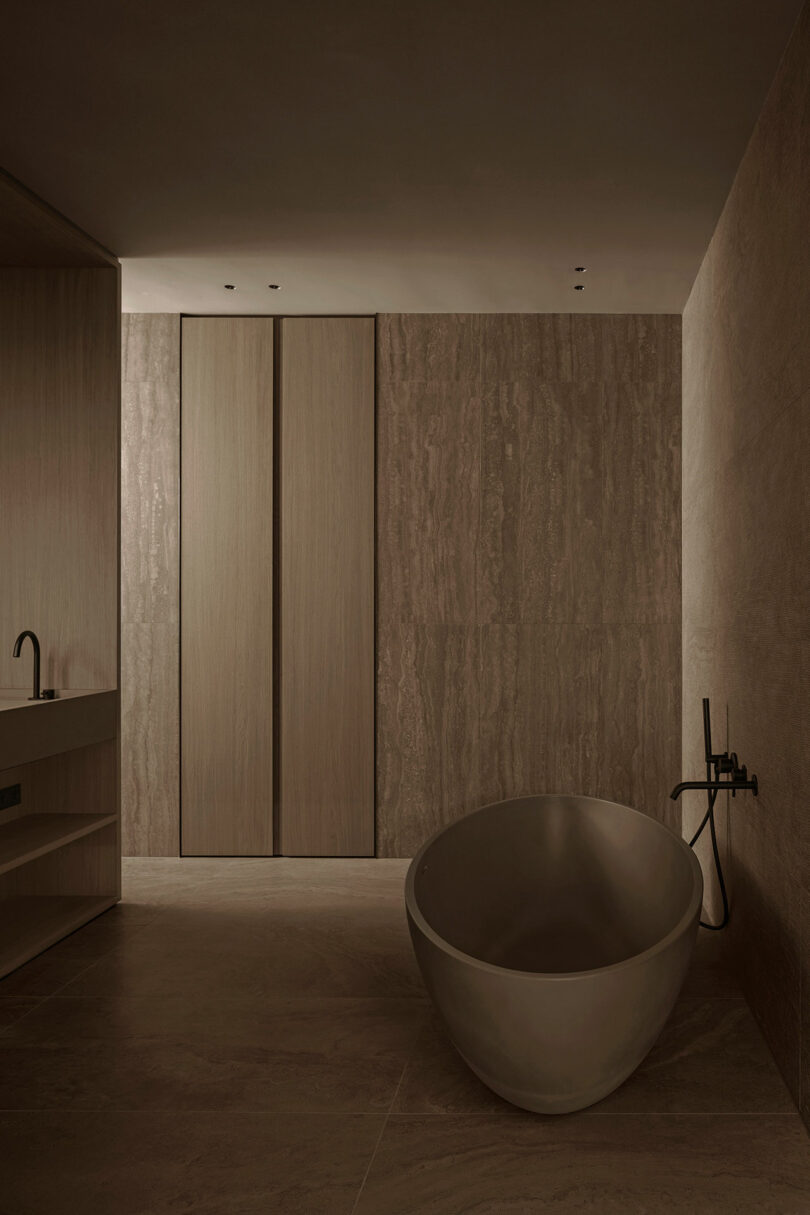
In the private spaces, such as the master bath, this sustainable ethos manifests as a spa-like atmosphere. The combination of warm wood and natural stone creates a sanctuary that feels connected to the earth, even when you're 200 feet above it.
5. High-Altitude Biophilia: Connecting Sky and Soul
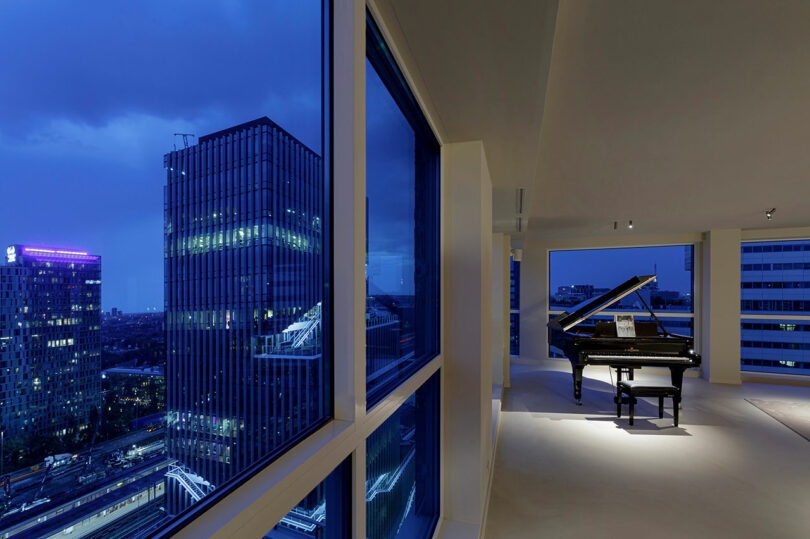
How does the apartment integrate nature in a high-rise setting? It goes beyond simply placing potted plants in corners. Instead, the design employs "High-Altitude Biophilia," using the 180-degree panoramic view of the Amsterdam Zuidas district as a living, breathing wallpaper.
The floor-to-ceiling glass facades allow the interior to change throughout the day. To harmonize with the shifting light of the Dutch sky, the designers used a palette of "Cloud Dancer" whites and warm neutrals. These tones reflect the morning's cool blues and the evening's golden hues, making the atmosphere of the home an extension of the weather outside.
This connection to the elements is essential for mental clarity in an urban environment. By maintaining a clear sightline from almost every point in the 3,229-square-foot layout, the residence ensures that the inhabitants never feel disconnected from the rhythm of the city or the natural world.
The Future of Urban Sanctuary
The i29 Amsterdam apartment is more than just a beautiful home; it’s a blueprint for the future of urban density. It proves that we don't have to sacrifice our connection to nature or our need for tactile warmth when we move into the clouds. Through a clever mix of bespoke craftsmanship, sustainable materials, and a curated selection of global design icons, it redefines what luxury living in Amsterdam Zuidas can be.
As we move into 2026, the "Apartment with a view" must also be an "Apartment with a soul." This residence achieves both, offering a tranquil escape that feels as grounded as a forest cabin, despite its 19th-floor altitude. It is, quite simply, spatial alchemy at its finest.
FAQ
What makes the Zuidas district a popular location for luxury high-rises? The Zuidas (South Axis) is Amsterdam’s premier business district, often compared to Canary Wharf in London. Its proximity to Schiphol Airport, excellent transit links, and the recent influx of high-end residential towers like HAUT have made it the epicenter of modern luxury living in the Netherlands.
How does i29 design studio maintain privacy in a glass-walled apartment? Privacy is managed through a combination of smart zonation and bespoke cabinetry. By placing private quarters like bedrooms and bathrooms behind "inner shells" of wood-clad walls, the designers create a buffer between the glass facade and the home's most intimate zones. Automated, recessed solar shading also provides privacy without compromising the architectural aesthetic.
Is organic modernism expensive to implement? While the high-end materials and bespoke cabinetry seen in this Amsterdam residence represent a significant investment, the principles of organic modernism can be applied at various budgets. Focusing on natural textures, a muted "earth-tone" palette, and reducing visual clutter are effective ways to achieve this look in any space.