Our Top Picks
The Bone China Canelé Pendant is the ultimate choice for homeowners seeking "quiet luxury" with an artisanal soul. It stands out for its unique 'wobbly' profile—hand-cast to mimic French pastry moulds—and its remarkable ability to transform from a glossy white object by day into a warm, translucent glow by night. This is more than a fixture; it is a piece of British heritage craftsmanship designed with a future-proof commitment to sustainability.
When Pastry Meets Porcelain
There is a specific kind of magic that happens when an object of daily utility is elevated to a piece of architecture. In the world of interior styling, we often look for "hero pieces"—items that anchor a room not through sheer size, but through the strength of their narrative. The Canelé lighting collection is exactly that.
Inspired by the deeply ridged, caramelized crust of the famous Bordeaux pastry, these pendants are a study in the beauty of the unexpected. The collaboration between Feldspar, a family-run pottery in Devon, and Berdoulat, a renowned antique-inflected shop in Bath, has birthed a lighting masterpiece that feels both ancient and entirely modern. By using hand-carved plaster models rather than CAD-designed perfection, the creators have achieved a "wobbly" profile that feels alive. It’s a gentle rebellion against the sterile symmetry of industrial manufacturing.
In this review, we’ll explore why the Bone China Canelé Pendant is setting a new standard for high-end lighting, blending material science with the soulful touch of the maker’s hand.
1. A Masterclass in Collaboration: Feldspar x Berdoulat
The story of the Canelé pendant begins with a meeting of minds. On one side, you have Feldspar, known for their "objects for life" philosophy and their commitment to preserving the heritage of fine bone china in Stoke-on-Trent and Devon. On the other, you have Patrick Williams of Berdoulat, whose Bath-based practice is a love letter to the 18th and 19th-century general store aesthetic.
This isn't just a brand partnership; it’s a merging of values. Berdoulat’s eye for historical proportions and Feldspar’s technical mastery of clay have created a product that feels like a found treasure from a French patisserie, reimagined for a contemporary London townhouse or a rural Cotswolds kitchen. It proves that when traditional British craftsmanship meets an antique French aesthetic, the result is timeless.
2. The Alchemy of Fine Bone China
In the interior design world, material is everything. While many high-street brands opt for standard ceramic or stoneware, the Canelé collection utilizes fine bone china. Why does this matter? It’s all about the "translucency factor."
Bone china is a remarkable material. During the day, it presents as a crisp, brilliant white with a buttery, glossy finish that catches the natural light from your windows. It looks solid, sculptural, and substantial. However, the true alchemy occurs at night. When the internal bulb is switched on, the bone china becomes translucent. The light doesn't just fall from the bottom of the shade; it permeates the material itself, causing the entire "wobbly" body to glow with a soft, amber warmth.
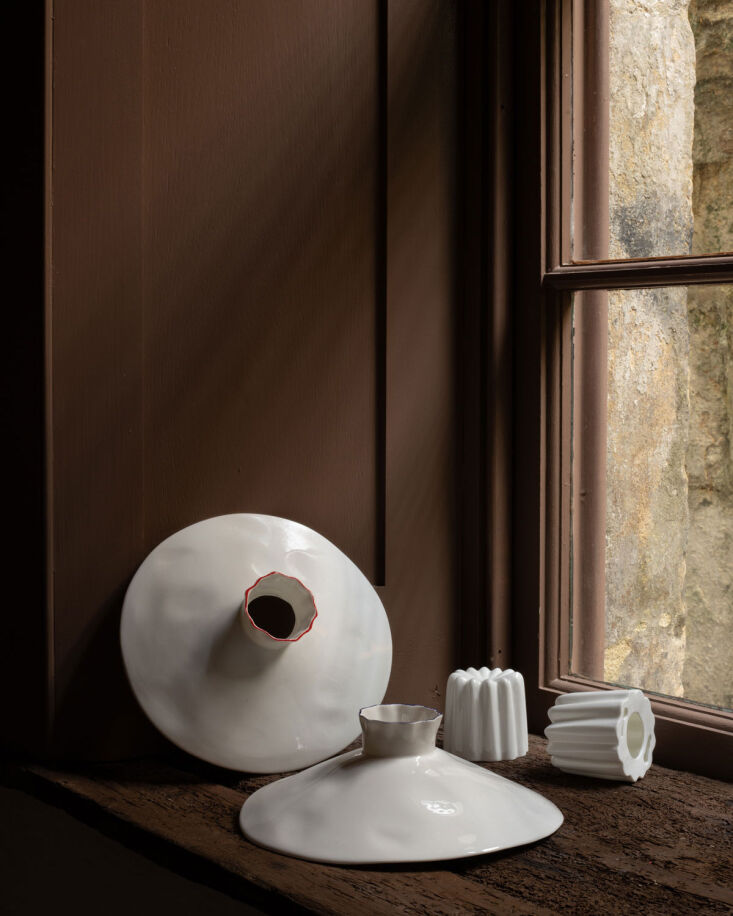
This dual nature makes it an ideal choice for multi-use spaces like open-plan kitchen-diners, where you need a bright, clean look during the day and an intimate, atmospheric vibe for evening dinner parties.
3. The Perfection of Imperfection: The 'Wobbly' Profile
We live in an age of 3D printing and laser-cutting, where every edge is mathematically perfect. While that has its place, it often lacks the "soul" required to make a house feel like a home. The Canelé Pendant intentionally rejects this industrial perfection.
The "wobbly" edges are the hallmark of the Feldspar x Berdoulat collaboration. Because the original models were hand-carved in plaster rather than turned on a mechanical lathe, the ridges of the Canelé shape have a subtle, organic movement. This imperfection serves a functional purpose, too: the uneven surfaces create a softer diffusion of light, casting gentle shadows that add depth to your walls and surfaces. It’s lighting that feels organic, almost as if it grew into that shape rather than being forced by a machine.
4. Engineering for the Kiln: The 15% Rule
One of the most fascinating aspects of high-end pottery—and one that many consumers never see—is the technical difficulty involved in the firing process. Fine bone china is notoriously difficult to work with because it shrinks dramatically when fired at high temperatures (around 1250°C).
To ensure that the final pendant fits its brass or matte black hardware perfectly, the craftsmen at Feldspar have to perform a delicate piece of engineering. The original plaster moulds for the Canelé series are hand-carved to be exactly 15% larger than the intended final product. This accounts for the extreme kiln shrinkage while maintaining the integrity of the fluted design. It is a high-stakes game of physics; if the carving or the temperature is off by even a fraction, the shade won't fit the electrical components. This level of precision is what separates a "masterpiece" from a standard household fixture.
5. Sustainable Luxury with 'Excellent Circularity'
As a design editor, I am increasingly focused on the environmental footprint of the products I recommend. The Canelé collection doesn't just look good; it is a benchmark for sustainable luxury.
In the lighting industry, the "TM66" score is the gold standard for measuring a product's circular economy performance. The Canelé lighting collection achieves a TM66 score of 2.5, which categorizes it as having "Excellent Circularity."
| Metric | Rating/Value |
|---|---|
| Material | Fine Bone China (Natural Components) |
| Manufacturing | Hand-poured in Devon, UK |
| Sustainability Score | TM66: 2.5 (Excellent Circularity) |
| Repairability | High (Modular components) |
| Longevity | Designed for multi-generational use |
This means the light is designed to be repaired rather than replaced. Every component—from the hand-painted shade to the twisted silk flex—is made to last for decades, and the materials used can be safely returned to the earth or recycled at the end of their very long life.
6. Versatile Styling: From Kitchen Islands to Reading Nooks
How do you style a piece this distinctive? Its versatility is actually one of its greatest strengths. While the "Canelé" shape is inherently decorative, its monochrome palette allows it to blend into various interior styles.
- The Kitchen Island Trio: For a classic look, hang three pendants in a row over a marble or wooden kitchen island. They provide excellent task lighting for food prep while acting as a visual anchor for the room.
- The Reading Nook: A single Canelé pendant hung low over a velvet armchair creates a pool of focused light, perfect for getting lost in a book.
- The Mixed-Metal Palette: Don't be afraid to pair these shades with different hardware. The white china looks stunning against matte black for a modern, graphic look, or with aged brass for a more traditional, "heritage" feel.
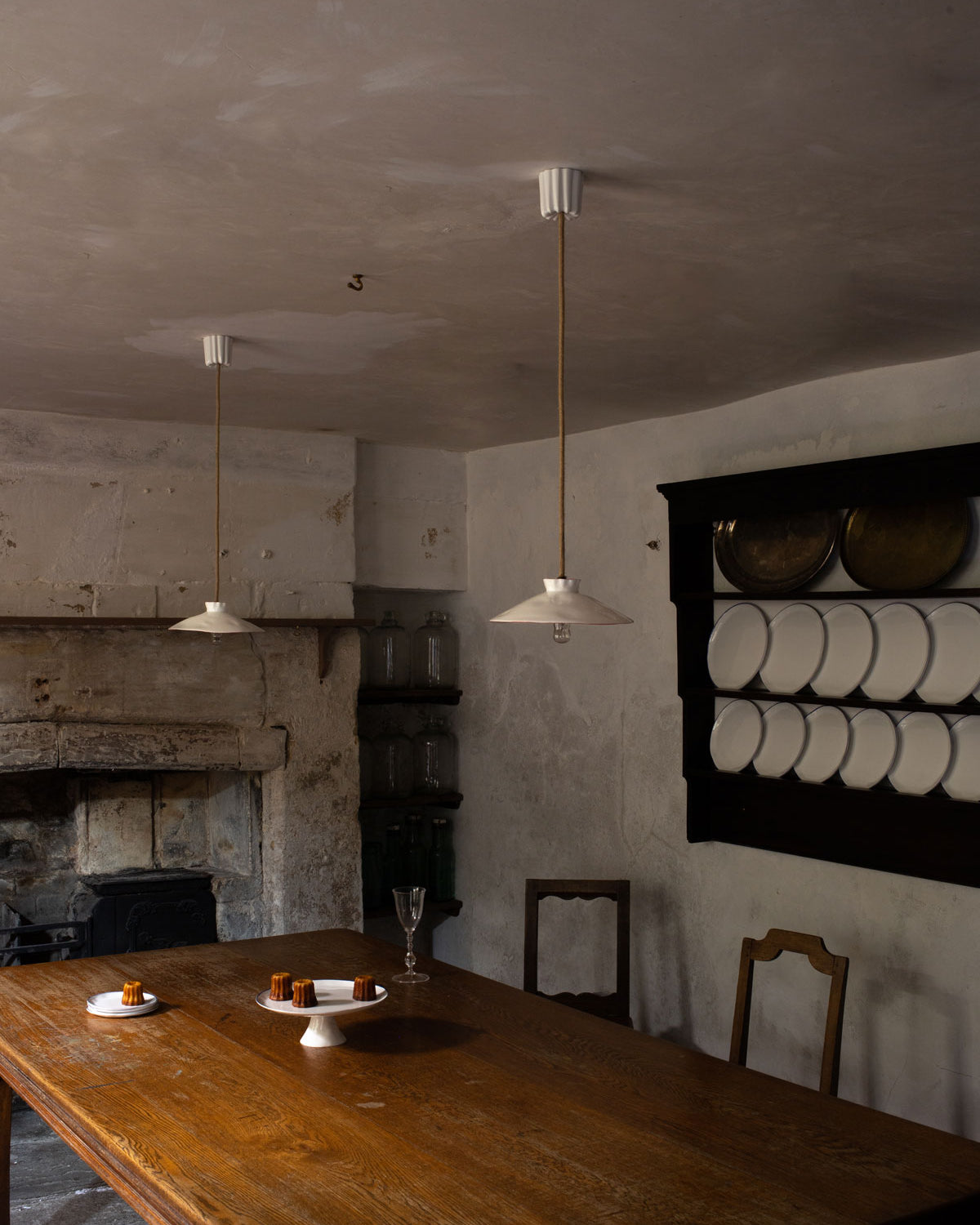
As we look toward 2026 interior trends, we are seeing a shift toward "Functional Art"—objects that serve a purpose but look like a gallery piece when not in use. The Canelé pendant fits this trend perfectly.
7. The Final Artisanal Touch: Hand-Painted Details
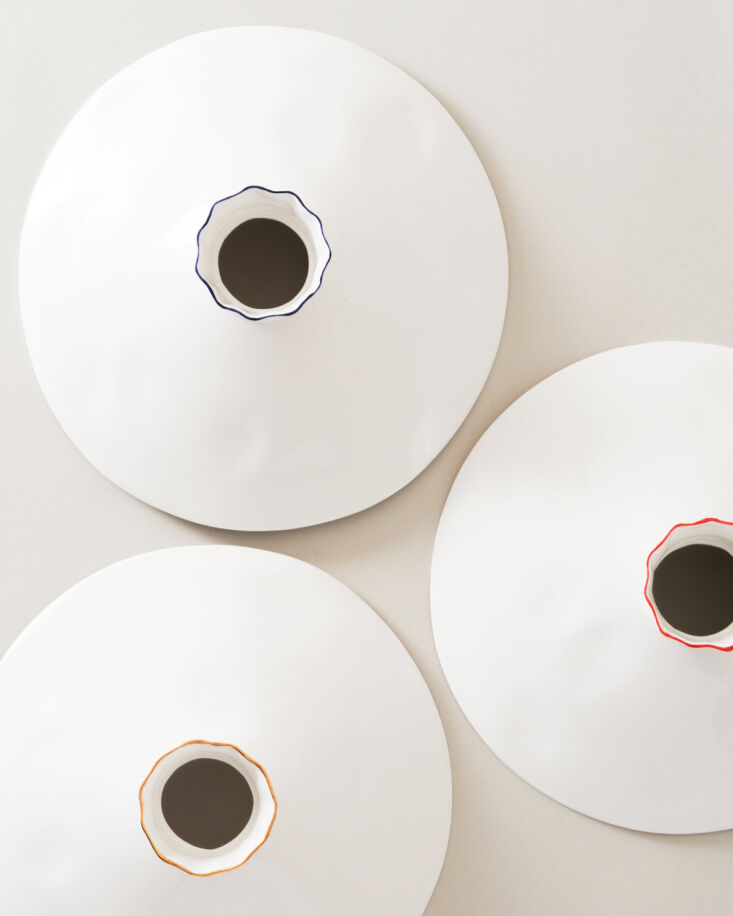
The final reason this pendant is a masterpiece lies in the "sweet detail" found at the very top and base of the shades. Each piece is finished with a delicate, hand-painted line—usually in a signature Feldspar blue or a classic forest green.
These lines are applied by hand using a traditional potter's wheel. If you look closely, you can see the slight variation in the brushstrokes, a quiet reminder of the human being who sat in a Devon studio to finish your light. In a world of mass production, these tiny signatures of the maker’s hand are what turn a house into a home filled with stories.
Choosing the Right Bone China Lighting for Your Space
When installing your Canelé pendant, there are a few professional tips to keep in mind to ensure it looks its best:
- The Height Rule: If hanging over a dining table, the bottom of the pendant should sit approximately 75cm to 80cm above the tabletop. This ensures you have clear sightlines across the table while keeping the light focused on the dining area.
- Color Temperature: To maximize the beauty of bone china, I always recommend using a "Warm White" bulb (around 2700K). A cool-toned bulb will make the china look sterile and blue, whereas a warm bulb brings out the rich, buttery tones of the material.
- Dimmer Switches: These pendants are meant to be dimmed. At full brightness, they are functional; dimmed to 20%, they become glowing embers that transform the mood of the room.
FAQ
Is bone china durable enough for a kitchen? Yes. While it looks delicate, fine bone china is actually one of the strongest ceramic materials due to its high firing temperature. It is easy to clean with a soft, damp cloth and won't yellow over time like plastic or low-quality resins.
What kind of bulb should I use in a Canelé Pendant? We recommend an E27 LED bulb. Look for one with a high CRI (Color Rendering Index) to ensure the colors in your room look natural under the china’s glow.
Are the "wobbles" the same on every light? No. Because they are hand-cast from hand-carved models, there are slight variations between each shade. This is considered a mark of quality and uniqueness, not a defect.