There is a specific kind of magic that happens when a building’s past and its future collide in a way that feels both inevitable and entirely surprising. In Denver’s historic La Alma neighborhood, a 1910 train depot that once pulsed with the rhythmic chug of locomotives has been reborn. But instead of iron and coal, this structure now houses the pioneers of the orbital highway. Welcome to Astroscale’s Denver headquarters—a 13,500-square-foot masterpiece of adaptive reuse that serves as a high-tech mission control for the next generation of space sustainability.
Quick Facts
- Location: 890 Navajo Street, Denver, Colorado (La Alma neighborhood).
- Structure: A former 1910 train depot and warehouse.
- Size: 13,500 square feet, supporting a workforce of over 100.
- Design Firm: Neoera.
- Core Mission: Satellite tracking, orbital debris removal, and space sustainability.
- Sustainability Goal: 100% reduction in natural gas usage through all-electric HVAC systems.
The Bones of History: Preserving the 1910 Depot
As an editor, I often see "industrial chic" used as a shorthand for exposed brick and a few Edison bulbs. However, what Neoera has accomplished at Astroscale is far more profound. They haven't just decorated a space; they have curated a narrative. The 13,500-square-foot facility retains the grit and soul of its 1910 origins while integrating the sterile, high-precision requirements of an aerospace hub.
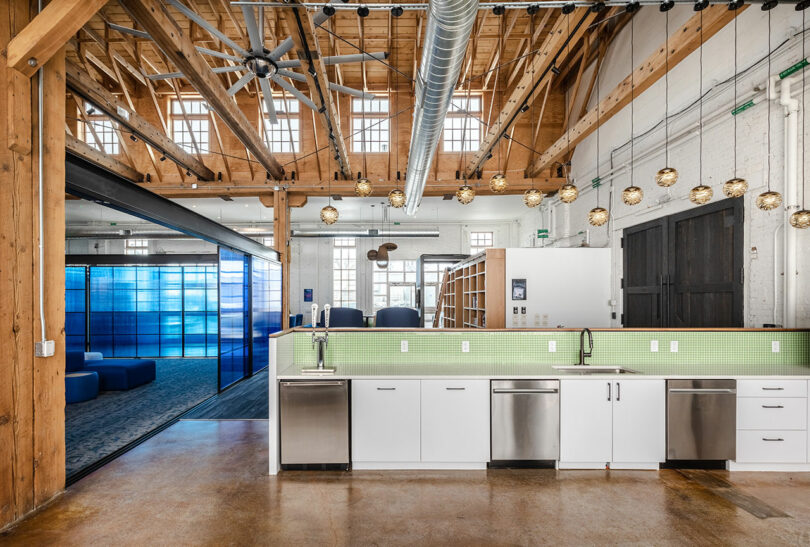
The architectural philosophy here was one of "calculated preservation." Rather than sandblasting the history out of the original timber beams and masonry walls, the design team embraced the imperfections. The massive wooden trusses that once supported the weight of freight now frame state-of-the-art workstations. The highlight of this preservation is arguably the 100-year-old Kewanee boiler. Once the literal heart of the depot's heating system, it has been decommissioned and kept as a sculptural centerpiece, a hulking iron ghost that grounds the room in Denver’s industrial heritage.
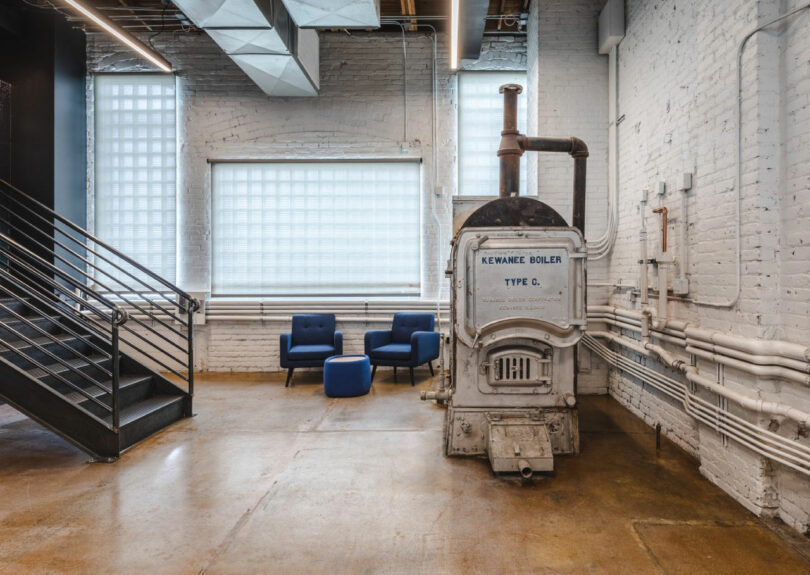
Designing for a workforce of over 100 people in a century-old depot presents unique challenges, particularly regarding acoustics and light. Neoera avoided the "sterile" office aesthetic by layering textures. The warmth of the original wood contrasts with the cool, reflective surfaces of the tech equipment, creating a workspace that feels human and grounded rather than cold and clinical.
A Fusion of Cultures: Japanese Roots and Galactic Vision
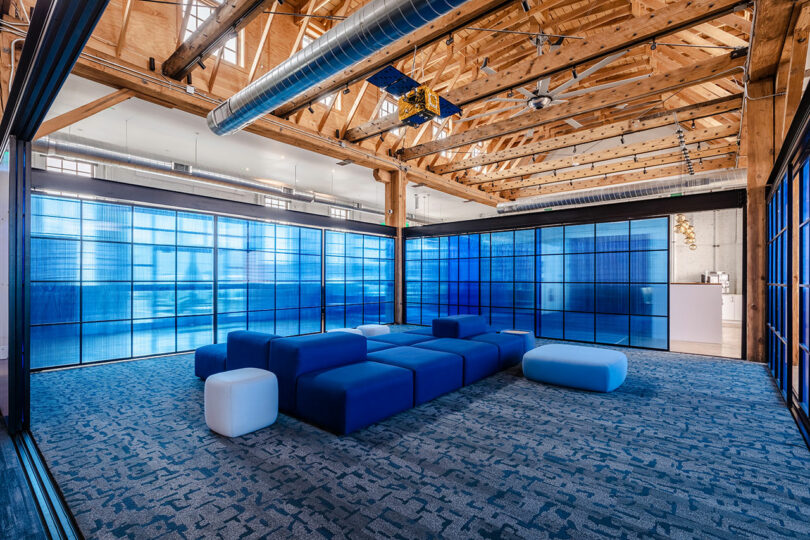
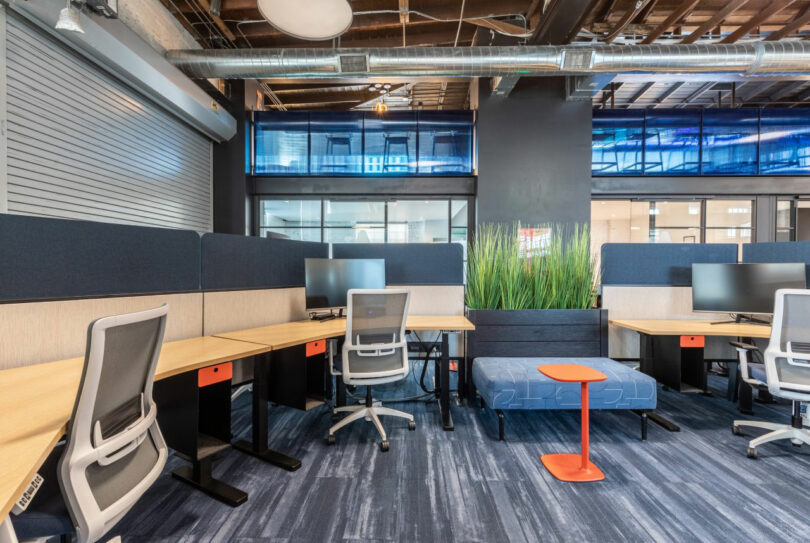
Astroscale is a global leader headquartered in Tokyo, and their Denver office needed to reflect that lineage. To achieve this, the design incorporates Japanese-inspired polycarbonate Shoji screens. These aren't your traditional paper screens; they are a modern, durable reimagining that provides privacy and light diffusion while adding a layer of "ethereal" tech.
These screens serve as movable partitions, allowing the 13,500-square-foot floor plan to remain fluid. In one moment, they create a private meeting nook; in the next, they open up to reveal the vastness of the central workspace. The translucent quality of the polycarbonate creates a soft, futuristic blue glow when hit by the office’s LED lighting, echoing the aesthetic of a clean room or a spacecraft’s interior.
The layout of the office is intelligently divided into three distinct "bays"—North, Central, and South. This structural metaphor simplifies the complex interior and mirrors the different stages of satellite communication. At the heart of it all is the Mission Operations Room. This isn't a dark, windowless bunker; it is a vibrant, active hub where engineers perform live satellite tracking. The juxtaposition of a satellite mission control room housed within the walls of a former locomotive depot is the ultimate nod to the evolution of human travel—from the tracks of the American West to the orbits of the stars.
The 'Other-Worldly' Lounges: Star Trek and Star Wars at Work
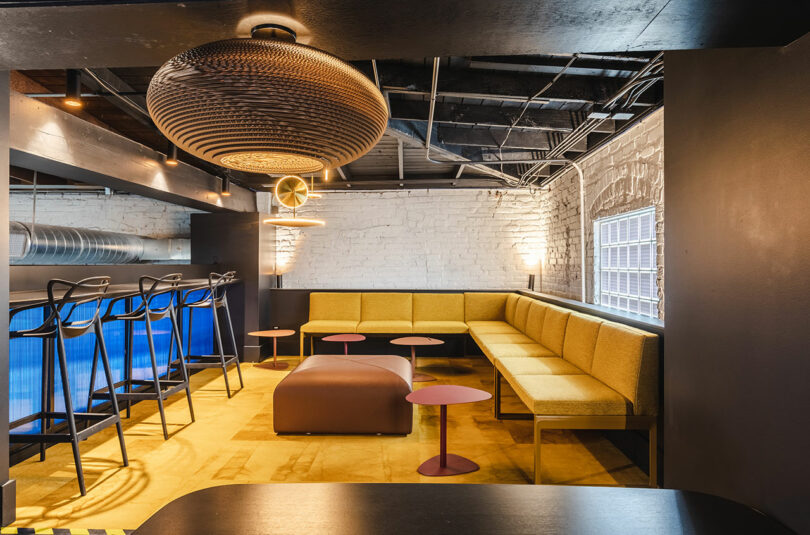
One of the most refreshing aspects of Astroscale’s Denver HQ is its refusal to take itself too seriously. While the work—removing orbital debris to keep space safe—is incredibly serious, the environment fosters creativity through escapism. The office features themed lounges that are a dream for any sci-fi enthusiast.
One lounge is a sophisticated, Star Trek-themed cocktail bar, featuring sleek lines and a "Ten Forward" vibe that encourages staff to decompress. Another is the "Mos Eisley" inspired lounge, a more rugged, eclectic space for socialization and hosting clients. These aren't just "fun rooms"; they are vital social hinges that facilitate the kind of "collision and collaboration" that drives innovation.
For moments of quiet reflection, the Zen Garden offers an outdoor respite. Featuring bamboo, fire pits, and the soothing sound of water fountains, it provides a stark, peaceful contrast to the high-intensity mission control just a few yards away. This balance of high-tech focus and high-concept relaxation is what makes this office one of Denver’s most innovative workplaces.
Beyond Aesthetics: Sustainability and the 'Energize Denver' Goal
In the world of interior design, beauty must be more than skin deep. For a company like Astroscale, which is dedicated to cleaning up the "junkyard" of space, environmental responsibility on Earth is a non-negotiable. The Denver HQ serves as a flagship for the city’s "Energize Denver" goals, which aim for a carbon-neutral future.
Adaptive reuse is inherently sustainable because it preserves the "embodied carbon" of existing structures. However, Neoera took this further by modernizing the building’s systems to eliminate natural gas usage entirely. This was a monumental task for a 110-year-old building. By implementing high-efficiency, all-electric HVAC systems and water heaters, the project is projected to achieve a 100% reduction in natural gas usage.
Sustainability Fact: Adaptive reuse projects like Astroscale and the nearby 'Refractory' are revitalizing Denver's oldest districts by repurposing structures that are sometimes 170 years old. These projects demonstrate that heritage buildings can meet 21st-century energy standards through smart engineering.
The impact of this renovation extends beyond the building's four walls. By choosing the Santa Fe Arts District/La Alma neighborhood, Astroscale is contributing to the revitalization of a historic community. It proves that tech companies don’t need to build glass towers in the suburbs to be innovative; they can find a home in the heart of the city’s history.
Conclusion: A Blueprint for the Modern Workplace
Astroscale's Denver headquarters is more than just an office; it is a statement of intent. It proves that we do not have to choose between our architectural heritage and our technological future. By weaving together the rugged masonry of a 1910 train depot with the ethereal glow of Japanese design and the cutting-edge requirements of aerospace operations, Neoera has created a space that feels timeless.
For brands looking to build a workspace that inspires, the lesson is clear: character cannot be manufactured, but it can be reclaimed. As we look toward the "Energize Denver" milestones, this project stands as a blueprint for how we can transform our aging urban cores into vibrant, sustainable, and innovative hubs.
FAQ
Q: What is adaptive reuse, and why is it important in Denver? A: Adaptive reuse is the process of repurposing an old building for a use other than which it was originally designed. In Denver, it is a key strategy for preserving historical architecture while meeting modern sustainability goals like "Energize Denver," which encourages buildings to move away from fossil fuels.
Q: How does the Astroscale office incorporate its Japanese heritage? A: The design uses polycarbonate Shoji screens, which are a modern interpretation of traditional Japanese room dividers. This creates a flexible, light-filled workspace that honors the company's roots in Tokyo.
Q: Is the Astroscale office open to the public? A: As a high-security aerospace facility tracking live satellites, the office is generally not open to the public for walk-ins, though it frequently hosts industry events and client meetings in its themed lounges.