In the world of interior styling, we often speak about light as a functional necessity—the warm glow of a floor lamp in a reading nook or the crisp clarity of task lighting over a kitchen island. But rarely do we treat light as a medium for interactive storytelling. That is, until now. Bo Zhang, a designer whose previous "Ripples" collection captivated the design world by mimicking the fluid movement of water, has returned with a series that challenges our very perception of what is real.
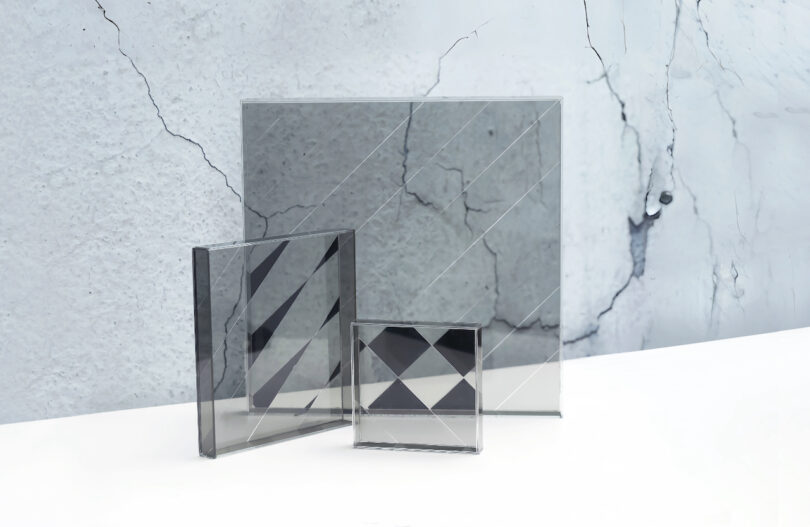
His latest creation, the Lightware series, is far more than a set of tabletop accessories. It is an exploration of "interactive design" for the modern home, where the object serves as a bridge between material science and ephemeral art. Recently honored as an Honoree of the 2025 NYCxDESIGN Award for Accessories, the Lightware collection uses the physics of light to turn a simple glass tray into a shifting landscape of shadows and color.
The Physics of Light: How Polarizing Film Works
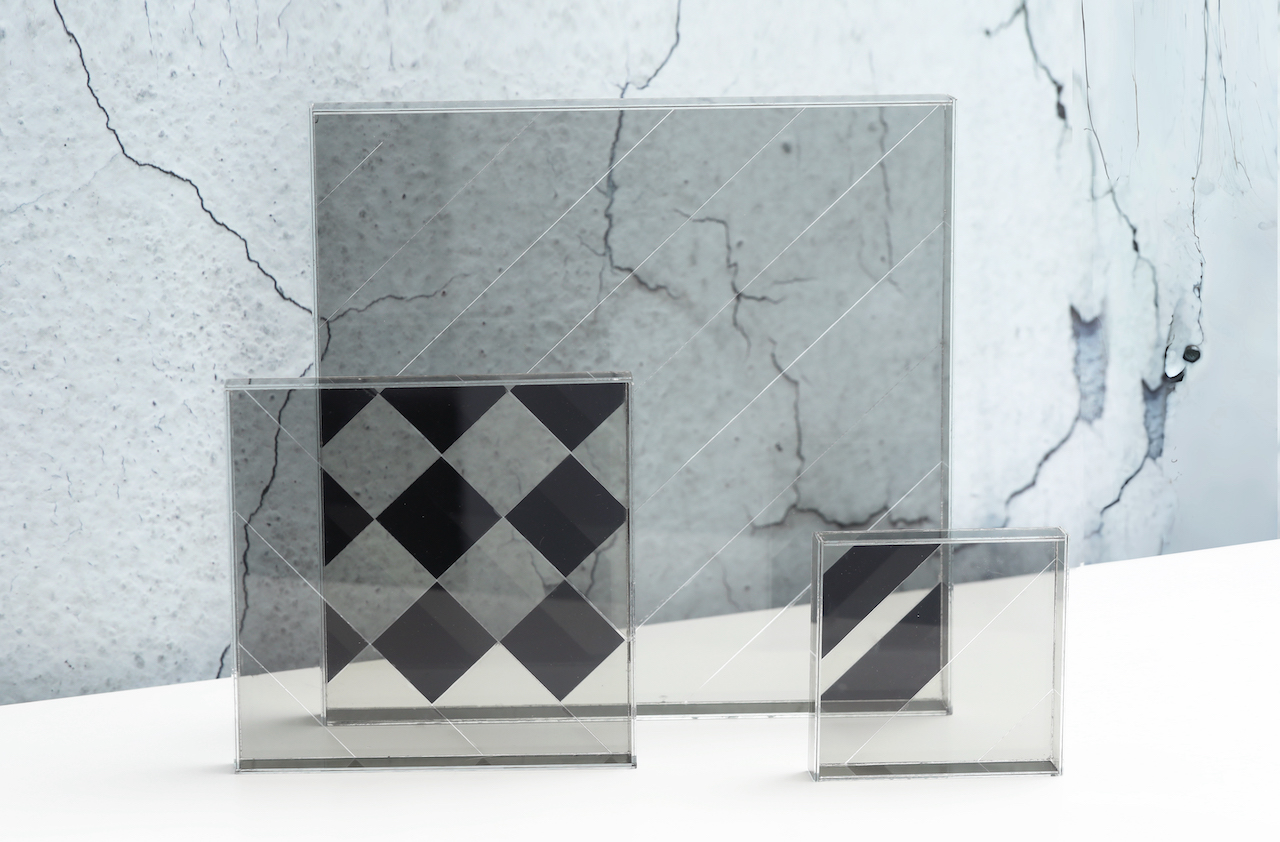
At the heart of the Lightware series lies a sophisticated use of optical technology that most of us carry in our pockets every day but rarely see in our home decor: polarizing films. These are the same materials used in smartphone screens and high-end sunglasses, but Bo Zhang has repurposed them into a decorative tool.
The mechanism is deceptively simple yet visually profound. Zhang utilizes 90-degree polarizing film technology to manipulate how light waves move through the glass. Light naturally vibrates in all directions, but a polarizing filter acts like a tiny set of vertical or horizontal blinds, only allowing light waves of a specific orientation to pass through.
The "magic" happens when you stack or rotate these layers. In Zhang's design, he has achieved 100% control of light directionality within the tray layers. Here is the scientific toggle at work:
- Parallel Alignment: When the polarizing layers are stacked in parallel, the light waves are allowed to pass through relatively unobstructed.
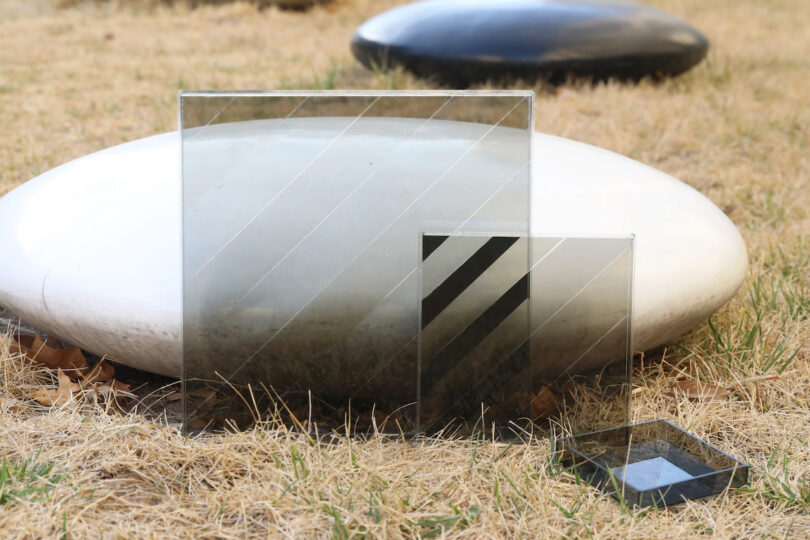
- The 90-Degree Cross: When one layer is rotated to a 90-degree angle relative to the other, the "blinds" close. The horizontal filter blocks what the vertical filter let through, effectively canceling out the light and creating a deep, opaque shadow.
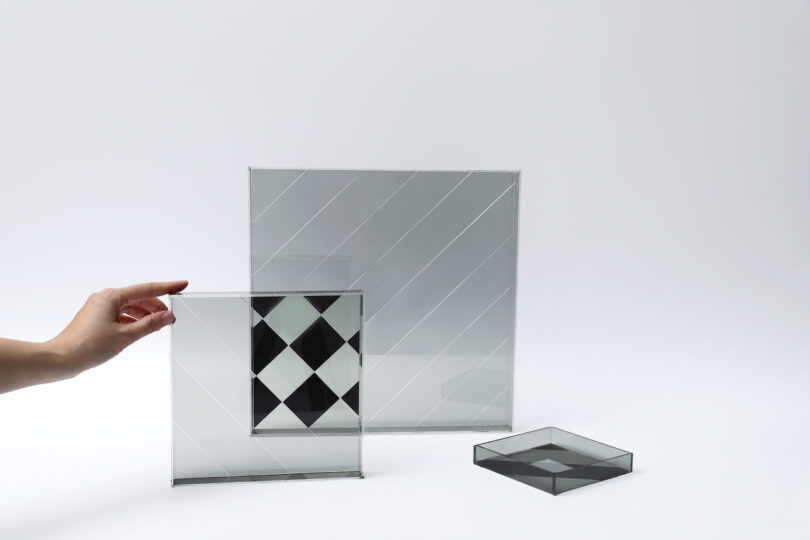
This isn't just a static effect; it’s an invitation to touch. As you move around the tray or adjust the layers, the shadows flicker and transform, turning a physical object into a rhythmic dance of dark and light.
Designing the Illusion: Reality vs. Perception
Bo Zhang’s design philosophy centers on the idea of the "fleeting." He believes that the most beautiful moments in a living space are those that are temporary—the way the sun hits a wall at 4:00 PM or the flickering of a candle. To capture this, he uses common materials like transparent glass and plastic, but treats them with the precision of a laboratory instrument.
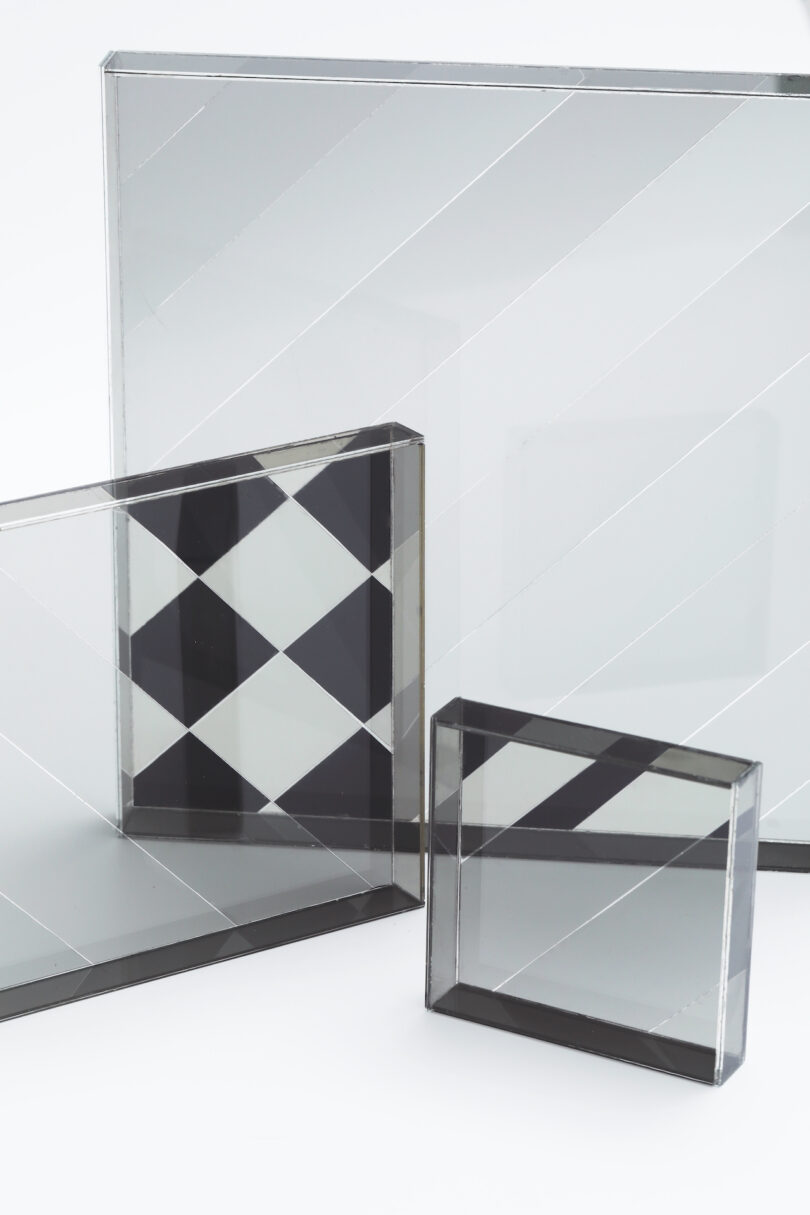
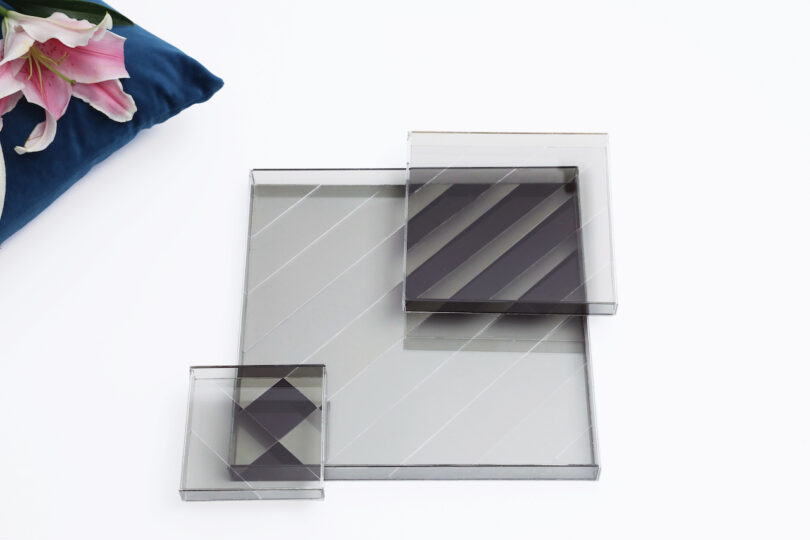
The Lightware collection consists of three distinct sizes of transparent glass trays, each designed for a different level of interaction with ambient light. While the trays appear clear and minimalist at first glance, the hidden polarizing films act as a prism. Under certain lighting conditions, the reflection and refraction of light on the glass create unexpected "rainbow" shadow patterns—a phenomenon known as stress birefringence, where the internal tension of the material is revealed through color.
"I wanted to create objects that didn't just sit in a room, but actively participated in the environment," Zhang notes. "By using light as a material, the tray becomes a different object every time the sun moves or the viewer shifts their gaze."
This tension between the solid reality of the glass and the illusory nature of the shadows is what makes the collection so compelling for modern interiors. It provides a tactile way to engage with the physics of our world without needing a screen or a battery.
Beyond Decor: The Psychological Pull of Shadows
As an editor, I am often asked why we are so drawn to certain textures or effects. With the Lightware series, the attraction is primal. Zhang’s work taps into a deep, historical fascination with shadow play. From the ancient Cambodian Sbek Thom to the Turkish Karagöz, humans have used shadows to tell stories and explore the subconscious for millennia.
Shadows represent the "unseen" or the "hidden." In a modern home, where everything is often brightly lit and hyper-defined, the introduction of shifting shadows provides a much-needed psychological reprieve. There is something meditative about watching the patterns on a Lightware tray change as you move a glass of water across its surface.
These "shadow miniatures" act as anchors for mindfulness. In our fast-paced, digital lives, an object that requires us to slow down and observe a physical phenomenon—the way light bends and disappears—creates a profound sense of presence. It turns a living room into a gallery of the subconscious.
Styling the Lightware Collection in a Modern Home
When it comes to integrating these trays into your home, the key is to think about your light sources. Unlike a traditional vase or bowl, the Lightware trays are "activated" by their environment.
1. Harnessing Ambient Light
For a subtle, ethereal effect, place the larger trays on a coffee table or sideboard that receives plenty of indirect ambient light. As people move through the room, they will catch glimpses of the shifting polarization, making the surface of the table feel alive and fluid.
2. The Direct Sun "Show"
If you want to maximize the "rainbow" shadows and high-contrast patterns, place the trays on a windowsill or a dining table that gets direct morning or afternoon sunlight. The intensity of the sun will project the tray's internal geometry onto your walls and floors, effectively turning the piece into a light installation.
3. Minimalism and Versatility
The beauty of Bo Zhang's work is its versatility. Because the trays are transparent, they don't visually clutter a space. They fit seamlessly into minimalist interiors but provide enough "intellectual depth" to serve as a conversation starter in more maximalist, curated homes. Use them as functional catch-alls for keys and jewelry, or stack them purely as optical sculptures.
The 2025 NYCxDESIGN Recognition
It is no surprise that the Lightware series was selected as an Honoree for the 2025 NYCxDESIGN Award for Accessories. The jury looked for designs that push the boundaries of material use, and Zhang’s ability to take a technical film and elevate it to the level of fine art is a masterclass in modern industrial design.
The recognition signals a broader trend in the home accessory market: a shift toward "intelligent" decor. We are moving away from objects that are merely pretty and toward objects that offer an experience. As we look toward the future of interior design, the fusion of material science and aesthetics—the very essence of Bo Zhang’s work—will likely define the next decade of our living spaces.
FAQ
Q: Are the Lightware trays made of glass or plastic? A: The trays are constructed primarily from high-quality transparent glass, which provides weight and durability. The specialized polarizing films are layered within or applied to the glass to create the optical effects.
Q: Do I need special lighting to see the shadow effects? A: No, the trays work with any light source—natural sunlight, incandescent bulbs, or LED. However, the effects are most dramatic when there is a clear direction to the light, such as a nearby window or a focused spotlight.
Q: How do I clean the polarizing surface? A: Because the optical film is sensitive, it is best to clean the trays with a soft microfiber cloth and a gentle, non-abrasive glass cleaner. Avoid harsh chemicals that could delaminate or scratch the polarizing layers.
Bring the Play of Light Home
If you're looking to elevate your space with a piece that is as much a scientific marvel as it is a decor staple, the Lightware series by Bo Zhang is a rare find. It challenges us to look closer, to touch, and to appreciate the fleeting beauty of the shadows we often ignore.