The traditional office is losing its grip. For decades, the workstation was a rigid altar to productivity—a desk, a task chair, and a fixed monitor. But as we navigate the post-pandemic landscape, the physical boundaries of "where work happens" have dissolved. We are no longer tethered to a 9-to-5 desk; instead, we gravitate toward "third spaces" within the office that offer the comfort of home with the high-performance utility of a professional environment.
Workplace design trends since 2019 show a remarkable 40% increase in demand for what designers are calling "athleisure-inspired" furniture. Just as we’ve traded stiff suits for high-tech, tailored separates that move with us, the office is trading the bulky, mechanical task chair for the smart-casual lounge chair. This shift isn't just about aesthetics; it’s a fundamental response to the hybrid modality of modern life.
What is a Smart-Casual Lounge Chair?
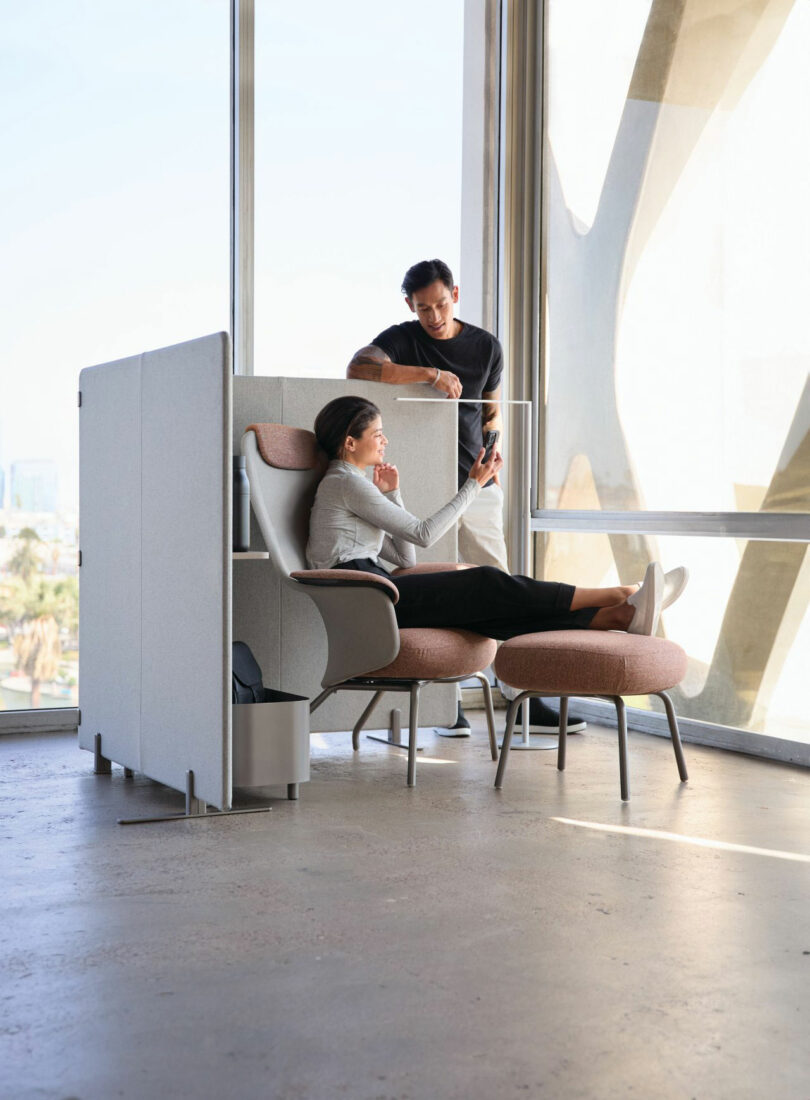
In my years as a decor editor, I’ve seen many "hybrid" trends come and go, but the smart-casual lounge chair is different. It is a furniture piece that successfully bridges two worlds: the sophisticated, soft-touch tailoring of residential lounge seating and the rigorous mechanical engineering of a traditional task chair.
Think of it as a seat that looks like it belongs in a high-end boutique hotel lobby but performs like the most advanced ergonomic tool in your arsenal. It is designed to support what we call "active lounging"—a state where you are physically relaxed but mentally engaged.
Why has this become the new standard? The answer lies in our pockets. Mobile technology and hybrid schedules have liberated us. When your "office" is a laptop or a tablet, the need for a 60-inch fixed desk evaporates. Today’s professionals spend less time typing at a station and more time in collaborative huddles, focused reading, or virtual meetings. The smart-casual chair provides a flexible, comfortable setting for these varied tasks without sacrificing the spinal support needed for long-duration work.
The 'Athleisure' of Furniture: Design Meets Engineering
The analogy of "athleisure" is particularly apt here. Just as a high-end yoga legging uses compression fabrics and ergonomic seams to support movement, the smart-casual lounge chair uses technical knits and hidden mechanisms to support the body. We are moving away from the era of "bulky cushions"—those overstuffed chairs that look comfortable but offer zero lumbar support—toward streamlined, tech-focused silhouettes.
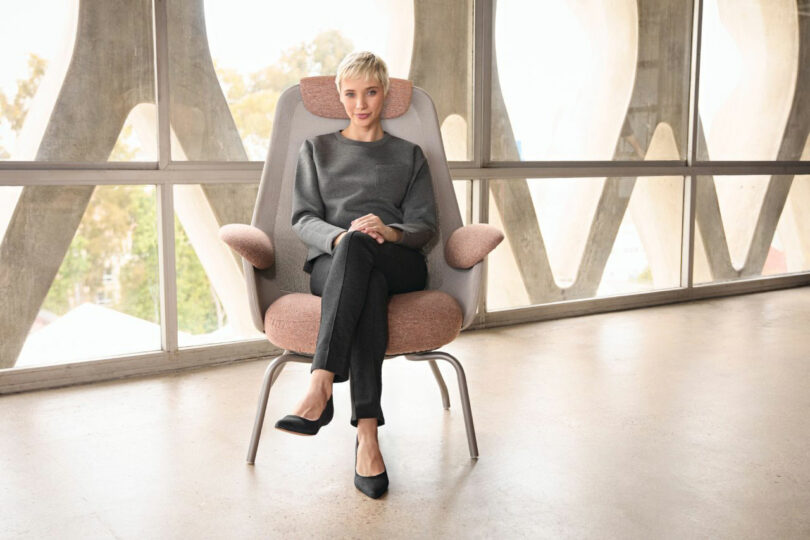
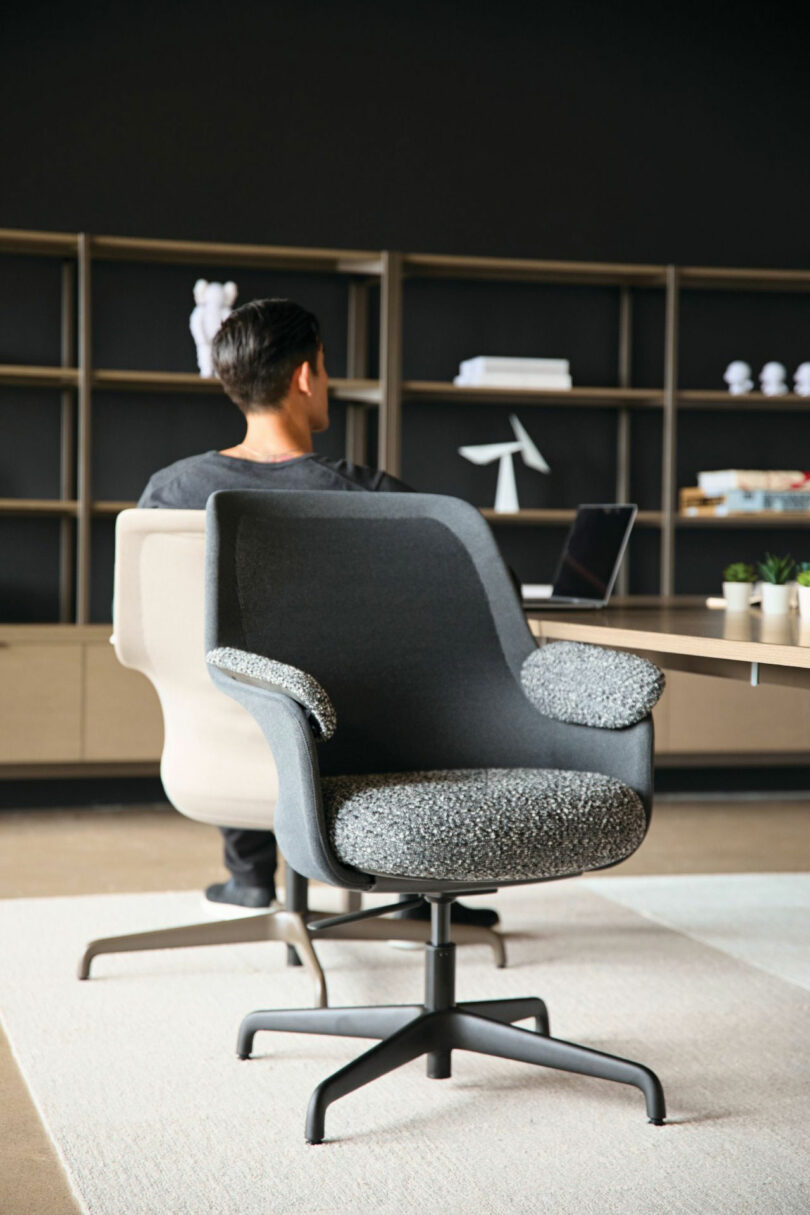
A prime example of this evolution is the Teknion Aarea chair, designed by the renowned firm Pearson Lloyd. This piece exemplifies the smart-casual ethos. It doesn't scream "office equipment," yet its performance is uncompromising. By utilizing a sophisticated knit envelope over a precision-engineered frame, it achieves a visual lightness that traditional office chairs lack.
Key Ergonomic Features of Modern Office Loungers
To the untrained eye, a smart-casual chair might look like a simple armchair. However, underneath the upholstery lies a suite of ergonomic checkpoints that distinguish it from a standard living room piece.
- The Synchro-Tilt Mechanism: Unlike a static armchair, these loungers feature a synchro-tilt that allows the seat and back to move in harmony. This maintains your center of gravity and ensures your feet stay planted while you recline.
- Flexible Technical Knits: Many modern loungers use a 3D-knit back. This material provides "zonal" support—firmer in the lumbar region and more flexible at the shoulders—allowing for a range of motion that foam and fabric cannot match.
- The 'Second Posture' Support: Traditional chairs focus on the "upright" posture. Smart-casual chairs are engineered for the "Second Posture"—a relaxed recline favored by tablet users and creative thinkers. It supports the neck and lower back even when you aren't sitting at a 90-degree angle.
- Intuitive Controls: You won't find a dozen clunky plastic levers here. Instead, height adjustability and tilt tension are often integrated into the form of the chair, using minimalist levers or even weight-sensitive mechanisms that auto-adjust to the user.
Sustainability as a Design Standard
As an editor, I prioritize pieces that are as kind to the planet as they are to the eyes. In the smart-casual category, sustainability isn't just a buzzword; it’s an engineering requirement.
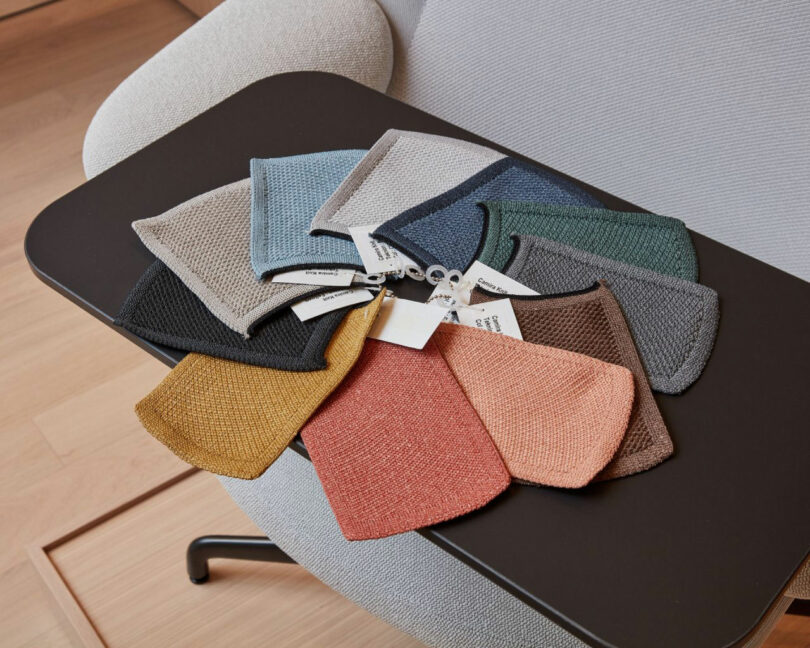
Many of the leading chairs in this category, such as the Aarea range, utilize 100% reclaimed marine plastic for their knit components. This process is fascinating: plastic recovered from the ocean is transformed into high-performance polyester yarn.
"The true beauty of modern technical knits is that they are 'knit-to-shape.' This means the fabric is created in the exact dimensions of the chair, resulting in zero cut-off waste during the manufacturing process—a stark contrast to traditional upholstery where 20-30% of fabric often ends up on the cutting room floor."
These eco-friendly materials are crucial for corporate facility managers aiming for LEED (Leadership in Energy and Environmental Design) or WELL certifications. When you invest in these pieces, you aren't just buying furniture; you’re contributing to a circular economy.
Implementing Smart-Casual Seating in Your Space
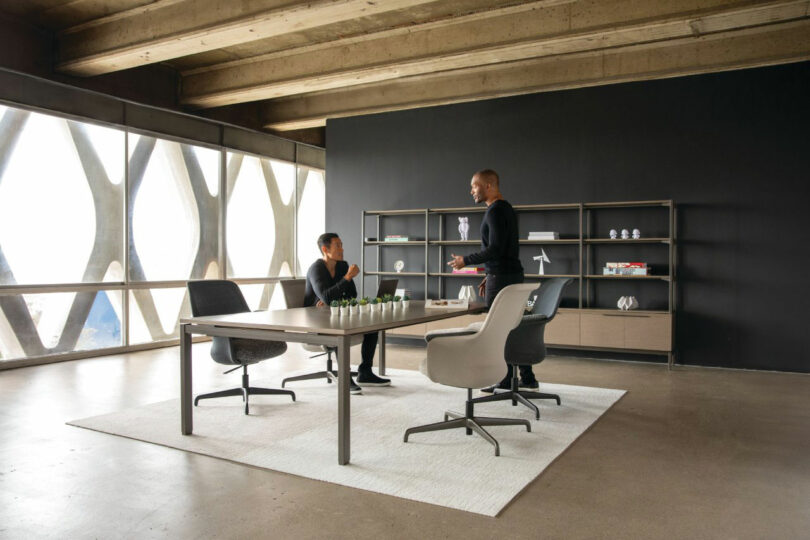
Integrating these pieces requires a shift in how we think about office layouts. It’s no longer about rows of desks, but about creating a "relaxation circuit" that encourages movement.
To help you plan, I’ve categorized the different "modalities" of lounge seating:
| Modality | Primary Use | Key Feature |
|---|---|---|
| Work Lounge | Solo focus work, emails | Integrated tablet arms, high lumbar support |
| Casual Lounge | Socializing, coffee breaks | Low-profile, softer foam, swivel bases |
| Conference Lounge | Collaborative meetings | Upright recline, 360-degree swivel for eye contact |
For those who worry about the lack of privacy in open-plan lounges, many smart-casual designs now include alcove partitions or high-back options. These act as personal assistant units, dampening acoustics and creating a psychological "do not disturb" zone while still allowing the user to remain part of the office energy.
Buying Guide: Choosing the Right Smart-Casual Piece
When you're ready to transition your space, look beyond the initial "wow" factor of the design. Here is my insider checklist for selecting a piece that lasts:
- Material Durability: Look for "Performance Fabrics." In a high-traffic office, you need a high Martindale count (a measure of abrasion resistance). Ensure the technical knits have high pilling resistance, so they don't look worn after six months.
- Footprint vs. Mobility: If you are designing a flexible space, choose chairs with polished aluminum or nylon bases equipped with multi-surface glides. This allows users to pull chairs together for a spontaneous meeting without scuffing the floors.
- Aesthetic Alignment: For 2025 and 2026, we are seeing a move toward "Polyester Mélange" knits—fabrics that weave multiple thread colors together to create depth. Look for earthy, grounding tones like sage green, terracotta, or deep navy to balance the "tech" feel of the office.
FAQ
Q: Are smart-casual lounge chairs as healthy as traditional ergonomic chairs? A: Yes, provided they include the core ergonomic features mentioned above, like synchro-tilt and lumbar support. They are designed for "active work" rather than just passive sitting. However, for 8-hour intensive data entry, a traditional task chair still offers the most adjustment points.
Q: How do I clean technical knit fabrics? A: Most technical knits are incredibly resilient. Usually, a mild water-based detergent and a soft cloth are all you need. Because they are often made from reclaimed polyester, they are naturally more stain-resistant than traditional wool or cotton blends.
Q: Can these chairs fit into a small home office? A: Absolutely. One of the greatest benefits of the smart-casual aesthetic is its smaller visual footprint. Without the bulky plastic spine and wide armrests of a traditional office chair, these pieces feel much more integrated into a residential setting.
Conclusion
The future of workplace design isn't about working harder; it’s about working smarter in environments that respect our need for comfort and movement. The smart-casual lounge chair represents the ultimate maturation of the office—a place where high-performance engineering is finally wrapped in a package that feels human, sustainable, and undeniably chic.
Whether you’re a facility manager reimagining a corporate headquarters or a freelancer upgrading your home studio, embracing the "athleisure" of furniture is the first step toward a more productive, inspired workday.