In the quiet backstreets of Kyoto, where the scent of cedar wood and aged paper lingers in the air, a 220-year-old flame is being meticulously tended by a new generation. When we think of Japanese lanterns (chochin), we often picture the delicate, mass-produced souvenirs found in airport gift shops. But for those of us in the design world, true luxury lies in the tension between heritage and evolution.
Kojima Shōten is a 10th-generation lantern manufacturer that has been active since the Edo period. Specializing in the rare jibari-shiki method, they produce "Kyo-chochin" (Kyoto lanterns) that are as much architectural feats as they are lighting fixtures. Today, under the leadership of brothers Shun and Ryo Kojima, the workshop is proving that ancient techniques aren't just relics to be preserved—they are the future of intentional, sustainable interior design.
The 220-Year-Old Flame of Kyoto
To understand Kojima Shōten is to understand the weight of a ten-generation lineage. Since the late 18th century, this family has illuminated Kyoto’s most sacred spaces, from the gates of the Minami-za theater to the city’s historic temples. For centuries, the business was guided by the steady hand of the 9th generation, Mamoru Kojima. However, the true "reimagining" began when his sons, Shun and Ryo, stepped into the workshop.
They didn't just inherit a business; they inherited a philosophy. In Kyoto, tradition is often viewed as a rigid set of rules, but the Kojima brothers saw it as a foundation for innovation. By blending the rugged, hand-crafted aesthetic of the Edo period with a modern, minimalist sensibility, they have transitioned the chochin from a religious or commercial signifier into a coveted piece of functional art for the modern home.
The Jibari-shiki Difference: Crafting Beyond the Spiral
Most contemporary lanterns are made using the makibone-shiki method, where a single long wire or bamboo strip is wound in a spiral. It is fast, efficient, and produces a lightweight, uniform look. Kojima Shōten rejects this. They utilize the jibari-shiki (affixing style) method—a labor-intensive process that results in a lantern of unparalleled sturdiness and character.
In the jibari-shiki method, every element is bespoke. The bamboo is not just bent; it is transformed. Here is how an authentic Kyo-chochin comes to life:
- Splitting and Shaving: Thick stalks of bamboo are split into strips by hand. Unlike the thin, flimsy strips used in mass production, these are robust and structural.
- Honetame (Rounding): This is the most critical technical step. The bamboo fibers are heated and manipulated to create individual, perfect rings. This "memory" in the wood ensures the lantern maintains its shape for decades.
- Stringing: Each bamboo ring is placed on a wooden mold and tied individually with hemp thread. This creates a skeleton that can withstand tension and weight.
- Gluing and Pasting: Heavy-duty washi (Japanese paper) is hand-pasted onto the frame. Because the frame is so strong, the paper can be applied with more tension, resulting in a drum-like surface that diffuses light with a rich, textured glow.
- Decoration: Finally, the lanterns are hand-painted with bold calligraphy or contemporary patterns using traditional pigments.
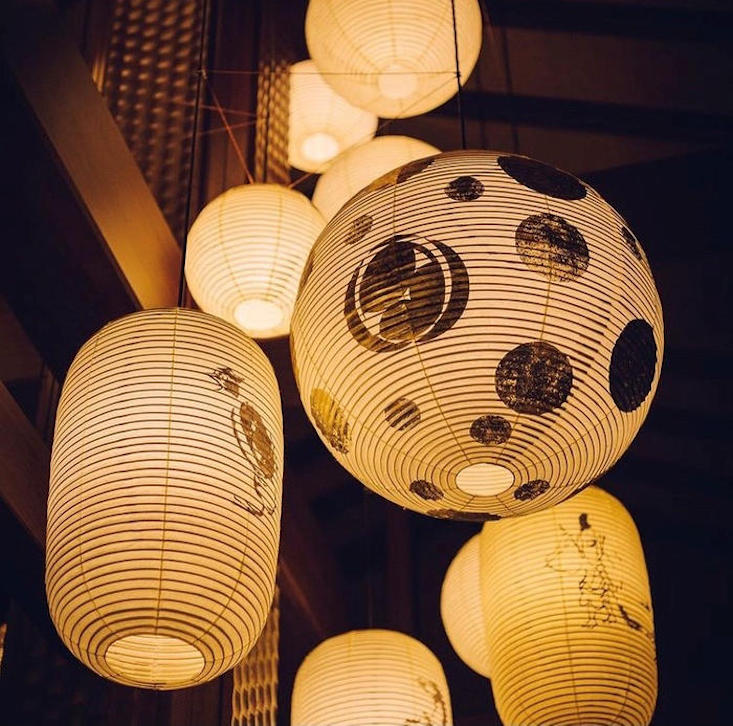
The result of this process is a "heavy-duty" lantern. While a standard lantern might feel like a paper toy, a Kojima Shōten piece feels like furniture.
From Temples to the Ace Hotel: Modern Collaborations
One of the reasons Kojima Shōten has remained relevant while other traditional workshops have faded is their willingness to step outside the temple gates. They have moved from "signage" to "sculpture."
A prime example is their collaboration with the Ace Hotel Kyoto. In this high-design setting, Kojima Shōten created a massive, layered centerpiece that greets guests with an amber glow. It isn't just a lamp; it’s an installation that bridges the gap between Kyoto’s artisanal past and the city’s status as a global design hub.
To cater to this broader audience, the brothers launched the brand Kobishiya Chūbe. This label focuses on creating lanterns specifically for interior spaces—restaurants, luxury hotels, and private residences—rather than just for festivals or shrines. This pivot has proven that the "Wabi Sabi" aesthetic—the beauty of imperfection and the passage of time—is exactly what modern, high-end interiors are craving.
Design for the Modern Home: The Chibi-maru and Beyond
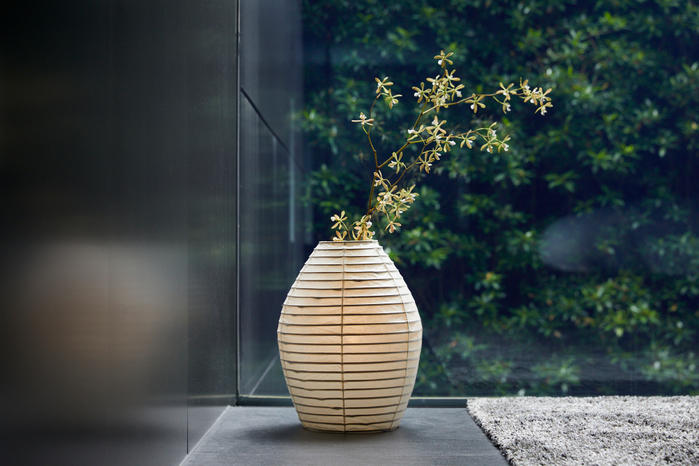
For a long time, Kyo-chochin were simply too large for a standard apartment or a modern living room. Shun and Ryo recognized this and introduced the Chibi-maru (literally "small ball") series.
These smaller, spherical lanterns are designed to sit on a tabletop or floor, bringing the organic warmth of washi paper into more intimate settings. Because they use the same jibari-shiki method as the giant temple lanterns, they possess a tactile, sculptural quality that plastic or glass fixtures simply cannot replicate.
Editor’s Tip: In a minimalist or Scandinavian-style home, a single Chibi-maru lantern acts as a perfect "soft" focal point. Place it in a corner or on a low wooden credenza to break up the hard lines of modern furniture with its organic, rounded silhouette.
The workshop also produces washi-mari—small paper balls that are frequently used in children’s rooms or as ceiling accents. Unlike glass globes, these are virtually unbreakable and cast a soft, non-glare light that is incredibly soothing for evening relaxation.
Durability and Care: A Decade of Light
One of the biggest misconceptions about paper lanterns is that they are fragile "disposable" items. When engineered by the 10th generation of the Kojima family, these pieces are built to last a lifetime.
| Feature | Specification / Detail |
|---|---|
| Functional Lifespan | 10+ years (when maintained indoors) |
| Core Material | Hand-split bamboo and heavy-duty washi paper |
| Construction Method | Jibari-shiki (individually tied rings) |
| Maintenance Needs | Dusting with a soft brush; avoid moisture |
| Heritage | 10 generations of continuous artisanal expertise |
To ensure your Kojima Shōten lantern reaches its full 10-year potential, follow these simple care guidelines:
- Keep it Dry: Moisture is the primary enemy of washi and traditional glue. Never use a wet cloth to clean the lantern.
- Avoid Direct Sunlight: While the paper is thick, constant UV exposure can cause the natural pigments to fade over several years.
- Gentle Dusting: Use a traditional feather duster or a soft, dry microfiber cloth to remove dust from the bamboo ridges.
Conclusion: Lighting the Path Forward
Kojima Shōten represents the gold standard of what I call "Living Heritage." They haven't survived for 220 years by doing things exactly the same way, but by ensuring that the quality remains unchanged while the application evolves. By moving the Kyo-chochin from the theater entrance to the modern living room, they are ensuring that the craft of the Edo period remains a vital part of the 21st-century design conversation.
Whether it’s a massive installation at a luxury hotel or a small Chibi-maru glowing softly on your bedside table, a piece from Kojima Shōten isn't just a lamp—it’s a piece of Kyoto’s soul, engineered to light your home for the next decade and beyond.
FAQ
How can I tell the difference between a Kojima Shōten lantern and a mass-produced one? Look at the bamboo frame. Mass-produced lanterns use a thin, continuous spiral wire. A Kojima Shōten lantern uses the jibari-shiki method, where you can see individual, thick bamboo rings tied with thread. The paper will also feel much thicker and more like fabric than standard paper.
Are these lanterns safe for use with modern LED bulbs? Absolutely. In fact, we recommend using high-quality LED bulbs. They produce very little heat, which helps preserve the washi paper and the natural adhesives used in the lantern's construction, further extending its lifespan.
Can Kojima Shōten lanterns be used outdoors? Traditional lanterns are made of paper and bamboo, so they are generally for indoor use. While they are used at festivals, they are typically protected or replaced frequently. For a residential setting, they should stay indoors to ensure they last for 10+ years.