For many urban dwellers, the dream of a dedicated home office often collapses against the reality of a 500-square-foot floor plan. We’ve all been there: balancing a laptop on a kitchen island or squeezing a clunky, flat-pack desk into a corner, only to find it consumes the very air we breathe. In the world of interior design, we are witnessing a pivotal shift. A 2025 survey of 20,000 renters revealed that 54% identified the need for more space as their primary reason for home dissatisfaction. As we move toward 2026, market projections suggest that 65% of apartment dwellers will prioritize "zero-footprint" furniture—pieces that offer high utility without permanently claiming floor real estate.
This is where design meets survival. The traditional desk is a static, heavy anchor; the modern workstation must be a nimble, vertical solution. Enter the Leandesk by Henry Swanzy, a piece of furniture that feels less like a product and more like a clever hybrid of architecture and maritime engineering. It’s a direct response to the hybrid work era, designed for those who refuse to let a home office dictate the flow of their living space.
The Renter’s Dilemma: Function Without the Friction
The greatest friction point for any renter is the security deposit. We crave the stability of wall-mounted shelving and floating desks, but the thought of drilling sixteen holes into a white-washed wall—and the subsequent patchwork required before moving out—is enough to kill any creative spark. Traditional wall-mounted furniture fails the renter test because it demands permanence in a lifestyle that is often transient.
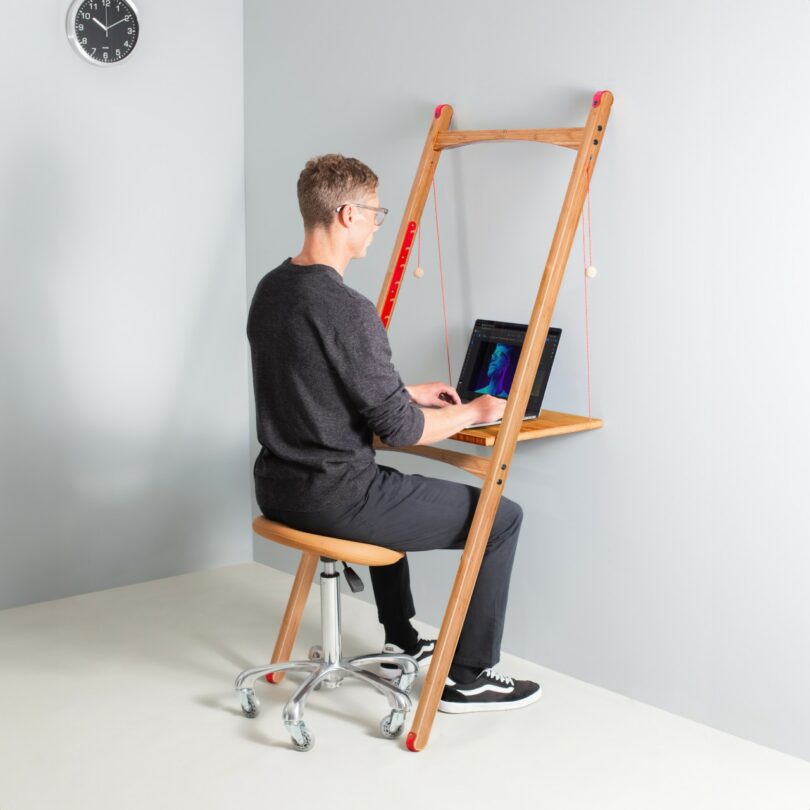
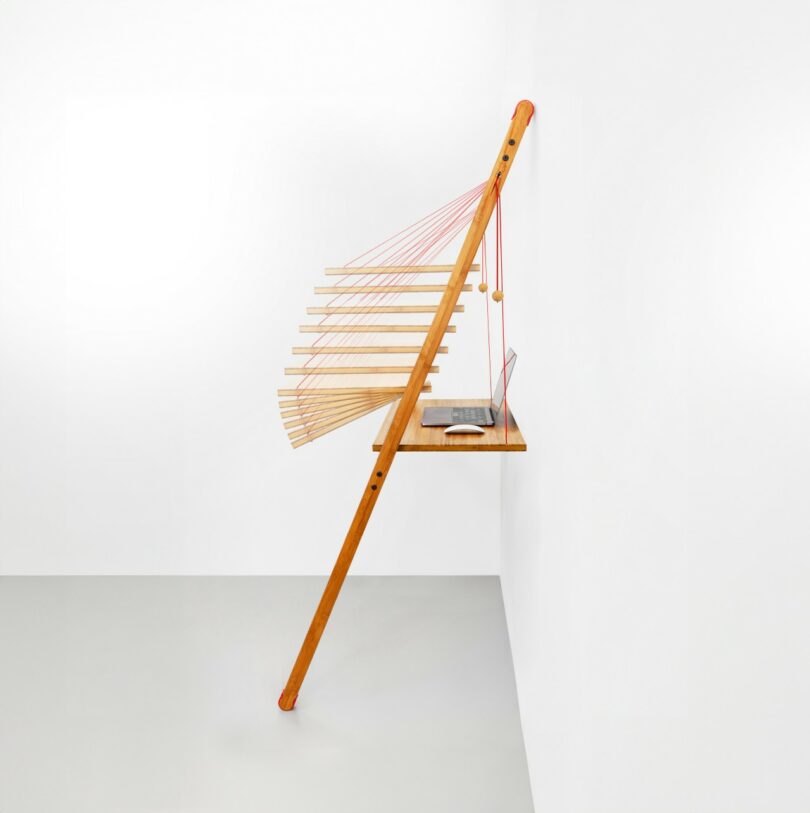
What makes Leandesk the ideal solution for renters is its "friction-only" philosophy. Instead of screws, brackets, or heavy-duty anchors, it utilizes a lean-to design. The desk relies on simple physics: non-marking rubber grips at the top and bottom secure the frame against the wall and floor through tension. The weight of your laptop and gear actually increases the stability of the unit. When it’s time to move, you simply lift it away. No holes, no dust, and no lost deposit.
Engineering the Vertical Workspace: How Leandesk Optimizes Walls
In a small apartment, the floor is premium real estate, but the walls are an untapped resource. Leandesk optimizes these vertical surfaces by turning them into functional support systems. While most desks require four legs and a clear radius of floor space, this workstation utilizes windows, hallways, or even that awkward narrow strip between the closet and the door.
The brilliance of Henry Swanzy’s design lies in its "zero-footprint" capability. When the workday ends, the desk doesn't just sit there as a reminder of tomorrow’s meetings. It can be folded or moved in seconds, occupying a footprint that is essentially non-existent compared to a standard four-legged table.
The materials used are as intentional as the design itself:
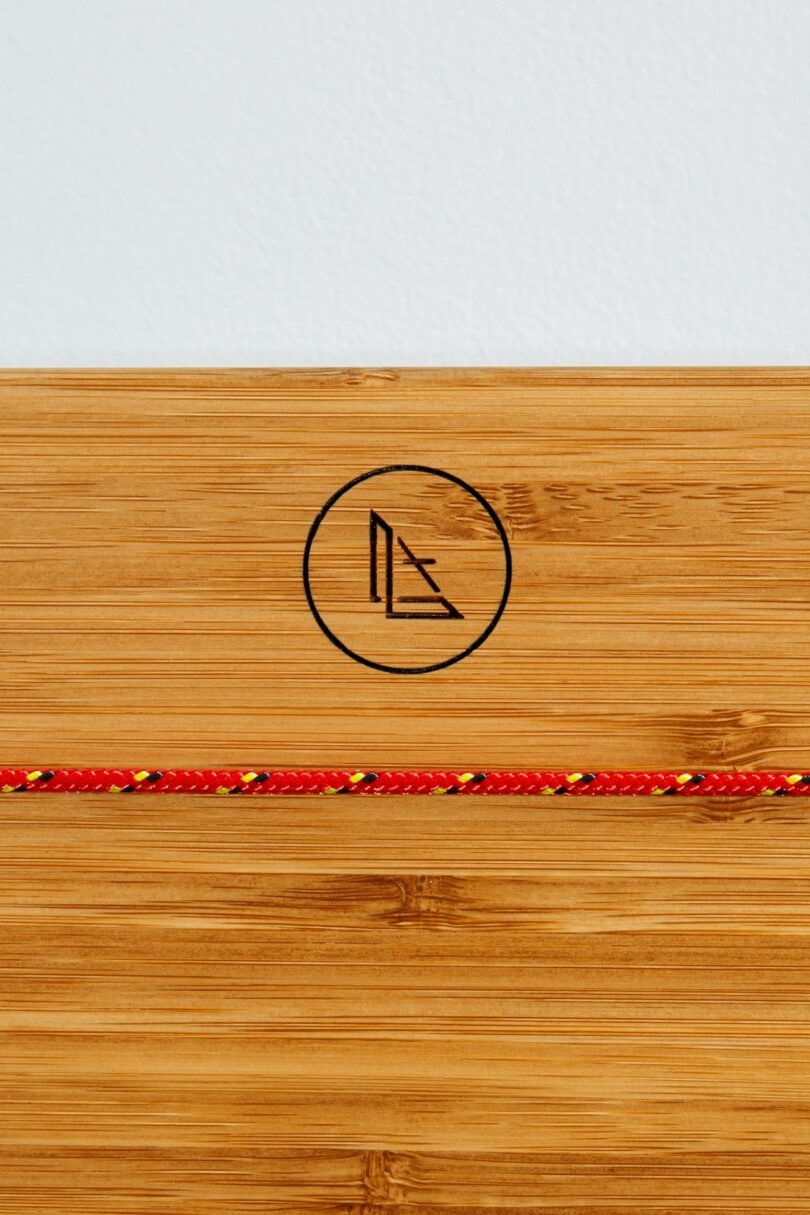
- FSC-Certified Bamboo: A sustainable, high-density material that provides a warm, biophilic touch to a tech-heavy setup.
- Dyneema® Cords: These 3mm cords are the secret to the desk's strength. Borrowed from the world of high-performance yachting, Dyneema® is technically stronger than steel but soft to the touch, providing the tension needed to hold the desktop steady.
- Alloy Clam Cleats: Precision-engineered hardware that allows for instant adjustments without the need for a toolbox.
Ergo-Innovation: From Sitting to Standing in Seconds
One of the most common questions I hear as an editor is: Is the Leandesk height adjustable? In a world where we alternate between deep-focus sitting and energy-boosting standing, a fixed-height desk feels like a relic. The Leandesk solves this using a maritime secret: the clam cleat system.
By utilizing the high-performance Dyneema® cords and alloy clam cleats, the desk surface can be shifted between sitting and standing heights in less than ten seconds. There are no motors to plug in, no jerky mechanical cranks, and no heavy lifting. It’s a smooth, manual transition that feels tactile and satisfying.
Despite its slender profile, the stability is remarkable. In testing, the desk has been shown to support up to 65kg without slippage. Whether you are leaning in for a video call or stacking multiple monitors, the non-slip rubber feet ensure the desk stays anchored to any surface, from hardwood to tile.
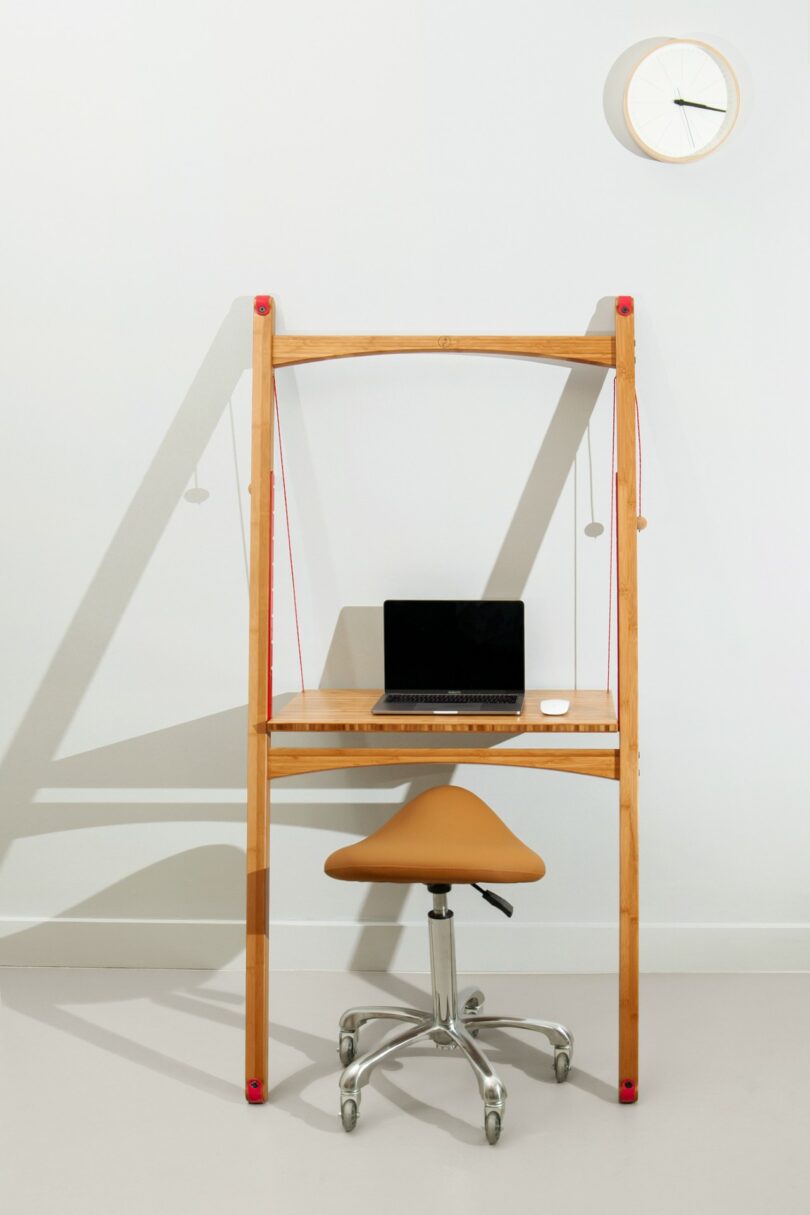
Ivy’s Pro-Tip: When transitioning to a standing position, ensure your elbows are at a 90-degree angle. The beauty of the Leandesk cord system is that you can micro-adjust to the exact millimeter, unlike pre-set holes in traditional standing desks.
2026 Home Office Trends: Aesthetic Meets Sustainability
As we look toward the design landscape of 2026, the "Home Office" is no longer a cubicle hidden in a spare room. It is a part of our living aesthetic. We are seeing a move toward Biophilic Design—incorporating natural textures like bamboo and wood to reduce cortisol levels and boost productivity.
The Leandesk fits perfectly into the "Multi-functional Hybrid" movement. It isn't just a desk; it's a wall-hung art piece. When folded, it has a depth of only 50mm. The minimalist tension lines and clean bamboo surfaces act as a visual palette cleanser, reducing the "visual noise" that often plagues small apartments. It turns a workspace into a wellness space by disappearing when it isn't needed.
| Feature | Traditional Modular Desk | Leandesk by Henry Swanzy |
|---|---|---|
| Mounting | Screws & Wall Anchors | Physics & Rubber Grips |
| Footprint | Permanent Floor Usage | Zero-Footprint (When Folded) |
| Adjustment | Fixed or Mechanical | Infinite Manual Adjustment |
| Renter-Friendly | Low (Leaves Holes) | High (Non-Marking) |
| Portability | Requires Disassembly | Ready in Minutes |
Setting Up Your Leandesk for Success
Setting up a Leandesk is more about finding your rhythm than following a manual. Because it’s a "ready-in-minutes" solution rather than a "flat-pack-puzzle," you can focus on the styling rather than the assembly.
- Find Your Angle: The ideal leaning angle is roughly 10-15 degrees. This ensures the physics of the rubber grips can work most effectively.
- Cable Management: Use the vertical frame to run your power cords. I recommend using minimalist felt cable ties to keep the silhouette clean.
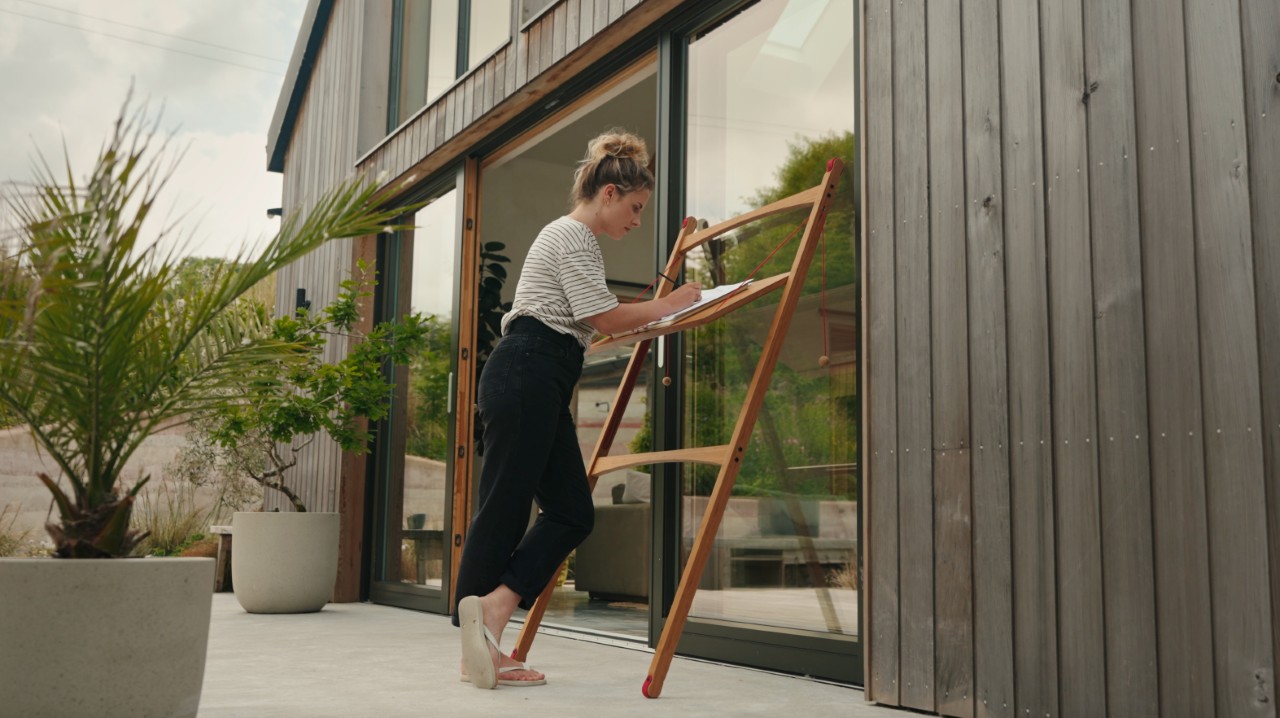
- Go Mobile: Don't limit yourself to the bedroom. One of the most underrated features of the Leandesk is its indoor/outdoor versatility. Because it's lightweight and requires no tools, you can easily carry it to a covered patio or balcony for a "work-from-fresh-air" afternoon.
FAQ
Q: Will it slide on polished floors? No. The Leandesk uses high-grade, non-marking rubber grips on both the wall-contact points and the feet. These are designed specifically to provide high-friction stability on everything from polished concrete to laminate and hardwood.
Q: How much weight can it actually hold? Despite its elegant looks, the engineering is robust. It is tested to hold up to 65kg (approx. 143 lbs). For context, a standard 27-inch iMac weighs about 9kg, meaning you have plenty of overhead for monitors, books, and coffee.
Q: Can I use it on a glass wall or window? Yes. Since it doesn't require screws, it can lean against any flat, sturdy vertical surface, including windows. This is a game-changer for those who want a desk with a view without blocking the light permanently.
Final Verdict
The Leandesk by Henry Swanzy isn't just a piece of furniture; it's a liberation strategy for the modern renter. It honors the reality of small-space living by refusing to take up more space than it gives back. By blending maritime strength with a minimalist aesthetic, it sets a new standard for what a home office should be in 2026: flexible, sustainable, and entirely hole-free.