In a world where "the office" is no longer a mandatory destination but a choice, a profound question has emerged for architects and interior designers alike: What actually draws people back into a shared workspace in 2026? As remote work remains a viable luxury, the corporate headquarters must evolve beyond rows of desks and sterile fluorescent lighting. It must become a "destination"—a cultural hub that fosters the kind of spontaneous collaboration and sensory inspiration that a home office simply cannot replicate.
This was the challenge facing designer Shimrit Mishan Abramovich when tasked with reimagining the new DHL Express HQ in Israel. Triggered by a 25% increase in staff during the pandemic to support a massive expansion in cargo operations, the logistics giant required a space that could house its growing family while reflecting its global identity. The result is a sprawling, 48,000-square-foot masterpiece that eschews corporate cliches in favor of a "Metropolis" concept—a miniature city where movement, texture, and light dictate the rhythm of the workday.
The 'Metropolis' Concept: Mapping Collaboration
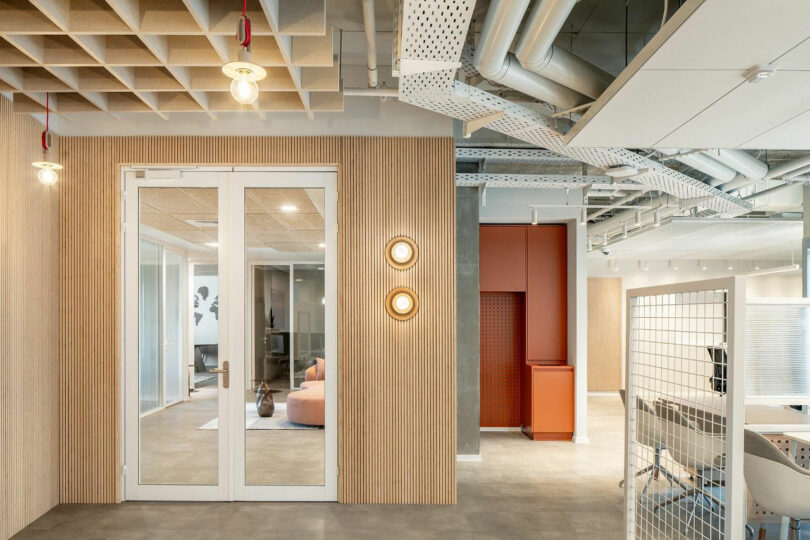
At the heart of the redesign is a radical shift in spatial philosophy. The previous office was a fragmented, perimeter-heavy layout that isolated departments and choked the flow of natural light. Abramovich’s "Metropolis" concept solved this by treating the floor plan like an urban grid.
The design is anchored by a "central artery"—a wide, primary corridor that mimics a city’s main boulevard. This artery connects various "neighborhoods" via secondary streets and narrow alleys, encouraging employees to move, cross paths, and engage in the kind of "incidental collaboration" that drives innovation.
- The Urban Grid: By moving enclosed offices away from the windows and toward the core, the design achieved a 100% improvement in visual access to daylight for central call center operators.
- Public Landmarks: Just as a city has town squares and monuments, the office features "Public Buildings" like "The Arena" (a tiered seating auditorium) and "The Square" (a central gathering hub) that act as navigational landmarks.
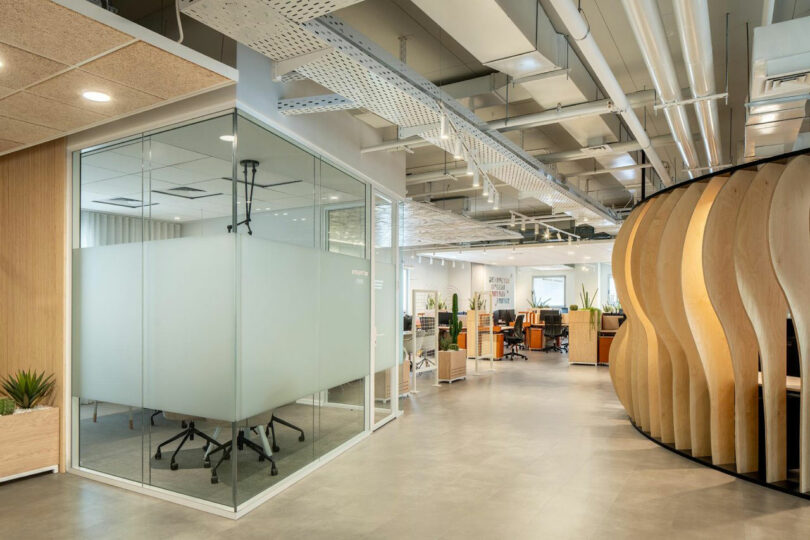
- Dynamic Flow: The use of curved glass partitions and rounded architectural lines ensures that movement through the office feels fluid rather than rigid, softening the industrial bones of the building.
Brand Identity Reimagined: Beyond Primary Colors
One of the most sophisticated aspects of this project is how it handles the DHL brand. In traditional corporate design, "branding" often means slapping primary colors—bright yellow and crimson red—on every available surface. Abramovich took a more nuanced, tactile approach, translating the DHL palette into high-end architectural materials.
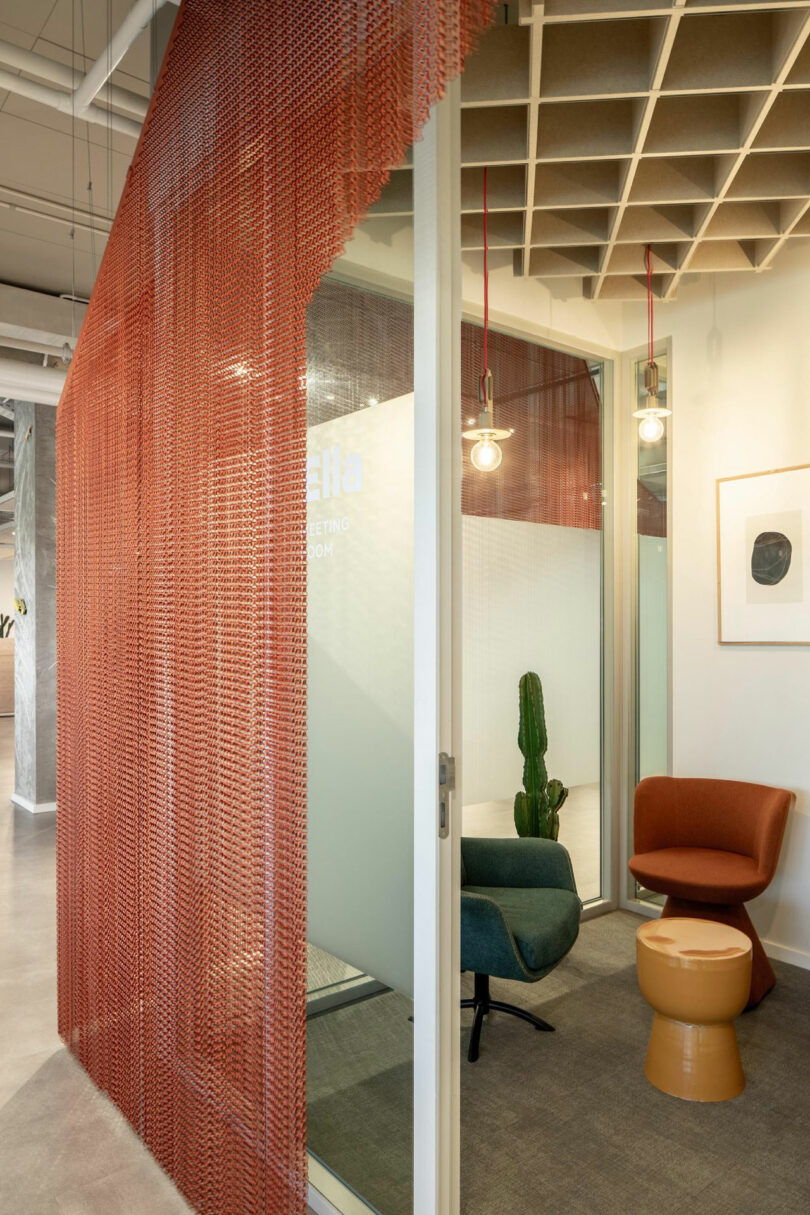
Instead of literal yellow paint, the designer utilized birch wood in various cuts and plates to provide a warm, golden glow that echoes the brand’s signature hue. The aggressive crimson red was substituted with rich terracotta tones and copper mesh, offering a grounded, earthier feel that feels modern and timeless.
Ivy’s Style Tip: When designing for a brand, look for the "soul" of the color rather than the hex code. Natural materials like wood, clay, and metal can represent a brand’s identity far more elegantly than synthetic pigments.
The materiality doesn't stop at wood and clay. The space is a masterclass in texture, featuring:
- Exposed Concrete: Honoring the building's industrial roots.
- Metal Mesh: Used as room dividers, reminiscent of a woman’s full skirt, adding a soft industrial touch.
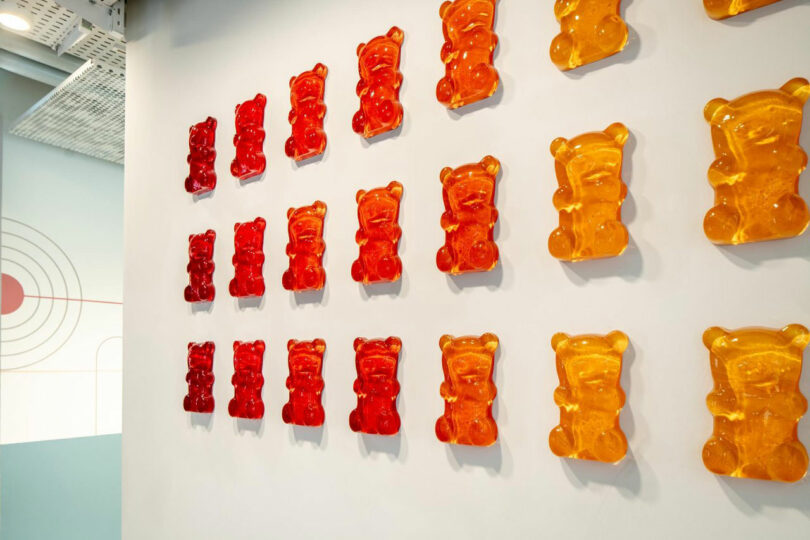
- Playful Accents: Amidst the sophistication, there are moments of levity. Mini DHL trucks and custom epoxy gummy bear wall art provide a whimsical nod to the company’s logistics nature and high-energy culture.
2026 Design Trends: Balancing Privacy and Proximity
As we look toward 2026, the hybrid workplace optimization trend focuses heavily on the "Workpoint"—a flexible station that supports various modes of work throughout the day. The DHL HQ addresses this through a careful balance of acoustic privacy and social proximity.
One of the standout features is the integration of "Mashrabiya" structures. Traditionally used in Middle Eastern architecture as latticework for privacy and climate control, these structures are reimagined here using mesh curtains and wooden frames. They provide semi-private zones that allow employees to focus without feeling isolated from the office's energy.
For more formal gatherings, "The Arena" provides a high-performance acoustic environment. This tiered space is perfect for all-hands meetings or presentations, utilizing sound-absorbing materials that ensure clarity without the "echo-chamber" effect common in large open offices.
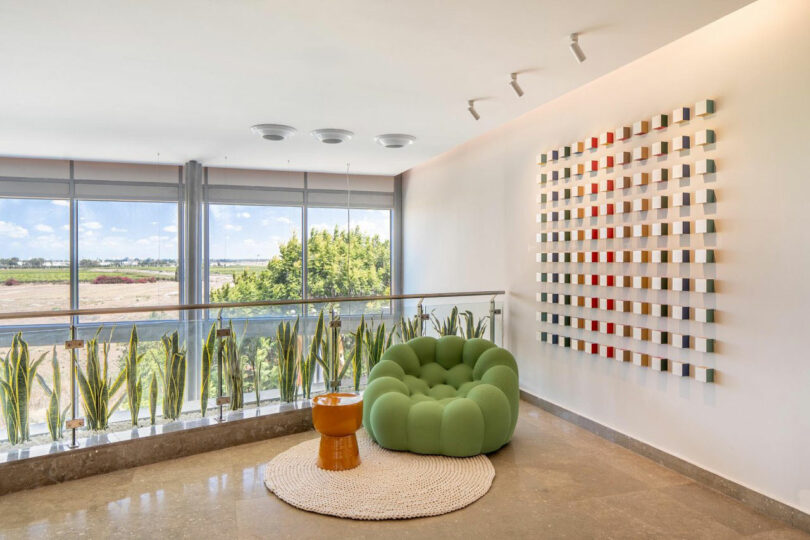
Biophilia also plays a starring role. By integrating hardy desert plants like cacti and ensuring every workspace is bathed in natural light, the design supports a documented 15% boost in employee well-being. It’s a design that recognizes humans aren't just workers; they are biological beings who thrive in organic environments.
Intelligent Environments and Sustainability
The DHL HQ is as smart as it is beautiful. In 2026, an "Intelligent Environment" is one where AI serves as a silent curator of comfort. The office features responsive lighting systems that adjust based on the time of day and the amount of natural sunlight entering the windows, reducing energy consumption while maintaining optimal lumens for productivity.
Sustainability was woven into the foundation of the project:
- Low-VOC Materials: Ensuring high indoor air quality for the hundreds of employees stationed here.
- LED Infrastructure: 100% of the office utilizes energy-saving LED fixtures integrated into the "metropolis" grid.
- Human-Centric Design: The layout accounts for neurodiversity, offering "quiet alleys" for those who need low-sensory environments and "vibrant squares" for social butterflies.
This inclusive approach ensures that the office isn't just a place to work, but a place where every individual feels they have a "home."
Conclusion: The Office as a Cultural Statement
The DHL Express HQ is a blueprint for the future of corporate design. By moving away from "cubicle farms" and toward a "metropolis" that prioritizes human movement, natural light, and sophisticated materiality, Shimrit Mishan Abramovich has created more than just a workspace. This is a cultural statement—a place that celebrates the brand's history while looking firmly toward a sustainable, inclusive, and collaborative future.
For the modern reader looking to refresh their own space, the lesson is clear: focus on flow, invest in natural textures, and never underestimate the power of a playful detail to make a large space feel like home.
FAQ
Q: How can I apply the 'Metropolis' concept to a smaller office? A: You don't need 48,000 square feet to use urban planning principles. Start by defining a "main street"—a clear path through your office—and create distinct zones for different "activities" (quiet work, social collaboration) rather than just rows of identical desks.
Q: What is the benefit of using terracotta and wood over traditional brand colors? A: Natural materials provide a psychological sense of calm and luxury. They age better than paint and plastic, and they allow brand identity to feel integrated into the architecture rather than applied as an afterthought.
Q: Why is 'visual access to daylight' so important in modern office design? A: Beyond aesthetics, daylight regulates our circadian rhythms, reduces eye strain, and significantly improves mood. In the DHL HQ, giving the call center operators (who spend the most time at their desks) the best light was a strategic move for employee retention and health.