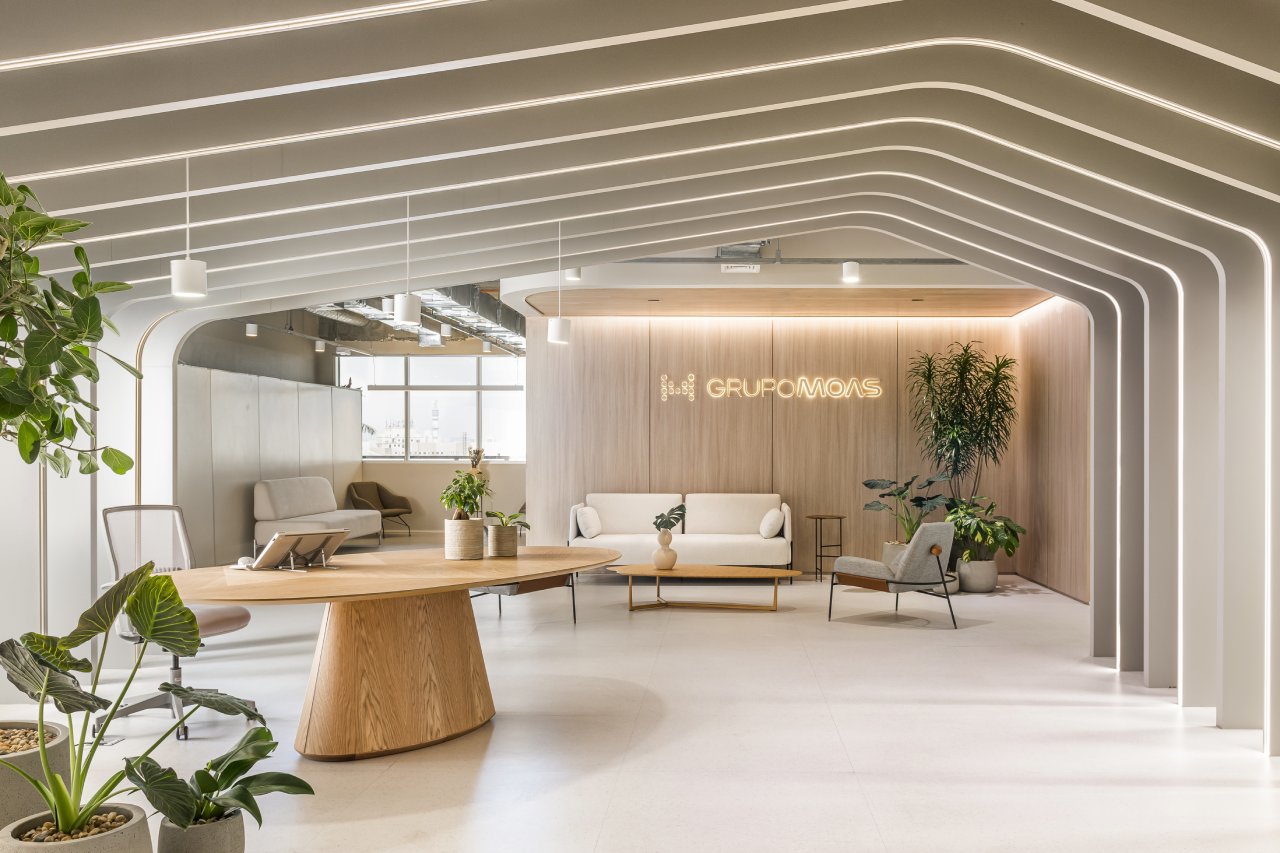
As we look toward the workplace landscape of 2026, the boundaries between professional efficiency and high-end retail experience are becoming increasingly blurred. The traditional office is no longer just a place to house desks; it has become a living, breathing manifestation of a brand’s soul. Nowhere is this evolution more evident than in the new Moas Group headquarters in São Paulo. Designed by the global architectural firm Perkins&Will, this 35,000-square-foot hub is a masterclass in "Workspitality"—a design philosophy that treats the office like a curated hospitality destination.
The challenge was significant: Moas Group needed to consolidate three distinct commercial brands—Buba, Buba Care, and Mart—into a single, cohesive headquarters. Perkins&Will met this challenge by creating a space that functions as both a high-performance office and a sophisticated showroom. By utilizing a neutral palette of beige, cream, and white, they created a canvas that allows the colorful, diverse merchandise of the brands to take center stage, while wood veneers and biophilic elements lend the space a warm, residential feel.
The Showroom Experience: Highlighting Brand Identity
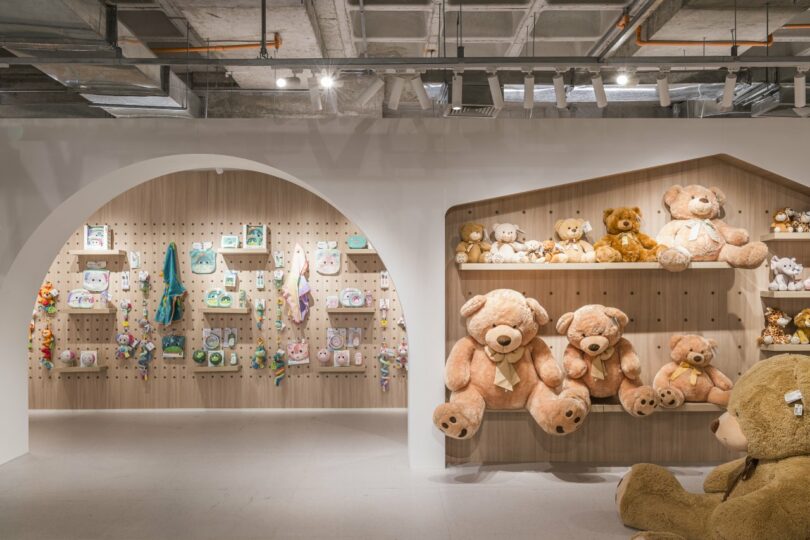
In modern interior styling, the concept of "retail theater" is moving into the corporate world. For Moas Group, the showroom isn't just a place to display products; it’s an immersive brand narrative. Because the group manages three very different brands—ranging from baby products to home decor—the architecture had to remain aesthetically flexible.
Perkins&Will opted for a strategy of "neutral elevation." By using vinyl terrazzo flooring and stone-look veneers, they achieved a high-end look that is durable enough for high-traffic showroom tours. The choice of materials provides a tactile quality that feels more like a luxury boutique than a distribution center.
How the Showroom Balances Diverse Brands:
- The Neutral Canvas: Off-white walls and light wood textures act as a silent backdrop, ensuring that the vibrant colors of Buba Care or the eclectic designs of Mart do not clash with the architecture.
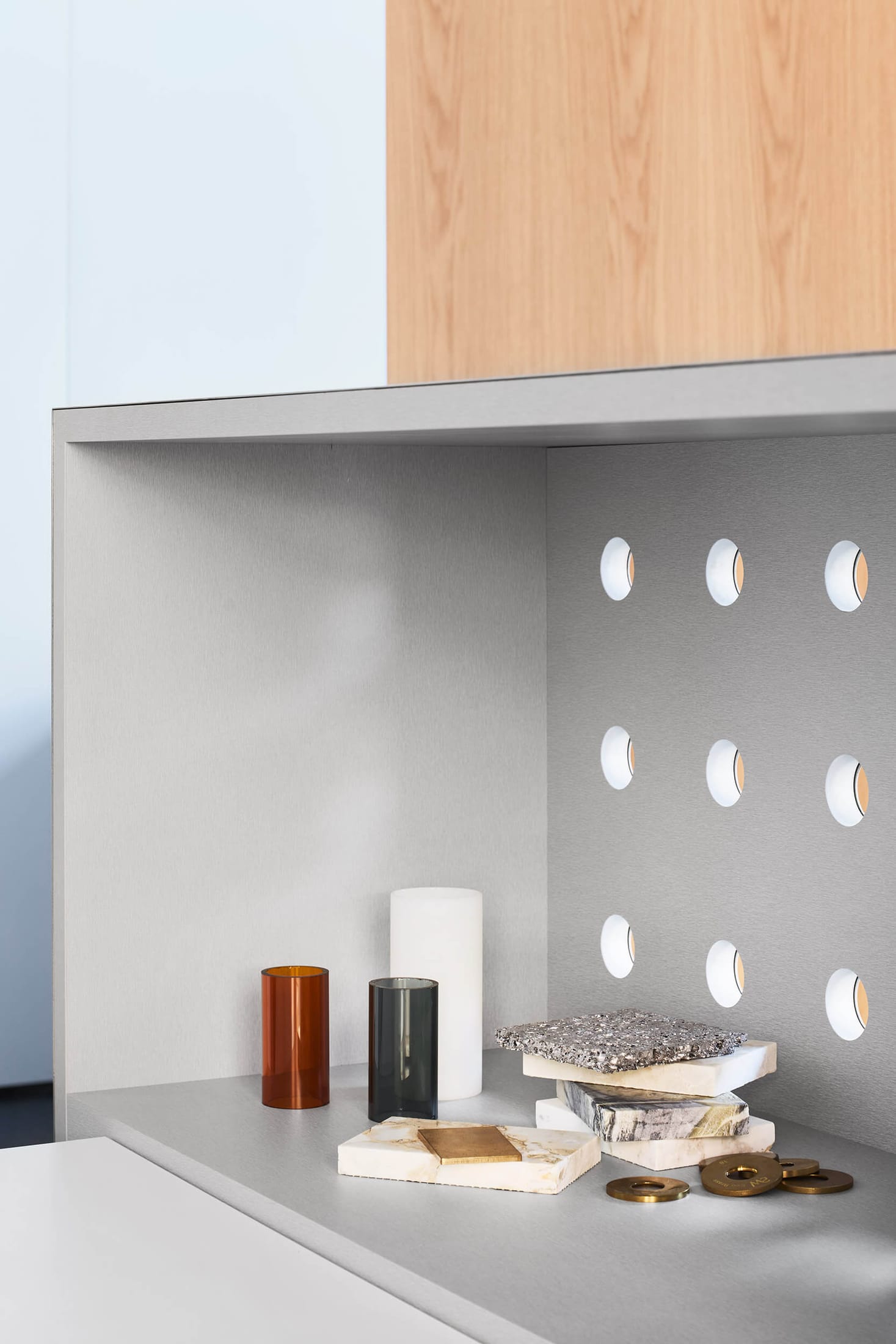
- Tactile Textures: The use of wooden pegboards and organic shelving systems allows for easy product rotation without compromising the design integrity.
- Integrated Lighting: Specialized track lighting highlights specific "hero" products, guiding the eye through the 35,000-square-foot layout.
2026 Workplace Trends in Action: 'Workspitality' and Community
The "Workspitality" trend is more than just a buzzword; it’s a response to the hybrid work era. If employees are expected to leave the comfort of their homes, the office must offer something superior to a home office. At Moas Group, this is achieved through social destinations that mimic high-end cafes and lounges.
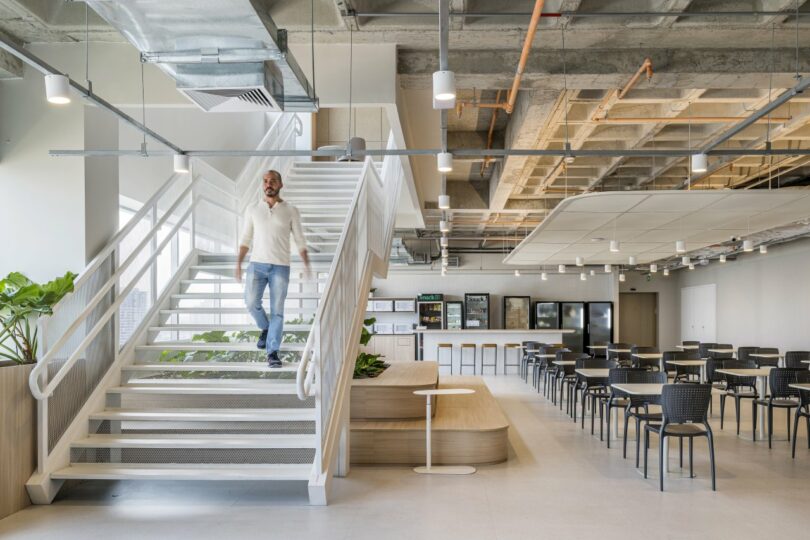
The heart of the project is the central café and dining area. Rather than hiding the breakroom in a corner, Perkins&Will placed it at the center of the floor plan, connected by a sculptural central staircase. This staircase serves as a social catalyst, encouraging "unplanned collisions"—those casual encounters between departments that spark innovation.
Expert Tip: To replicate the 'Workspitality' look at home or in a smaller office, focus on the "third space." Create a zone that isn't for deep work or sleeping, but for transition—a high-quality coffee station with comfortable soft seating and warm, low-level lighting.
Project Specifications at a Glance
| Feature | Details |
|---|---|
| Location | São Paulo, Brazil |
| Total Area | 35,000 Square Feet |
| Design Firm | Perkins&Will |
| Core Brands | Buba, Buba Care, Mart |
| Design Philosophy | Flat Hierarchy & Workspitality |
Breaking the Ceiling: Layout and Hierarchy
One of the most radical shifts in the Moas Group headquarters is the dismantling of traditional corporate hierarchy. In many Brazilian corporate designs, the "corner office" is a symbol of status, often isolated and inaccessible. Perkins&Will flipped this script.
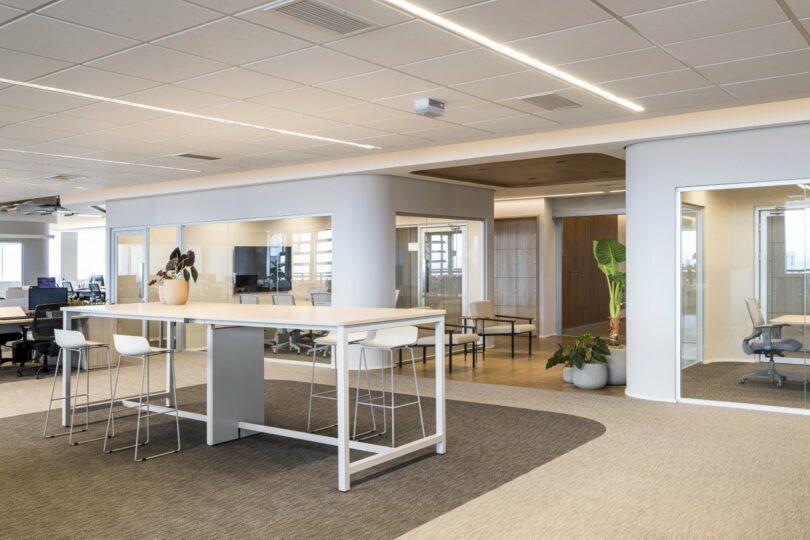
The architectural layout provides 360-degree views of the São Paulo skyline to everyone, not just the executives. By implementing a flat-hierarchy design, 100% of the executive corner offices serve a dual purpose: they are the directors' workspaces when needed, but they double as shared meeting rooms for the entire staff when the directors are out. This maximizes operational efficiency and fosters a culture of transparency.
Key Layout Innovations:
- Glass-Fronted Transparency: Conference rooms are encased in floor-to-ceiling glass, promoting a sense of openness and "visual democracy."
- Shared Amenities: Executive zones are interspersed with collaborative lounges, breaking down the physical barriers between leadership and staff.
- Acoustic Management: Despite the open feel, acoustic panels integrated into the ceiling and fabric finishes on walls ensure that the "airy" feel doesn't result in a noisy environment.
Biophilic Design and the São Paulo Skyline
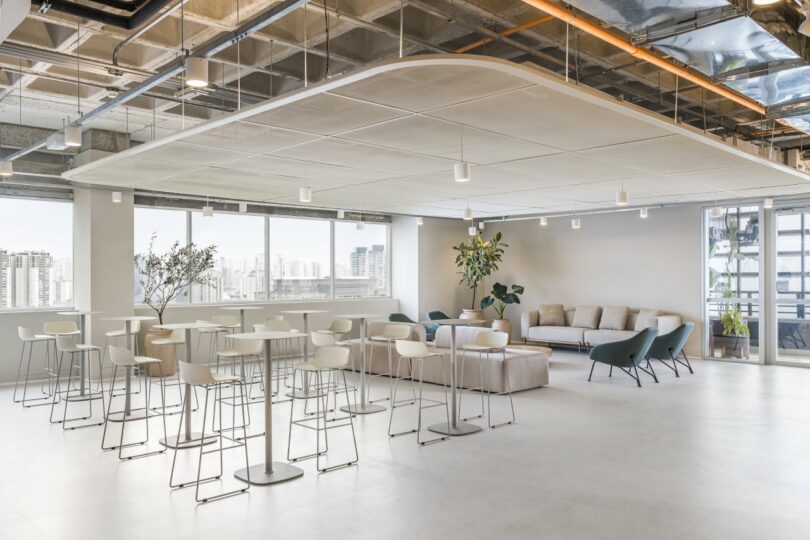
In a dense urban environment like São Paulo, the "grayness" of the city can be overwhelming. Perkins&Will mitigated this by bringing the outdoors in. The use of biophilic design—lush greenery, layered tree canopies, and natural light—serves as a psychological buffer for employees.
By utilizing strategic glazing, the design team ensured that the internal comfort of the office feels connected to the expansive urban view outside. The greenery isn't just decorative; it’s integrated into the furniture and the architecture. Large planters act as natural room dividers, while the presence of wood veneers across the floors and walls improves employee wellbeing and reduces stress levels.
This connection to nature is a cornerstone of 2026 design trends. We are seeing a move away from "sterile" modernism toward "organic" modernism, where the health of the inhabitant is as important as the aesthetics of the furniture.
Flexible Foundations: Modular Systems for Future Growth
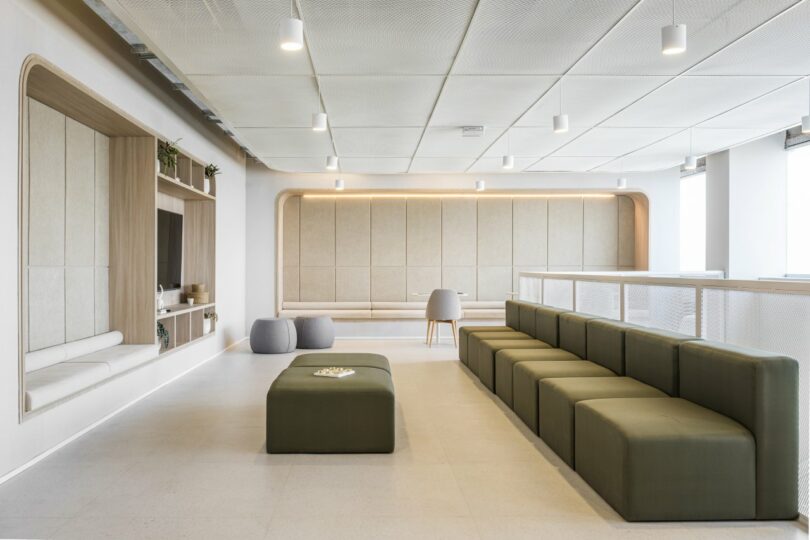
The final piece of the Moas Group puzzle is adaptability. A company that has thrived for 20 years knows that growth is the only constant. To accommodate this, the workspace was built on a foundation of modular furniture and mobile soft seating.
Instead of fixed cubicles, the office utilizes smart zoning. Areas are defined by rugs, lighting shifts, or modular shelving rather than permanent walls. This allows for rapid reconfiguration as team sizes fluctuate or as the group introduces new product lines.
The Benefits of Modular Furniture:
- Scalability: Teams can expand or shrink their footprint without needing a contractor.
- Versatility: A lounge can become a brainstorming session in minutes simply by moving the mobile ottomans and whiteboards.
- Longevity: High-quality modular pieces are an investment that moves with the company, reducing the waste associated with traditional office fit-outs.
Conclusion: The Office as a Brand Narrative
The Perkins&Will design for Moas Group is a testament to the power of integrated design. By merging three brands under one roof, they didn't just save on square footage; they created a powerhouse of cultural and operational synergy.
From the "Workspitality" of the central café to the transparent, flat hierarchy of the glass-walled offices, every square inch of this 35,000-square-foot space celebrates the group's 20-year success. It serves as a reminder that the office is not just a place where work happens—it is an irreplaceable hub for culture, innovation, and brand pride. As we look toward 2026, this project stands as a blueprint for how companies can evolve their physical spaces to meet the needs of a modern, hybrid, and highly sophisticated workforce.
FAQ
1. What is 'Workspitality' and why is it important in the Moas Group design? 'Workspitality' is the blend of workplace functionality with hospitality-inspired amenities. In the Moas Group hub, this is seen in the central café, lounge-like meeting areas, and the use of "homey" materials like wood and terrazzo. It’s important because it creates a destination where employees want to be, fostering community and culture.
2. How does the flat-hierarchy layout benefit the company? By making executive offices dual-purpose (serving as meeting rooms when vacant) and using glass walls for transparency, the company breaks down corporate silos. It maximizes the use of space (operational efficiency) and ensures all employees have access to natural light and the best views of the city.
3. Why did Perkins&Will choose a neutral palette for the showroom? The neutral palette (beige, cream, white) acts as a "blank canvas." Because Moas Group represents three brands with very different color identities—Buba, Buba Care, and Mart—a neutral background ensures that the merchandise remains the focal point and doesn't clash with the interior design.