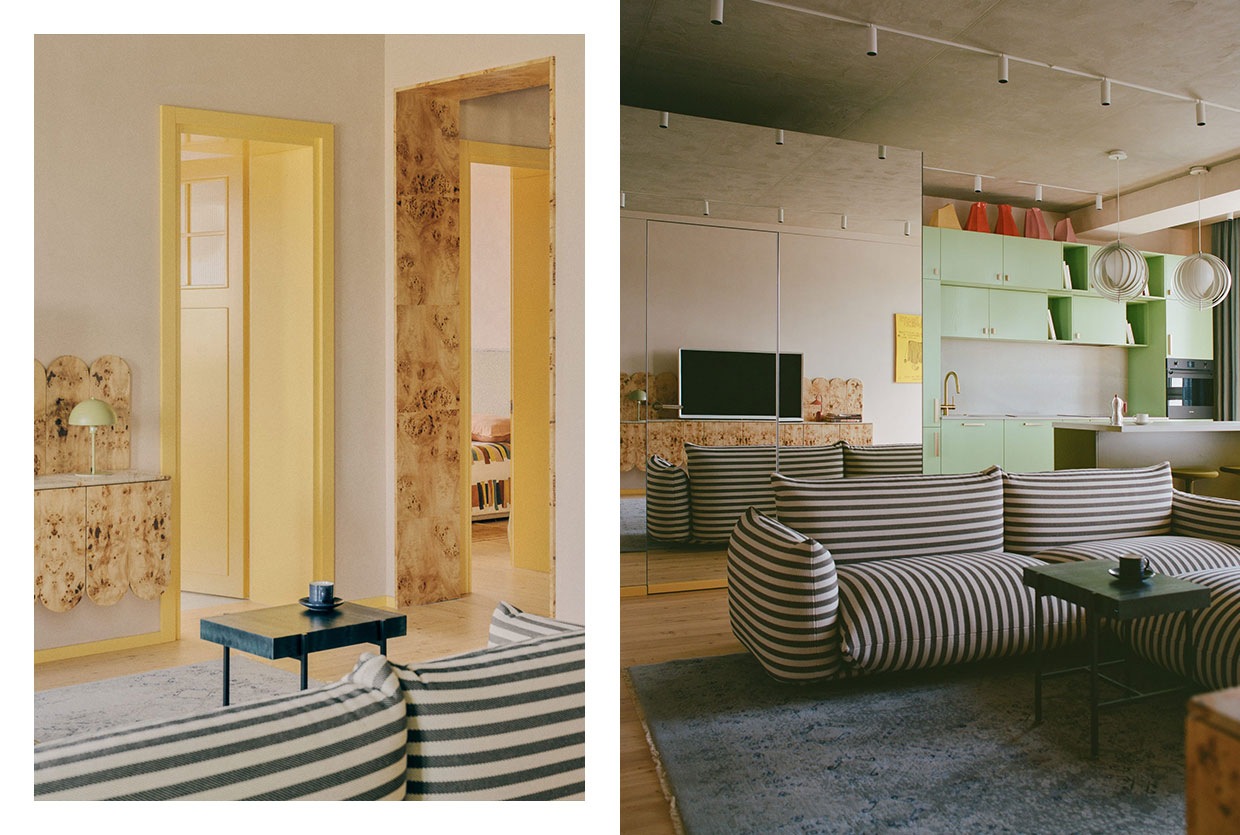
Standing at the threshold of a converted shoe factory in Shoreditch, one is immediately struck by the sheer volume of the space. It isn’t just about the square footage; it’s about how that volume is curated to serve a dual purpose. As we look toward 2026, the concept of the "Multidisciplinary Home" has evolved from a pandemic-era necessity into a sophisticated design standard. For the modern professional, a 100sqm loft represents the "sweet spot"—large enough to house a high-performance studio, yet intimate enough to remain a sanctuary for rest.
The challenge, of course, lies in the balance. How do you prevent your living room from feeling like a corporate lobby, or your office from feeling like an afterthought in the corner of a bedroom? The answer lies in architectural intentionality and the seamless integration of industrial soul with domestic warmth.
The 'Zoned Open Concept': Defining 100sqm without Walls
In an open-plan loft, the traditional instinct is to build walls to create privacy. However, in 2026, we are moving toward a zoned open concept that prioritizes flow and light.
How can I define zones in a 100sqm open-plan loft? The most effective method is to use architectural joinery, such as custom oak shelving, double-sided cabinetry, or concrete sideboards. These elements act as "soft" anchors that separate work from leisure without blocking sightlines or the natural path of light. By using furniture and structural joinery as dividers, you maintain the "loft feel" while providing clear psychological boundaries between your professional and personal life.
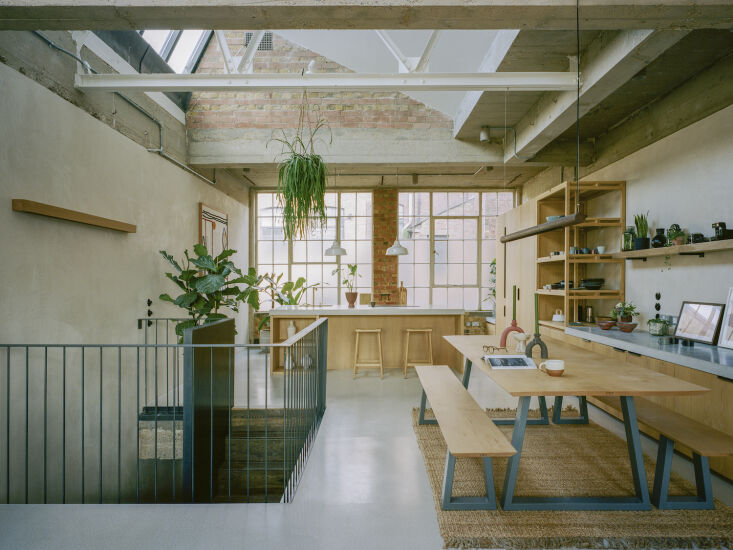
Implementing 'semi-open' transitions adds architectural depth. Consider a floor-to-ceiling slatted timber screen or a change in floor material—perhaps transitioning from polished concrete in the workspace to a plush, oversized rug in the lounge. This creates a visual "threshold" that signals a change in the room’s function.
Technical Foundations: Heights, Routes, and Regulations
When designing a productive environment, the "vibe" is secondary to the technical performance of the space. To avoid the fatigue often associated with home offices, you must consider the atmospheric health of the room.
What is the ideal ceiling height for a productive 100sqm workspace? For a space of this size, a minimum height of 2.75 meters is required for adequate air circulation. However, I highly recommend aiming for 3.0 meters. This extra verticality significantly enhances acoustics and air quality, especially in high-occupancy zones where you might host clients or collaborators.
Furthermore, movement within the loft must be fluid. Modern 100sqm live-work conversions require main traffic routes of at least 0.9 meters in width. This isn't just a comfort metric; it’s a functional requirement to effectively accommodate hybrid teams of up to five people. If your paths are too narrow, the space feels cluttered and frantic, which kills productivity.
Ivy’s Insider Tip: In high-ceilinged industrial lofts, echo is the enemy of the Zoom call. Use "slubby" textiles—heavy linens, boucle, and velvet—alongside clay-plastered walls to naturally dampen sound without the need for ugly acoustic foam.
The High-Performance Work Zone: The 16% Rule
One of the most common mistakes in loft design is underestimating the amount of space needed for professional output. In high-performance 100sqm layouts, dedicating approximately 16% of floor space (roughly 16sqm) to a dedicated meeting or presentation zone is the golden rule.
This 16% isn't just a desk in the corner. It is a "hybrid-ready" environment equipped with:
- Integrated video-call lighting: Dimmable, high-CRI LEDs recessed into joinery to eliminate harsh shadows.
- Collaborative seating: A small round table or a modular sofa section that allows for face-to-face brainstorming.
- Acoustic privacy: Perhaps a heavy felt curtain that can be drawn to enclose the area during high-stakes calls.
By allocating this specific percentage, you ensure that your professional life has a "home" that feels legitimate and separate from your dining table.
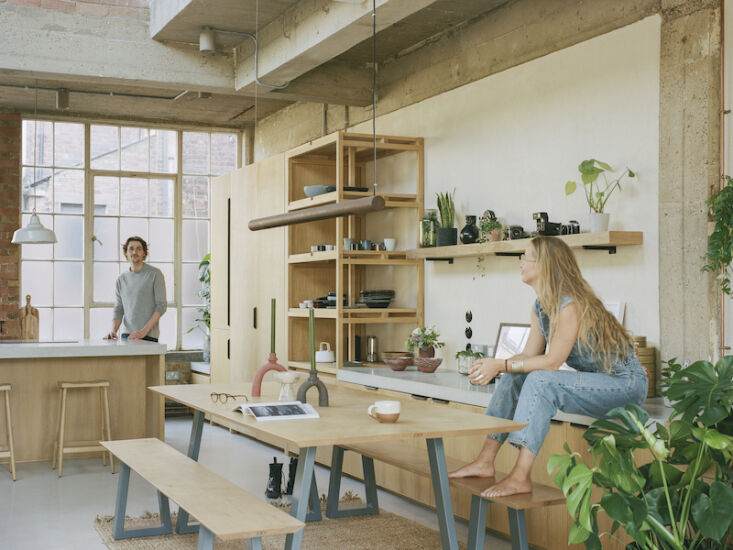
Materiality & Aesthetics: Natural Materials meet Industrial Soul
The aesthetic of 2026 is what I call "Warm Industrial." We are moving away from the cold, sterile steel and grey palettes of the past decade. Instead, we are embracing grounded hues and tactile surfaces that foster a "Calm and Productive" atmosphere.
| Material | Application | Design Impact |
|---|---|---|
| Warm Oak | Custom Joinery & Desks | Adds organic warmth and "homeliness" to industrial shells. |
| Raw Concrete | Flooring or Ceilings | Maintains the warehouse heritage and provides thermal mass. |
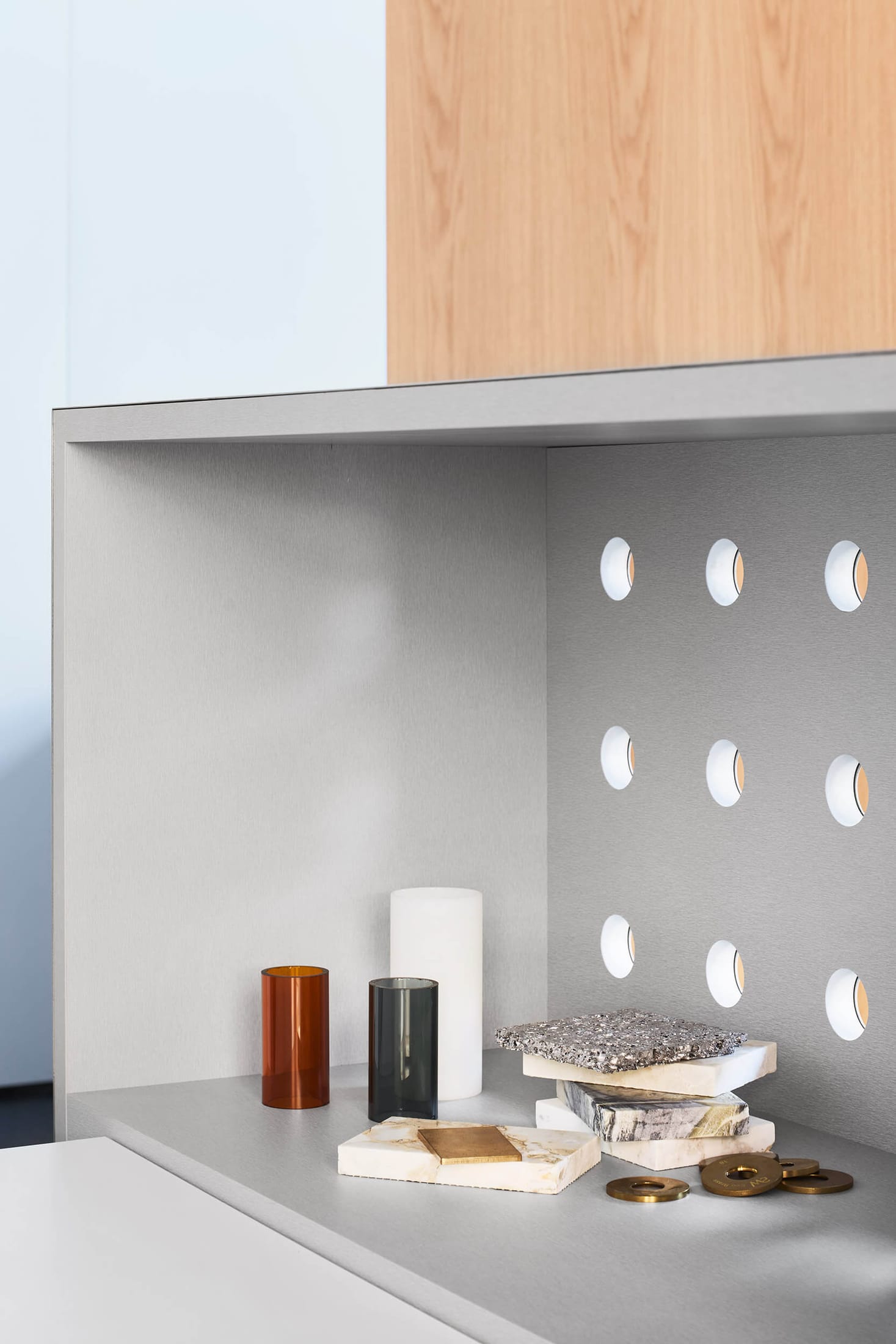
| Brushed Bronze | Hardware & Lighting | A softer, more sophisticated alternative to matte black steel. |
| Clay Plaster | Feature Walls | Provides natural texture and excellent acoustic properties. |
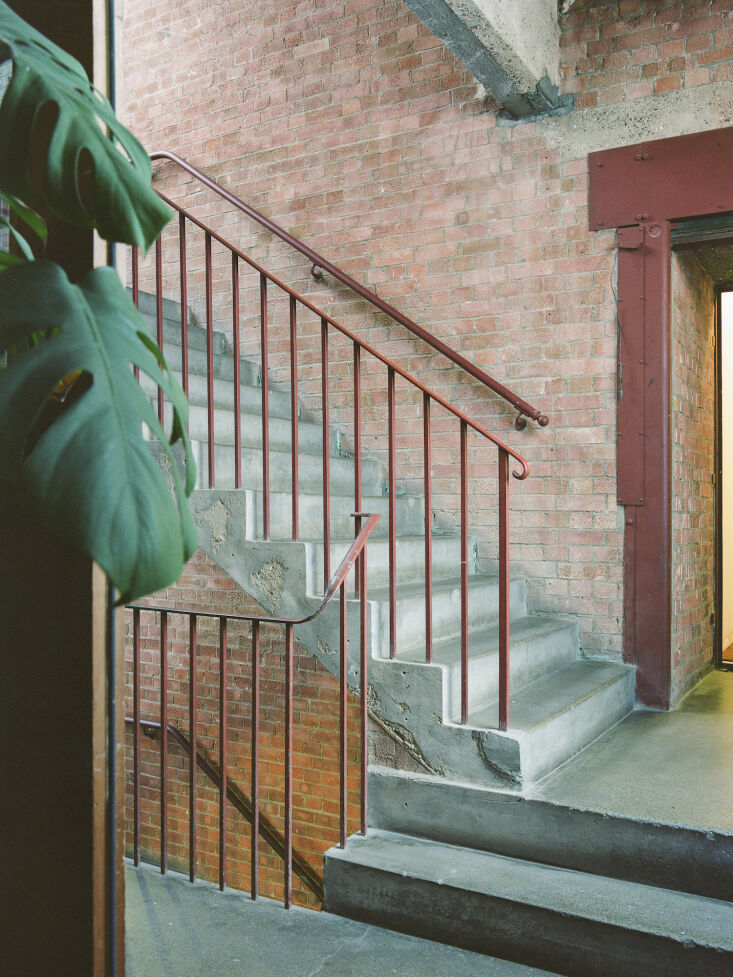
The goal is to restore the warehouse character—exposed brickwork, steel window frames—while layering in materials that feel soft to the touch. This juxtaposition is what makes a loft feel like a residence rather than a factory.
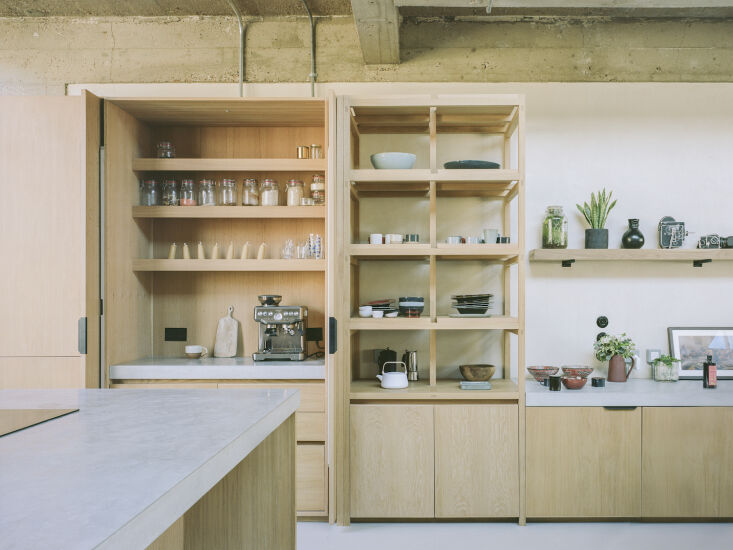
The Art of the 'Disappear': Storage and Ritual
Clutter is the ultimate productivity killer. In a 100sqm space where you work and sleep, seeing your printer, cables, and half-finished files while you’re trying to enjoy a glass of wine in the evening can lead to "workspace creep."
How do I maintain a clutter-free live-work environment? The most sophisticated solution is to implement concealed storage where office equipment can "disappear" during evening hours. Use custom cabinetry with pocket doors that slide back to reveal a full workstation during the day and close to create a flush, minimalist wall at night. This allows the loft to transition from a high-energy studio to a relaxing social area in a matter of seconds.
Custom joinery serves as a spatial anchor, particularly along the southern elevation where light is most consistent. By building storage into the architecture itself, you free up the floor place, making the 100sqm feel significantly larger.
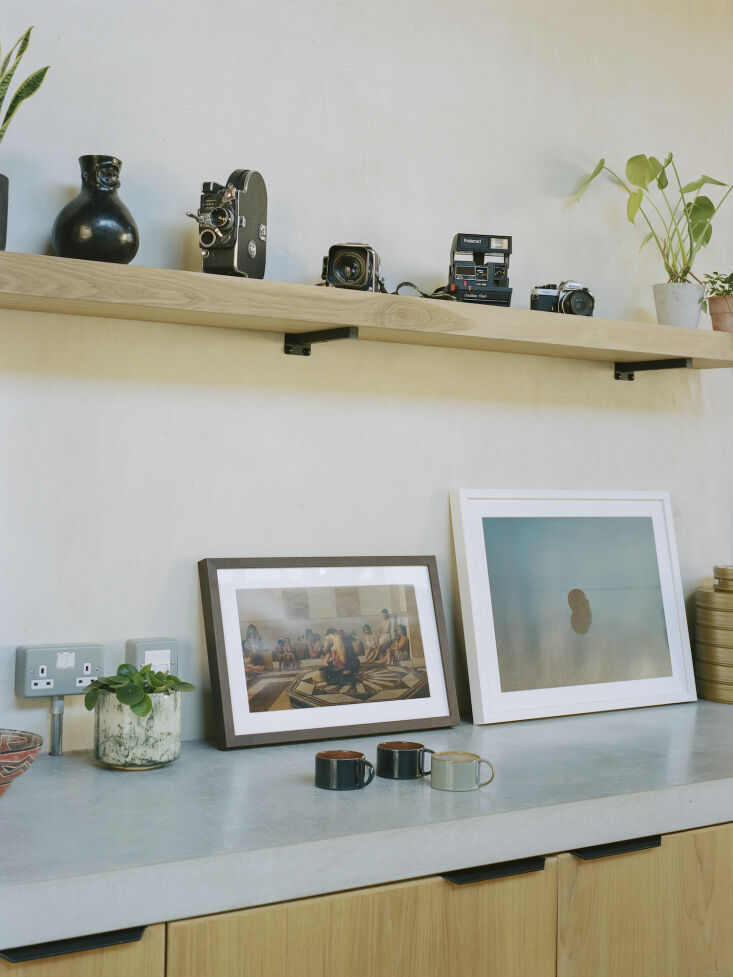
Right-Sizing for the Future: Quality Over Quantity
As we look toward the lifestyle of 2026, the 100sqm loft has emerged as the ideal footprint for the hybrid professional. It forces a "quality over quantity" mindset. Every piece of furniture must earn its place. Every zone must have a purpose.
To truly master this layout, consider a "Split-Zone" design. This involves placing high-traffic work zones (and guest entries) near the front of the loft, while keeping the "rest zones"—the primary bedroom and ensuite—tucked away at the rear or on a mezzanine level. This physical separation is crucial for long-term mental well-being in a live-work environment.
Design Snapshot: The 60/20/15/5 Zoning Rule
- 60% Living & Social: Kitchen, lounge, and dining areas.
- 20% High-Performance Work: Dedicated studio or meeting zone.
- 15% Private Sanctuary: Bedroom and bathroom.
- 5% Transition/Storage: Entryway and concealed utility.
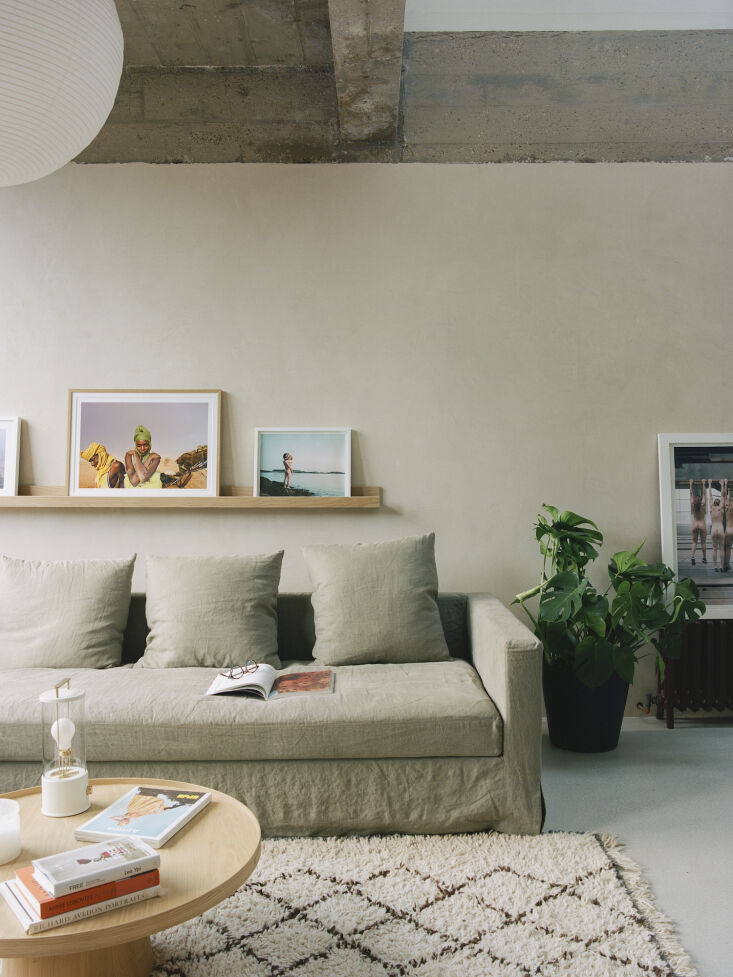
Designing a 100sqm loft in 2026 isn't just about interior decoration; it’s about life-mapping. By prioritizing ceiling height, intelligent zoning, and the "art of the disappear," you create a space that doesn't just house your work, but actively inspires it—all while remaining the sanctuary you deserve at the end of the day.
FAQ
Can I achieve this look in a rental loft? Absolutely. While custom joinery is ideal, you can use modular shelving units (like the Vitsoe 606 or USM Haller) to create the same "zoned open concept" without permanent structural changes. Large area rugs and freestanding screens also work wonders for defining zones.
What is the best lighting setup for a live-work loft? Always aim for layers. Use "Cool White" (approx. 4000K) for your task lighting in the work zone to maintain focus, but ensure your ambient lighting (pendants and floor lamps) is "Warm White" (2700K) to create a cozy atmosphere in the evenings.
How do I handle guests in a 100sqm live-work space? Focus on the "Split-Zone" layout. Keep your workspace organized and use the "disappearing" cabinetry trick mentioned above. If your work is hidden away, your guests will feel they are in a home, not an office.