Our Top Picks
- Best Example of Adaptive Reuse: The Lo & Behold Group Headquarters sets a new benchmark for Singapore, proving that 1970s Brutalist architecture can be softened into a vibrant, functional office without losing its historic soul.
- Most Innovative Workspace Feature: The "Standing Desk" window ledges—a brilliant way to utilize the original library's deep-set geometry for 21st-century ergonomic health.
- Top Interior Palette: The pairing of "burnt red" timber with original concrete creates an immediate sense of sophisticated warmth that feels more like a boutique hotel than a traditional corporate HQ.
Introduction: The New Bahru Transformation
In the heart of Singapore’s River Valley, a mid-century icon is finding its second act. The former Nan Chiau Girls’ High School—and more recently, a public library—has been reimagined as New Bahru, a creative cluster that feels like a breath of fresh air in the city's sleek skyline. At the crown of this transformation lies the new headquarters for The Lo & Behold Group, the hospitality visionaries behind some of Singapore's most beloved venues like Odette and Tanjong Beach Club.
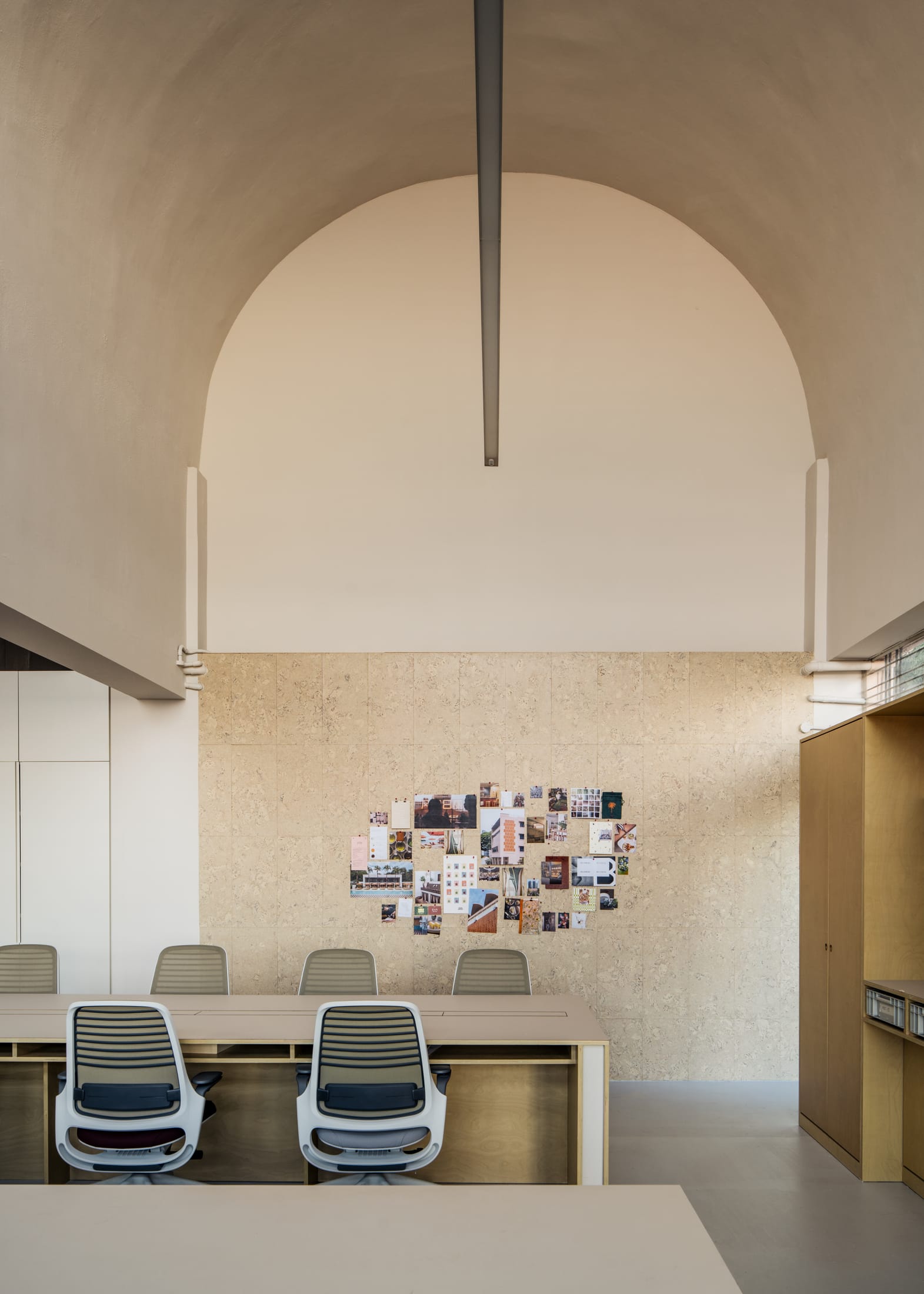
Spanning 485 square metres, this isn't your standard office fit-out. Tasked with turning a rigid, 50-year-old Brutalist library into a dynamic workspace, London-based Nice Projects had a mountain to climb. The result? A masterclass in balance. By integrating the original 1970s concrete vaults with 21st-century design needs, they have created a space that respects its monumental past while looking firmly toward the future. It’s a design that proves you don’t need to demolish history to build a modern empire.
Respecting the Vaults: The Architectural Challenge
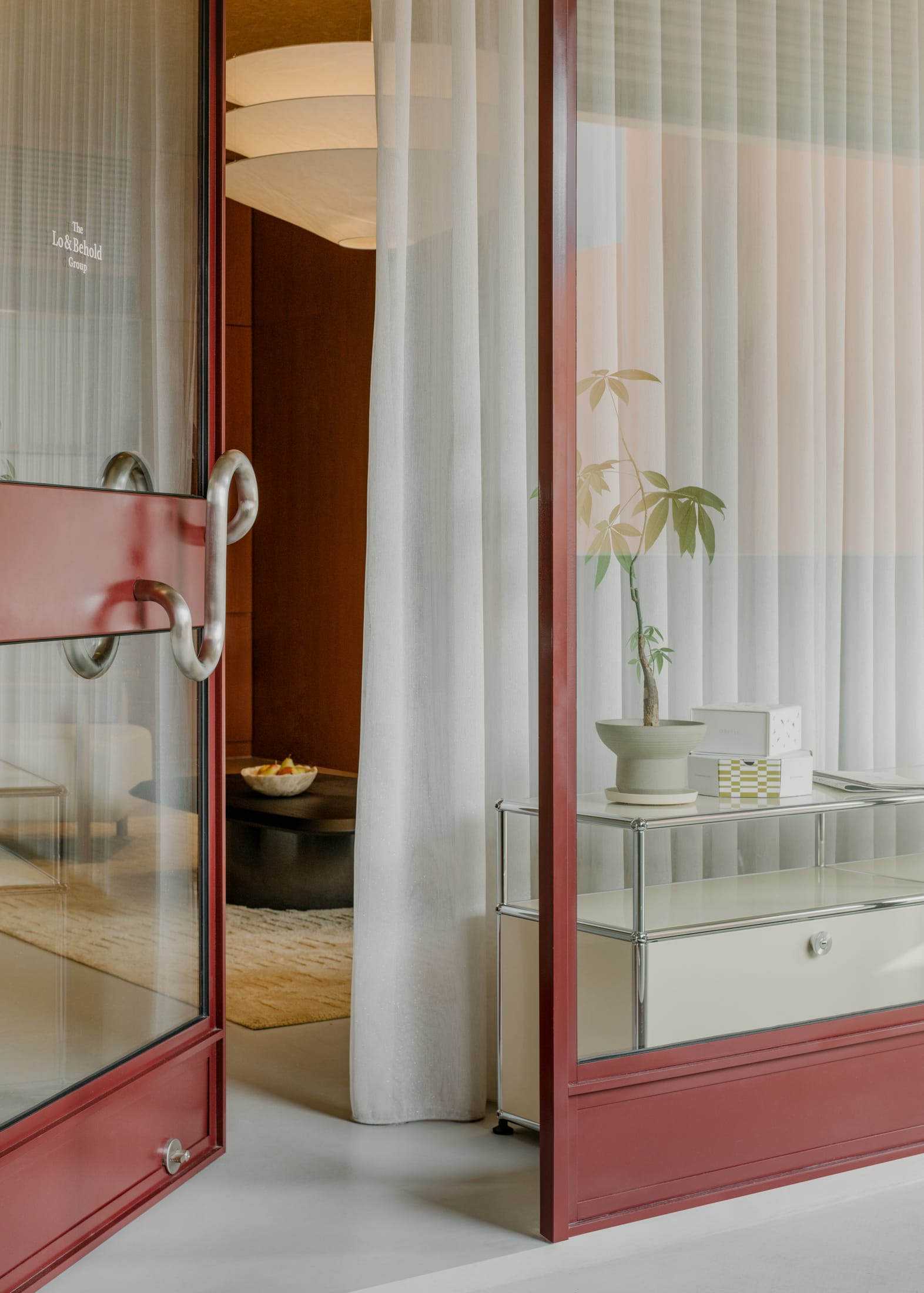
Brutalist architecture, by its very nature, is uncompromising. The original library was defined by heavy concrete shells and a repetitive, rigid geometry that could easily feel oppressive in a workspace setting. For Nice Projects, the mission was clear: preserve the structural integrity of these mid-century vaults without letting them dictate a cold or uninviting atmosphere.
The challenge wasn't just aesthetic; it was structural. How do you integrate modern HVAC systems, lighting, and collaborative zones into a building that was never designed for them? The designers chose a path of "negotiated intervention." Instead of fighting the concrete, they used it as a frame. The workstations and meeting rooms are tucked neatly within the existing shell, ensuring that the 50-year-old architecture remains the star of the show. By avoiding major structural demolition, the project also stands as a win for sustainability, significantly reducing the carbon footprint compared to a traditional "gut and rebuild" approach.
Materiality and Warmth: Softening the Concrete
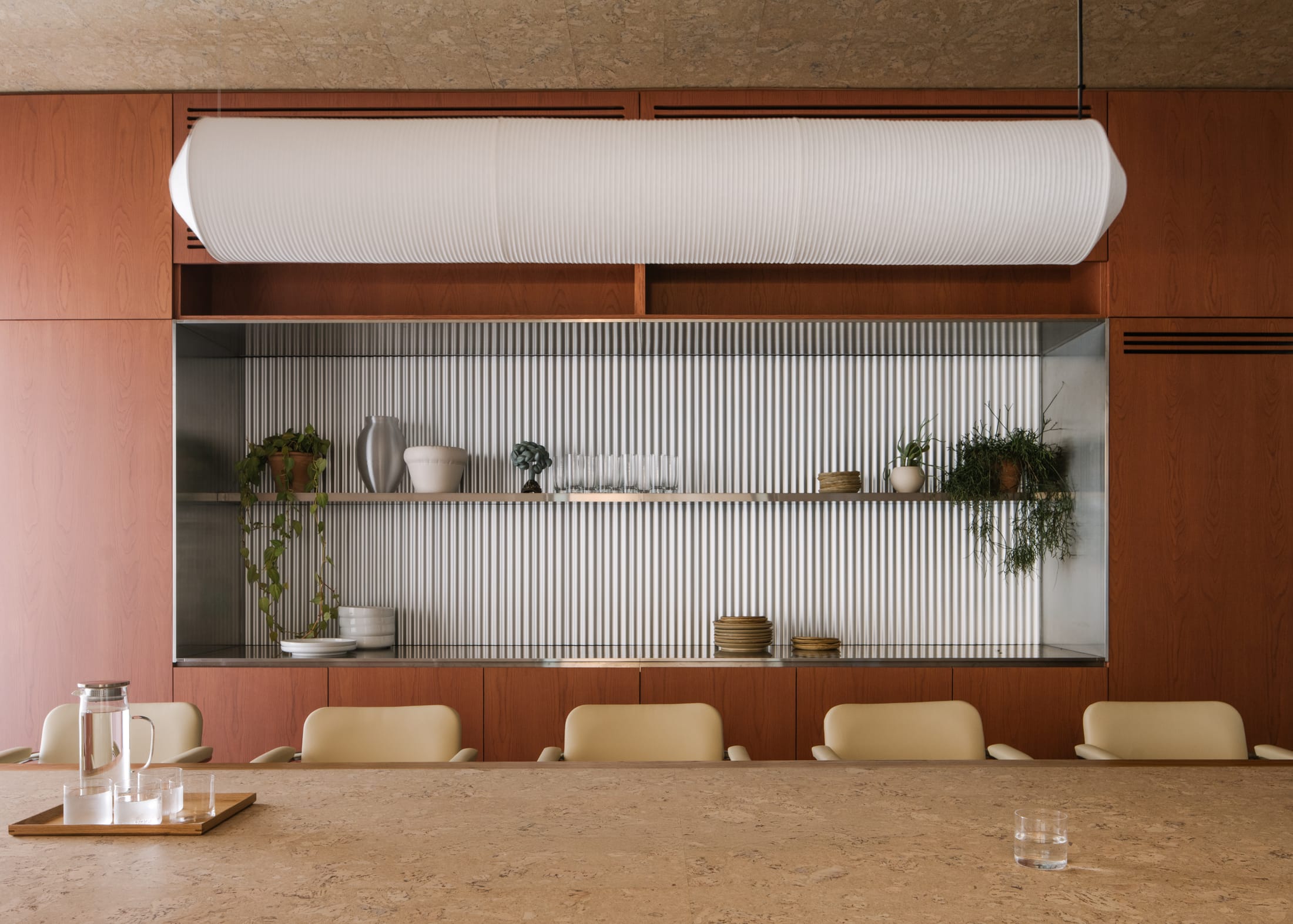
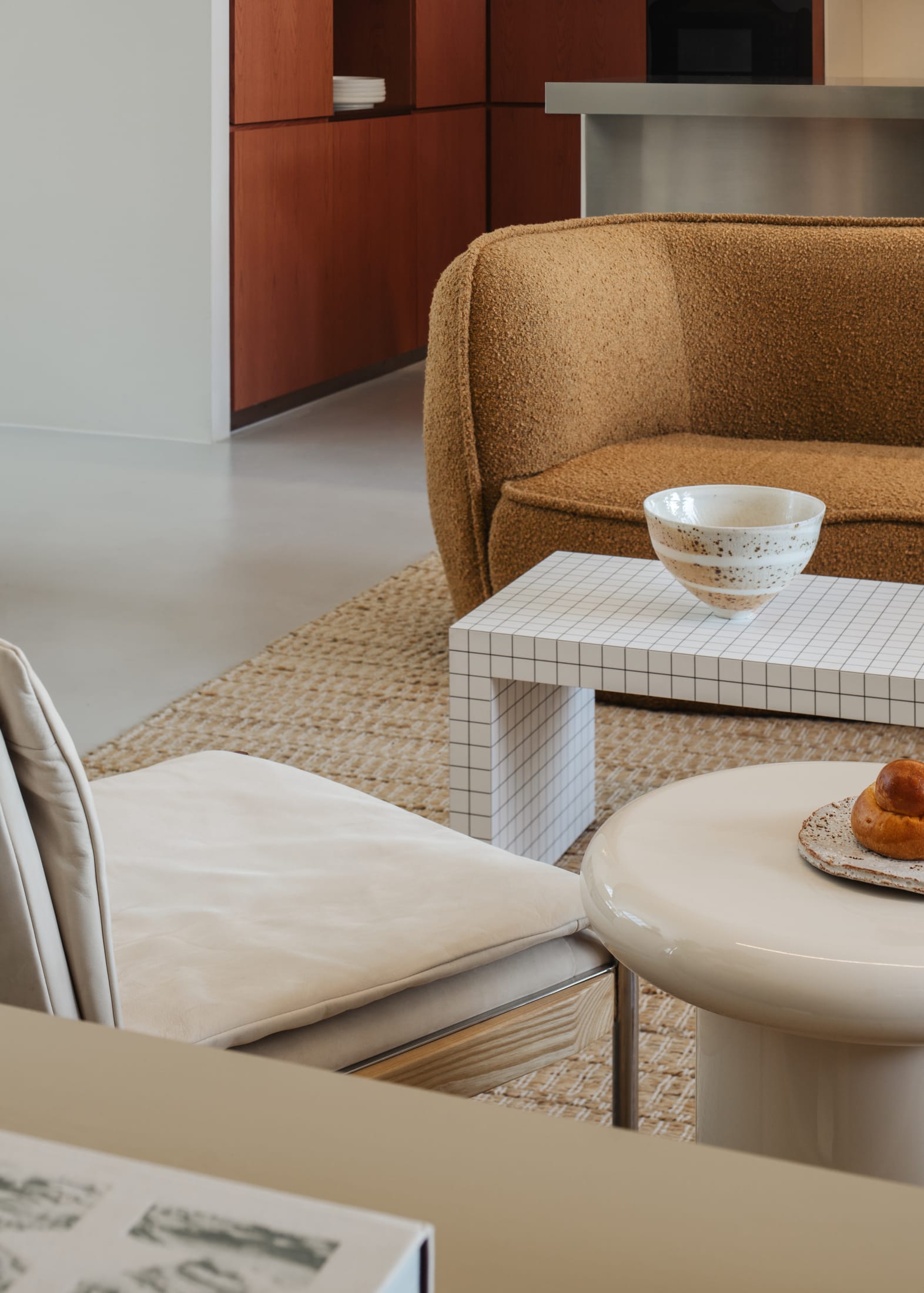
Walking into the Lo & Behold headquarters, the first thing you notice isn't the gray concrete—it’s the warmth. To counter the inherent "coldness" of Brutalism, the designers curated a palette that feels earthy and grounded. The hero material here is the burnt red timber, which weaves through the kitchen and communal areas like a steady heartbeat.
But it’s the smaller details that truly elevate the space. Consider the use of:
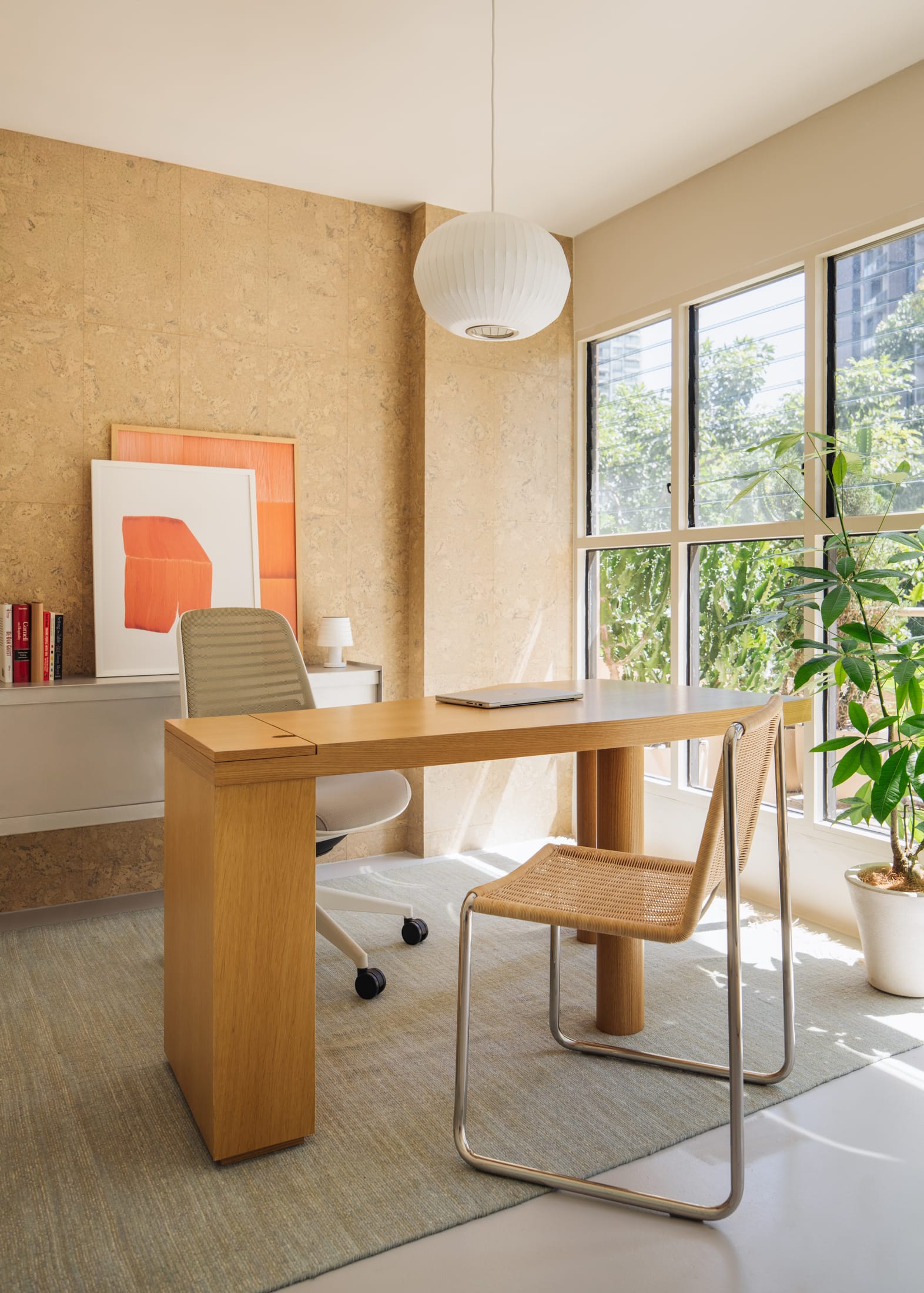
- Forbo Linoleum Tops: Applied to custom-built desks, these provide a tactile, soft-touch surface that feels organic underhand.
- Cork Walls: These aren't just for pinning up mood boards; they serve as essential acoustic insulation, absorbing the echoes that usually plague concrete-heavy interiors.
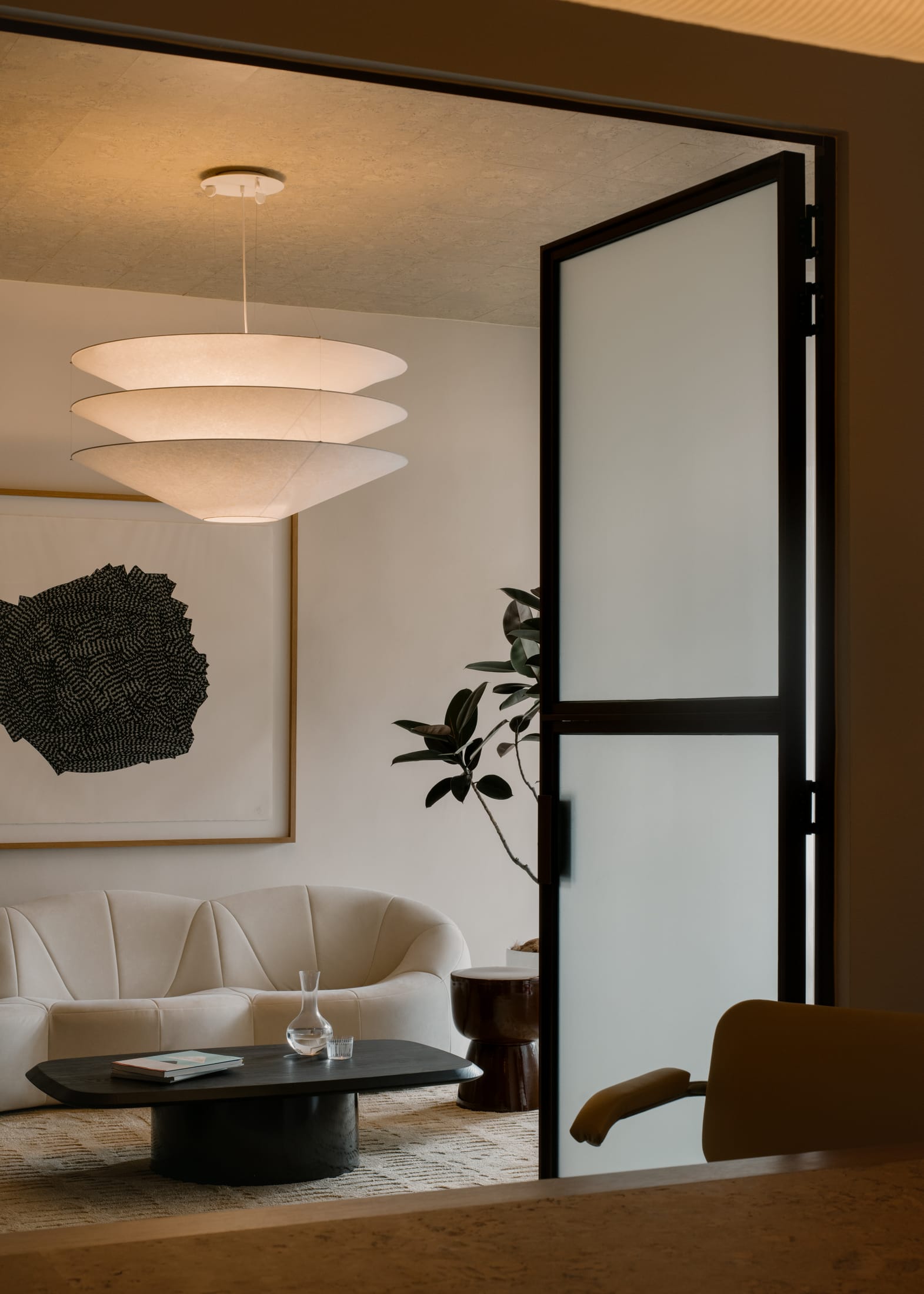
- Local Artistry: A striking installation by Singaporean artist Dawn Ng adds a sense of place and local pride, anchoring the international design language in a distinctly Singaporean context.
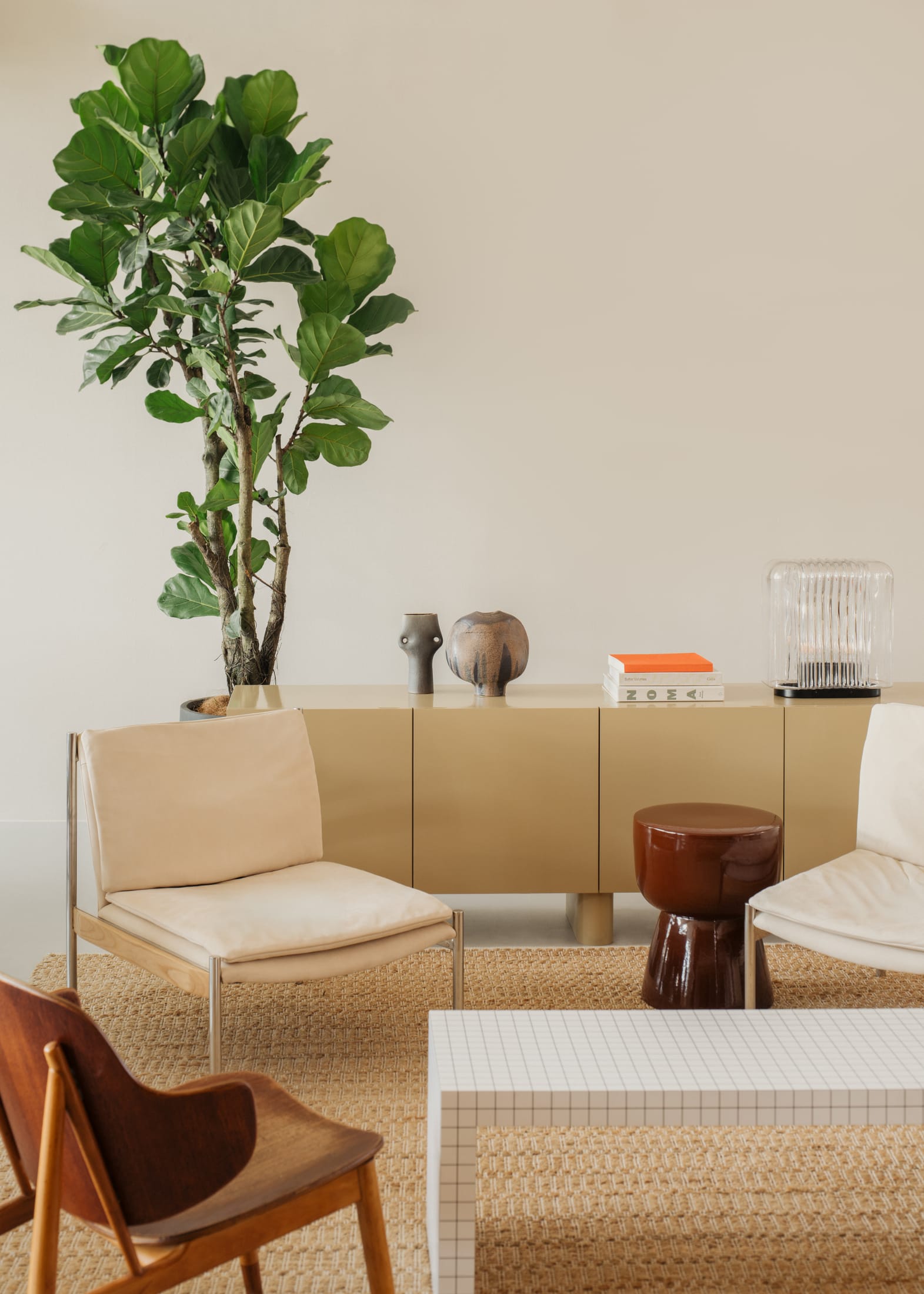
The color palette shifts from the neutral grays of the structure to warm terracottas, deep reds, and soft creams. It’s a deliberate move to turn what was once a quiet, static library into a living, breathing headquarters. The space feels alive.
Zone Breakdown: From Wine Tastings to Standing Desks
The Lo & Behold Group is a hospitality powerhouse, and their workspace needed to reflect that culture. This isn't just a place to answer emails; it's a testing ground for new concepts. The floor plan is cleverly divided into zones that support everything from high-focus deep work to social, celebratory gatherings.
The Central Kitchen: The Heart of the Office
In any hospitality-focused company, the kitchen is where the magic happens. Here, the central kitchen is a double-height communal hub. Clad in that signature burnt red timber, it serves as the ultimate "water cooler" spot. It’s designed to foster spontaneous collaboration, allowing team members from different departments to cross paths over a morning coffee or an afternoon snack.
The Boardroom: A Dual-Purpose Sanctuary
The boardroom is perhaps the best example of "stealth hospitality." While it functions as a high-stakes meeting room, it was also specifically designed for wine-tasting sessions for Clink Clink (the group’s wine retail arm). With custom-designed furniture by Nice Projects, the room feels more like an intimate dining room than a corporate box. It’s a space where deals are made and vintages are savored with equal importance.
Ergonomic Details and Clever Repurposing
One of my favorite details in this project is the repurposing of the original library window ledges. Instead of leaving them as dead space, Nice Projects transformed them into functional standing desks. It’s a brilliant way to encourage movement throughout the day while offering staff a front-row seat to the greenery outside.
| Feature | Original Library Function | New Workspace Use |
|---|---|---|
| Window Ledges | Book display/structural support | Ergonomic standing desks |
| Concrete Vaults | Book stacks & sound dampening | Framed workstation zones |
| Double-Height Void | Circulation area | Communal kitchen & social hub |
A Living Lab for Creativity
What makes the Lo & Behold headquarters truly special is its identity as a "living lab." For a creative team that manages some of the city's most aesthetic venues, having a space that facilitates the creative process is non-negotiable.
Dedicated photo studios allow the marketing team to shoot content in-house, while the abundance of cork mood-board walls ensures that inspiration is never more than an arm's length away. Nice Projects has successfully designed a space that "works hard but feels effortless." It avoids the clichés of the "fun office" (no beanbags or ping-pong tables here) and instead focuses on what creative professionals actually need: light, texture, and a sense of belonging.
This project sets a new standard for adaptive reuse on the fringe of Singapore’s CBD. It proves that our architectural heritage—even the "ugly" Brutalist bits—is worth saving. By injecting warmth and modern functionality into this historic shell, Nice Projects hasn't just built an office; they’ve built a home for the next decade of Singaporean hospitality.
FAQ
How did the designers handle the acoustics in a concrete building? The designers used several "soft" materials to mitigate the echo common in Brutalist structures. Key additions included extensive cork-lined walls, linoleum desk surfaces, and specific furniture fabrics that act as sound absorbers.
Can the public visit the workspace? While the headquarters itself is a private office for The Lo & Behold Group, it is located within the New Bahru creative cluster. Visitors can explore the retail, F&B, and public areas of the building to experience the incredible Brutalist architecture and the creative energy of the site.
What is "Adaptive Reuse" in this context? Adaptive reuse refers to the process of repurposing an old building for a use other than which it was originally designed. In this case, transforming a mid-century library into a modern creative office while preserving its historic concrete structure.
Inspired by this makeover? Whether you're dealing with a rigid concrete shell or just looking to add some "burnt red" warmth to your home office, remember that design is always a conversation between the old and the new. Use those high-contrast materials, respect your architecture's "bones," and never underestimate the power of a well-placed cork wall.