Our Top Picks
- The Ultimate High-Tech Choice: The COOP by Bould Design – A premium, $2,000 IoT-integrated sanctuary for urban poultry that combines industrial-grade durability with the design language of a Nest thermostat.
- Best Door Retrofit: Run-Chicken Automatic Door – A reliable, light-sensing solution for those who want to automate their existing wooden coop without a full hardware overhaul.
- Best Budget Smart Integration: Omlet Autodoor – A versatile, battery-powered system that offers great predator protection but lacks the full IoT ecosystem of the Bould Design vision.
The Evolution of Backyard Poultry: From Sheds to Smart Homes
For the last decade, I’ve spent my time reviewing smart thermostats, mesh Wi-Fi systems, and automated lighting. My home is a living lab of connectivity. But lately, the "connected home" has stepped out the back door and into the garden. We are seeing a radical shift in how we approach urban farming, moving away from the "dilapidated wooden shed" aesthetic toward something much more sophisticated.
The intersection of industrial design and urban poultry keeping has finally reached its zenith. If you’ve ever used a Nest thermostat or a Roku remote, you’ve interacted with the work of Bould Design. Now, they are applying that same "setup simplicity" and "real-world usability" to the backyard. The COOP by Bould Design is a high-tech solution for modern keepers, featuring remote app monitoring and automated scheduling that treats your flock with the same technological care you’d give your climate control system.
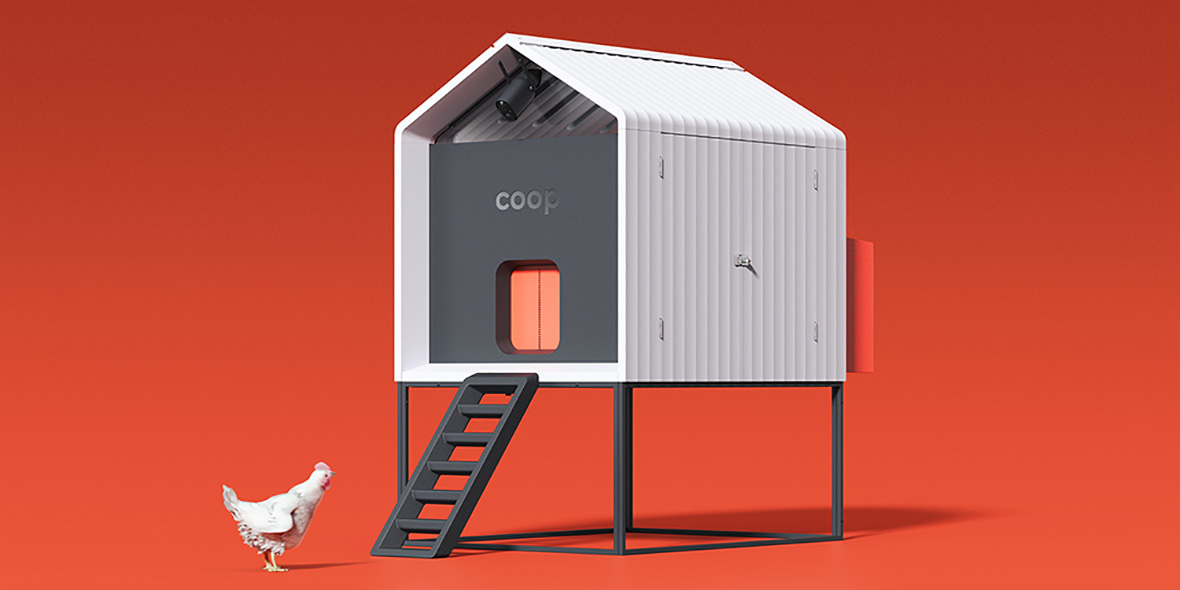
This isn't just about "fancy chickens." It's about data-driven animal husbandry. As we look toward 2026, the smart chicken coop is becoming a staple of the high-tech household, providing peace of mind for owners who want to travel, work long hours, or simply sleep in without worrying about predators or forgotten feedings.
Inside The COOP: High-End Architecture Meets Industrial Durability
When you look at The COOP, you don't see chicken wire and cedar. You see high-density polyethylene (HDPE) crafted through rotational molding. This is the same manufacturing process used for high-end YETI coolers. The result is a double-walled, recyclable plastic shell that provides incredible insulation against both summer heat and winter freezes.
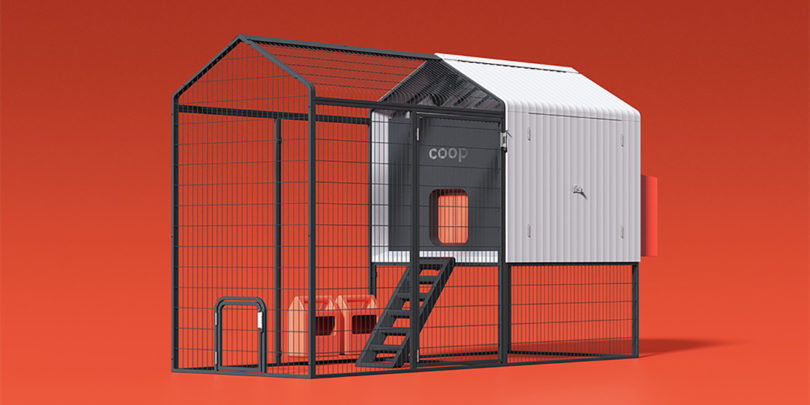
From a spatial perspective, the math is generous for an urban setting. The COOP provides 28 square feet of housing for up to 6 chickens, resulting in a spatial allocation of approximately 4.6 square feet per bird. This is well above the minimum industry standard, ensuring that your flock doesn't just survive but thrives.
Premium Features and Pricing
A premium smart chicken coop like this costs approximately $2,000. While that might cause sticker shock for a traditional farmer, for the urban dweller, it represents an investment in longevity. The package typically includes:
- Integrated Feeding and Watering Stations: Designed to prevent spills and keep pests out.
- Ventilation-First Design: Clerestory windows that allow light and air to flow without creating drafts at the chickens' roosting level.
- Predator-Proof Perimeter: Heavy-duty metal mesh that extends into the ground to prevent digging.
The 2026 Standard: Steel Worm Drive vs. Traditional Cables
One of the most frequent questions I get as an automation editor is: "Why does the door mechanism matter?" In the world of smart home security, we talk about deadbolts and encryption. In the world of smart coops, we talk about drive mechanisms.
Traditional automatic doors often use a thin cable or string to pull a door up and down. These are prone to snapping, tangling, and—most importantly—being lifted by clever predators like raccoons. By 2026, the industry standard has shifted toward the steel worm drive.
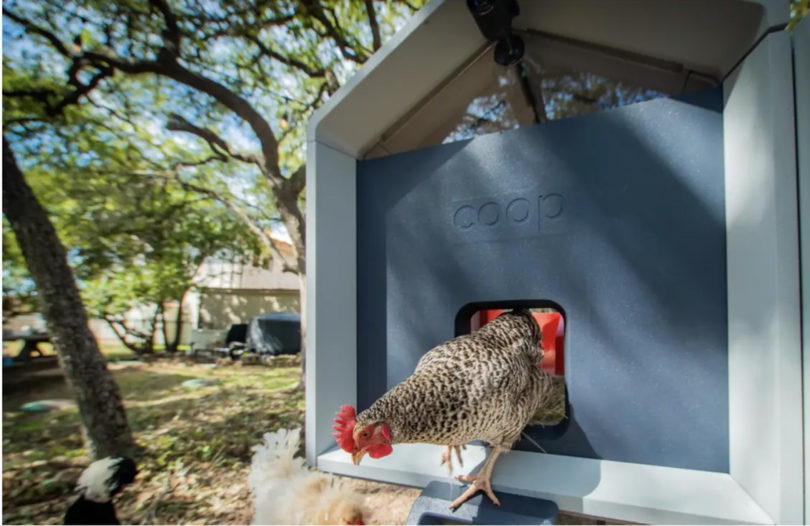
Advanced steel worm drive mechanisms are projected to last 8-15 years, compared to just 2-4 years for traditional cable-based systems. A worm drive acts as a mechanical lock; because of the gear ratio, the door cannot be "pushed" or "pried" open by a predator. Furthermore, these systems are built for the extremes. Whether it's a humid 100°F afternoon or a -20°F polar vortex, the steel gears maintain their torque where plastic pulleys fail.
Comparison Table: Door Mechanism Longevity
| Feature | Cable-Based Systems | Steel Worm Drive (2026 Standard) |
|---|---|---|
| Lifespan | 2–4 Years | 8–15 Years |
| Predator Resistance | Moderate (can be pried open) | Maximum (mechanically locked) |
| Weather Performance | Prone to freezing/snapping | Reliable down to -20°F |
| Maintenance | High (cable replacement) | Low (occasional lubrication) |
| System Noise | Moderate | Silent/Low |
IoT and Remote Monitoring: The 'Nest' for Hens
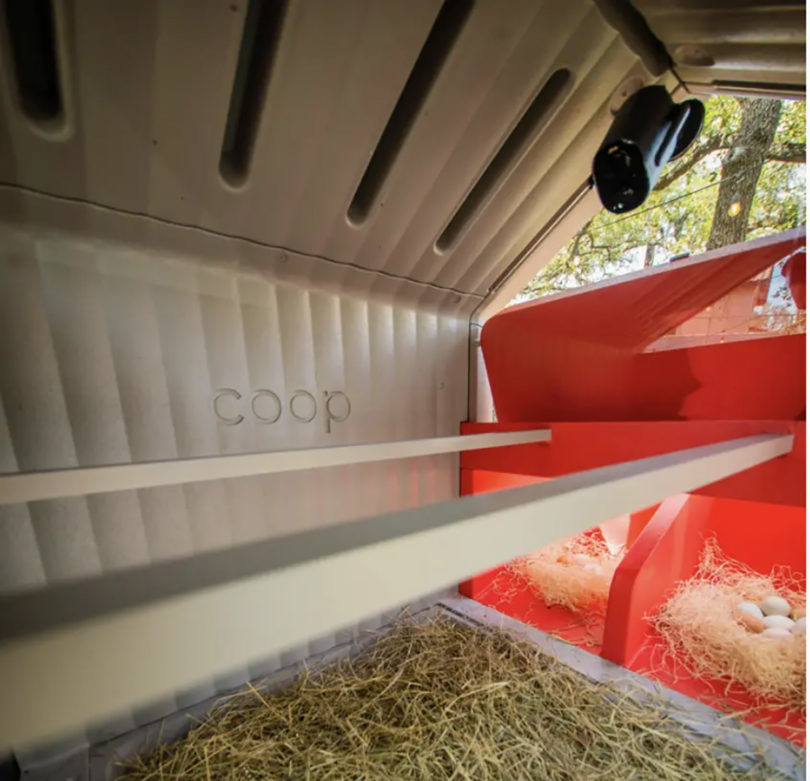
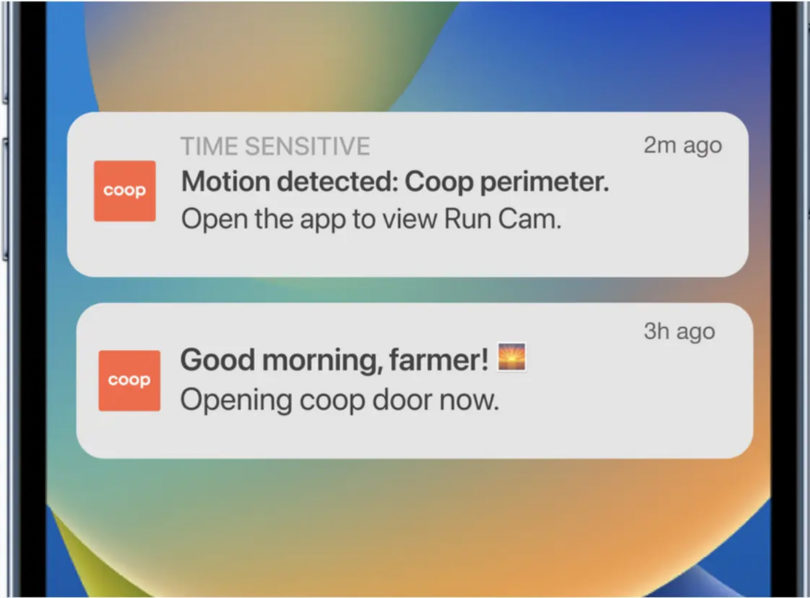
The real "magic" happens when you open the app. Smart coops utilize IoT cameras to allow remote flock checks via mobile app, effectively becoming the "Nest Cam" for your backyard. The COOP features a dual-camera system: the Run Cam and the Roost Cam.
These are not your standard graining security feeds. We’re talking 1080p resolution, high-definition night vision, and motion alerts that can distinguish between a chicken and a coyote. Through the app, you can set a custom schedule for the automatic front door or manually override it if you see a straggler outside after dusk.
Connected Ecosystem Features:
- Motion Alerts: Receive a push notification if there is unusual activity in the run at 3 AM.
- Temperature Sensors: Monitor the internal heat of the roost to ensure your birds are comfortable.
- Light Control: Some models allow for supplemental lighting during winter months to maintain egg production, all controlled via your smartphone.
Expert Comparison: Top Automatic Doors of 2026
While Bould Design offers the "all-in-one" Tesla of coops, many keepers prefer to build their own and add smart components. Here is how the top systems stack up for the 2026 season:
- Run-Chicken: Known for its "all-in-one" aluminum design. It is incredibly easy to mount on any wooden structure but relies primarily on light sensors rather than complex IoT scheduling.
- Omlet Autodoor: A fantastic mid-range option that works in extreme cold. It features a horizontal sliding action that is very difficult for predators to bypass, though it lacks a built-in camera ecosystem.
- Coop Tender: The choice for the "power user." This system offers Wi-Fi connectivity and a robust internet-based dashboard, though the installation is more complex than the Bould Design "plug-and-play" philosophy.
Maintenance and Living with a Smart Coop
The biggest barrier to entry for backyard chickens has always been the "mess factor." Bould Design addresses this by treating the coop like a modern appliance. The assembly process is a revelation—taking only about 30 minutes with a single screwdriver. Compare this to the weekend-long frustration of assembling a traditional cedar coop with hundreds of screws.
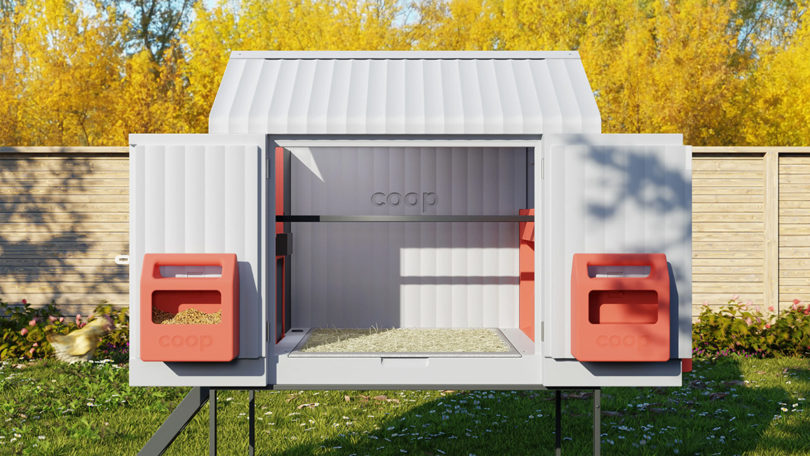
Maintenance is equally streamlined. The use of compostable litter trays means you aren't shoveling manure; you're simply sliding out a tray and dumping it into your garden. Large swing doors provide full access to the interior, making the weekly deep clean a 5-minute task rather than a chore you avoid.
Noah’s Pro Tip: Even with a smart coop, the "Deep Litter Method" is your friend. Use a thick layer of hemp or pine shavings in the pull-out trays to absorb moisture and odor. The IoT temperature sensors will help you monitor the natural heat generated by the composting litter in the winter.
FAQ
Q: Can I use The COOP if I don't have strong Wi-Fi in my backyard?
A: To use the IoT features like the 1080p cameras and app alerts, you will need a stable Wi-Fi connection. If your coop is far from the house, I recommend a weather-proof outdoor mesh extender (like the Orbi Outdoor) to ensure a solid signal.
Q: How do the chickens handle the plastic material in the summer?
A: The double-walled HDPE plastic acts as an insulator, much like a thermos. Combined with the clerestory windows that provide constant airflow, the interior stays significantly cooler than a single-walled wooden coop under direct sunlight.
Q: Is the $2,000 price point justified compared to a $400 wooden coop?
A: If you factor in the 15-year lifespan of the worm drive, the lack of wood rot, and the integrated security cameras (which would cost $300+ on their own), the ROI becomes clear within the first 3-5 years.
Final Verdict: Is the $2,000 Investment Worth It?
As a smart home editor, I evaluate products based on one core metric: Does this technology solve a problem or just create a new one?
Traditional coops create problems—they rot, they leak, they are hard to clean, and they are vulnerable to predators. The COOP by Bould Design is the first product I’ve seen that treats poultry keeping as a seamless extension of the modern connected home.
If you are an urban or suburban resident who values your time, your home's aesthetic, and the safety of your flock, the $2,000 investment is absolutely worth it. You aren't just buying a box for birds; you're buying a piece of industrial-grade architecture that automates the hardest parts of farming. In 2026, this is the gold standard for what pet housing should be: intelligent, durable, and designed for real life.