Quick Facts
- Project Name: Connie-Connie Café Interior
- Location: Copenhagen Contemporary (CC), Refshaleøen, Copenhagen
- Design Leads: Tableau and Ari Prasetya in collaboration with Dinesen
- Key Materials: 100% reclaimed Douglas Fir offcuts from flooring production
- Scale: 50 bespoke furniture units created by a collective of 25 international designers
- Where to Buy: Select pieces available via the official Tableau webshop
There is a specific kind of magic that happens when industrial waste meets high-end curation. For years, Dinesen has been the gold standard for premium Douglas Fir flooring—the kind of wood that defines the "quiet luxury" of Scandinavian interiors. But what happens to the offcuts, those "choicest scraps" that fall away during the precision milling of those iconic long planks? The Connie-Connie project is the definitive answer.
Born from a collaboration between design studio Tableau, designer Ari Prasetya, and Dinesen, this initiative has transformed the café at the Copenhagen Contemporary museum into a living gallery of responsible reuse. Featuring 50 bespoke pieces made entirely from reclaimed Douglas Fir offcuts, Connie-Connie proves that sustainability doesn't have to look recycled—it can look like the future of luxury.
The Setting: Connie-Connie at Copenhagen Contemporary
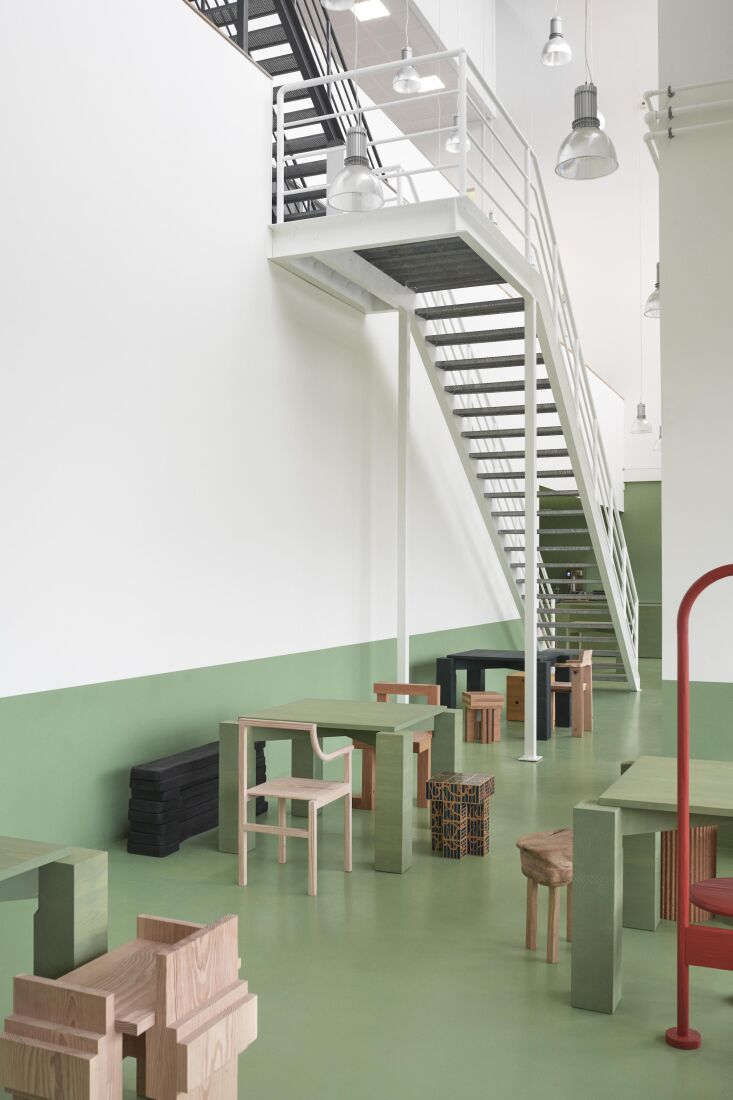
Located in a former industrial welding hall on the rugged Refshaleøen island, Connie-Connie serves as the social heart of Scandinavia’s largest exhibition space. The venue's history is raw and cavernous, providing a dramatic backdrop for a café that prioritizes "material honesty."
The first thing you notice isn't the wood, but the color. The café is defined by a striking, monochromatic green that coats the walls and built-in structures. This isn't just an aesthetic choice; the distinctive green color of the Connie-Connie café was inspired by the industrial packaging and transport materials Dinesen uses to protect its premium wood during global transit. It’s a clever narrative bridge that connects the source of the material to its final, artistic destination.
Designing with Purpose: 25 Designers, 100% Reuse
The brilliance of this project lies in its collective spirit. Rather than a single aesthetic, Tableau and Ari Prasetya invited a group of 25 international designers to Dinesen’s headquarters in Jels. Their mission was simple but challenging: create functional art using only the industrial wood leftovers from Dinesen’s flooring production.
The project achieved a 100% material reuse rate for the café's interior furnishings. By treating "waste" as a primary resource, the designers moved beyond the limitations of standard furniture production.
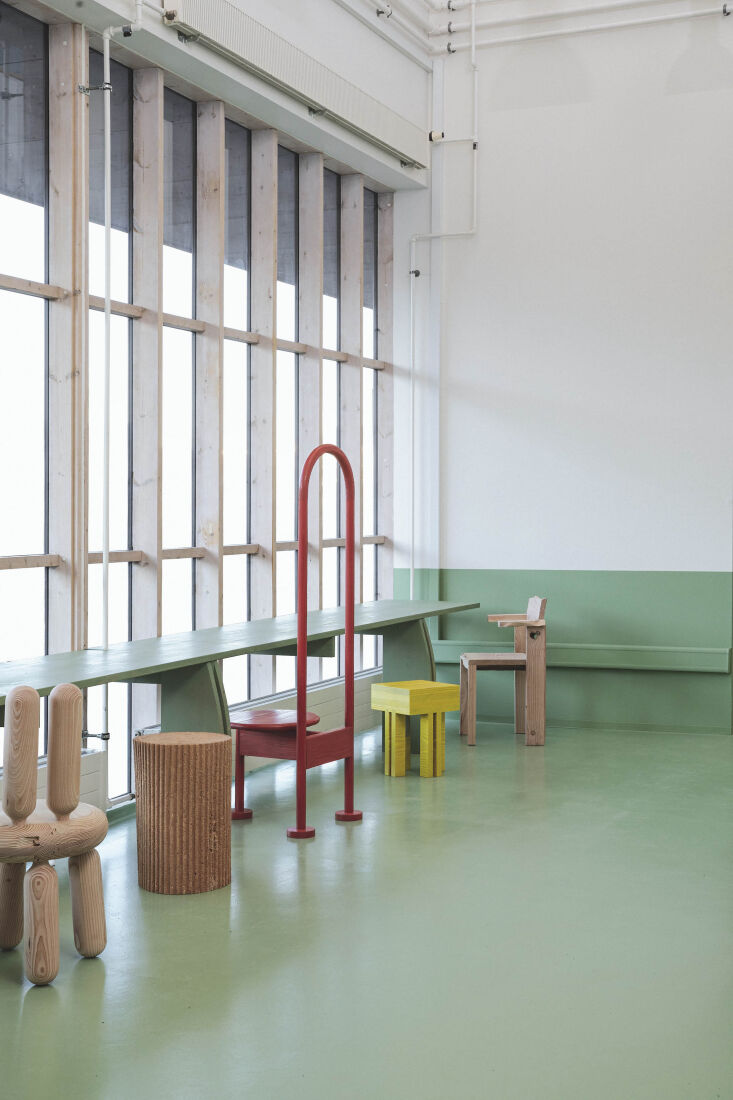
- The Collective Effort: The initiative engaged 25 designers, including names like Paul Cournet and Onur Stasli, to create 50 unique furniture units.
- Philosophy of the Piece: While some designers focused on precision joinery, others embraced the "soul of the wood," highlighting natural knots and rough edges.
- Functional Art: Every chair, table, and bench in the café is a one-of-a-kind exploration of what Douglas Fir can become when it’s freed from the floor.
Material Excellence: The Soul of Douglas Fir
Douglas Fir is beloved for its warm, rosy hues and distinct grain, but in standard production, "imperfections" like bark or heavy knots are often discarded. Connie-Connie subverts this. By utilizing CNC fabrication alongside traditional craftsmanship, the collaboration celebrates the industrial texture of the wood.
"We wanted to honor the natural soul of the wood. By using the offcuts, we aren't just making furniture; we are creating a quiet architecture of intimate spaces within a massive industrial hall." — Interior Perspective
| Feature | Traditional Dinesen Use | Connie-Connie Collaboration |
|---|---|---|
| Material Source | Full-length Douglas Fir logs | Production offcuts & leftovers |
| Aesthetic | Uniform, expansive planks | Geometric, textured, varied |
| Production | Large-scale milling | Bespoke, designer-led workshop |
| Sustainability | High-quality longevity | 100% material reuse/circularity |
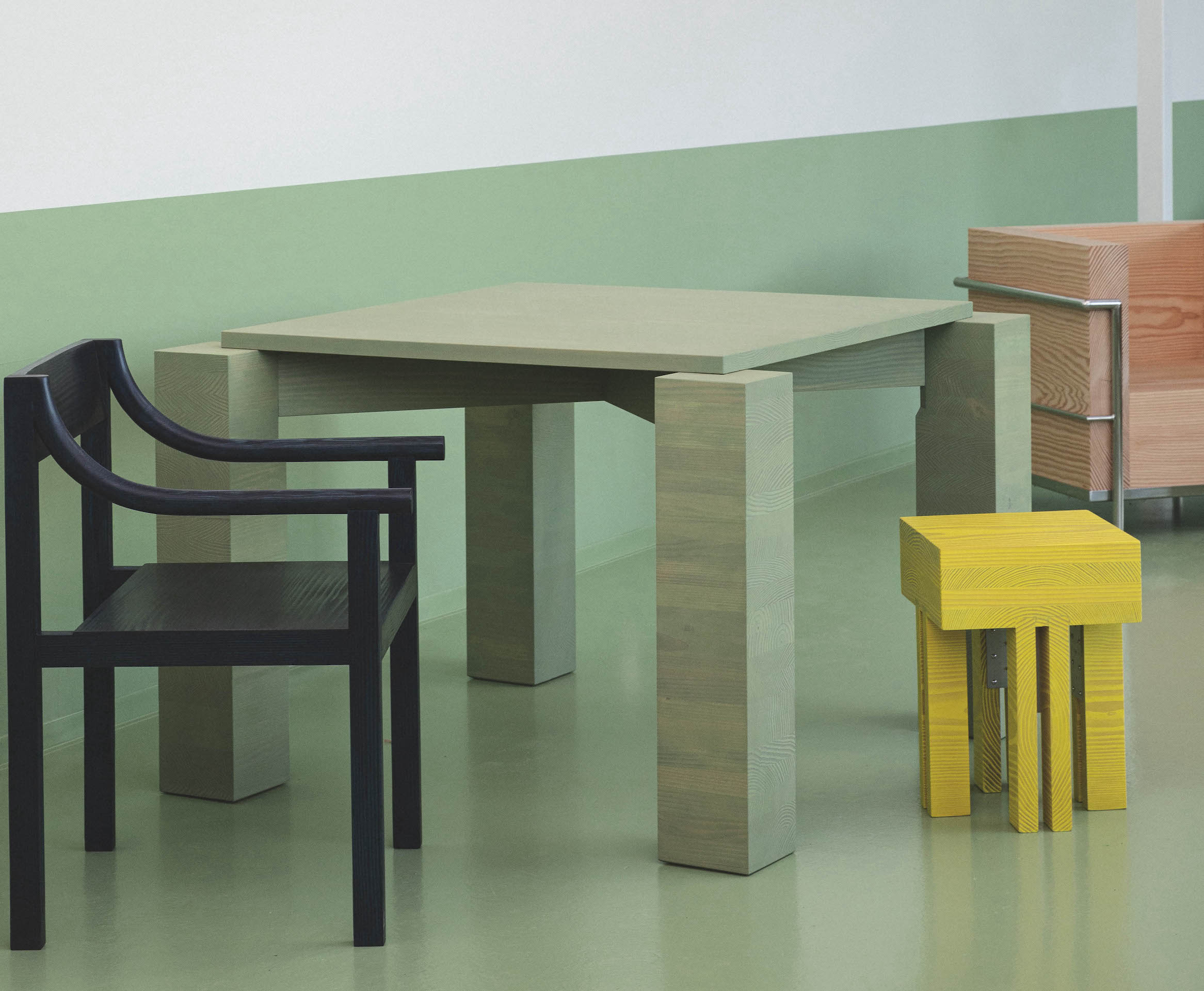
The contrast between the geometric precision of the Stacked Table and the organic character of the Genno chair showcases the versatility of the material. It’s a masterclass in how salvaged wood can be transformed into sophisticated, minimalist furniture that feels right at home in a high-end gallery or a modern residence.
Curating Your Own Space: The Tableau Webshop
While Connie-Connie is a public space, the vision behind it is deeply personal. For those of us looking to bring this level of intentional design into our own homes, the transition from public art to private collection is seamless.
Furniture from the Tableau and Ari Prasetya collaboration—including the standout Stacked Table and the sculptural Genno chair—can be purchased through the official Tableau webshop. Owning one of these pieces isn't just about buying furniture; it’s about participating in a movement toward responsible reuse.
Sustainable Trends: Luxury Furniture in 2026
As we look toward the interior trends of 2025 and 2026, the Tableau x Dinesen collaboration serves as a North Star. We are moving away from the era of mass-produced "fast furniture" and toward a period of intentional curation.
Luxury is no longer defined by the rarity of the material, but by the honesty of its application. The "Connie-Connie" ethos—valuing the knot in the wood, the story of the scrap, and the hand of the designer—is exactly where modern living is headed. It’s about creating spaces that feel grounded, sustainable, and undeniably unique.
FAQ
Can I visit the Connie-Connie café? Yes, the café is located at Copenhagen Contemporary in the Refshaleøen district of Copenhagen. It is open to the public and serves as a functional gallery where you can experience the furniture firsthand.
Is the furniture durable enough for home use? Absolutely. Dinesen Douglas Fir is a high-density, premium softwood known for its durability. The pieces created for Connie-Connie were designed to withstand the high traffic of a museum café, making them more than sturdy enough for a private residence.
How does "responsible reuse" differ from standard recycling? In this context, responsible reuse (or upcycling) involves taking high-quality industrial by-products and elevating them through design without breaking them down into raw fibers. This preserves the "soul" and carbon-sequestering properties of the original wood.
Are you ready to redefine your space with intentional design? Whether you're visiting Copenhagen or browsing the webshop from home, the Tableau and Ari Prasetya collaboration offers a rare glimpse into the future of sustainable luxury.