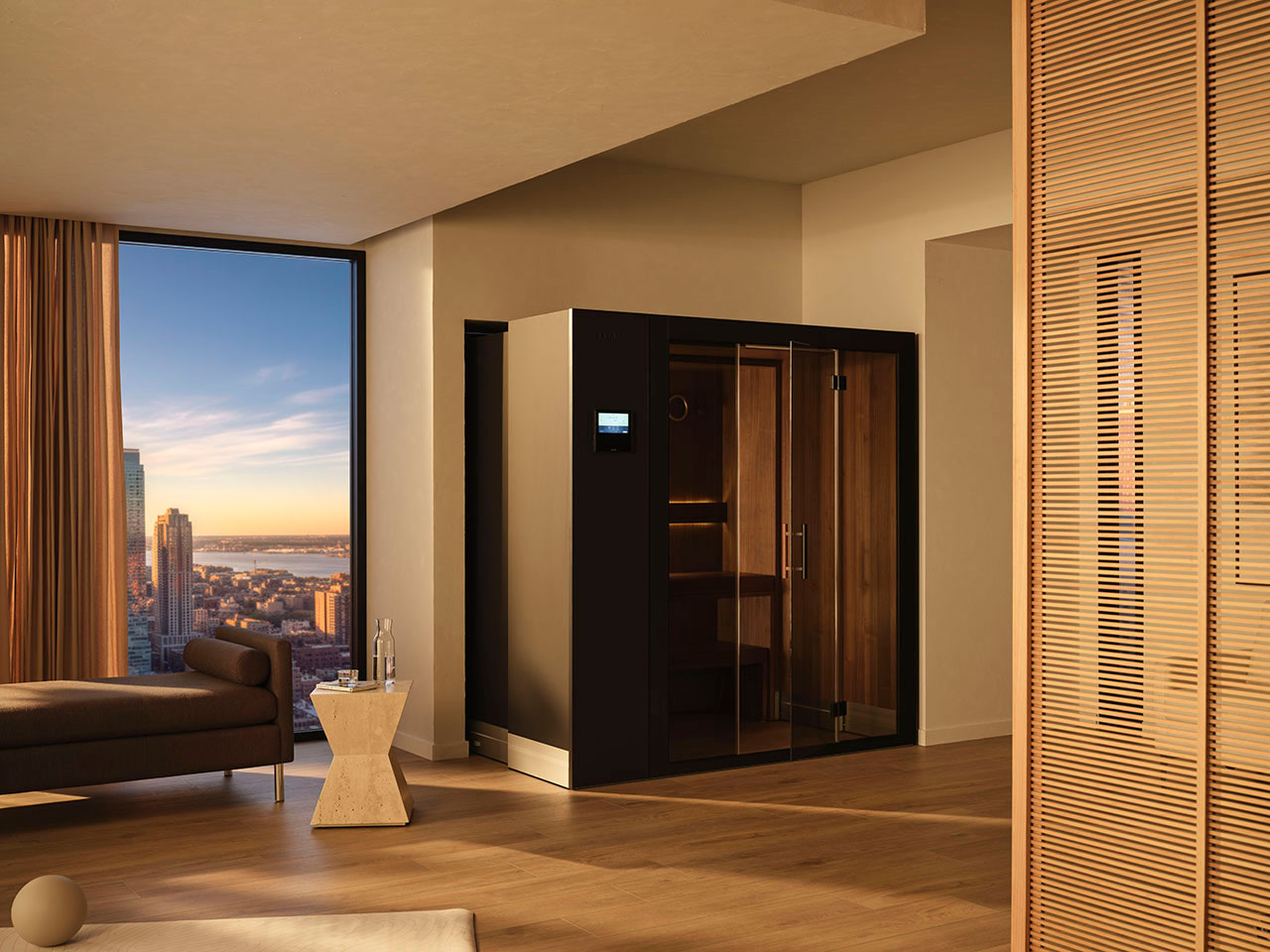
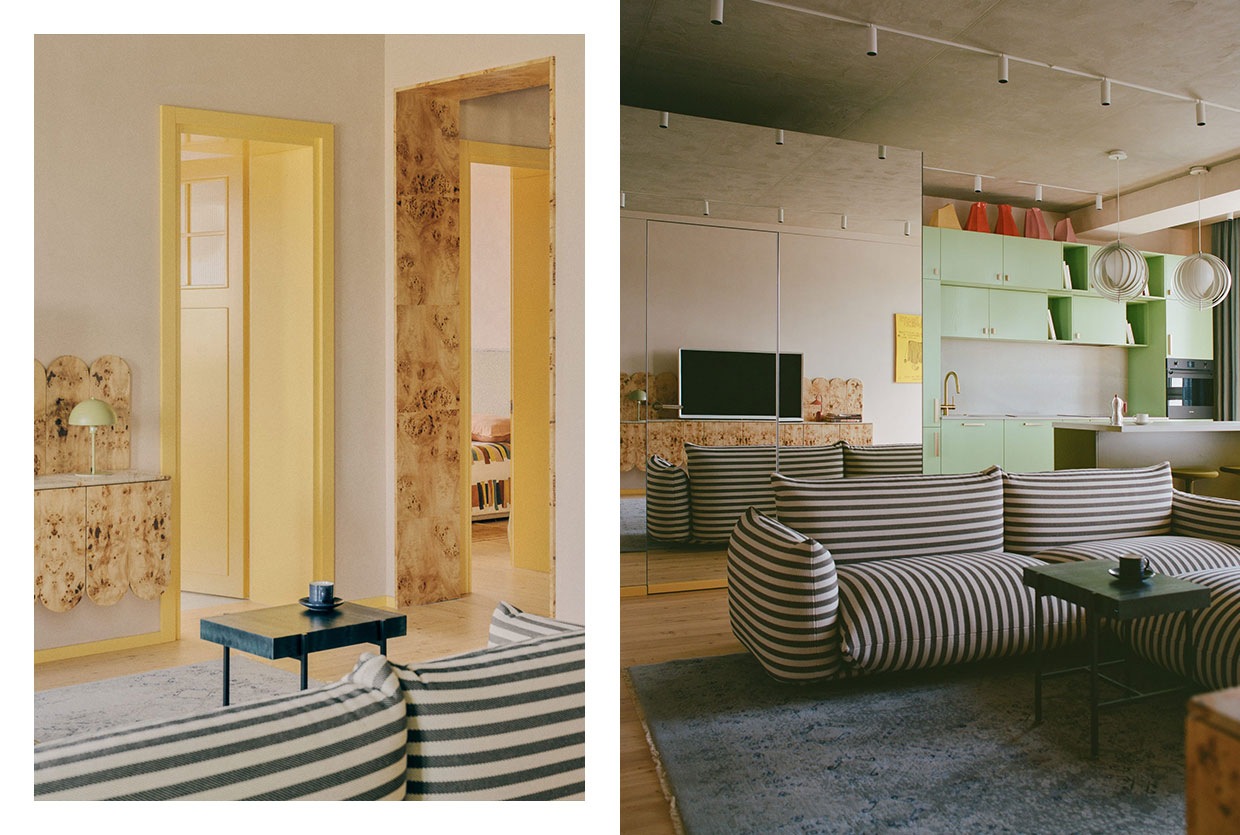
There is a specific kind of loneliness found at 600 feet in the air. As an editor, I’ve walked through hundreds of glass-walled penthouses that, while breathtaking in their views, felt more like a gallery for the sky than a home for a human. We call it the "Cold Sky" paradox: the higher we climb, the more we lose our connection to the grounding elements of the earth.
In 2026, the definition of luxury has undergone a radical metamorphosis. We are moving away from the era of "Spectacle"—those sterile, white-box monuments to minimalism—and toward the era of the "Sanctuary." The secret to mastering this transition lies in a single, evocative concept: Tactile Warmth. By replacing the reflective, hard-edged surfaces of modern architecture with light-absorbing, sensory-rich materials, we can transform a high-rise unit into a soulful retreat that feels as permanent and peaceful as a forest floor.
The 2026 Philosophy: Curated Comfort Over Minimalism
For the past decade, minimalism was the default language of the urban elite. But as our lives become increasingly digital and fleeting, our physical environments must provide the opposite. The 2025 "blank-slate" aesthetic is officially evolving into what we call Soulful Interiors. Design industry reports show that 72% of high-end residential projects in 2026 now feature "multi-sensory layering," a significant 30% jump from 2024 trends that focused solely on visual minimalism.
The 2026 luxury interior trends prioritize 'curated comfort' over minimalism, focusing on lived-in aesthetics, organic silhouettes, and nuanced, grounded color palettes like patina blue and mineral tones. It’s about "Lived-in Longevity"—choosing pieces that don’t just look good in a photograph but feel better the more you touch them. We are seeing a move toward furniture with softened corners and materials that develop a character-rich patina over time.
Material Layering: The 'Anti-Glass' Palette
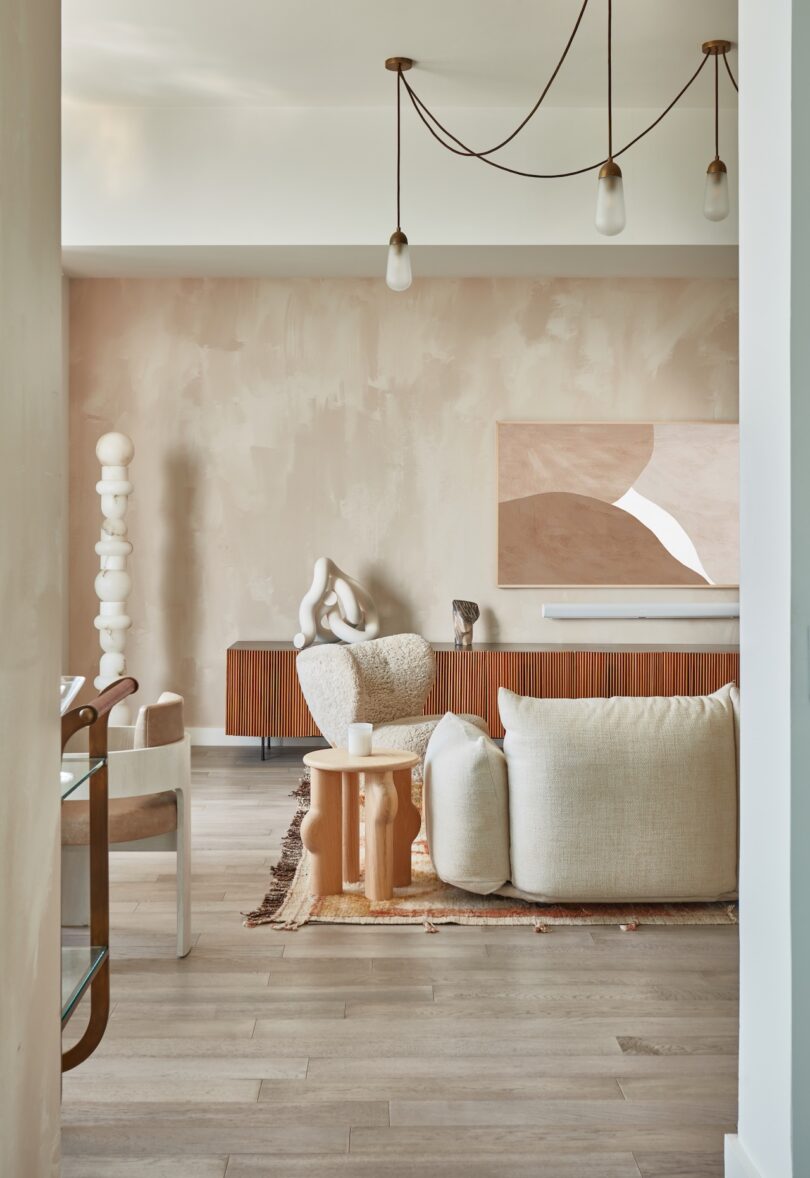
The primary challenge of high-rise living is the glass. Glass is cold, reflective, and acoustically "bright." To create tactile warmth in a high-rise, you must deliberately replace reflective surfaces with light-absorbing materials such as shearling, boucle, and mohair. These textures soften the hard edges of glass towers and significantly improve acoustic comfort.
When you walk into a room, your eyes see the view, but your body feels the floor and the fabrics. The secret to sanctuary living in urban penthouses is the 'grounding' effect of natural materials. Incorporating walnut joinery, oak finishes, and matte stones creates a sense of permanence and peace amidst city skylines.
Sensory Spotlight: The Mohair Effect Mohair is the "velvet" of the 2026 sanctuary. Unlike synthetic velvets that reflect light, mohair has a deep, matte pile that absorbs light and sound. Using mohair for floor-to-ceiling drapery can single-handedly "lower the temperature" of a room's visual noise.
Designer’s Cheat Sheet: The Texture Stack
- Base Layer: Wide-plank European Oak or Walnut floors with a matte oil finish.
- Soft Layer: Hand-tufted wool rugs with varying pile heights to create "topographical" interest.
- Tactile Layer: Boucle armchairs paired with a chunky, hand-knit cashmere throw.
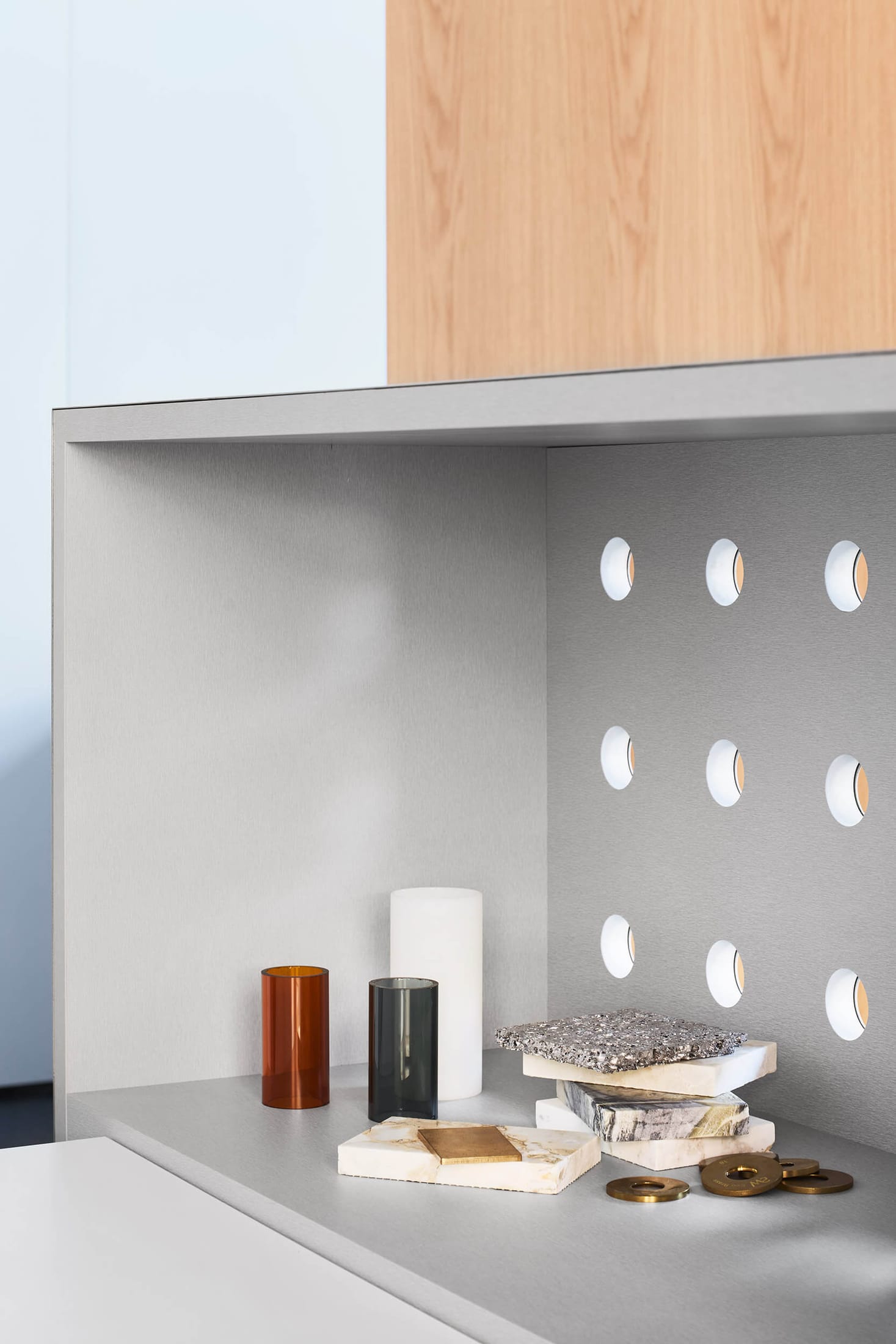
- Finish Layer: Honed (not polished) stone surfaces like travertine or soapstone.
Color Evolution: Beyond the Neutral
In 2026, we are finally saying goodbye to the "Greige" era. The new palette is inspired by the transition of the sky itself—not the bright midday blue, but the complex, moody tones of twilight and the deep hues of the earth.
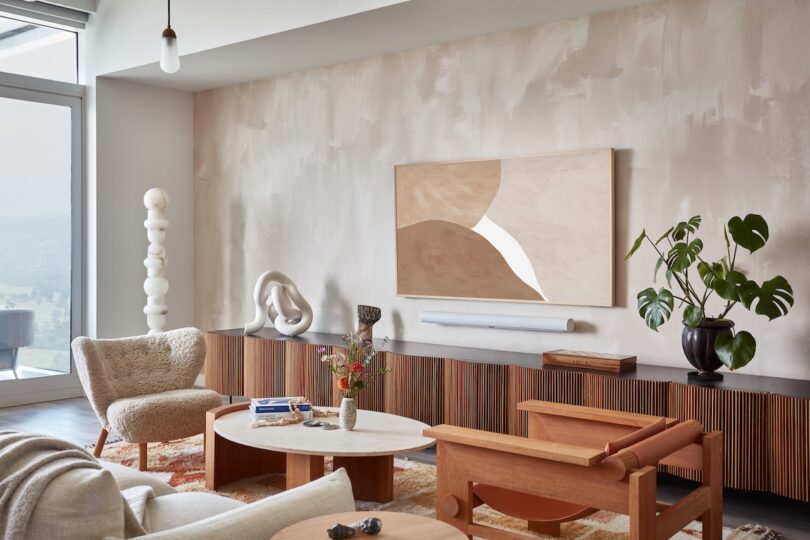
We are seeing a major transition from cool grays to Patina Blue and Softened Mineral tones. These aren't just aesthetic choices; they are functional. High-altitude light is incredibly intense and often carries a blue tint. Using "cocoon-like" neutrals—terracotta, chocolate brown, and moss green—helps to modulate this light, making the interior feel protective rather than exposed.
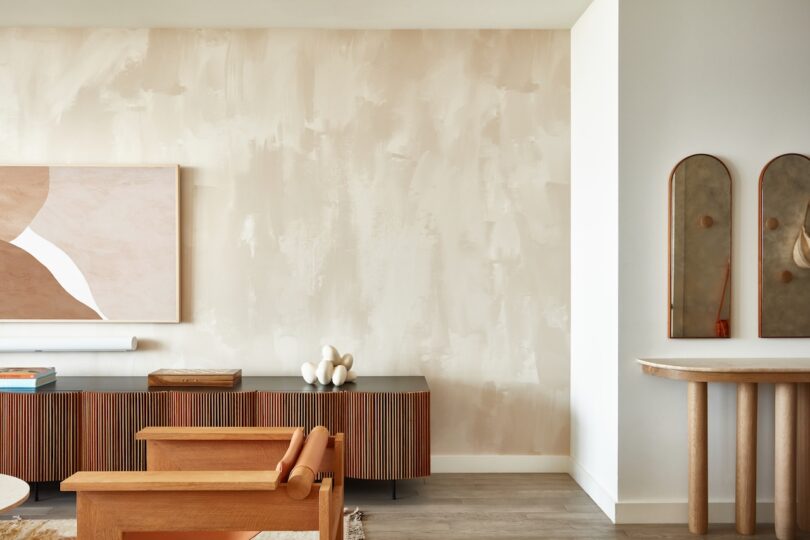
Textured wall finishes, such as lime wash or plaster, are also making a massive comeback. Unlike flat paint, these finishes catch the light in microscopic shadows, adding a layer of depth that makes a wall feel like a solid, protective barrier between you and the world outside.
Architectural Anchors in the Sky
One of the biggest complaints about modern penthouses is that they feel "floaty." Without the traditional architectural details of a ground-level home, a high-rise can feel like a temporary glass box. To fix this, we look to Architectural Anchors.
Adding weight to open-plan layouts is essential. This can be achieved through:
- Wood Beams & Coffered Ceilings: These break up the vastness of the ceiling and provide a visual "weight" that lowers the perceived height of the room, making it feel more intimate.
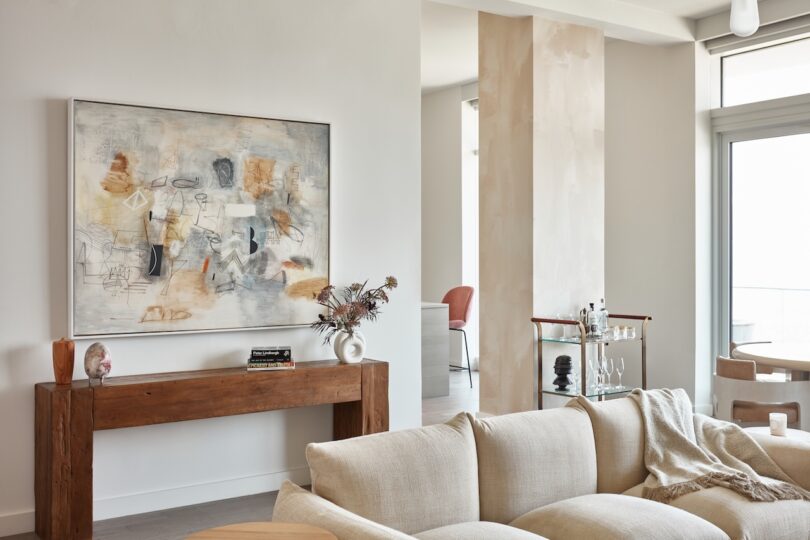
- Column Wraps: Instead of hiding structural columns, wrap them in fluted wood or matte metal. This transforms a structural necessity into a design highlight that provides a sense of vertical rhythm.
- Wainscoting and Wall Panels: Adding texture to the walls provides "visual storytelling." It suggests a history and a level of craftsmanship that is often missing in new builds.
A heavy timber element, like a canopy bed or a monolithic walnut dining table, acts as a psychological anchor. It tells the brain, "You are safe; you are grounded; you are not just floating in the clouds."

The Luxury of Silence: Acoustic Comfort
Silence is the new gold. Recent market analysis indicates a 45% increase in luxury high-rise residents prioritizing 'acoustic comfort' and sound-absorbing textiles over traditional aesthetic upgrades. In a glass tower, sound bounces. The hum of the city, the whistle of the wind, and the echo of your own footsteps can create a subtle, constant state of stress.
Implementing slatted wood acoustic panels is a favorite trick of mine for 2026. These panels "look as good as they sound," offering a rhythmic, architectural look while hiding high-performance sound-absorbing felt behind the wood. When 72% of high-end projects focus on sound and touch, they aren't just designing for beauty; they are designing for the nervous system.
Designer’s Tip: Don't forget the ceiling. An upholstered or "stretched fabric" ceiling in a media room or bedroom can reduce reverberation by up to 60%, creating that coveted "library-quiet" atmosphere.
Wellness Suites: The Ultimate High-Rise Retreat
The bathroom is no longer just a functional space; it has become the Restoration Sanctuary. In 2026, we are seeing high-rise dwellers invest heavily in "Wellness Suites" that rival five-star spas.
The focus here is on the transition from the "hard" world to the "soft" self. We’re seeing a rise in:
- Integrated Steam Showers: Featuring aromatherapy and chromotherapy.
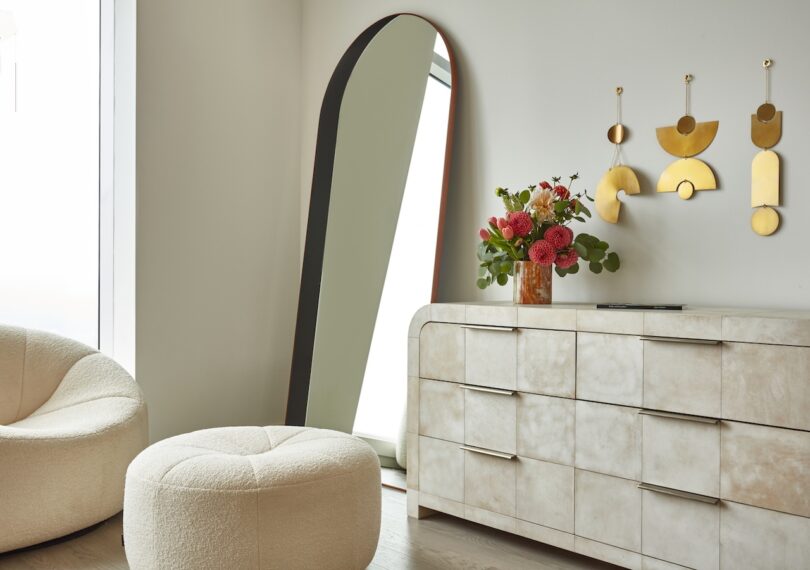
- Matte Metals: Moving away from polished chrome to brushed bronze and matte black, which feel warmer to the touch.
- Circadian Lighting: Discrete smart technology that adjusts the color temperature of the room to match your body’s natural rhythm—bright and cool in the morning, warm and amber as the sun sets.
Sustainable Luxury: Investing for Decades, Not Seasons
Finally, tactile warmth is inextricably linked to sustainability. There is no warmth in disposable furniture. The conscious high-rise dweller of 2026 seeks Heirloom Quality.
FSC-certified woods and GOTS-certified textiles are the new baseline. We are seeing a significant rise in U.S.-based manufacturing and bespoke craftsmanship. Investing in a hand-crafted walnut cabinet or a custom-woven wool rug isn't just a design choice; it’s an environmental one. These pieces are designed to age gracefully, developing a story and a soul that "fast furniture" can never replicate.
FAQ
Q: How do I maintain tactile materials like boucle and shearling in a high-traffic home? A: The key is prevention and high-quality fibers. Opt for performance-treated wool blends which naturally repel stains. For shearling, a light brushing every few months keeps the fibers from matting. Always choose "high-rub count" fabrics for seating.
Q: Are 2026 color trends too dark for small high-rise apartments? A: Not at all. Darker, mineral tones can actually make a small space feel larger by "blurring" the corners of the room. The key is to use a monochromatic approach—paint the walls, trim, and ceiling in the same softened tone to create a seamless, expansive cocoon.
Q: Can I achieve acoustic comfort without major renovations? A: Absolutely. Start with "soft architecture": floor-to-ceiling heavy-weight linen drapes, oversized wool rugs that cover at least 70% of the floor space, and fabric-covered wall art or tapestries. These elements act as natural sound baffles.
Transform Your Skyline
High-rise living doesn't have to be a cold, detached experience. By embracing the philosophy of tactile warmth, you can create a home that balances the thrill of the view with the deep, primal need for a sanctuary. Start by looking at your surfaces—every glass, metal, or polished stone edge is an opportunity to introduce a soft, natural, and grounding counterpoint. Your sanctuary in the sky is waiting; you just need to reach out and touch it.