Quick Facts
- The Concept: A pioneer of the "functional art" movement, the Cloud Pendant blends industrial brass chains with mouthblown frosted glass orbs to create a weightless, sculptural silhouette.
- Design Origin: Launched in 2012 by Apparatus Studio in New York, it fundamentally redefined high-end lighting as an anchoring art piece rather than a mere utility.
- Investment Value: Authentic Cloud Pendants maintain up to 85% of their original retail price on the secondary market, a rarity in the interior decor sector.
- Designer Preference: 78% of high-end interior designers now prioritize artisan-made, sculptural lighting over mass-produced fixtures for luxury, double-height spaces.
- 2026 Outlook: The fixture aligns perfectly with upcoming "Hyper-Tactile" and "Monolithic" trends, where lighting serves as a room's primary architectural focal point.
In the world of interior design, few objects achieve the status of a "modern icon" within a single decade. Yet, since its debut in 2012, the Apparatus Cloud Pendant has done exactly that, transitioning from a darling of the New York underground design scene to a permanent fixture in the world’s most sophisticated residences. When Jeremy Anderson and Gabriel Hendifar founded Apparatus in a small Manhattan studio, they weren't just making lamps; they were challenging the industry's obsession with sterile minimalism.
The Apparatus Cloud Pendant is considered a modern design icon because it pioneered the 'functional art' movement. It achieved the impossible: making heavy, industrial materials like brass and glass feel entirely ethereal. By blending mouthblown frosted glass orbs with hand-worked industrial chains, the studio created a weightless, sculptural aesthetic that transcends traditional lighting. Beyond mere illumination, the Cloud offers a moment of tension—a soft, organic cluster of "bubbles" held in place by the hard, unforgiving geometry of a metal chain.
The Anatomy of a Masterpiece: Craftsmanship vs. Mass Production
What truly separates an icon from a trend is the technical rigor behind its creation. To the untrained eye, the Cloud might look simple, but the physics of its construction are a masterclass in artisanal engineering. Each orb is mouthblown to a specific translucency, ensuring that when the light is dimmed, the glass maintains a soft, pearlescent glow rather than looking like a cold, empty bulb.
The primary difference between the Apparatus Cloud and mass-produced alternatives like CB2's Corvina is the level of craftsmanship. The original features hand-worked glass and precise scaling that ensures uniform light diffusion across all orbs—a feat mass-market fixtures often fail to replicate. In cheaper versions, you often see "hot spots" where the bulb is visible through the glass, or uneven weight distribution that causes the fixture to tilt awkwardly.
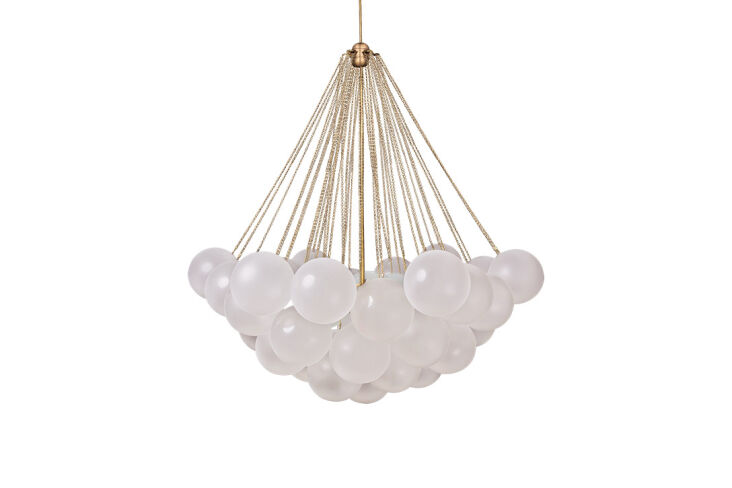
Comparison: Artisanal vs. Mass-Market Lighting
| Feature | Apparatus Studio (Original) | Mass-Market Alternatives |
|---|---|---|
| Glass Quality | Mouthblown, frosted glass with variable opacity | Molded glass with spray-on frosting |
| Metalwork | Hand-finished brass with living patina | Plated steel or painted aluminum |
| Light Diffusion | Uniform "internal glow" across all orbs | Visible "hot spots" and uneven shadows |
| Customization | Available in multiple tiers and finishes | One-size-fits-all dimensions |
| Value Retention | Up to 85% resale value | Negligible resale value |
The hand-applied patina on the brass is another hallmark of the Apparatus ethos. Unlike the static, plastic-like finish of mass-market metal, the brass on a Cloud Pendant is a "living" material. It evolves over time, deepening in tone and character, mirroring the way a Parisian apartment or a London townhouse ages with grace.
2026 Trends: Lighting as a Room-Anchoring Sculpture
As we look toward the interior landscape of 2026, the shift is moving away from cluttered "gallery walls" and toward "Monolithic Pendants." We are seeing a return to "Hyper-Tactile" materials—textures that demand to be touched and light that feels soft to the human eye. In the context of 2026 interior trends, the Cloud Pendant aligns perfectly with this movement, where lighting serves as a room-anchoring sculpture rather than just a source of illumination.
In high-end design, the era of the "unobtrusive recessed light" is fading. Designers are now using the Cloud Pendant to create a sense of architectural tension. In a double-height foyer, a large-scale Cloud doesn't just fill space; it defines the volume of the room. It creates a ceiling-down perspective that forces the eye to appreciate the height and airiness of a modern atrium.
The Investment Perspective: Why Authentic Design Holds Value
From a purely financial standpoint, purchasing an Apparatus fixture is often more akin to buying fine art than buying furniture. Recent market analysis indicates that 78% of high-end interior designers now prioritize 'artisan-made' lighting over mass-produced fixtures for luxury spaces. They recognize that their clients are no longer looking for "disposable luxury"; they want pieces that carry a narrative of human touch and artisanal imperfection.
The data backs this up. Apparatus Studio fixtures have demonstrated a high value-retention rate, with authentic Cloud Pendants maintaining up to 85% of their original retail price on the secondary design market. In an industry where most decor depreciates the moment it leaves the showroom, the Cloud Pendant behaves like a blue-chip asset. This is largely due to the studio's "Handcrafted Imperfection"—the slight variations in each glass orb that signal it was made by a human hand, not a machine.
Styling the Cloud: From Parisian Apartments to Modern Atriums
Styling this icon requires an understanding of "Emotional Minimalism." Because the Cloud is so visually complex, it thrives in environments where the rest of the decor is grounded and organic.
- Scaling for Success: For standard ceilings (8-9 feet), the Cloud XL can feel overwhelming. Opt for the 19-orb or 37-orb configurations to allow for enough negative space between the furniture and the fixture. In double-height spaces, don't be afraid to go big; the 73-orb version acts as a breathtaking anchor for a grand staircase.
- The Color Palette: The Cloud pairs exquisitely with "earth-rooted" tones. Think smoky ambers, aged bronze, and greige neutrals. The warmth of the brass finish complements natural wood grains like white oak or walnut, creating a dialogue between the industrial and the organic.
- The Glow: To truly capture the magic of this piece, use warm-dim LED bulbs. The goal is to create a diffused, human-centric light that mimics the soft glow of a sunset.
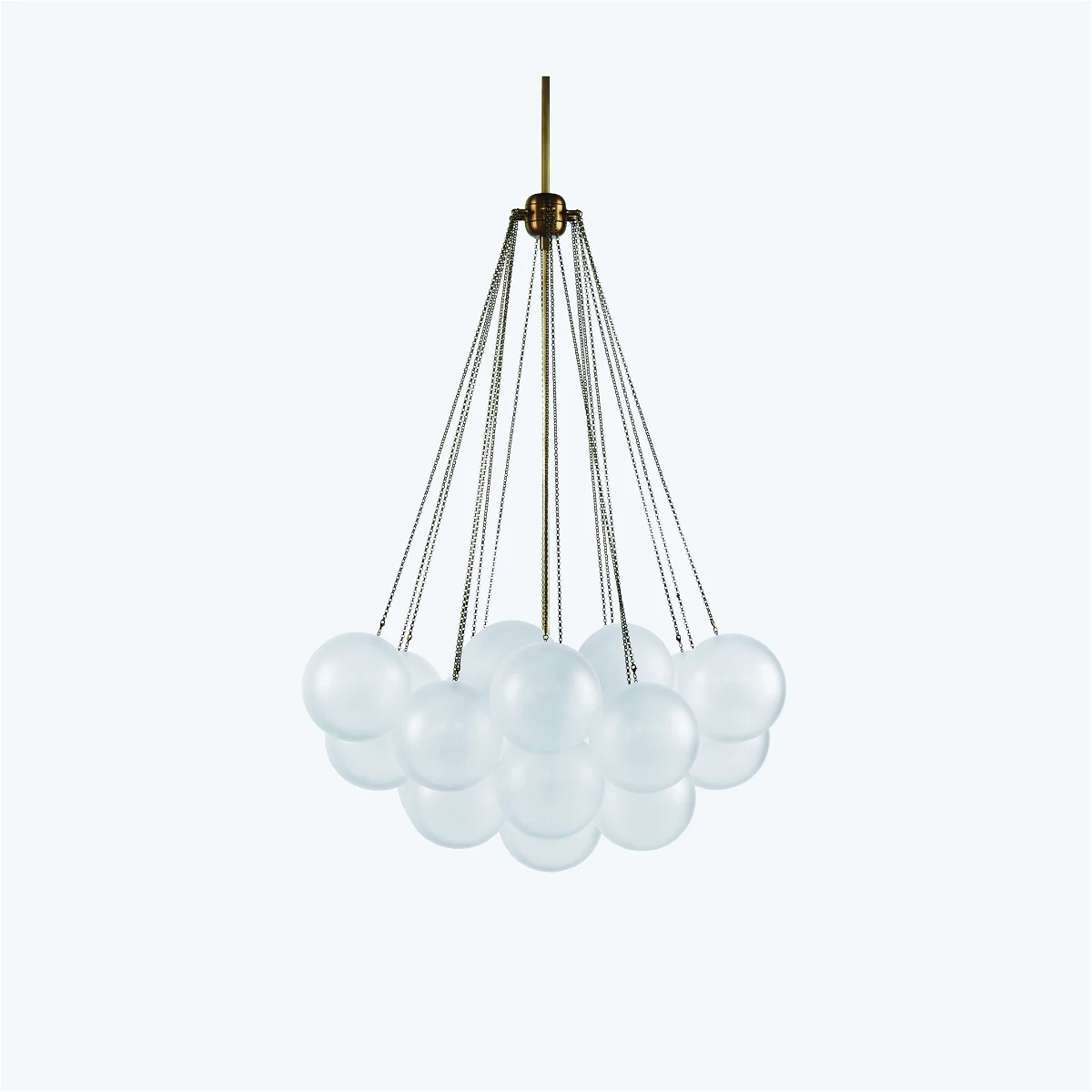
Whether hanging over a minimalist dining table or floating in a sun-drenched atrium, the Cloud remains a testament to the power of "functional art." It is a piece that doesn't just light a room; it gives it a soul.
Conclusion
The Apparatus Cloud Pendant's journey from a 2012 newcomer to a global design icon is rooted in its refusal to compromise on the human element of design. By prioritizing mouthblown glass and hand-worked metals over the efficiency of mass production, Apparatus created a fixture that feels both timeless and futuristic. As we move toward 2026, the Cloud continues to represent the pinnacle of "Hyper-Tactile" luxury, proving that when a design is born from true craftsmanship, it never goes out of style.
FAQ
1. Is the Apparatus Cloud Pendant difficult to clean? Because the glass is frosted and textured, it is surprisingly forgiving with dust. However, to maintain the luster, we recommend using a soft microfiber cloth and a gentle, non-abrasive glass cleaner. Avoid spraying directly onto the orbs; instead, spray the cloth and wipe each orb individually.
2. Can I install the Cloud Pendant on a sloped ceiling? Yes, the chain-hung nature of the Cloud Pendant makes it naturally adaptable to sloped ceilings. The weight of the fixture ensures it hangs vertically, though you should always consult with a professional electrician to ensure the junction box is rated for the fixture's weight.
3. Why is there such a significant price difference between the original and replicas? The price difference reflects the materials and labor. The original uses mouthblown glass (each orb is unique) and high-quality brass with a living finish. Replicas typically use machine-molded glass and thin metal plating, which lacks the depth, weight, and light-diffusing properties of the authentic piece.