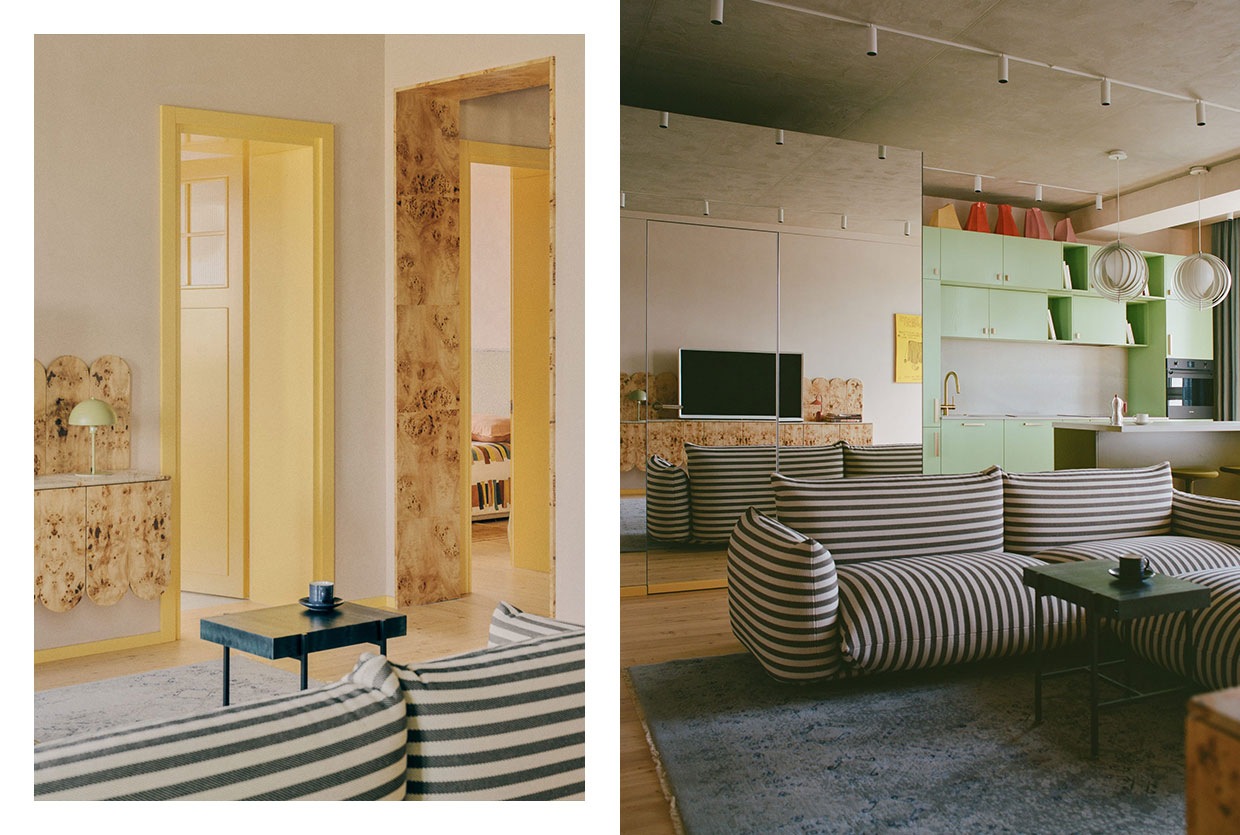
Imagine, for a moment, the office of 2019. It was a place of "static containers." You had your desk, your assigned chair, and perhaps a shared breakroom where the coffee was as uninspired as the grey cubicle walls. It was a linear world: you sat, you worked, you left.
Fast forward to 2026, and the landscape has undergone a tectonic shift. The "office" is no longer a destination you go to; it is a high-dimensionality cognitive space that breathes with you. In this new era, the most successful firms have realized that the physical environment isn't just a backdrop for work—it is a cognitive tool. We are moving away from ghostly corridors and toward living systems that prioritize human mental fluidity over rigid floor plans.
Defining High-Dimensionality Cognitive Spaces
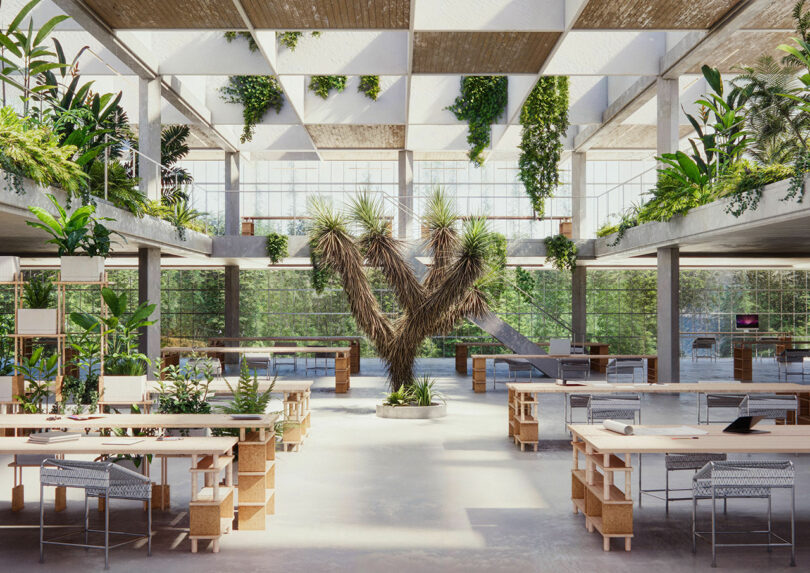
What exactly is a high-dimensionality cognitive space? In the simplest terms, these are integrated work environments where tasks, information, and social interactions are interconnected rather than siloed.
Think of a traditional office as a 2D map. You move from Point A (the desk) to Point B (the meeting room). A high-dimensionality space is more like a 3D ecosystem—or even a 4D experience when you factor in time and mental state. It is a place where a single area can transition from a high-energy brainstorming hub to a serene deep-work sanctuary in minutes.
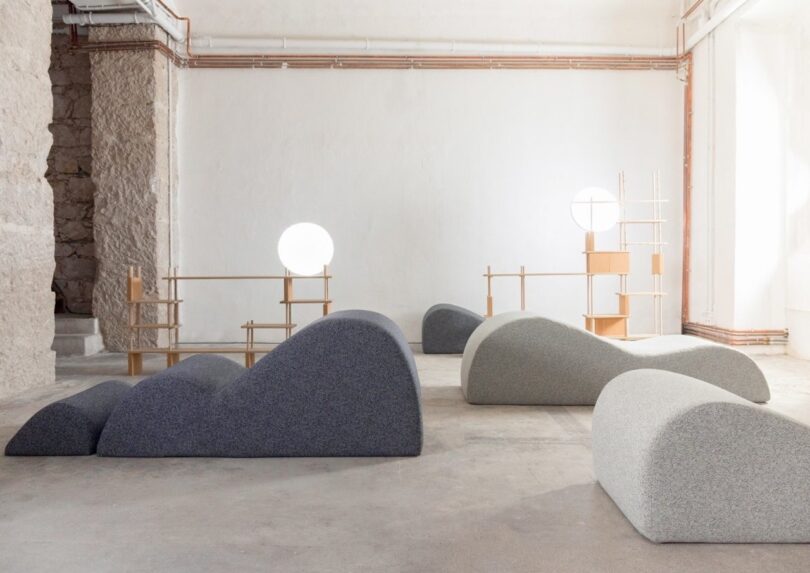
The philosophy here is built on three invisible roots: Connectivity, Design, and Wellbeing. When these elements align, productivity isn't forced; it flourishes naturally like a well-tended garden. To achieve this, forward-thinking designers are looking toward collections like Smarin Officetopia. This isn't just furniture; it’s an adaptive system designed to facilitate the complex cognitive states modern professionals navigate daily. By using soft, sculptural elements, Smarin allows the office to become a "landscape" rather than a floor plan.
The Modular Revolution: Furniture That Moves at the Speed of Ideas
In the old world, if you wanted to change the office layout, you needed a contractor and a weekend. In 2026, modularity is the new norm. High-dimensionality spaces rely on modular office furniture that allows environments to be rapidly reconfigured into flex areas, meeting zones, or relaxation spots.
Why does this matter? Because the way we think isn't static. Sometimes we need the friction of others to spark an idea; other times, we need total isolation to execute it. Statistics show that implementing adaptive high-dimensionality spatial design leads to a 42% increase in spontaneous cross-departmental collaboration compared to static floor plans.
Non-Negotiable Elements for 2026 Modularity:
- The sChaise: Furniture that encourages movement and posture shifts, preventing the physical "stagnation" that leads to mental blocks.
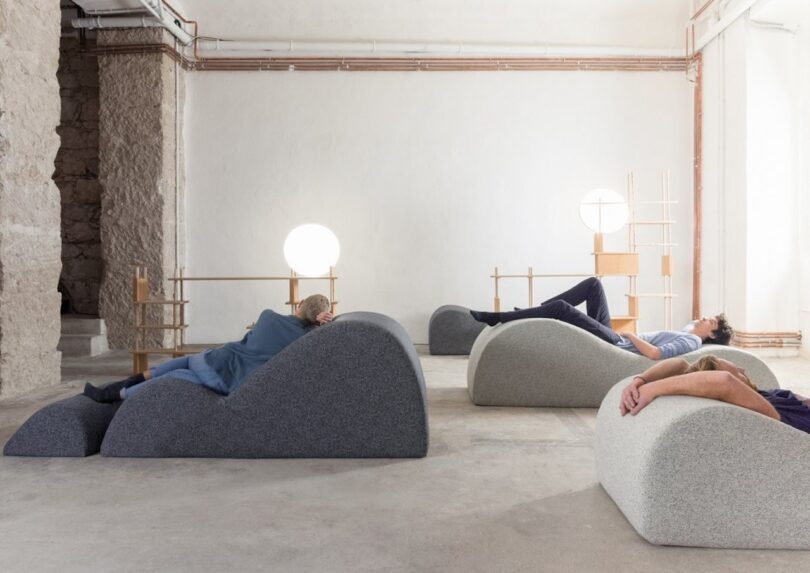
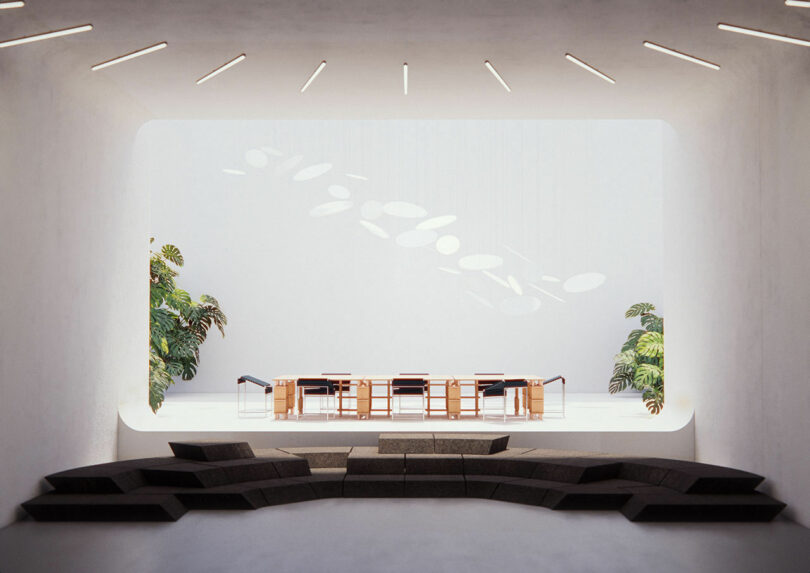
- The 'Dunes': Sculptural foam elements from the Smarin collection that serve as informal seating or "landscape" features for quick huddles.
- Mobile Acoustic Shields: Lightweight dividers that can turn an open area into a private pod in seconds.
The office is a product, not just a place. If the product doesn't adapt to the user's immediate needs, the user will simply go elsewhere—usually back to their home office.
Employee Autonomy: The New ROI Benchmark
So, how do the best workspaces win in 2026? They stop acting like landlords and start acting like hospitality providers. The single greatest driver of performance in the modern era is employee autonomy.
Organizations that allow staff to choose exactly where and how they work report 3x higher satisfaction levels and significantly improved mental clarity. This is the death of the "Open Plan" mandate. Instead, we are seeing the rise of "Intentional Choice."
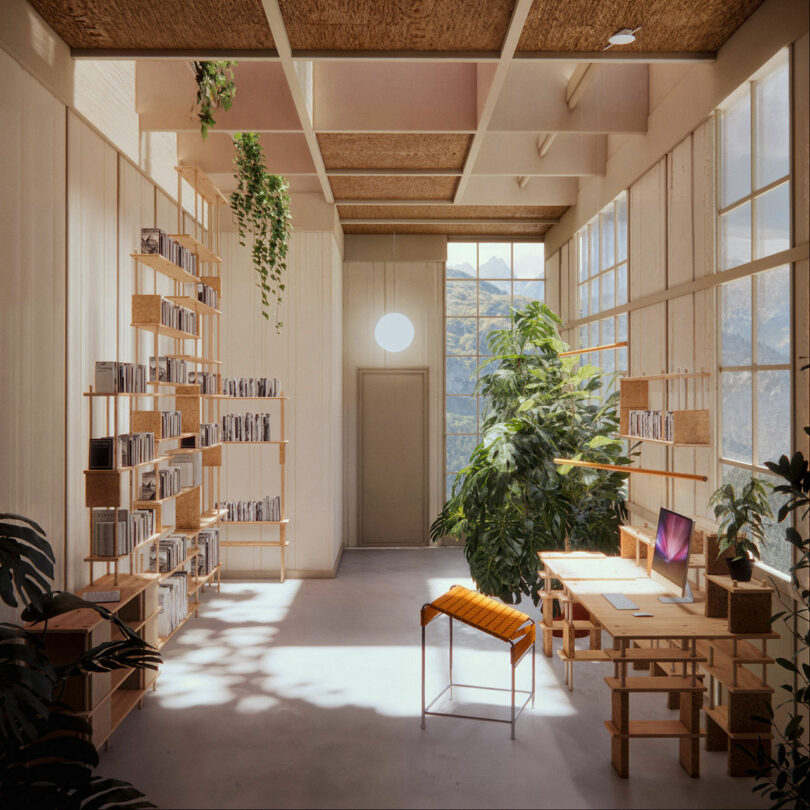
In a high-dimensionality space, an employee might start their morning in a "Low-Stimulation Focus Pod," move to a "High-Energy Social Hub" for lunch, and spend the afternoon in a "Biophilic Garden" for creative strategy. This "Gradient of Privacy" allows the brain to regulate its own energy expenditure. Privacy is the new premium, and the companies providing it are the ones seeing the highest returns on their spatial investments.
The Neuro-Inclusive Blueprint: Designing for Every Brain
We have finally moved past the "one size fits all" era of office design. By 2026, 85% of high-performing firms will prioritize "Cognitive Recovery Zones" over traditional cubicle layouts to mitigate digital burnout.
Neuro-inclusive design recognizes that different brains respond differently to sensory input. High-dimensionality spaces manage these inputs through:
- Acoustic Management: Utilizing felt, moss walls, and sound-masking technology to create "quiet zones" that actually stay quiet.
- Circadian Lighting: Systems that mimic natural light cycles to keep the body's internal clock in sync, even during long winter workdays.
- Scent-Free and Sensory-Neutral Areas: Specifically designed for those with sensory processing sensitivities.
When you design for the most sensitive users, you create a better experience for everyone. A "Cognitive Recovery Zone" isn't just a place to nap; it’s a place for the brain to de-frag, leading to better decision-making and fewer errors in the long run.
The Invisible Architecture: Connectivity and Desktop Flow
While furniture and layout are the "visible" parts of the office, the "invisible architecture"—technology and connectivity—is what keeps the system from crashing. It is estimated that nearly £100bn is lost annually to poor connectivity and tech friction.
In a high-dimensionality space, the tech "just works." This means seamless transitions between a personal laptop and a wall-sized collaborative screen. It also means a radical rethinking of desktop organization.
The 2026 Desktop Hierarchy:
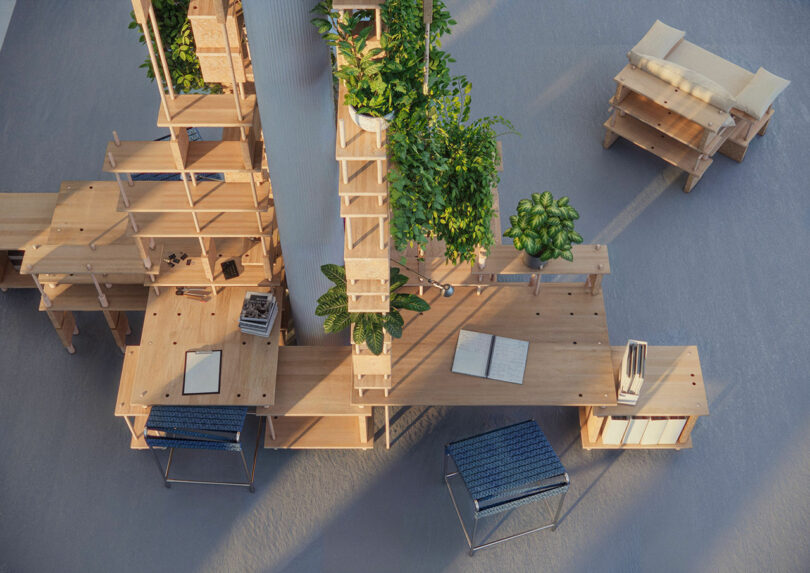
- Immediate Reach (The 80% Zone): Tools you use 80% of the time—laptop, notepad, water—should be on a clean, ergonomic surface.
- Vertical Storage: Utilizing the space above the desk for secondary items to keep the primary workspace clear.
- Integrated Greenery: Not just a "desk plant," but integrated biophilic elements that improve air quality and lower cortisol levels.
- Zero-Cable Philosophy: Everything is wireless or integrated into the furniture itself, removing the "visual noise" of tangled cords.
Strategic Investment: The Priority Table
If you are looking to transition your team into a high-dimensionality cognitive space, you don't have to do it all at once. Here is where the smartest money is being spent for 2026:
| Investment Level | Feature | Primary Benefit |
|---|---|---|
| High Impact | Modular Seating (Smarin/Dunes) | Massive increase in collaboration & flexibility |
| High Impact | Cognitive Recovery Zones | 85% reduction in burnout & digital fatigue |
| Medium Impact | Acoustic Felt & Dividers | Improved focus in open-plan areas |
| Medium Impact | Vertical Desk Storage | 20% increase in usable workspace surface area |
| Essential | High-Speed Mesh Connectivity | Eliminates "friction" and lost time |
FAQ
Q: Do high-dimensionality spaces require more square footage? A: Not necessarily. In fact, because these spaces are modular and multi-functional, many companies find they can reduce their total footprint while increasing the quality and utility of the space they have.
Q: Is modular furniture durable enough for a busy office? A: Yes. Modern modular collections, like Smarin’s foam-based systems, are designed for high-traffic environments. They are often easier to maintain and clean than traditional heavy upholstery.
Q: How do I measure the ROI of a "Recovery Zone"? A: Look at employee retention rates, sick days taken (especially for mental health), and internal satisfaction surveys. Most firms see the investment pay for itself within 18 months through reduced turnover alone.
Moving Forward
The transition to high-dimensionality cognitive spaces isn't just a trend; it's a response to a fundamental change in how we work. In a world where AI handles the routine, the human "value-add" is creativity, empathy, and complex problem-solving. These are delicate mental processes that require the right environment to survive.
As we move toward 2026, the question for leadership is no longer "How many desks can we fit?" but rather "How many cognitive states can we support?" Those who answer the latter will be the ones who lead the next decade of innovation.