In the mid-1960s, the world of interior design was undergoing a quiet but profound metamorphosis. The rigid, ornate structures of the pre-war era were being shed in favor of something more fluid, more experimental, and decidedly more human. It was against this backdrop of Italian industrial optimism that Elio Martinelli, a visionary who had already spent a decade establishing his brand, Martinelli Luce, looked to nature for his next great inspiration. He didn't just want to create a lamp that sat still; he wanted to capture the essence of a living creature. The result was the Serpente Lamp, a fixture that debuted in 1965 and has remained in continuous production for six decades, evolving from a radical experiment into a permanent resident of the world’s most prestigious design museums.
The Origin Story: A 1965 Revolution in Light
To understand the Serpente, one must first understand the man behind it. Elio Martinelli was not merely a manufacturer; he was a trained set designer who brought a sense of theatricality and technical rigor to everything he touched. After founding Martinelli Luce in the 1950s, he focused on exploring new materials that could bridge the gap between industrial utility and organic beauty.
While many designers of the era were still working with traditional glass and heavy metals, Martinelli was fascinated by the potential of polymers. He was an early adopter of thermoforming techniques, a process that allowed for the creation of large, seamless shapes that were previously impossible. When the Serpente Lamp was first unveiled in 1965, it was a direct challenge to the status quo. It moved away from the "static" nature of traditional lighting, offering a sinuous, sculptural form that changed the geometry of a room depending on how it was positioned.
The Anatomy of a Masterpiece: Form and Function
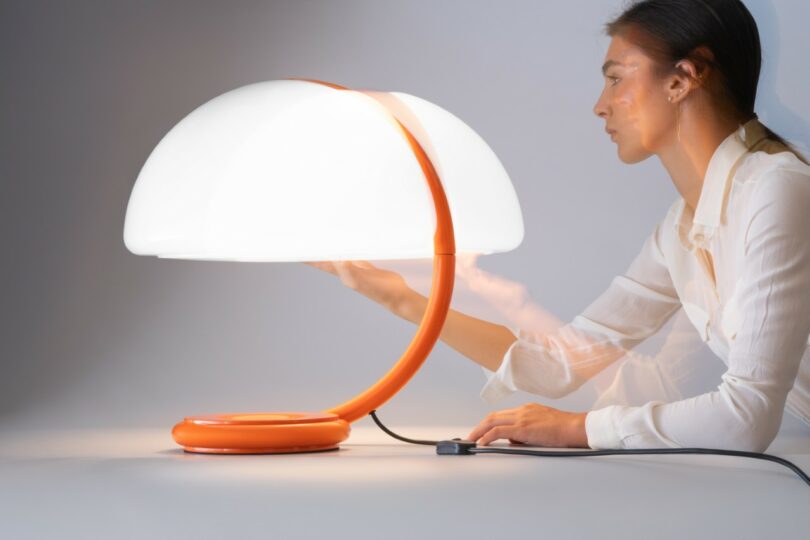
What defines an "icon"? In the world of lighting, it is the rare ability to solve a functional problem through a poetic form. The Serpente Lamp achieves this through its signature swivel arm. Unlike standard lamps that offer fixed illumination, the Serpente features a heavy metal base connected to a rotating upper arm, supporting a large opal white methacrylate diffuser.
The "magic" lies in its movement. The lamp provides a full 360-degree horizontal rotation, allowing the user to direct light exactly where it’s needed without moving the entire unit. This movement mimics the fluid, sinuous motion of a snake—hence the name Serpente.
"The Serpente is not just a lamp; it is a mechanical gesture. It represents the moment when Italian design stopped being about the object and started being about the interaction between the object and the inhabitant." — Ivy Chen
The choice of materials was equally groundbreaking. The diffuser is made of opal white methacrylate, which provides a soft, translucent glow that eliminates harsh shadows. This was a significant departure from the direct, often glaring light of traditional metal lampshades. By utilizing thermoforming, Martinelli achieved a perfectly hemispherical "undercut" shape that appears to float above the base.
The 60th Anniversary: Why Orange is the New White
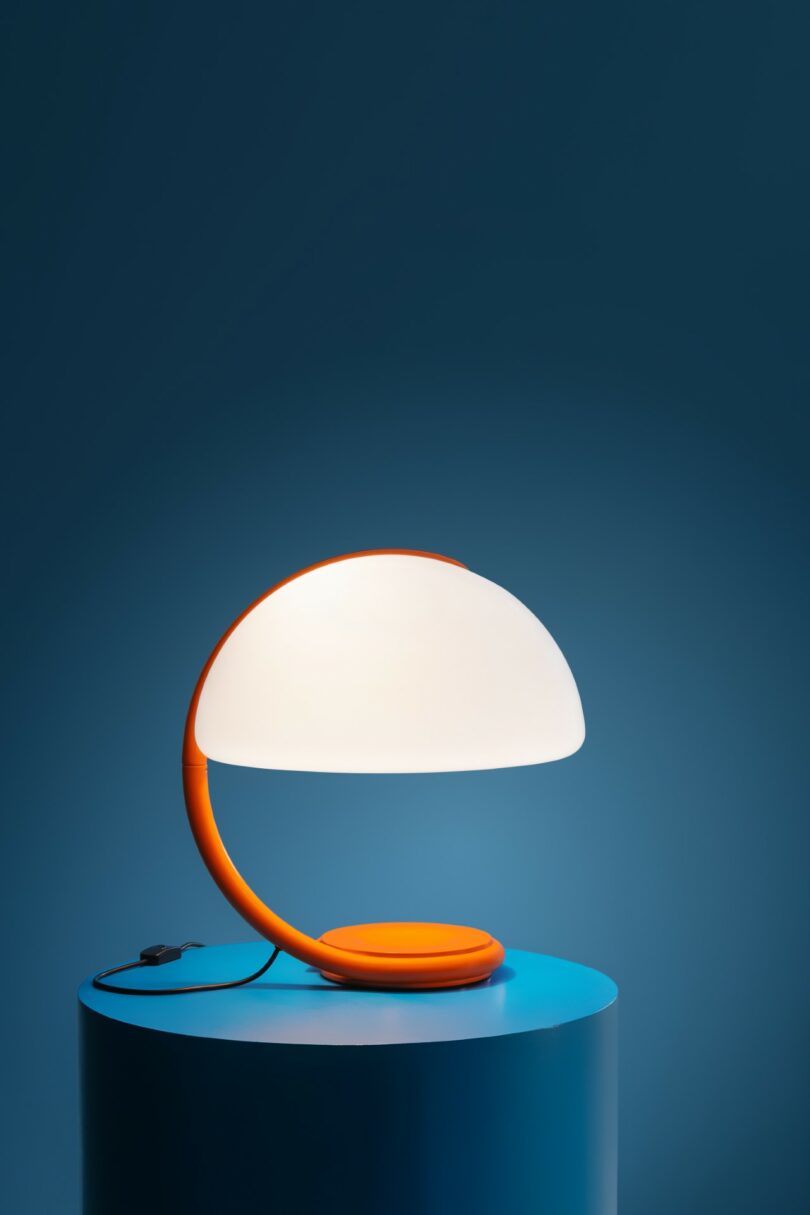
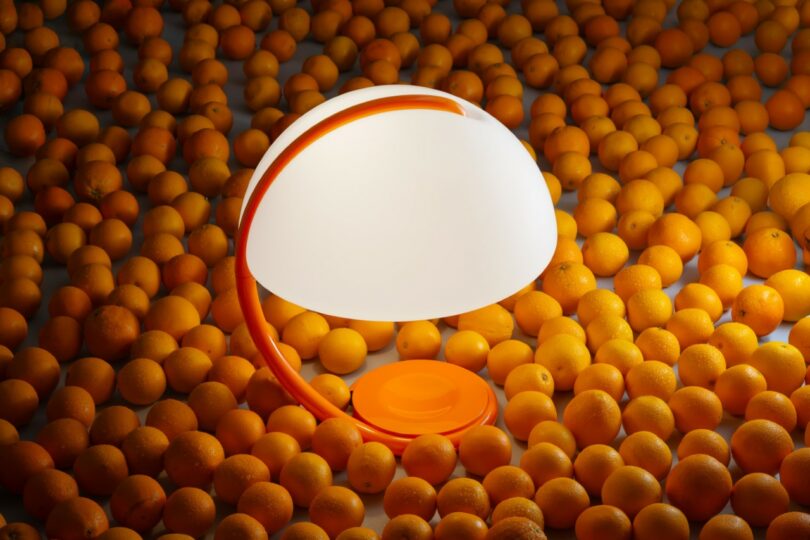
As we celebrate the 60th anniversary of this masterpiece, Martinelli Luce has introduced a limited edition that pays homage to the vibrant spirit of the 1960s: the Serpente 60. While the classic white model is the definition of timelessness, the anniversary edition comes in a bold, saturated orange.
This wasn't an arbitrary choice. According to Emiliana Martinelli, Elio’s daughter and the current president of the company, orange was chosen to symbolize enthusiasm, creative freedom, and the "vital spark" that drove her father’s work. The orange Serpente 60 is more than a lighting fixture; it is a statement piece that bridges the gap between mid-century nostalgia and contemporary maximalism.
The anniversary edition features:
- A High-Gloss Finish: The orange hue is applied with a finish that emphasizes the lamp's curves.
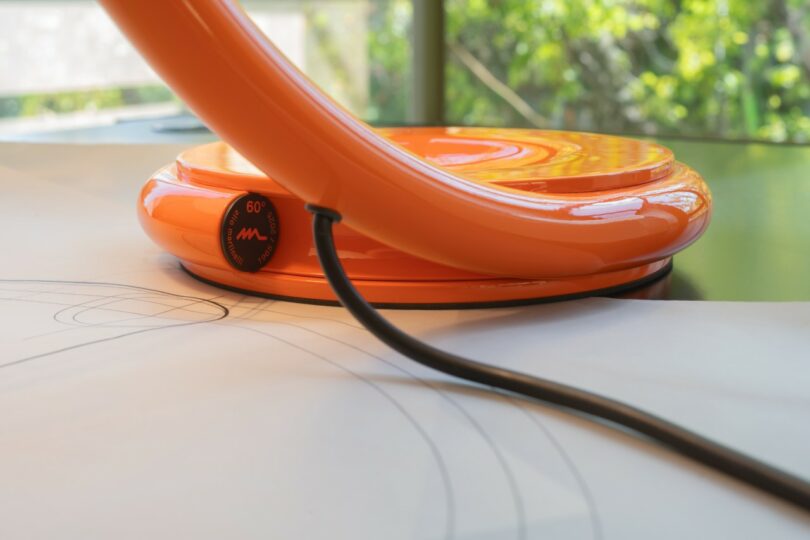
- Commemorative Engraving: Each piece in the anniversary series carries the weight of 60 years of heritage.
- LED Compatibility: While the form remains unchanged, the internal components have been modernized for maximum energy efficiency.
Choosing Your Icon: Floor vs. Table Models
The Serpente is available in two primary sizes, each serving a distinct purpose within a living space. Whether you are looking for a centerpiece for your lounge or a functional companion for your desk, understanding the proportions is key to a successful styling project.
| Feature | Serpente Table Lamp (Mod. 599) | Serpente Floor Lamp (Mod. 2131) |
|---|---|---|
| Height | 45 cm | 120 cm |
| Diameter | 45 cm | 55 cm |
| Rotation | 360-degree swivel arm | 360-degree swivel arm |
| Ideal Placement | Side tables, desks, consoles | Reading nooks, sofa corners |
| Bulb Type | 1x E27 LED | 1x E27 LED |
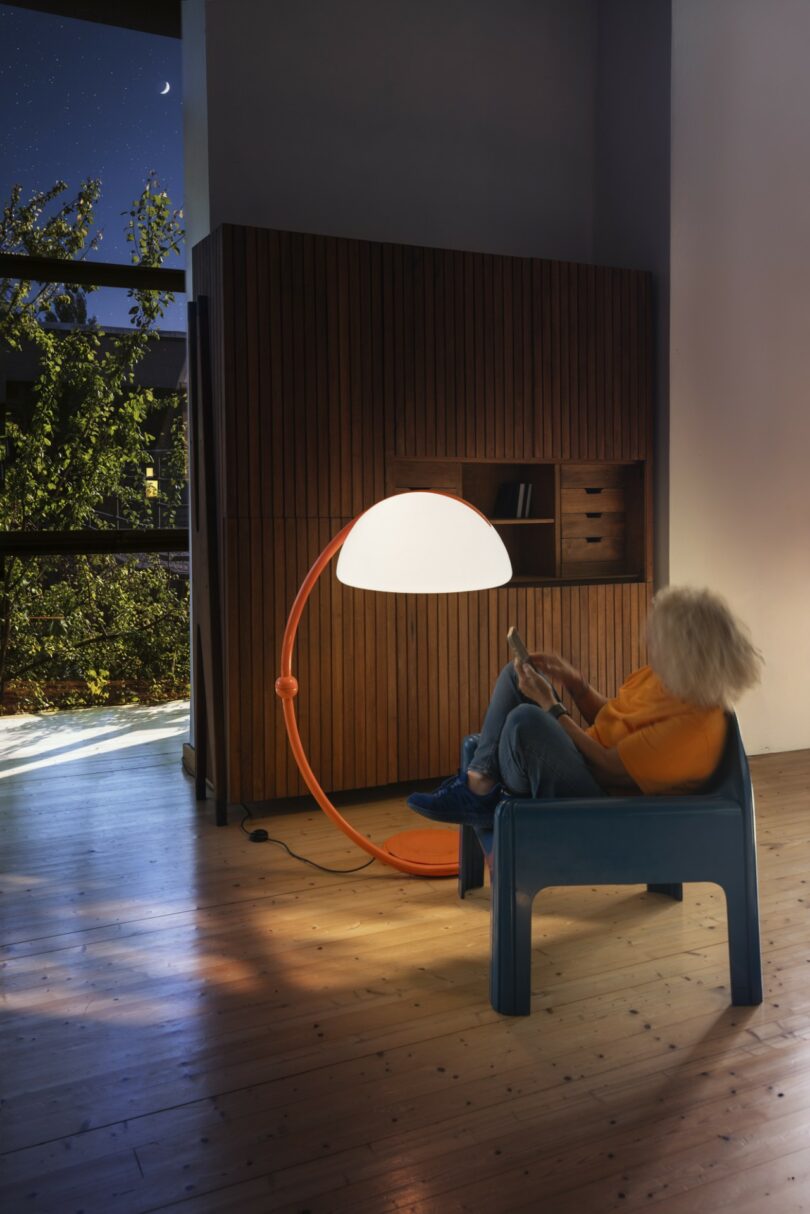
The floor model, standing at 120 cm, is a masterclass in scale. Its height allows the swivel arm to extend over the back of a lounge chair or a low-profile sofa, providing the perfect downward glow for reading without the need for an overhead light. Its presence is sculptural; even when turned off, its silhouette creates a focal point that anchors a room.
Styling the Serpente in a Modern Context
One of the reasons the Serpente has survived for 60 consecutive years is its incredible versatility. It fits as naturally in a minimalist loft as it does in a home filled with eclectic antiques. As an editor, I often see the Serpente used as a "visual bridge"—a piece that connects different eras of design.
Pairing with Mid-Century Classics
The Serpente pairs beautifully with the work of Elio’s contemporaries. Consider placing a white Serpente floor lamp next to a Gae Aulenti coffee table or near a Gio Ponti-inspired armchair. The shared language of Italian Mid-Century Modernism—clean lines, organic curves, and innovative use of materials—creates a cohesive, curated look.
The Power of Contrast
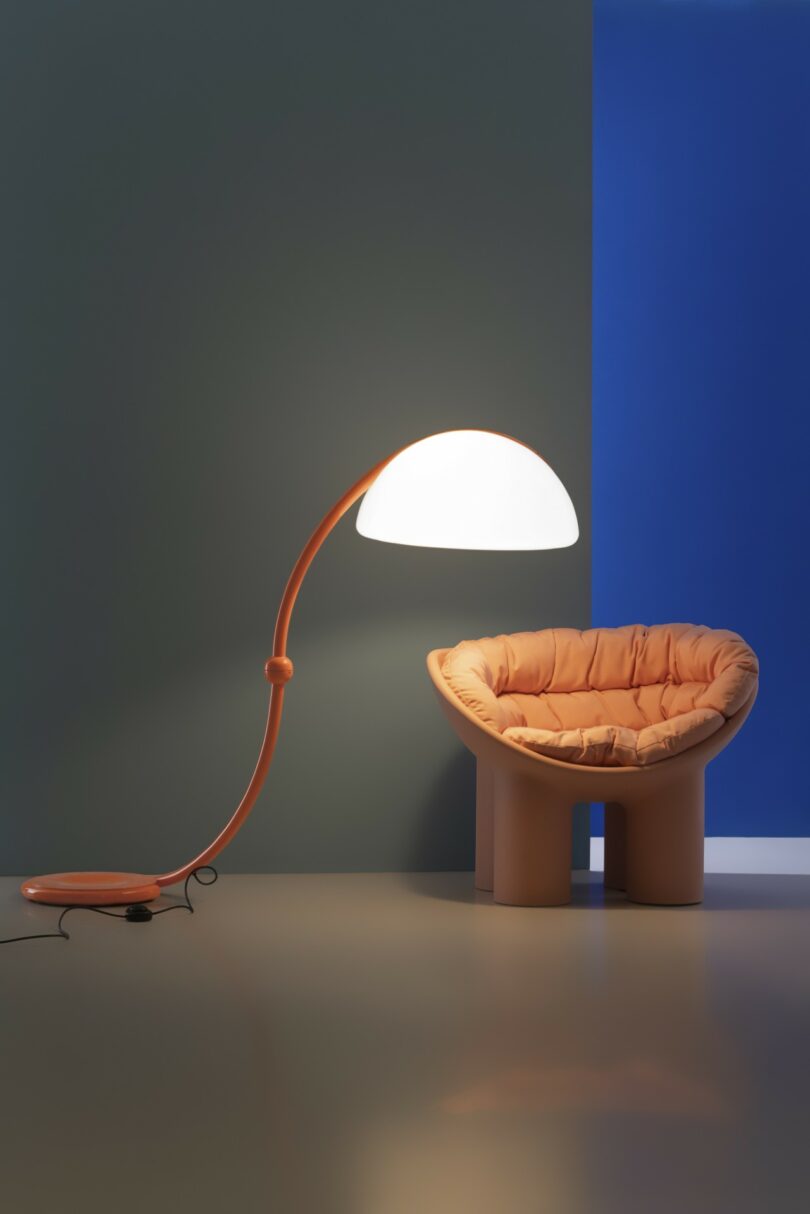
Don't be afraid to use the Serpente 60 (orange) in a room dominated by cool tones like charcoal gray, navy blue, or forest green. The pop of orange provides a warm, energetic contrast that keeps a space from feeling too "gallery-like" and sterile.
Placement Tips
- The Reading Nook: Place the floor model slightly behind your favorite chair. Rotate the arm so the light falls directly over your shoulder.
- The Minimalist Office: Use the table model on a clean, wooden desk. Its 360-degree rotation allows you to pivot the light away from your computer screen to your paperwork with a single touch.
- The Entryway Statement: A table model on a sleek console table creates an immediate sense of design authority for anyone entering your home.
Evaluating Authenticity and Craftsmanship
Because the Serpente is a "production staple"—meaning it has never gone out of production—you can find both vintage and new models. However, its popularity has also led to many imitations. To ensure you are investing in a genuine piece of design history, look for these hallmarks:
- The Weight: A genuine Serpente is surprisingly heavy. The base must be substantial to counteract the cantilevered weight of the swivel arm.
- The Movement: The rotation should be smooth, silent, and effortless. If there is resistance or a "grinding" feel, it is likely a low-quality replica.
- Material Quality: The methacrylate diffuser should be uniform in color and thickness. Authentic Martinelli Luce diffusers have a specific density that creates a "velvet" light quality.
- Maker's Marks: Check the underside of the base for the Martinelli Luce stamp and the "Made in Italy" certification.
Conclusion: The Timelessness of Good Design
The Serpente Lamp remains an icon because it captures the rare intersection of engineering and emotion. It is a functional sculpture that brings energy and life into any space it occupies. After 60 years, it continues to prove that good design isn't about following trends—it's about creating a form so perfect that it never needs to change.
Whether you choose the classic white for its understated elegance or the bold anniversary orange for its creative spark, owning a Serpente is about more than just lighting a room. It is about becoming a steward of a legacy that began in a small Italian workshop in 1965 and continues to illuminate the future of design today.
FAQ
Who designed the Serpente Lamp? The Serpente Lamp was designed by Elio Martinelli in 1965. It was one of his most significant contributions to the Italian Mid-Century Modern movement and remains the flagship product of his company, Martinelli Luce.
What makes the Serpente Lamp's movement unique? The lamp features a unique swivel arm that allows the diffuser to rotate 360 degrees horizontally. This design allows the user to change the direction of the light and the silhouette of the lamp itself, mimicking the fluid motion of a snake.
What is special about the Serpente 60 edition? To celebrate its 60th anniversary, Martinelli Luce released the Serpente 60 in a bold orange hue. This color was selected by Emiliana Martinelli to symbolize the enthusiasm, creative energy, and freedom that characterized the brand’s origins in the 1960s.