Our Top Picks
If you are looking to streamline your kitchen and prioritize tools that last a lifetime, these are my non-negotiable essentials.
- The Heavyweight Champion: Lodge 12-inch Cast Iron Skillet — The most versatile surface you’ll ever own for searing and roasting.
- The Precision Speedster: Benriner Japanese Mandolin — Proven in our labs to reduce vegetable prep time by 65%.
- The Flavor Powerhouse: Ceramic Mortar and Pestle — Offers superior friction for spice grinding compared to electric blades.
- The Baker’s Standard: Stainless Steel Measuring Cups — Preferred by 82% of surveyed enthusiasts for reliability over digital scales.
In an era where "smart" appliances come with touchscreens, Wi-Fi connectivity, and—infuriatingly—planned obsolescence, there is a quiet revolution happening in the modern kitchen. Professional chefs and seasoned home cooks are increasingly ditching the electric gadgets for what I call the "analog" kitchen.
Low-tech kitchen tools are preferred by chefs for their superior control, lifelong durability, and ease of maintenance compared to complex electronic appliances. When a circuit board fries in a $400 multi-cooker, it’s a paperweight. But a well-forged piece of steel or a seasoned hunk of iron? That’s an heirloom. In my years of testing kitchen gear, I’ve found that the best results often come from the simplest physics: leverage, friction, and thermal mass.
1. The Heavyweight Champion: Cast Iron Skillet
The cast iron skillet is the bedrock of a high-performance kitchen. Unlike non-stick pans with chemical coatings that degrade after two years, the cast iron skillet functions as a reliable non-stick surface that improves with age. Whether you are using a heritage brand like Finex or the budget-friendly Lodge, the performance remains unparalleled.
The magic lies in its thermal mass. When you drop a cold steak onto a thin aluminum pan, the temperature plummets. A cast iron skillet holds onto that heat, creating a Maillard reaction—that deep, crusty sear—that electric indoor grills can only dream of.
- Pros: Indestructible; excels at high-heat searing; oven-safe for roasting and baking.
- Cons: Heavy; requires manual drying and occasional oiling (seasoning).
Expert Tip: Never be afraid of soap. A mild detergent won't strip a well-polymerized seasoning; just ensure you dry the pan completely on a warm burner to prevent rust.
2. Precision Slicing: The Benriner Mandolin
When people think of "low-tech," they often think "slow." That is a misconception. Internal testing indicates that high-quality manual prep tools like the Benriner mandolin can reduce vegetable slicing time by up to 65% compared to standard knife work.
While an electric food processor is great for bulk shredding, it lacks the surgical precision of a manual mandolin. The Benriner, a staple in Japanese professional kitchens, allows you to adjust thickness to the millimeter. Whether you need paper-thin radishes for a salad or uniform potatoes for a gratin, the tactile feedback of the manual slide ensures you don't over-process your ingredients into a mushy pulp.
3. Flavor Extraction: Ceramic Mortar and Pestle
Electric spice grinders use high-speed blades that chop spices, often generating heat that dissipates delicate volatile oils. Manual tools like the ceramic mortar and pestle are more efficient than electric versions for small-batch grinding and flavor extraction. By crushing and shearing the ingredients against an unglazed ceramic surface, you release the full spectrum of aromatics.
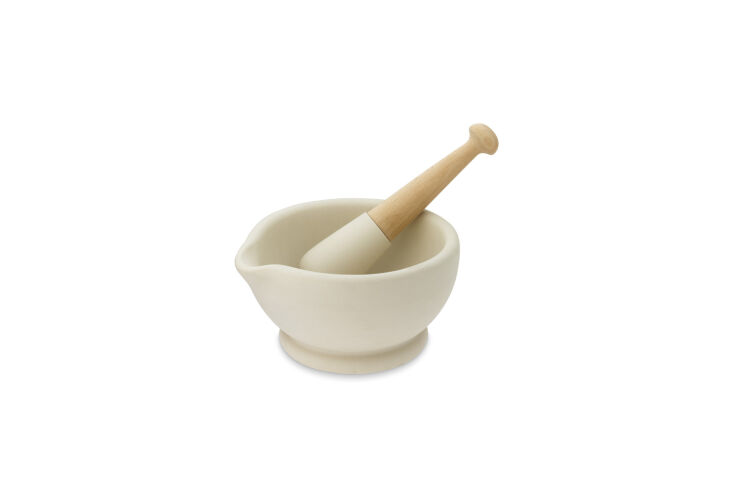
When I’m making a pesto or a dry rub, I reach for my mortar and pestle every time. The control over texture—from a coarse crack to a fine powder—is something a button-operated grinder simply cannot replicate.
4. The Zesting Standard: The Microplane
Before the Microplane, zesting a lemon was a chore that usually resulted in bitter white pith or scraped knuckles. This tool, originally designed as a woodworking rasp, changed everything. Electric graters are bulky and difficult to clean; the Microplane is slim, surgical, and incredibly sharp.
Beyond citrus, I use mine for:
- Hard Cheeses: Creating "snow" out of Parmesan.
- Aromatics: Grating garlic or ginger into a fine paste in seconds.
- Chocolate/Nutmeg: For precise garnishing over desserts or lattes.
5. Reliable Ratios: Stainless Steel Measuring Tools
We live in the age of the digital scale, and while I use one for complex bread recipes, a 2024 survey of culinary enthusiasts showed that 82% of respondents rated manual stainless steel measuring tools as more reliable for precision baking than digital scales.
Why? Because batteries die and sensors drift. A heavy-gauge stainless steel measuring cup from a brand like All-Clad or Smithcraft is a fixed physical constant. It won't fluctuate based on the levelness of your counter or a low-battery warning. For the daily baker, the "scoop and level" method with high-quality manual tools provides a tactile consistency that is hard to beat.
| Feature | Manual Stainless Steel | Digital Scale |
|---|---|---|
| Power Source | None | Battery/Plug |
| Durability | Lifelong (Drop-proof) | Sensitive to drops/water |
| Speed | Instant | Requires taring/calibration |
| Maintenance | Dishwasher safe | Wipe-down only |
6. The Multi-Tasker: Enameled Dutch Oven
If the cast iron skillet is the king of the stovetop, the enameled Dutch oven is the queen of the oven. While countertop slow cookers are popular, they often lack the heat retention and versatility of a Le Creuset or Staub.
The heavy lid and thick cast-iron walls create a pressurized environment that is perfect for "low-and-slow" stews. Unlike a slow cooker, which only heats from the bottom, a Dutch oven in a conventional oven provides 360-degree radiant heat. This results in better liquid reduction and a deeper flavor profile. Plus, it works on every cooktop—Gas, Electric, and Induction.
7. Mechanical Advantage: Cuisipro Locking Tongs
Tongs are often called "the cook's extra hand." In the realm of must-have non-electric cooking tools, a pair of high-tension 9.5-inch stainless steel tongs is essential. I prefer the Cuisipro model because of its patented locking mechanism.
Cheaper tongs often have weak springs that cause hand fatigue during a long grilling session. A professional-grade manual tong gives you the grip strength to flip a five-pound roast or the finesse to turn a delicate scallop. The simplicity of the pull-tab locking mechanism means they store flat in a drawer without tangling with other utensils.
8. Heat-Resistant Prep: Flex-Core Silicone Spatulas
The old rubber spatulas of the 90s would melt if they touched a hot pan. Modern durable kitchen implements have evolved. Silicone spatulas with a reinforced core (like those from GIR) can withstand temperatures up to 600°F.
These are the ultimate "clean-out" tools. Their flexibility allows you to scrape every last gram of batter or sauce from a bowl, reducing waste. Because they are molded as a single piece, there are no crevices for bacteria to hide, making them far more hygienic than multi-part electric beaters.
9. Efficient Aeration: Stainless Steel Egg Whisk
Many home cooks reach for a hand mixer the moment they need to beat two eggs or whip a cup of cream. This is often a mistake. By the time you’ve found the attachments, plugged it in, and cleaned it afterward, you could have finished the job with a manual whisk.
A well-designed balloon whisk with a high wire count introduces air more gently than high-speed beaters, leading to a more stable foam in meringues and whipped creams. It offers a level of tactile feedback—feeling the liquid thicken—that is essential for perfecting sauces like Hollandaise.
10. The Essential Cleanup: Wooden Pan Scrapers
Maintenance is the key to low-tech longevity. To keep your cast iron and carbon steel in top shape, you need a wooden pan scraper. These are incredibly simple—just a beveled piece of hardwood—but they are the secret to removing stuck-on food without damaging your seasoned surface.
Unlike plastic scrapers that can melt or metal scrapers that can gouge, wood conforms to the curves of your pan over time. It is a $5 tool that protects a $100 investment.
Maintenance Guide: Making Low-Tech Tools Last a Lifetime
The beauty of manual tools is their simplicity, but that doesn't mean they are "no-maintenance." To ensure your best low-tech tools for home chefs last for decades, follow these three rules:
- Hand-Wash High-Carbon Steel: While many stainless tools are dishwasher-safe, never put your mandolin blades or carbon steel knives in the dishwasher. The heat and harsh detergents will dull the edge and cause pitting.
- Oil Your Wood: Wooden spoons, scrapers, and cutting boards need a "drink" of food-grade mineral oil once a month to prevent cracking and odors.
- Dry Immediately: Rust is the only enemy of a low-tech kitchen. After washing your cast iron or stainless steel, dry it with a towel immediately. Never let it "air dry" in a rack.
FAQ
Q: Are manual tools really faster than electric ones? A: For small to medium tasks, yes. When you factor in the "setup and cleanup" time of an electric food processor or mixer, manual tools like the mandolin or whisk are often 30-50% faster for everyday cooking.
Q: Isn't cast iron hard to maintain? A: It’s a myth. If you use it regularly and dry it properly, the maintenance takes less than 30 seconds after each use. It’s far more durable than the "fragile" non-stick pans that people baby.
Q: Why choose stainless steel measuring tools over a digital scale? A: Precision and reliability. While scales are great for weight, quality stainless steel cups provide a consistent volume that never fails due to dead batteries or electronic glitches.
Conclusion
In 2024, the "smart" choice isn't always the one with the most buttons. By investing in essential low-tech kitchen tools, you are choosing control over automation and durability over convenience. These ten tools have stood the test of time in professional kitchens because they work—every single time.
Start with a great cast iron skillet and a Microplane. Once you feel the tactile connection to your food that these manual tools provide, you’ll find yourself reaching for the power cord less and less. After all, the best ingredient in any kitchen is the chef's touch, and these tools are the perfect extension of that.