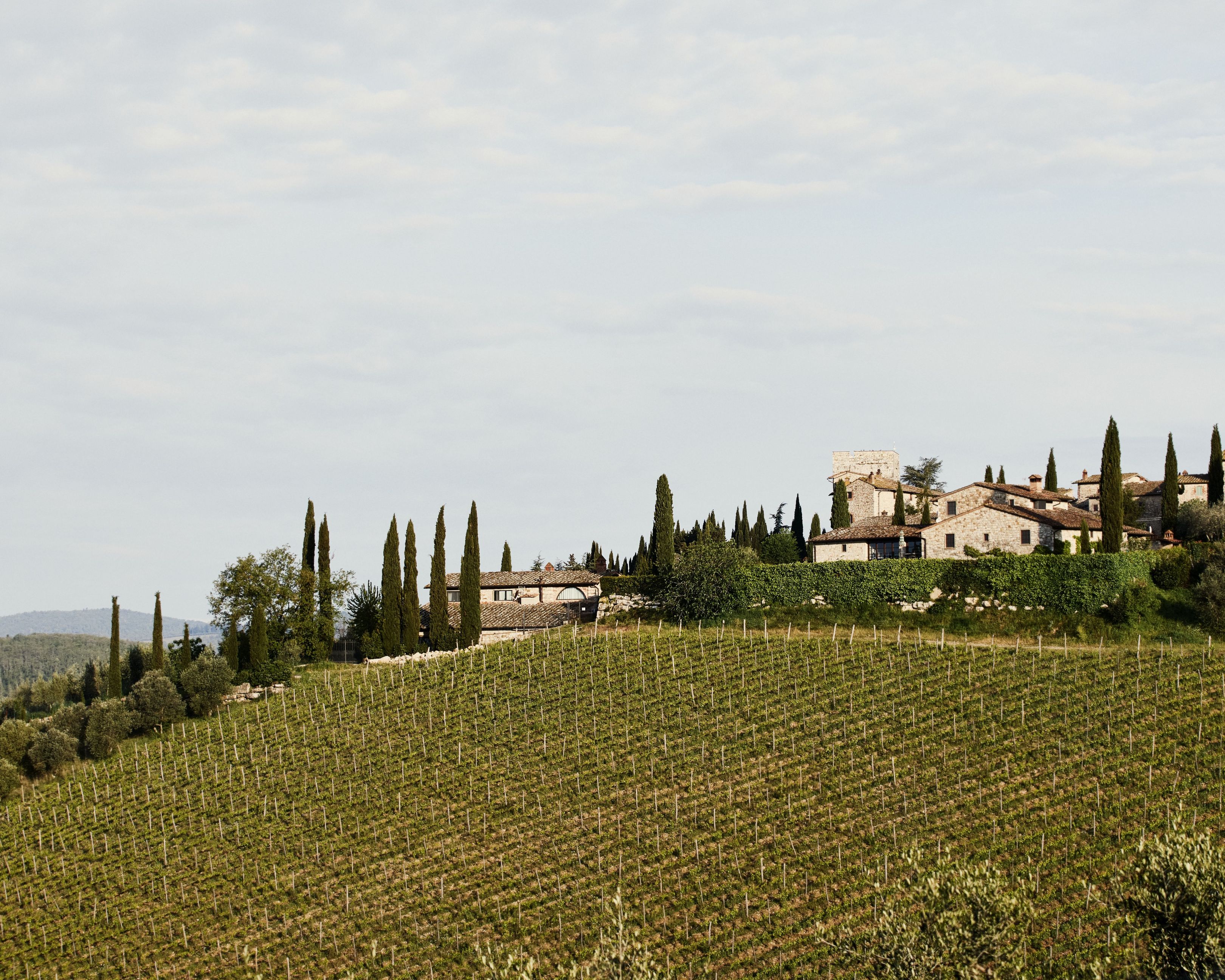
For most Americans, a dinner that lasts four hours sounds like a logistical nightmare or a wedding reception gone wrong. We are a culture of efficiency, where the average evening meal is wrapped up in a tidy 45 minutes. But in the sun-drenched hills of Tuscany, specifically within the rolling vineyards of Chianti, a 45-minute dinner isn't just fast—it’s considered a clinical failure of hospitality.
In Italy, the most vital rule of dining etiquette is to simply slow down. Meals are not logistical pauses in a busy day; they are the main event. They are social anchors intended to last several hours, prioritizing conversation, eye contact, and community over the mere act of consumption. To rush a meal in a Chianti trattoria is to signal to the chef and your companions that you have somewhere more important to be—and in the Italian worldview, there is almost nothing more important than the table you are currently sitting at.
To truly understand this philosophy, one must look to those who have bridged the gap between the frantic pace of the West and the rhythmic pulse of Tuscany. John Bersani, a name synonymous with the "20 Amici" philosophy, spent twenty years living in the heart of Chianti. His journey from an outsider to a local fixture reveals that Italian dining isn't just about what is on the plate, but the spirit in which it is shared.
Lesson 1: Embrace the Art of the Four-Hour Dinner
The "Slow Down" rule is the foundation of Italian dining culture. When you sit down at a local Osteria, the table is yours for the night. You will notice that waitstaff rarely hover, and they almost never bring the check unless you specifically ask for it ("Il conto, per favore"). In the U.S., "flipping tables" is the goal of a restaurant; in rural Tuscany, "holding the table" is the goal of the guest.
Cultural studies comparing dining habits have found a staggering disparity: while a standard social dinner in rural Tuscany averages 3.5 hours, American evening meals average less than an hour. This isn't because Italians eat more food—though they often do—but because they treat the intervals between courses as the most essential part of the experience.
It is during these gaps that the real work of living happens. You discuss the harvest, the local politics, or the quality of the olive oil. By rushing, you bypass the connection. To dine like a local, you must rewire your internal clock. If you find yourself looking at your watch, you're doing it wrong.
Lesson 2: The Power of Five (Or Fewer)
If you ask a traditional Tuscan nonna for the secret to her world-class Pappa al Pomodoro, she won't hand you a list of twenty spices. She will likely point to the bread, the tomatoes, the garlic, the basil, and the olive oil. That’s it.
Authentic Tuscan cuisine is built on a foundation of extreme simplicity. The goal isn't to mask ingredients with complex sauces, but to celebrate the ingredient itself. Expert analysis of traditional Chianti home cooking reveals that 85% of authentic regional recipes utilize five or fewer primary ingredients. This commitment to culinary purity ensures that the natural, seasonal flavors remain the centerpiece.
Consider the classic spring dish of Fava Beans and Pecorino. It requires zero cooking. It is simply the freshest beans, a wedge of salty sheep’s milk cheese, and perhaps a crack of black pepper. To a local, adding anything else would be viewed with "dripping skepticism." When the ingredients are this high-quality, complexity is seen as a way to hide a lack of freshness.
Local Insight: Simplicity in the kitchen requires bravery. When you only use three ingredients, each one must be perfect. This is why Italians are so obsessive about the "Gallo Nero" (Black Rooster) seal on their Chianti Classico wine—it represents a standard of quality that allows the wine to speak for itself without additives.
Lesson 3: Navigating the 'Unspoken' Etiquette
Tourists often feel a sense of "cultural friction" in Italy, usually because they are unknowingly breaking long-standing social codes. These aren't just "rules" for the sake of being difficult; they are rooted in a deep-seated belief in la bella figura (making a good impression) and a physiological respect for digestion.
To blend in with the locals and show respect for the traditions John Bersani lived by for two decades, keep this "No-Go" list in mind:
| The Faux Pas | Why It Matters | The Local Alternative |
|---|---|---|
| Cappuccino after 11 AM | Italians believe milk after a meal ruins digestion. | Order an Espresso or Caffè Macchiato. |
| Using a spoon for pasta | Spoons are for soup or for children who haven't mastered the fork. | Twirl your pasta against the side of the plate. |
| Cheese on seafood | The strong flavor of cheese is thought to overpower delicate fish. | Just say "No" to the Parmigiano if there's clams on the plate. |
| Dipping bread in oil/balsamic | Bread is meant to clean your plate (scarpetta) or accompany meat. | Use bread to soak up the leftover sauce at the end. |
One of the most common mistakes is attempting to rush the service. If you try to flag down a waiter every five minutes, you aren't being "proactive"—you are viewed as breaching the social rhythm. Trust the process. The food will come when it is ready, and it will be better for the wait.
Lesson 4: Simplicity in Life as in the Kitchen
The final lesson from a Chianti local is that the philosophy of the table extends far beyond the dining room. In Tuscany, there is a seamless bridge between how one eats and how one lives. This is the concept of Piano, Piano—slowly, slowly.
In the U.S., we often strive for a "perfect" life, which usually involves a packed schedule and high-speed achievements. In Chianti, the goal is a "good" life, which involves community and "going with the flow." After a heavy meal, locals participate in the Passeggiata—a slow, aimless stroll through the village piazza. It isn't exercise; it's a social ritual. It’s a chance to see neighbors, breathe the evening air, and digest both the food and the conversation of the night.
Living in Chianti for 20 years teaches you that perfection is found in the imperfections—the slightly dusty bottle of wine, the loud laughter from the next table, and the realization that you don't need a twenty-item to-do list to have a productive day. Sometimes, the most productive thing you can do is sit under a pergola for three hours with a glass of Sangiovese and a few good friends.
Practical Guide: Visiting Chianti Like a Local
If you are planning a trip to the region, don't just stick to the main squares of Florence or Siena. To experience true Chianti dining culture, you need to head into the hills.
- Follow the Black Rooster: Look for the Gallo Nero symbol. This indicates an authentic Chianti Classico, grown and bottled within the historic region according to strict traditional methods.
- Drive the SS222: Also known as the Chiantigiana, this is one of the most beautiful roads in the world. It connects Florence to Siena, passing through essential villages like Greve, Panzano, and Radda.
- The "Coperto" Explained: When you see a charge of €2 or €3 for "Coperto" on your bill, don't be alarmed. This is a standard "cover charge" for the bread, linens, and the fact that you are occupying the table for as long as you wish. It is not a tip, though a small additional tip is appreciated for exceptional service.
- Stand for your Coffee: If you want a quick caffeine hit, do it like the locals. Drink your espresso standing up at the bar. It’s cheaper, faster, and gives you a front-row seat to the morning theatre of Italian life.
FAQ
What should I do if I have a food allergy in a traditional Tuscan restaurant? While Tuscans value tradition, they are generally very accommodating. Use the phrase "Sono allergico a..." (I am allergic to...). However, because many dishes only have 3-5 ingredients, it is often easier to identify "safe" dishes than in more complex cuisines.
Is it rude to ask for "To-Go" boxes in Italy? In traditional rural trattorias, the concept of a "doggy bag" is still somewhat rare. Portions are designed to be finished, and the emphasis is on the freshness of the moment. It is better to order fewer courses and finish them than to plan for leftovers.
Do I need to make reservations? In Chianti, yes. Because locals "hold" tables for the entire evening, a restaurant with only ten tables might only serve ten groups in a night. Always call ahead, especially for dinner.
About the Author: Alex Morgan is a General Content Editor specializing in cultural travel and culinary traditions. With a focus on slow-living philosophies, Alex translates global heritage into actionable insights for the modern traveler.