If you’ve ever watched a professional cooking show and wondered how the host manages to maintain a pristine marble countertop while braising short ribs, I’m going to let you in on a secret: it’s an illusion. Behind the camera, there are piles of dirty prep bowls, half-empty spice jars, and enough grease to fry a second meal. The difference between their "set" and your Tuesday night kitchen isn't that they are cleaner; it's that they know how to curate the view.
As a home organization editor, I’ve spent years studying how professional set stylists create that elusive "breathable" kitchen aesthetic. They don’t wait for a deep-clean Sunday to make a space look functional and calm. Instead, they use a series of systems-driven "cheat-cleaning" methods. To hide kitchen clutter instantly, the pros use the 'stash and dash' method: move unwashed dishes and countertop items into a laundry basket or the cabinet under the sink to create an immediate visual reset.
By adopting a "Set Director" mindset, you can transform your kitchen from a site of stress into a high-performance workspace—even if you only have five minutes before guests arrive.
I. The Immediate Visual Reset: Hiding the Mess
The primary goal of a video set is to eliminate "visual noise." In your home, visual noise is anything that draws the eye away from the intentional design of the room—the mail pile, the toaster crumbs, the tangled charging cables.
1. The Laundry Basket 'Stash and Dash'
When a director shouts "Action!" every non-essential item must vanish. You can replicate this speed by keeping a dedicated "Reset Basket"—ideally a sturdy, aesthetic wicker or wire laundry basket—nearby. Instead of trying to organize every piece of mail or stray toy when you're in a rush, simply sweep everything into the basket and move it out of the room.
This isn't just about hiding a mess; it's about reclaiming the surface area. Moving unwashed dishes and countertop items into the dishwasher, the oven (if it's off!), or a deep cabinet under the sink creates an immediate visual reset. This allows your brain to focus on the task at hand rather than the mountain of "to-dos" sitting on your counters.
Pro Tip: An industry analysis of professional cooking sets shows that these 'cheat-cleaning' techniques can reduce perceived visual clutter by 70% in under five minutes. It’s about managing the "frame" of your life.
2. Under-Sink Sanctuaries
Professional sets never have loose bottles of dish soap or ragged sponges sitting out. They utilize the space under the sink as a high-efficiency zone. Invest in lined baskets to categorize your cleaning supplies: one for daily sprays, one for heavy-duty scrubbing, and a "go-bag" for the rest of the house.
Before you start your "speed clean," follow the 30-second 'sink scrub' rule. Clear the basin, hit it with a quick spray of multi-purpose cleaner, and wipe it down. A shiny sink reflects light and serves as the "anchor" of a clean kitchen, even if the surrounding counters aren't perfect yet.
II. Aesthetic Camouflage: Professional Styling Secrets
Sometimes, you don't have time to scrub away every blemish. Professional set stylists use 'camouflage decor' to hide grease stains, wall cracks, or unsightly fingerprints on countertops and shelves while adding an illusion of freshness.
3. The 'Camouflage Decor' Strategy
If you have a stubborn tile crack or a lingering grease spot on the backsplash, don't panic. This is where your styling "props" come in. A large wooden cutting board leaning against the wall can hide a multitude of sins. Similarly, a stack of vibrant, oversized cookbooks can cover up a worn patch on a laminate countertop.
Think of your kitchen items as actors. A beautiful ceramic pitcher doesn't just hold water; it's a "distraction accent" that draws the eye away from a cluttered corner. Bold prints on high-quality tea towels draped over the oven handle can also mask fingerprints or minor dents in the appliance door.
4. Cookbook Stacking and Open Shelving
To achieve that "Retail Chic" vibe seen in professional kitchens, stop thinking of your shelves as storage and start thinking of them as displays. Professional sets use vertical stacks of cookbooks rather than horizontal rows. This creates different heights and levels, which is more pleasing to the eye.
Zone your items by color and height. Group all your white ceramics together, or create a "coffee station" zone that feels intentional. When items are grouped into "zones," the brain perceives them as a single unit rather than ten individual pieces of clutter.
5. Freshness via Greenery
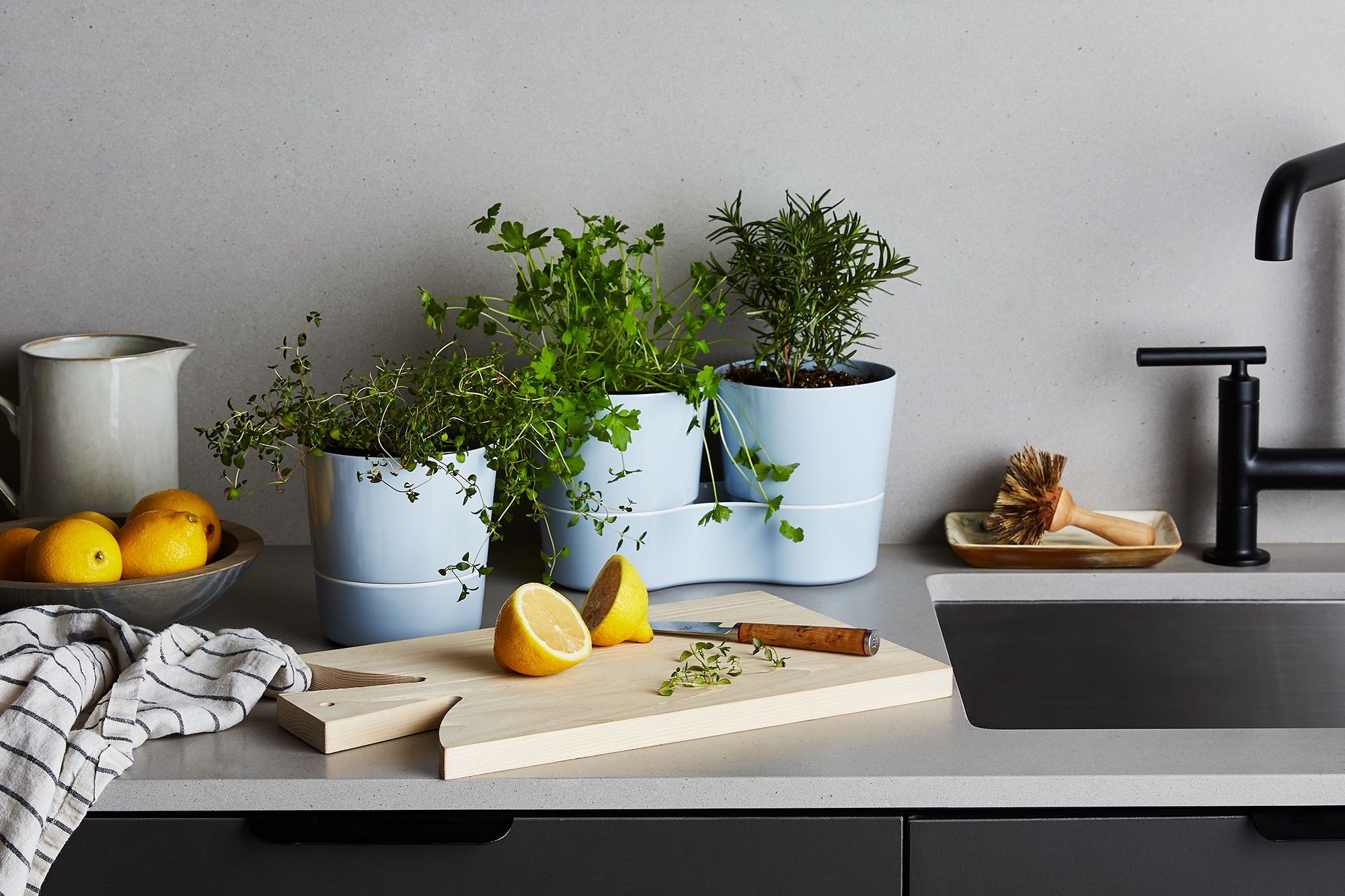
Nothing says "organized and clean" like living plants. Set directors often bring in "hero plants" to make a kitchen feel vibrant and healthy. If your kitchen feels a bit stale, transfer a few plants from your balcony or living room. Snake plants, succulents, or even a simple vase of eucalyptus can provide an 'illusion of freshness.'
III. Sensory Polish and Detail Work
A kitchen that looks clean but smells like last night’s fish isn’t truly "set-ready." Sensory polish is the final layer that convinces the brain the space is pristine.
6. The Cotton Ball Scent Hack
The 'cotton ball trick' for kitchen odors is a staple in the hospitality and film industries. Soak a cotton ball in essential oils—lemon, grapefruit, or peppermint are best for kitchens—and place it at the bottom of your trash can, beneath the liner. This releases a fresh, subtle scent every time the lid is opened, neutralizing odors before they can escape.
If you have an extra five minutes, you can also create a "simmer pot." Put a pot of water on the stove with a few lemon slices and a sprig of rosemary. The steam will act as a natural humidifier and scent diffuser, making the entire kitchen feel intentional and cared for.
7. The 30-Second Fingerprint Wipe
On a high-definition video set, every smudge is magnified. To get that pro-level finish at home, focus on high-touch surfaces. You don't need to deep-clean the whole fridge; just use a microfiber cloth and a dash of white vinegar to wipe the handles and the front panel.
For glass cabinet doors or open shelving, use the old-school newspaper trick. The ink and the texture of the paper provide a streak-free shine that modern paper towels can't match. It’s these small "glimmer" points—the faucet, the fridge handle, the window—that signal "clean" to the observer.
8. Pantry Zoning 2026: The Grid System
As we move into 2026, the trend in kitchen organization is shifting toward "The Grid System." This involves implementing clear containers and smart zones specifically for "active ingredients." Instead of a pantry overflowing with half-opened bags, move your most-used items (flour, sugar, pasta, snacks) into uniform glass or BPA-free plastic bins.
Pro Tip: A 2024 survey of kitchen organizers indicates that 88% of homeowners feel more productive when adopting the 'pro-set' rule of keeping only active ingredients on the counter. If you haven't used it in the last 24 hours, it doesn't belong on the "stage."
| Standard Cleaning | Pro Set Styling |
|---|---|
| Focuses on deep scrubbing surfaces | Focuses on visual lines and "hero" spots |
| Keeps all appliances on the counter | Hides daily appliances to create "negative space" |
| Organizes by category (all cans together) | Organizes by "action" (baking zone, coffee zone) |
| Uses commercial air fresheners | Uses natural simmer pots and 'cotton ball' hacks |
IV. Final Touches: Lighting and Authenticity
The final secret to a professional-looking kitchen is lighting. Shadows create an atmosphere of clutter and grime, while light creates an atmosphere of cleanliness.
9. Under-Shelf Glow-Ups
Adding LED light strips under your cabinets is one of the most cost-effective ways to upgrade your kitchen. As seen in the Best of Houzz 2026 winners, under-cabinet lighting creates depth and warmth. It illuminates the backsplash (and your camouflage decor!), making the kitchen feel larger and more organized.
However, remember that perfection is overrated. Even the most expensive video sets have a "lived-in" quality. Embrace a little bit of the "well-worn" kitchen—the patina on a copper pot or the soft edges of a wooden spoon. These elements provide soul to the systems you've built.
FAQ
Q: How do I maintain this look when I'm actually cooking? A: Use the "Clean as You Go" rule, but with a twist: have a "dirty bin" for used utensils so they aren't scattered across the counter. Keep your 'Stash and Dash' basket nearby for immediate clearing.
Q: What essential oils are best for the trash can hack? A: Citrus oils (Lemon, Orange, Bergamot) are excellent for cutting through food odors. Eucalyptus or Tea Tree oil can provide a more "sanitized" and clinical scent if that’s what you prefer.
Q: Are LED strips hard to install? A: Not at all. Most modern LED strips are "peel-and-stick" and battery-operated or USB-rechargeable, meaning you don't need an electrician to get that professional glow.
By treating your kitchen like a professional set, you aren't just "faking" a clean house—you're creating a system that prioritizes visual peace and functional efficiency. Start with the 'stash and dash,' add a bit of 'camouflage decor,' and watch how quickly your kitchen transforms from a chaotic room into a curated sanctuary.