By 2026, the global workforce will be sitting on some of the most sophisticated engineering marvels in history—chairs that adjust to the micron and desks that rise at the touch of a smartphone app. Yet, a troubling paradox remains: musculoskeletal disorders (MSDs) are not disappearing. In fact, research indicates that up to 75% of the potential health benefits from adjustable office furniture are lost if employees do not receive habit-based training for posture variability.
We have spent decades perfecting the "stage"—the equipment—while ignoring the "actors"—the people. Behavioral ergonomics is the missing link. It is a system-centric approach that prioritizes human habits, movement patterns, and reporting behaviors over static hardware. To build a truly people-centered space, we must move beyond simply buying better tools and start designing for better human behavior.
The ROI Crisis: Why Better Furniture Isn't Saving Your Back
The traditional approach to office ergonomics has been transactional: an employee reports back pain, the company buys a $1,200 task chair, and the case is closed. However, this "equipment-only" mindset is failing. By 2026, behavior-driven ergonomics programs are projected to reduce MSD risks by 40% more effectively than equipment-only interventions.
The reason is simple: a sit-stand desk is a sedentary tool if the user never actually stands. When we look at the Return on Investment (ROI) of ergonomic furniture, we see it depends entirely on behavioral adoption. If an employee receives a high-end ergonomic setup but continues to lean forward, crane their neck, and stay seated for eight hours straight, the equipment serves as little more than an expensive decoration.
Traditional Environmental Health and Safety (EHS) models are often reactive, waiting for an injury to occur before intervening. Behavioral ergonomics shifts this timeline. It focuses on "leading indicators"—active participation in movement and early reporting of discomfort—rather than "lagging indicators" like insurance claims. It’s about teaching the body to move through a "posture repertoire" rather than hunting for one "perfect" static position that doesn't exist.
Interaction Design: Using the Environment to Shape Habit
In a people-centered space, the environment acts as a "nudge." This is where interaction design meets physical ergonomics. Interaction design isn't just for software; it’s about how the physical world shapes user behavior. Think of the "Help Point" intercoms in the New York City subway system designed by Antenna Design. By making the interface intuitive and the physical placement accessible, the design dictates how people flow through the space and seek help.
In the office, we can use these same principles. For example, placing printers or water stations further from desks encourages "incidental movement." Using furniture with intuitive interfaces—such as desks that vibrate gently to remind a user to stand—turns a static object into a behavioral coach.
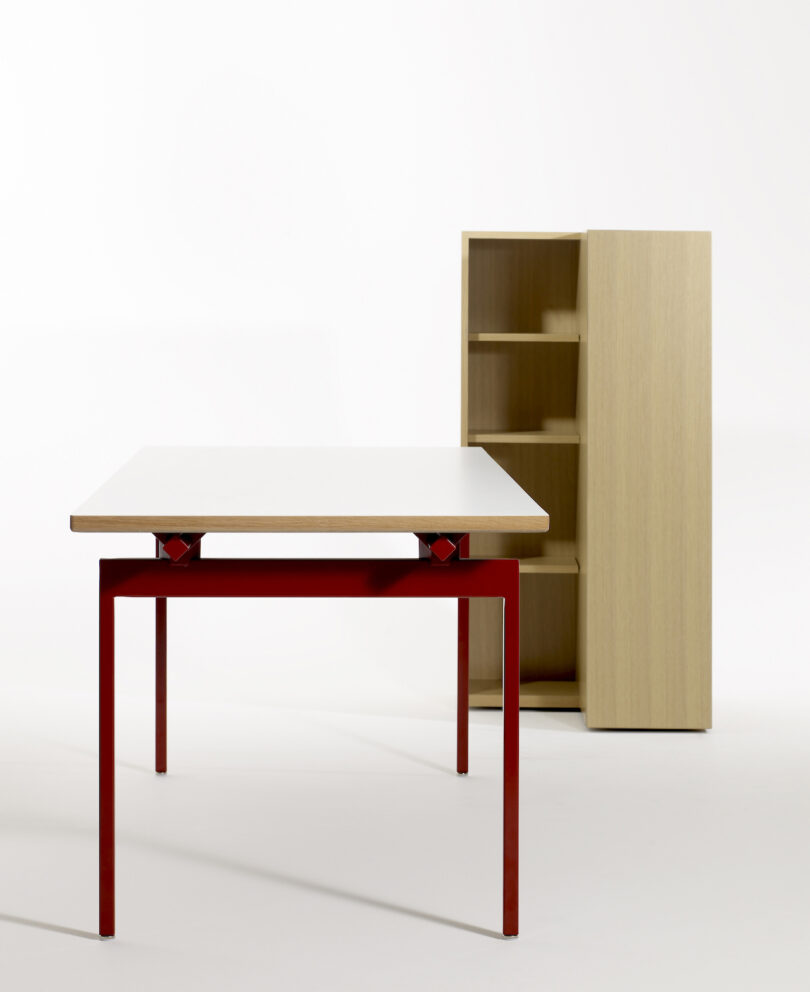
When the environment is designed to reward movement, behavior changes naturally. A people-centered space uses active-movement furniture not just for comfort, but as a cue for the brain to switch postures. This reduces "static load," the silent killer of productivity that causes muscle fatigue and cognitive fog.
Engineering the Blueprint: The Math of a People-Centered Space
Designing for people requires more than empathy; it requires geometry. To create a space that fits the 5th to 95th percentile of the workforce, we must look at the mathematical relationship between the user and their tools.
One of the most common issues in modern offices is the "Depth Deficit"—where the monitor is placed too close or too far, leading to "turtle necking" or eye strain. A people-centered blueprint uses specific anthropometric reference tables to calculate the ideal workspace.
The Viewing Distance Formula:
Recommended Distance (D) = 20 to 40 inches (50–100 cm)The 90-Degree Rule:Elbow Angle (E) ≈ 90° | Hip Angle (H) ≈ 90°–100° | Knee Angle (K) ≈ 90°
The Ergonomic Checklist for 2026
- Monitor Height: The top third of the screen should be at eye level to prevent neck flexion.
- Keyboard Position: Should allow for neutral wrists; if you can’t slide your feet under the desk, it’s too low.
- Lumbar Support: Must match the natural inward curve of the lower spine.
- The 20-20-20 Rule: Every 20 minutes, look at something 20 feet away for 20 seconds to reduce visual fatigue.
Sit-stand workflows are a core part of this blueprint, but they must be implemented with performance demand in mind. Standing for eight hours is just as harmful as sitting for eight. The goal is "posture variability"—switching between sitting, standing, and walking throughout the day.
2026 Implementation: Scaling Behavioral Change
As we approach 2026, the biggest challenge for organizations is scale. How do you implement behavioral ergonomics for a workforce of 5,000 spread across different time zones? The answer lies in leveraging technology to extend the reach of safety professionals.
Digital platforms and visual demonstrations are now the primary drivers of proactive safety. By using AI-driven assessments or multimedia training modules, companies can provide personalized coaching to every employee. This moves the needle from a reactive "injury-driven" response to a "proactive intervention" strategy.

By 2026, the most successful companies won't be those with the flashiest chairs, but those with the highest "ergonomic literacy." This means employees understand why they need to move and have the self-correction tools to fix their own posture before pain sets in.
The Hybrid Frontier: Self-Regulation in the Home Office
The rise of hybrid work has moved the "ergonomic perimeter" beyond the corporate office. In the home office, behavioral ergonomics is the only primary control available to the employer. You cannot control the lighting or the floorplan of an employee's spare bedroom, but you can empower them with habit-based training.
Self-regulation is the future of human-centric workspaces. When employees are taught to recognize the early signs of fatigue—the "micro-break" cues—they become their own safety officers. Measuring "Leading Indicators," such as the frequency of reporting discomfort or participation in wellness training, allows organizations to fix problems before they become costly medical claims.
Conclusion: Building the Future-Proof Workspace
The synergy between engineering and human habit is the foundation of a future-proof workspace. People do not get injured because chairs are designed poorly; they get injured because poor behaviors persist under pressure.
As we look toward the office of 2026, the focus must shift from the "object" to the "interaction." A truly people-centered space is one where the furniture facilitates movement, the culture rewards micro-breaks, and the individual is equipped with the knowledge to maintain their own physical well-being. Behavioral ergonomics isn't just a safety program; it’s a commitment to the long-term health and productivity of the human beings at the heart of every business.
FAQ
What is the main difference between traditional ergonomics and behavioral ergonomics?
Traditional ergonomics focuses on the physical design of equipment (the "stage"). Behavioral ergonomics focuses on the habits and movement patterns of the user (the "actor"). It prioritizes how people use their tools rather than just the tools themselves.
Why aren’t ergonomic chairs enough to prevent back pain?
An ergonomic chair only works if used correctly. If a user sits in a static position for hours or maintains poor posture, the chair's features cannot overcome the physical strain of inactivity. Habit-based training is required to unlock the chair’s benefits.
How often should I switch between sitting and standing?
The general recommendation is the 30-minute cycle: sit for 20 minutes, stand for 8 minutes, and move/stretch for 2 minutes. This variability prevents muscle fatigue and improves circulation.