Imagine walking into a home where the first thing you encounter isn’t a solid wall, but a mirror of liquid light. The air feels cooler, the light dances across the ceiling in rhythmic ripples, and the ambient noise of the city outside is replaced by the soft, rhythmic cadence of a flowing stream. For decades, we’ve treated water in residential design as a luxury afterthought—a swimming pool in the backyard or a fountain in the driveway. But as we look toward the architecture of 2026, water is reclaiming its role as a fundamental "compositional spine."
In my years as an editor focusing on sustainable living, I’ve seen the industry shift from decorative water features to integrated hydrological systems. Designing with nature isn’t just about adding greenery; it’s about using water as a primary architectural principle to organize space, manage energy, and restore the human psyche.
Beyond Aesthetics: Water as a Generator
When we speak of water as an architectural principle, we aren't just discussing a visual element. We are discussing a tool that dictates how a person moves through a building and how that building breathes. In modern sustainable design, water acts as a generator of spatial sequences. It defines thresholds, separates public and private zones, and serves as a natural cooling engine.
How does water function as an architectural principle? Water acts as a 'compositional spine' that organizes spatial sequences, reflects natural light to brighten interiors, and creates a rhythmic atmosphere through movement and sound. It serves as both a physical boundary and a sensory connector between the built environment and the natural world.
Unlike a static wall, water is dynamic. It responds to the wind, the angle of the sun, and the time of day. By placing water at the core of a home—perhaps in a central courtyard or as a perimeter "moat" that follows the hallway—architects can use its reflective properties to drive natural light deeper into a floor plan than windows alone ever could. This isn't just a poetic choice; it's a strategic one for energy efficiency and human well-being.

The Sukiya-zukuri Influence: Sensory Movement and Light
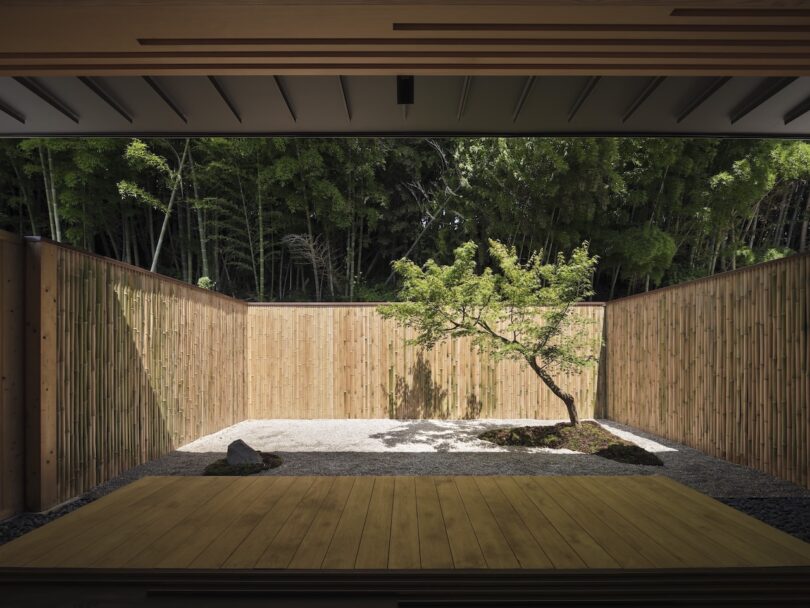
One of the most profound influences on this modern "water-first" philosophy is the Japanese Sukiya-zukuri style. Traditionally applied to teahouses, this aesthetic emphasizes a restrained, refined connection to nature. In the context of 2026 architecture, we see this most clearly in how water is used to handle transitions.
Take the 10M residence by Cubo Design Architect as a prime example. Here, the entry sequence is a masterclass in "compression and release." As you enter, the space might feel narrow or enclosed, only to open up into a vast area dominated by a water feature. This sudden expansion—coupled with the sight of salt air drifting through nearby bamboo and the sound of water—amplifies your sensory perception of the home’s scale and luminosity.
The Role of Luminosity and Sound
The impact of water on light is quantifiable. Strategic sunlight fragmentation—where light hits moving water and bounces onto interior surfaces—can increase perceived interior luminosity by up to 25%. This "shimmer effect" reduces the need for artificial lighting during the day and creates a living artwork on the walls.
Furthermore, water serves as a tool for "acoustic masking." In dense urban environments, the "white noise" generated by a small weir or a gentle overflow system masks traffic sounds, providing what psychologists call "cognitive restoration." It’s not just about silence; it’s about replacing stressful noise with biological rhythms.
What is the Sukiya-zukuri influence on water design? It emphasizes a restrained aesthetic where water-centric entries use compression and release to amplify the sensory perception of luminosity and natural surroundings. It bridges the gap between the interior and exterior, making the home feel like an extension of the landscape.
The Hierarchical Adaptation Framework for 2026
To design effectively with water, architects are now adopting a "Hierarchical Adaptation Framework." This approach ensures that water serves multiple functions simultaneously, from the ecological to the symbolic.
- Layer 1: Ecological (Resilience) This is the foundation of the home. Water is used for passive cooling (thermal mass) and resource availability. In a 2026-ready home, the water you see in the courtyard might also be part of a rainwater harvesting system that feeds the home’s greywater needs.
- Layer 2: Sensory (Psychological) This layer focuses on the user experience. It involves the thermal properties of the water (cooling the air through evaporation) and the psychological benefits of "Blue Space"—the proven reduction in cortisol levels when humans are near water.
- Layer 3: Symbolic (Identity) Finally, water serves as a cultural or personal anchor. It re-codes ancient rituals—like the cleansing act of crossing water to enter a sanctuary—into modern domestic life. It gives a home a sense of place and permanence.
Sustainable Residential Water Management: Tech Trends
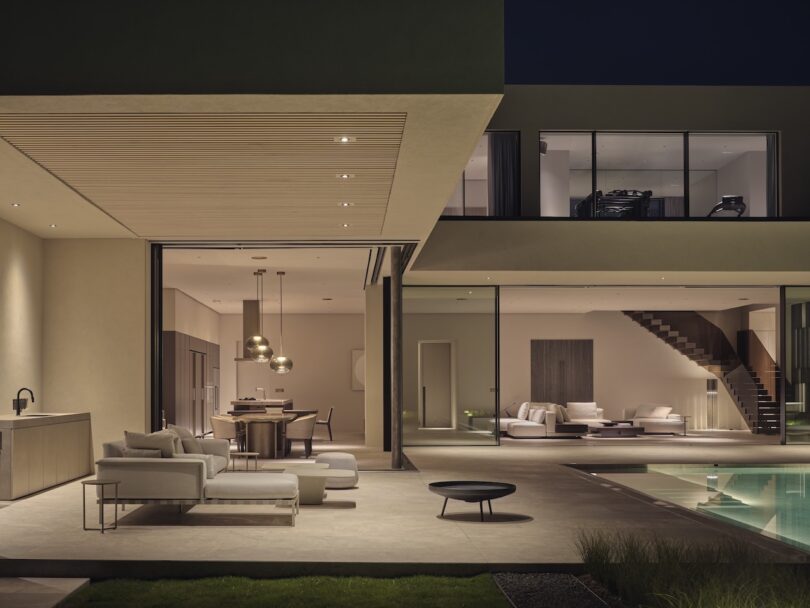
As we move toward 2026, the "how" of water design is becoming as sophisticated as the "why." We are moving away from centralized, wasteful systems toward decentralized, modular solutions. For the modern homeowner or renter, this means sustainability is no longer an invisible "utility" but a visible part of the home’s tech stack.
The Rise of Modular Treatment and AI
The most significant shift is the integration of decentralized modular water systems. These are essentially mini-treatment plants built into the residential plot. When combined with AI-driven sensors, these systems can monitor water quality in real-time, optimizing aeration to keep the water clear while using minimal energy.
How will technology impact water design by 2026? Future architecture will integrate modular treatment systems and AI-driven sensors to optimize real-time water recycling and energy-efficient aeration. These technologies are projected to reduce localized freshwater demand by 40% in residential projects.
Current luxury domestic designs are also adopting "Zero-Liquid Discharge" (ZLD) principles. In a ZLD home, every drop of water is accounted for—from the rain hitting the roof to the water used in the shower—recycled through modular filtration and reused for irrigation or atmospheric cooling.
| Feature | Traditional Water Design | 2026 Water Architecture |
|---|---|---|
| Primary Goal | Visual Decoration | Compositional & Ecological Spine |
| Water Source | Municipal Supply | Rainwater/Recycled Greywater |
| Management | Manual/Simple Timers | AI-Driven Real-Time Sensors |
| Impact | Increases Utility Costs | Reduces Freshwater Demand by 40% |
| Luminosity | Negligible | +25% Interior Brightness |

Implementing Biophilic Water Design: Materials and Systems
If you are looking to implement these principles, the choice of materials and the "delivery system" of the water are your two biggest levers.
Passive vs. Engineered Systems
You generally have two paths. Passive treatment systems, such as constructed wetlands or bio-swales, use plants and gravel to filter water naturally. These are beautiful and require no electricity but need more space. Engineered systems, like modular Reverse Osmosis (RO) or UV filtration, are compact and can be hidden within the architecture, making them ideal for urban terrains.
Material Interaction
The materials that touch the water define the aesthetic.
- Basalt and Dark Stone: Create a "mirror" effect, perfect for reflecting the sky and architecture.
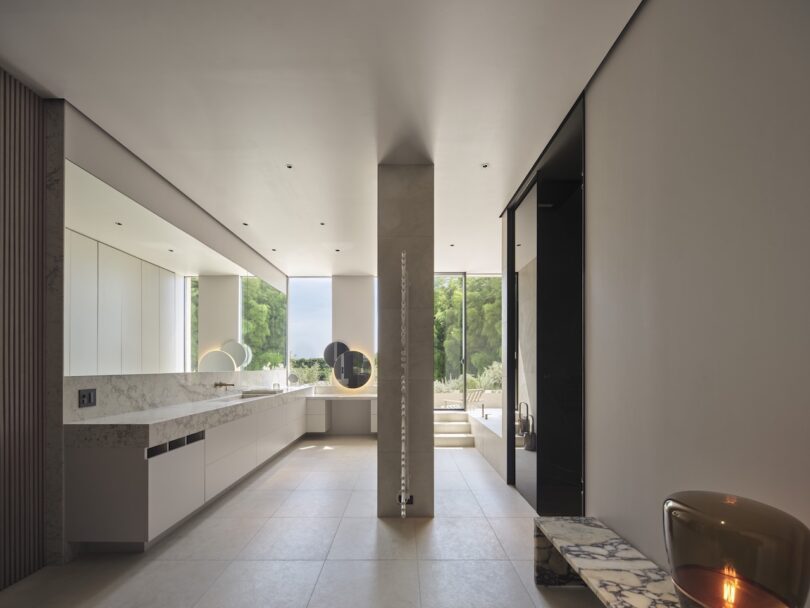
- Light Marble and Glass: Enhance the transparency and "purity" of water, often used in bathrooms or wellness zones to emphasize cleanliness.
- Permeable Pavers: Essential for the areas surrounding your water features to ensure that runoff is absorbed back into the local water table rather than lost to the sewer.
Conclusion: The Resilient Roadmap for Water-Centric Urbanism
Water is more than a resource; it is a mediator between our built environments and our human experience. As we face increasing water scarcity and urban heat islands, the move toward "Technological Biomimicry"—where our homes mimic the natural water cycle through tech-enhanced design—is no longer optional.
By embracing water as a compositional spine, we don't just build more beautiful homes; we build more resilient ones. We create spaces that breathe, that reflect the sky, and that save costs while saving our sanity. The future of architecture isn't just about what we build—it's about how we flow.
FAQ
Can water design be implemented in small urban apartments? Yes. While large ponds may be impossible, "vertical water walls" and integrated hydroponic systems can serve as atmospheric dividers. These smaller features still provide acoustic masking and can increase interior humidity and air quality.
Is maintaining an architectural water feature expensive? With 2026 technology, maintenance is becoming significantly cheaper. AI sensors alert you to pH or filtration issues before they become expensive problems, and modular systems are designed for "plug-and-play" part replacement.
How does water architecture help with summer cooling? Through evaporative cooling. As water evaporates from a feature located in the path of natural breeze-ways, it can drop the ambient temperature of a courtyard or room by several degrees, significantly reducing the load on air conditioning systems.
Call to Action
Ready to transform your living space into a sustainable sanctuary? Whether you are a homeowner planning a renovation or a renter looking for biophilic touches, start by analyzing how light and sound move through your home. Subscribe to our newsletter for more guides on integrating energy-efficient tech with nature-first design.