In Melbourne’s leafy south-eastern suburbs, where the streets are lined with the architectural echoes of the early 20th century, a grand 1912 Federation residence has found a second life. This isn't just a story of preservation, but one of "Respectful Reinvention." For a family of five, the challenge was clear: how do you honor a 113-year-old heritage facade while demanding the fluidity and luxury of a modern, three-level home?
To modernize a heritage Federation home while preserving its soul, the secret lies in identifying the natural contrast between original rooms and new extensions. By using bold color palettes and sculptural furniture, designers can create a sophisticated dialogue between eras. Swee Design’s "Kaleidoscope" project serves as a masterclass in this approach, proving that modernization is not about erasure, but about a vibrant, ongoing conversation with history.
The Architecture of 1912: Honoring the Bones
The house, originally designed by the renowned architect Augustus Fritsch, stands as a testament to the Federation era’s craftsmanship. Before stepping inside, one is met with a meticulously preserved facade that speaks of a bygone era. However, the interior tells a more complex story. The design philosophy here wasn't to mimic the past but to celebrate it through a contemporary lens.
Preserving the "bones" meant keeping the high-reaching ceiling heights, the ornate plaster cornices, and the intricate stained glass windows that define the period. These elements provide a textural weight that modern builds often lack. Under the guidance of Swee Design, these features weren't just kept; they were framed.

Lesson 1: Identify the Fault Lines Between Old and New
One of the most effective strategies in heritage renovation is the clear delineation between the "formal" historical rooms and the "expressive" modern extensions. Swee Design treated the original front rooms as a series of sophisticated, moody vignettes, while the rear of the home opened up into a light-filled, fluid sanctuary.
The "Kaleidoscope" theme refers to this play of light and perspective. In a family home of this scale, the layout must accommodate both communal gathering and private retreat. Successful heritage renovation requires respecting those original 1912 features while integrating contemporary "must-haves" like a basement bar, a dedicated wine cellar, and open-plan zones that blur the line between the interior and the garden.
Design Tip: Don't try to make the new part look old. Instead, find a common thread—perhaps a shared color or a material—that allows the two sections to speak the same language even if they have different accents.
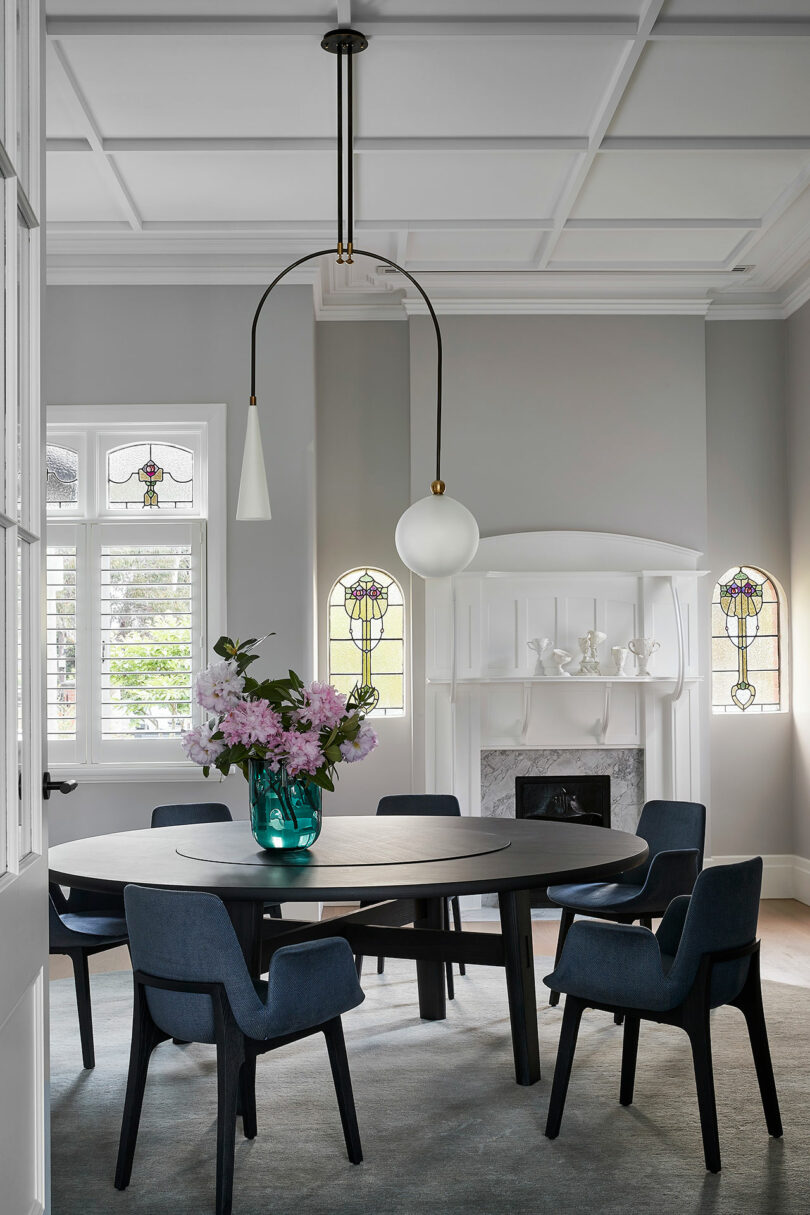
Materiality and Mood: The Designer’s Palette
The transition from the heritage front to the modern rear is bridged by a sophisticated material palette. Swee Design moved away from the predictable "all-white" renovation, opting instead for a "luminous solidity."
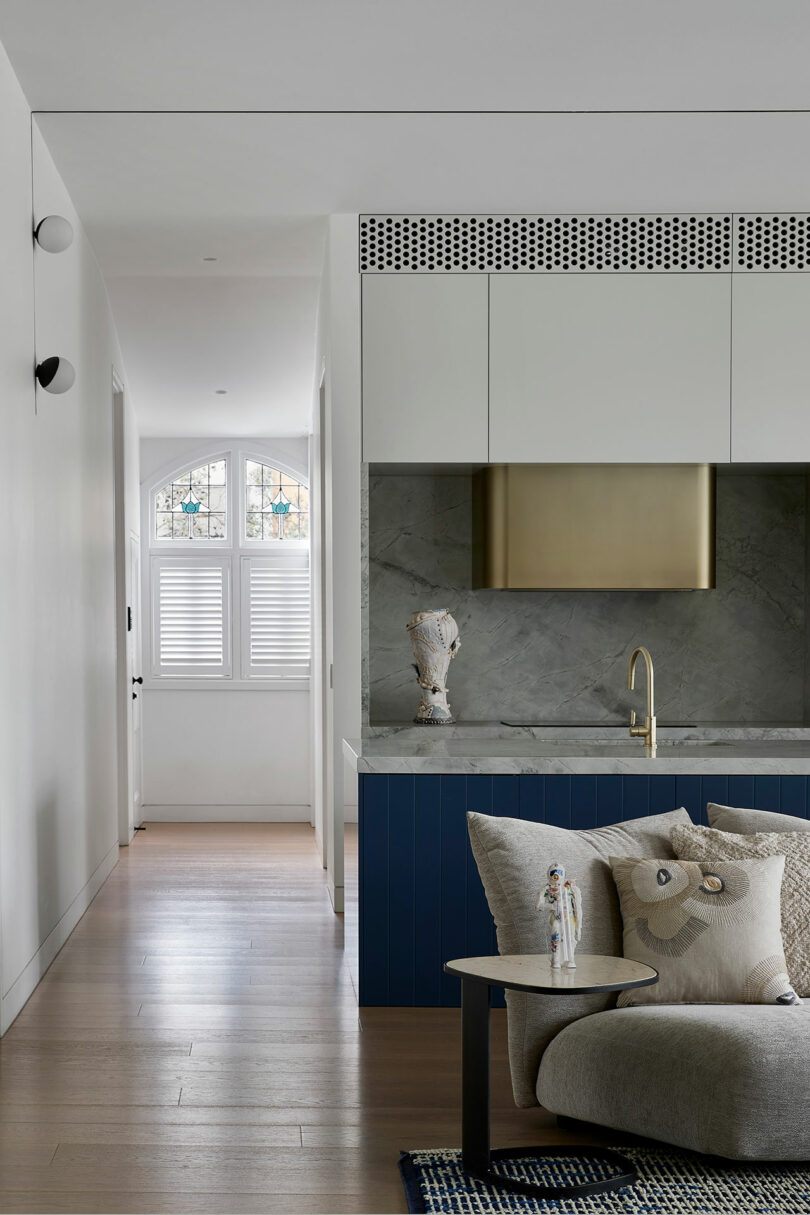
The 'Kaleidoscope' project features a palette of dolomite marble, cast bronze accents, and oceanic blue lacquered joinery. This specific blue isn't just a color; it’s an anchor. It provides a visual depth that competes with the heavy timber and ornate details of the 1912 rooms, ensuring the new extension feels just as "permanent" as the century-old front.
- Dolomite Marble: Used for its milky translucency and durability in high-traffic kitchen zones.
- Cast Bronze: Adds a touch of 20th-century industrialism in a refined, modern form.
- Pink Marble Accents: Softens the masculine edges of the architectural lines.
- Oceanic Blue Joinery: Provides a bold, lacquered finish that reflects light and mimics the sky.
The Subterranean Drama: Art-Led Curation
One of the most ambitious aspects of the renovation was the creation of a third level: the basement. In Melbourne’s premium suburbs, land is a luxury, so going "down" is often the only way to expand. But subterranean spaces often feel dark or disconnected.
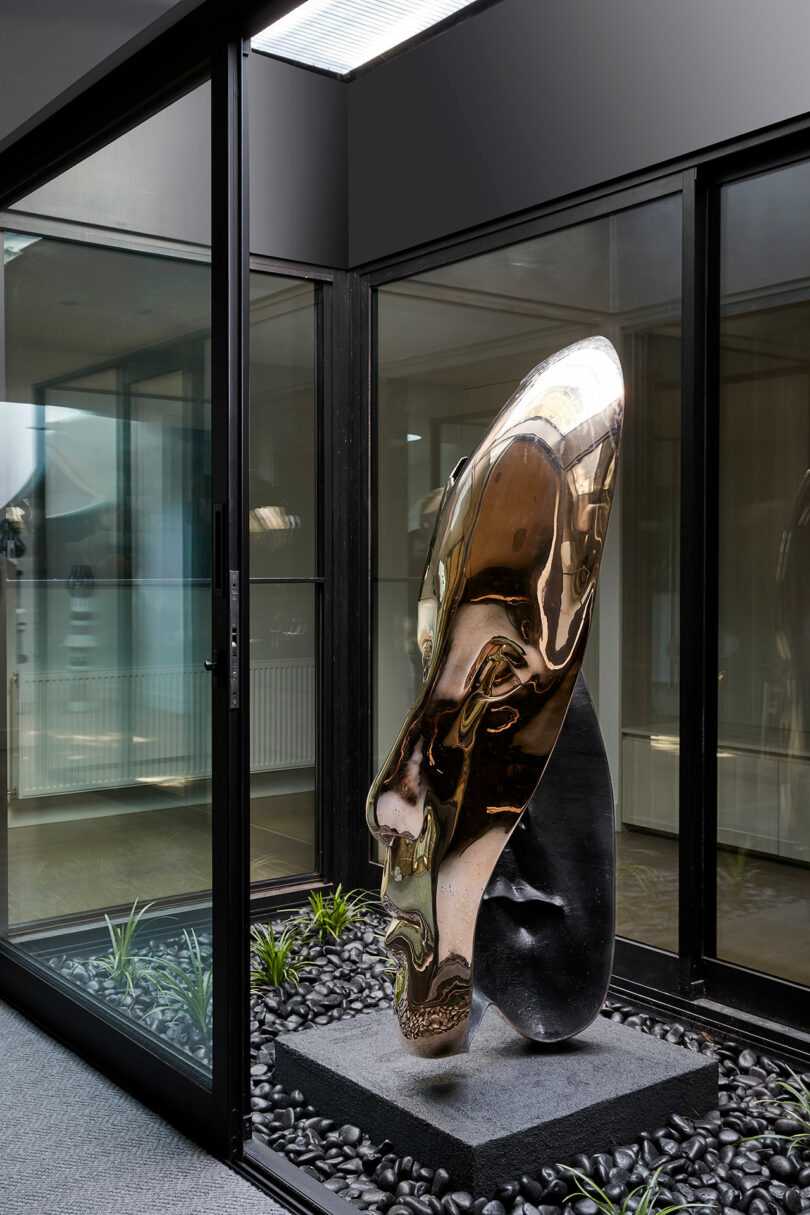
Swee Design solved this through what they call "structural choreography." They integrated a basement courtyard that allows light to pour into the lower levels. The centerpiece is a 100-kilogram bronze sculpture, which had to be craned into the courtyard during construction. This art-led approach ensures that even the lowest level of the home feels like a curated gallery rather than a cellar.
Large-scale art serves a functional purpose here—it modulates the soaring proportions of the 113-year-old house, making the grand spaces feel intimate and lived-in.
Navigating the Heritage Overlay: A Practical Guide
For homeowners looking to replicate this success, it’s vital to understand the "invisible" side of design: regulations. In Melbourne, heritage homes are often subject to strict overlays from Heritage Victoria or local councils.
Renovating a Federation home isn't just about choosing tiles; it's about navigating a complex web of permits. Heritage impact assessments are almost always required, and these can cost between $3,000 and $8,000, with processing times often taking 8-12 weeks.
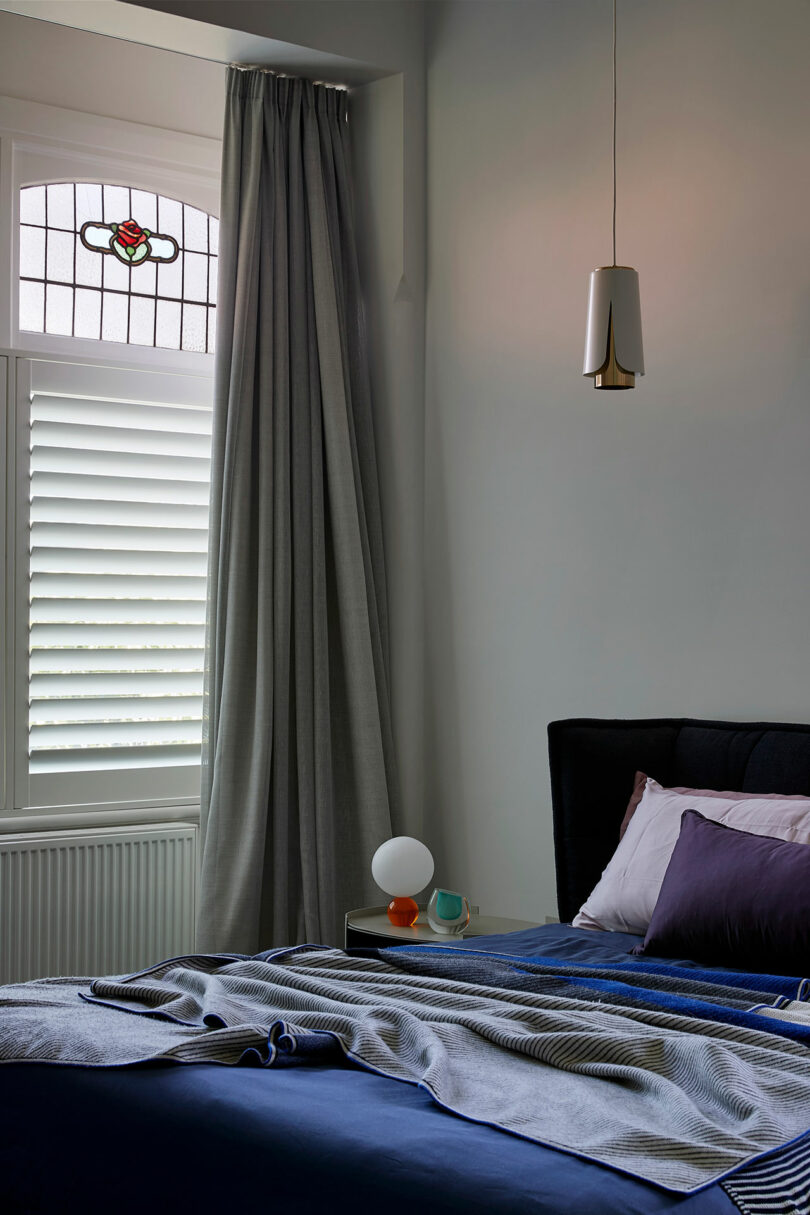
However, these constraints can be turned into design opportunities. For instance, while you might not be allowed to change the window frames, you can integrate high-end interior shutters for privacy and energy efficiency. Double glazing can often be retrofitted into original sashes, maintaining the aesthetic while significantly improving the home’s thermal performance for modern living.
| Element | Heritage Constraint | Modern Solution |
|---|---|---|
| Windows | Original stained glass must stay | Internal shutters & retrofitted double glazing |
| Facade | No structural changes to front | Meticulous restoration & subtle lighting |
| Floorplan | Original front rooms must be kept | Use for formal dining, libraries, or home offices |
| Energy | Old homes are often "leaky" | Discreet insulation upgrades and zoned HVAC |
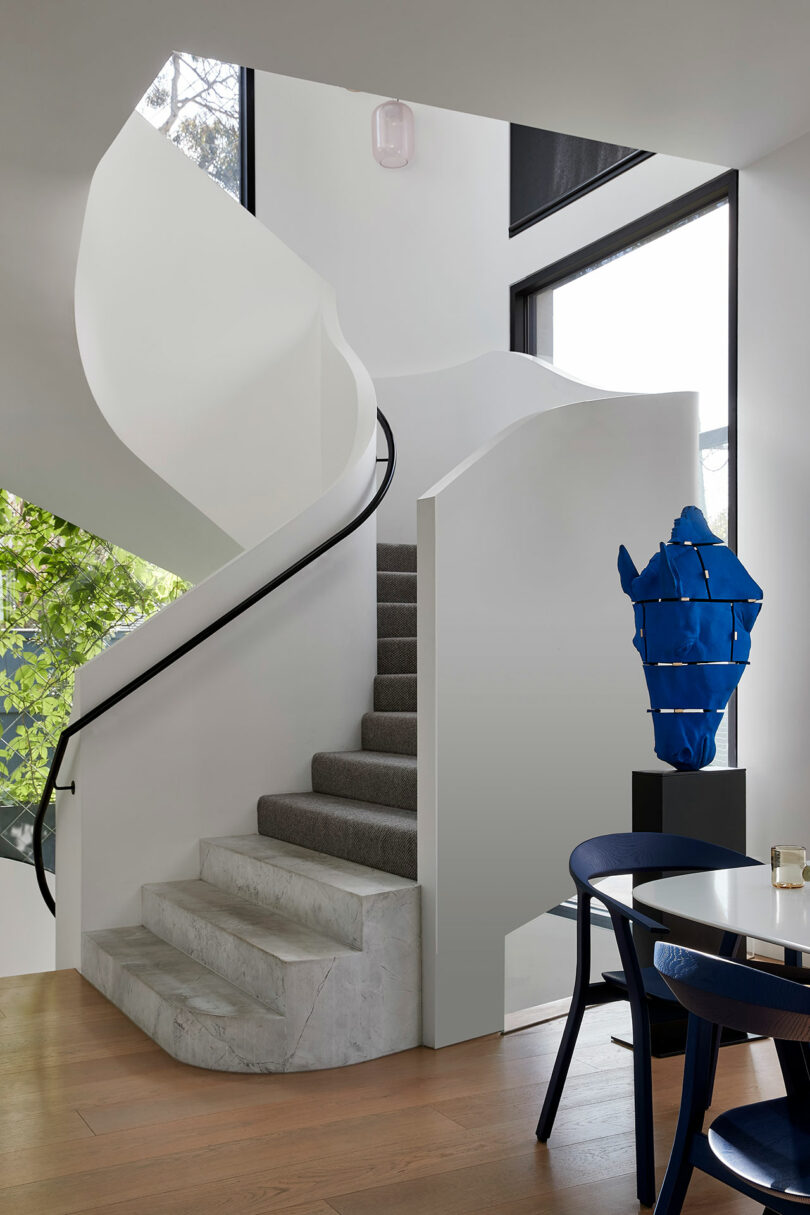
The result of this meticulous planning is a home that feels both grounded in history and effortlessly modern. The central curved staircase acts as a sculptural bridge, reflecting the fluidity of the "Kaleidoscope" theme and connecting the 1912 foundations with the 2024 luxury of the upper levels.
FAQ
Can I move the kitchen in a heritage-listed home? In most cases, yes. While the facade and front "principal" rooms are usually protected, the rear of the house is often more flexible. Most modern heritage renovations involve moving the kitchen to a new, open-plan extension at the back of the property to connect with the garden.
How do I choose a color palette for a Federation home? Look to the existing features. If you have original leadlight windows with blue or amber tones, pull those colors into your modern joinery or soft furnishings. A palette of warm greys and off-whites usually provides a perfect neutral backdrop for the more ornate heritage features.
Is it worth adding a basement to an old home? Adding a basement is a significant investment but can add immense value in suburbs where footprint expansion is limited. It provides space for luxury amenities like cinemas, gyms, or wine cellars without altering the historical silhouette of the home.