Quick Facts
- Location: Toronto, Canada (Victorian-era structure, c. 1880s)
- Homeowner: Heather Shaw, Artist and Founder of Pi’lo textile design.
- Renovation Timeline: A disciplined 20-year cycle, prioritizing structural integrity before aesthetics.
- Core Philosophy: Slow Design—a mindful approach focusing on longevity, personal history, and sustainability.
- Primary Palette: Benjamin Moore’s Chantilly Lace (trim), Pure White (walls), and Opaline (floors).
- Design Strategy: A sophisticated high-low mix involving local artisans (Saudade), digital marketplaces (Craigslist), and thoughtful IKEA hacks.
Over a decade ago, I first stepped into the world of Heather Shaw, the visionary behind the textile brand Pi’lo. Back then, her Toronto Victorian home was already a beacon of thoughtful restraint. Revisiting this space today, more than twenty years since she first took ownership, is a masterclass in the enduring power of Slow Design. In an era of "fast interiors" and overnight makeovers, Shaw’s home serves as a soulful sanctuary—a testament to the idea that a home shouldn't just be built; it should be grown.
Slow Design is more than a trend; it is a philosophy of deceleration. It’s about choosing materials that age gracefully, preserving historical footprints, and allowing a room to reveal its purpose over years rather than weeks. For Shaw, this Victorian residence hasn't just been a renovation project; it’s been a two-decade-long living experiment in minimalist, handmade, and deeply personal living.
The 20-Year Evolution: A Renovation Timeline
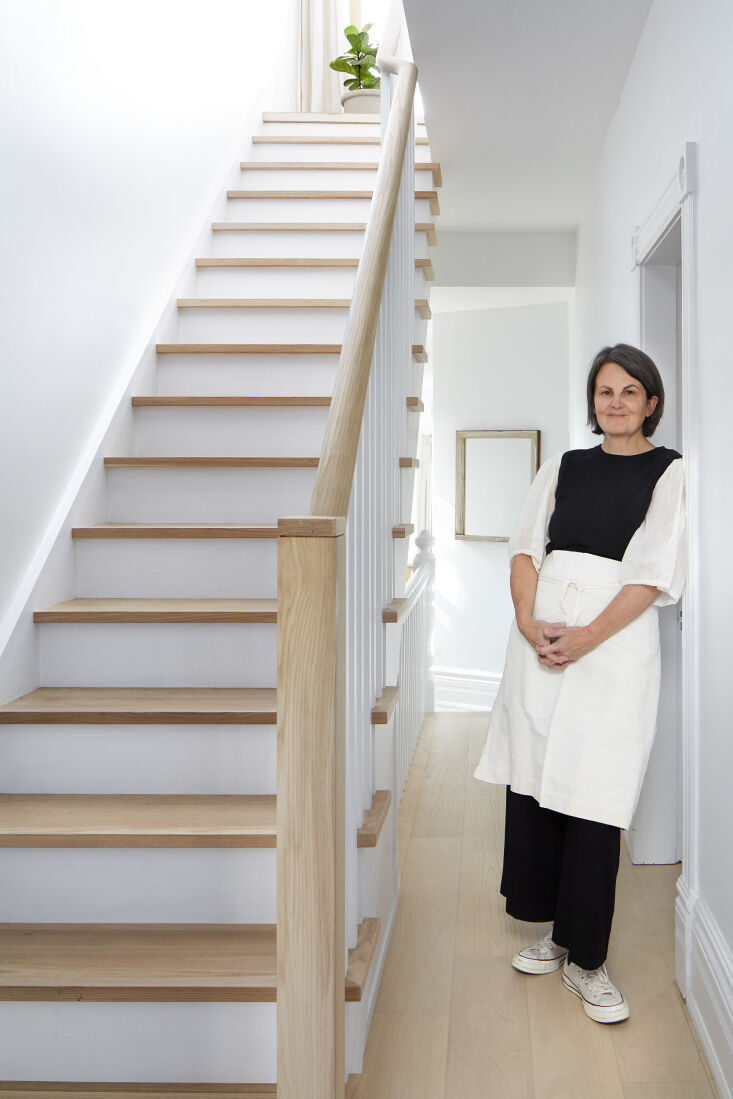
One of the most radical aspects of Shaw’s approach is her patience. In a world of instant gratification, she adhered to a strict structural-first logic. She didn't rush into marble countertops while the wind whistled through old frames. Instead, she spent the first years addressing the "bones"—replacing windows and ensuring the Victorian structure was sound.
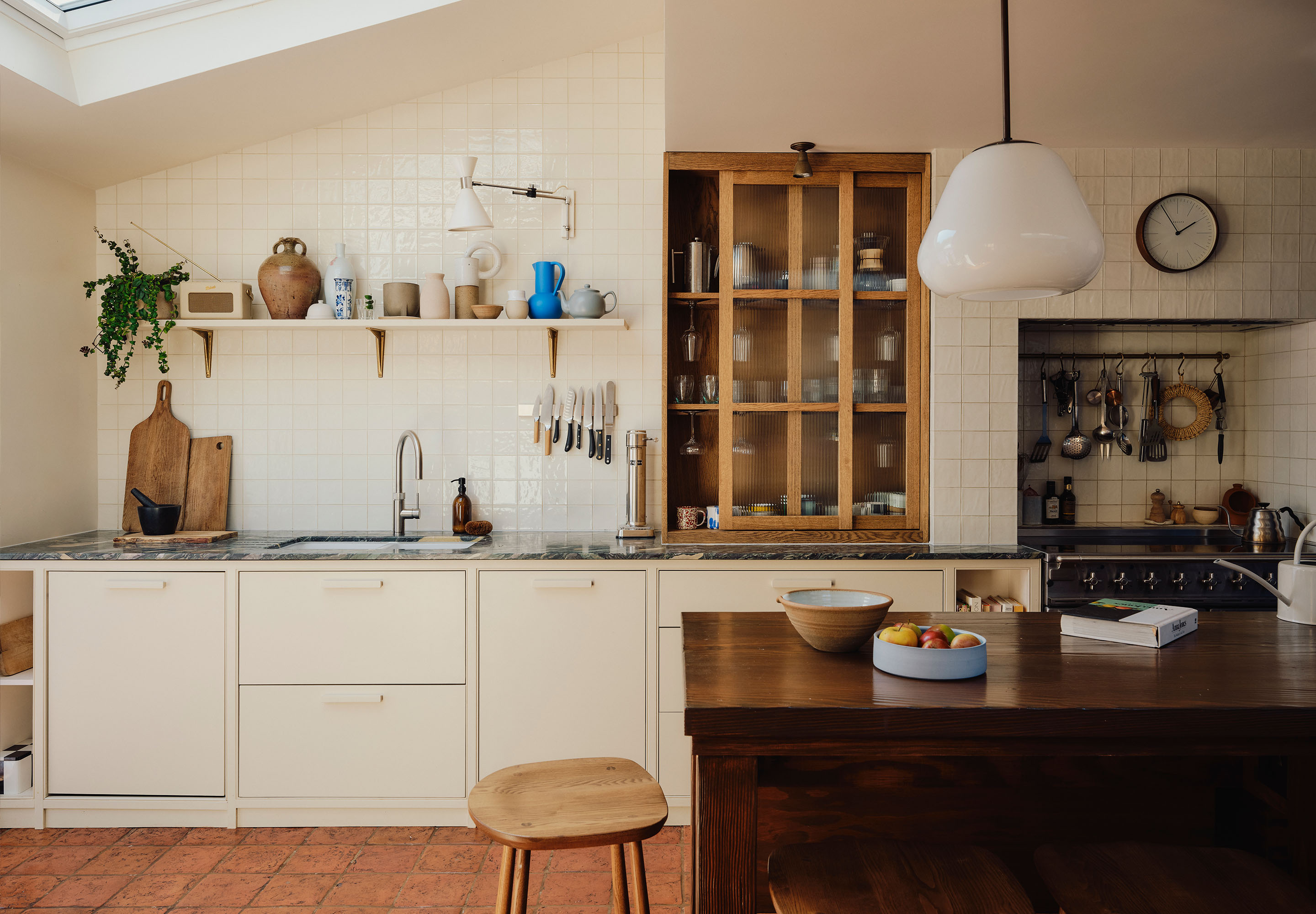
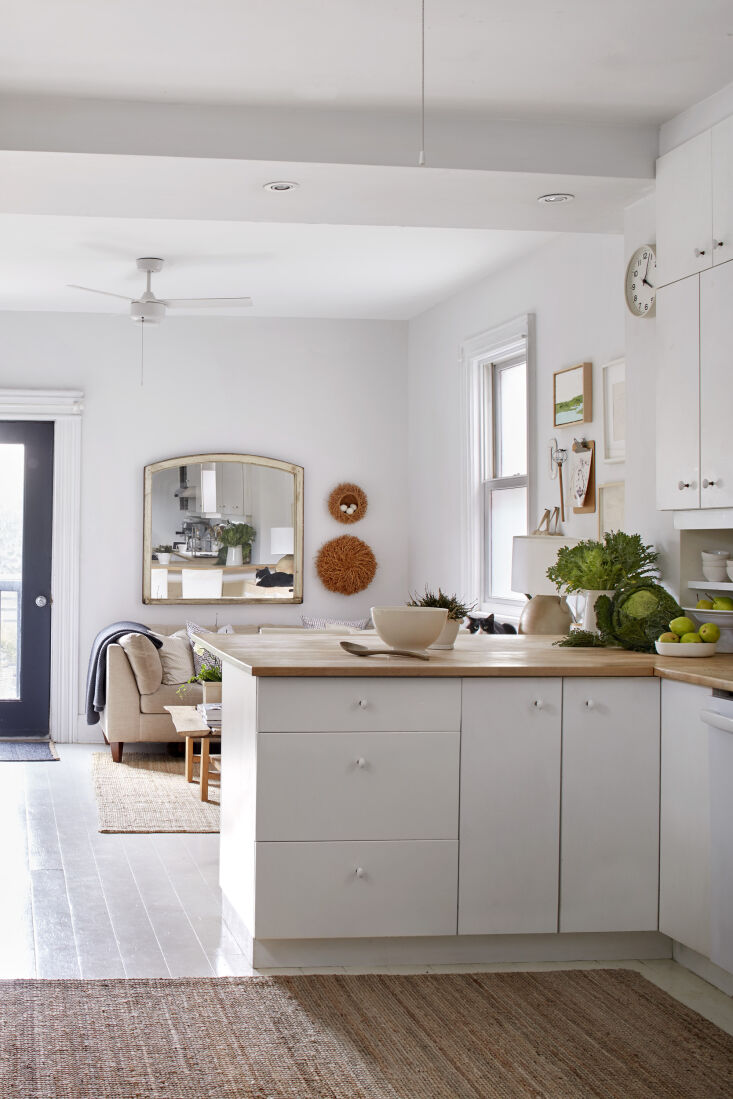
Phase 1: The Foundation (Years 1–5) The initial focus was on light and heat. Once the structural updates were complete, the first major aesthetic shift occurred five years in: the kitchen expansion. To bridge the gap between the budget and her high-design vision, Shaw chose paint-grade pine flooring and IKEA birch countertops. This phase proved that "luxury" isn't about the price tag of the material, but the intention behind its application.
Phase 2: The Deep Dive (Years 10–15) Ten years into the journey, the focus shifted downward. The basement was transformed from a dark utility space into a bright, functional area featuring radiant-heat concrete floors. This update added significant living square footage without altering the home’s historic footprint, a core tenet of sustainable slow design.
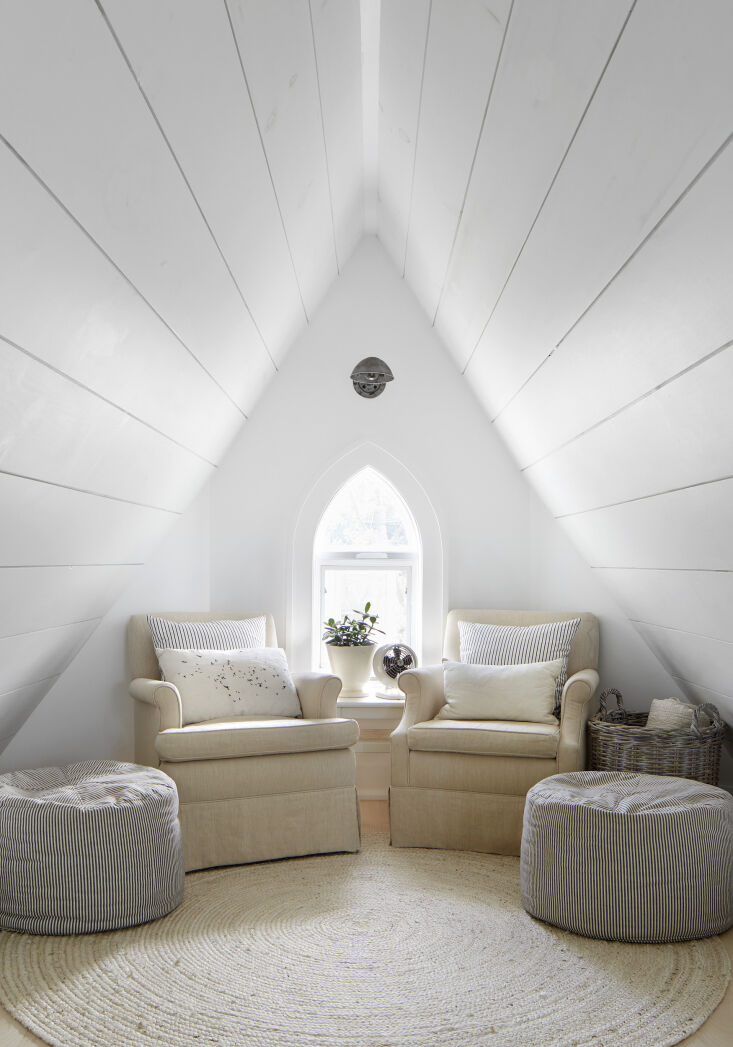
Phase 3: Reaching Upward (Year 20) The most recent milestone was the addition of a third floor. Designed to accommodate the next generation, this space utilized clever architectural hacks to maximize the Victorian roofline. It represents the final chapter in a renovation that evolved alongside Shaw’s own family and career.
"A home should be a slow reveal," Shaw once remarked. "You have to live in the light of a room for a full year to truly understand what it needs."
The Palette of Calm: Minimalist Victorian Interiors
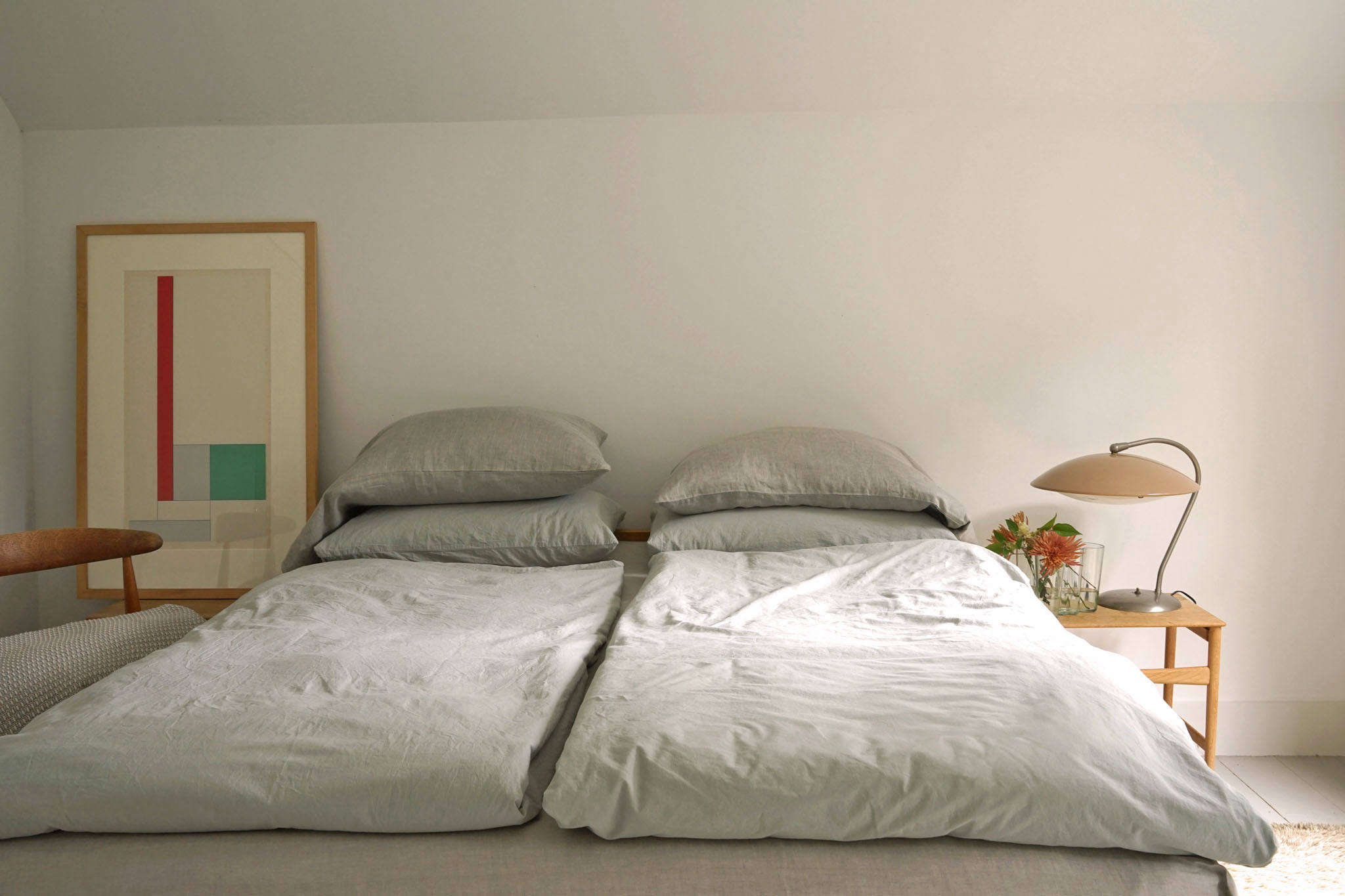
Traditional Victorian design is often synonymous with "more"—more molding, more heavy drapes, more dark wood. Shaw flipped this script, using minimalism as a "break from the business of the world." Her palette is a study in the nuances of white, creating a gallery-like backdrop that allows the architecture and the objects within to breathe.
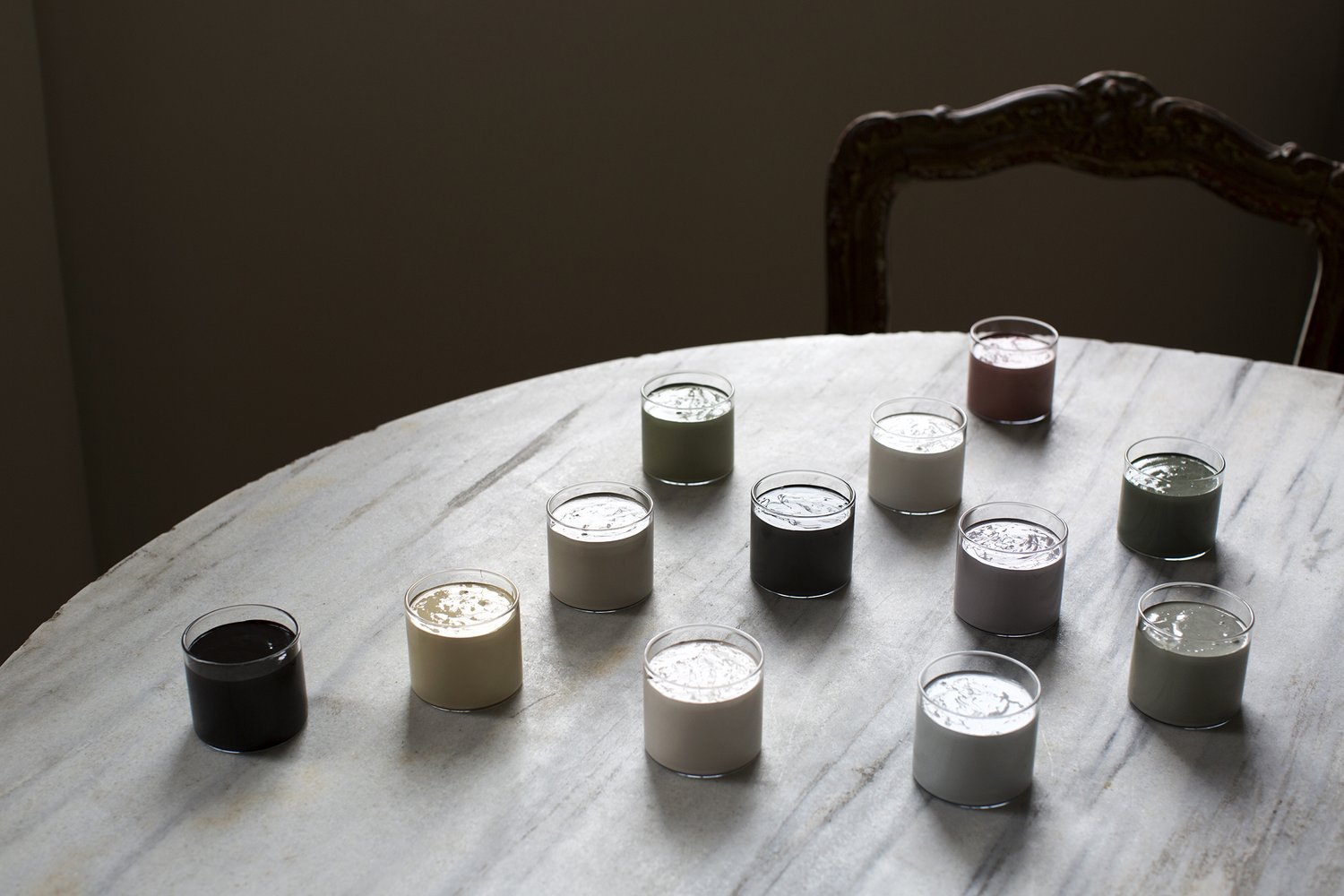
The foundation of this serenity lies in her specific choice of Benjamin Moore paints. She utilized Chantilly Lace for the trim to provide a crisp, clean edge, while Pure White was applied to the walls to soften the Toronto sunlight.
Perhaps the most daring move was the floor. To eliminate the "orangey" hue of the original aged wood without a full replacement, Shaw sanded the floors and applied Opaline oil paint. This DIY transformation turned a dated feature into a unified, luminous surface that reflects light into the furthest corners of the narrow Victorian layout.
Curating the 'Soul': Principles in Practice
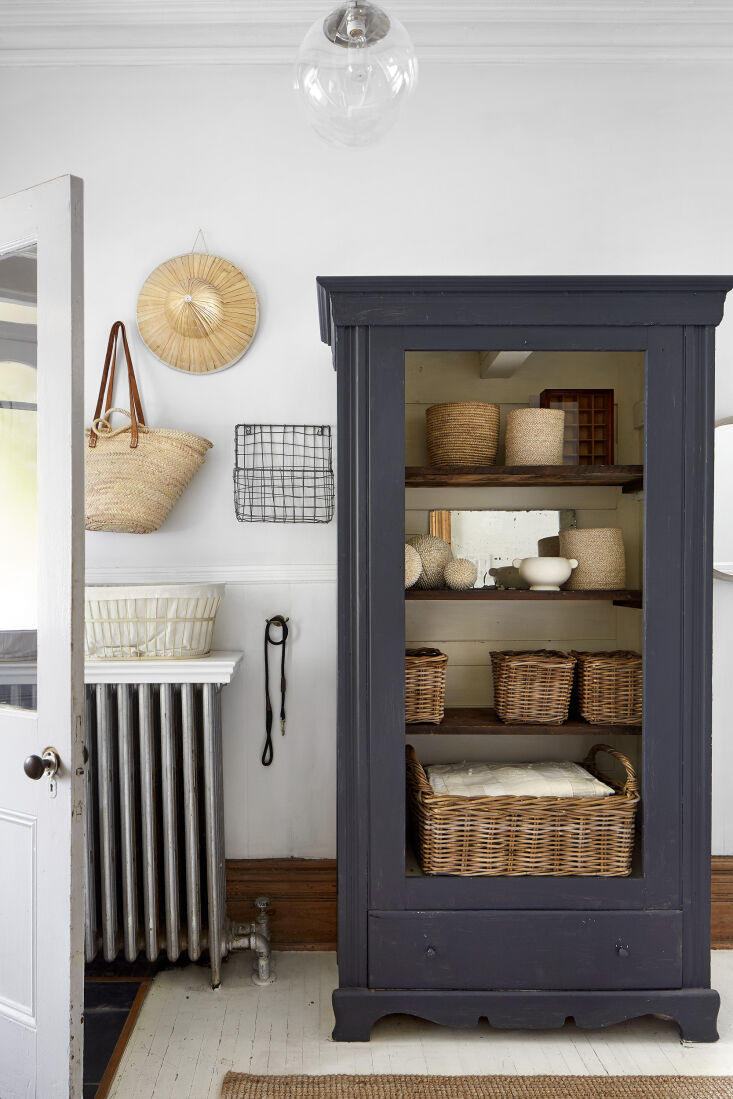
A soulful home is one that tells a story. In Shaw’s residence, this is achieved through the "Reveal & Reflect" principle. Rather than hiding the mess of life, she curates it. A wall of collections serves as a grounding anchor, displaying family ephemera, her children’s early art, and prototypes of her own Pi’lo textile designs.
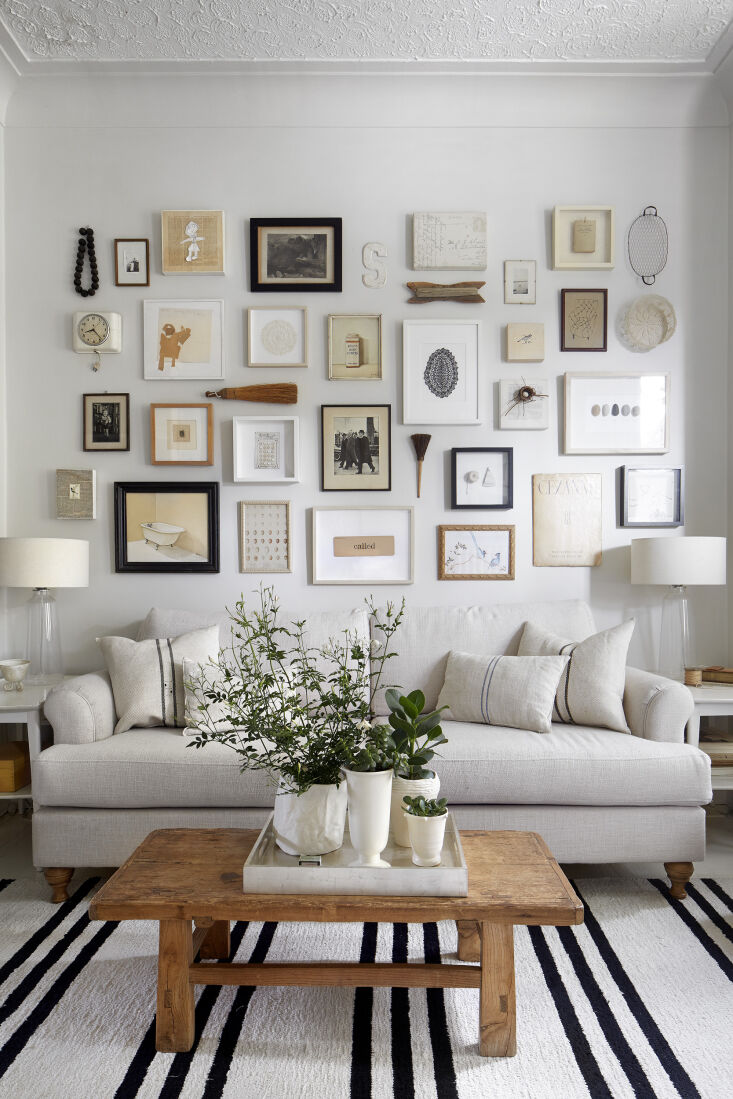
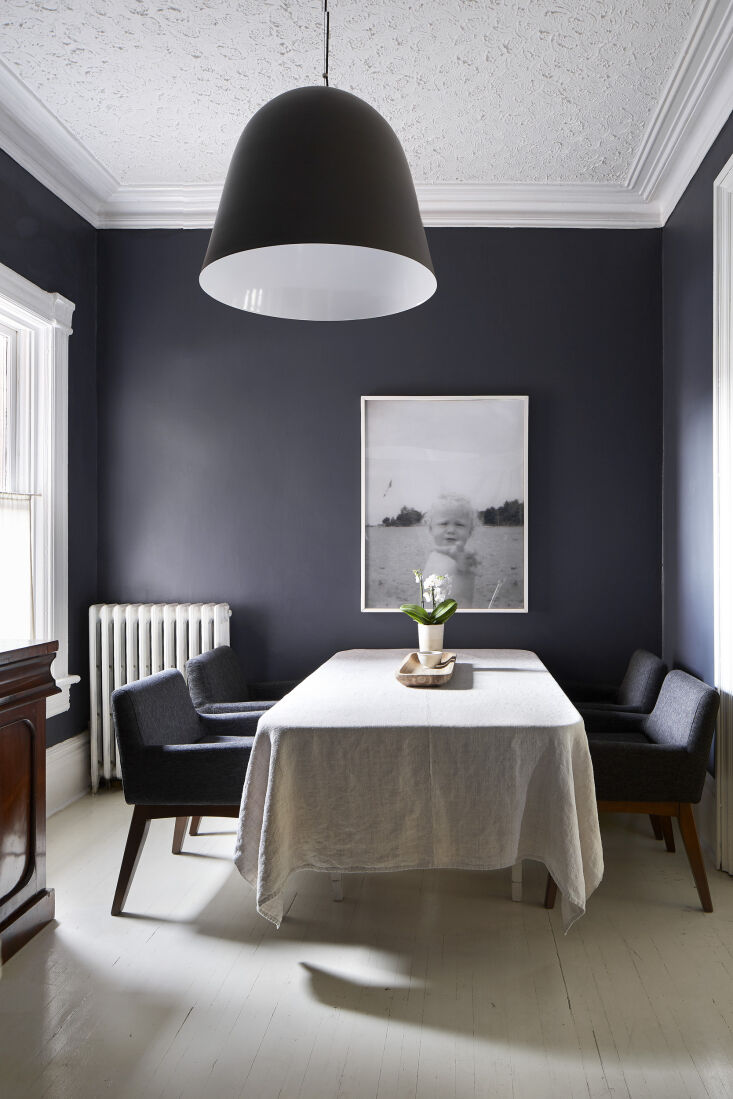
However, the home isn't all white. Shaw understands the psychological power of contrast. The dining room, painted in Benjamin Moore Baby Seal Black, acts as a "muddy" room—a dark, intimate cocoon.
"A dark dining room forces you to concentrate on the people across from you," I’ve often noted in my own styling work. By saturating the walls in a near-black matte finish, Shaw creates a space where the outside world disappears, making dinner parties feel like secret, sacred gatherings.
The High-Low Sourcing Strategy
Heather Shaw’s home is a triumph of procurement. She proves that a high-end look doesn't require a high-end budget for every item. By mixing digital marketplace finds with local artisan pieces and affordable staples, she achieved a balance that feels curated rather than "purchased."
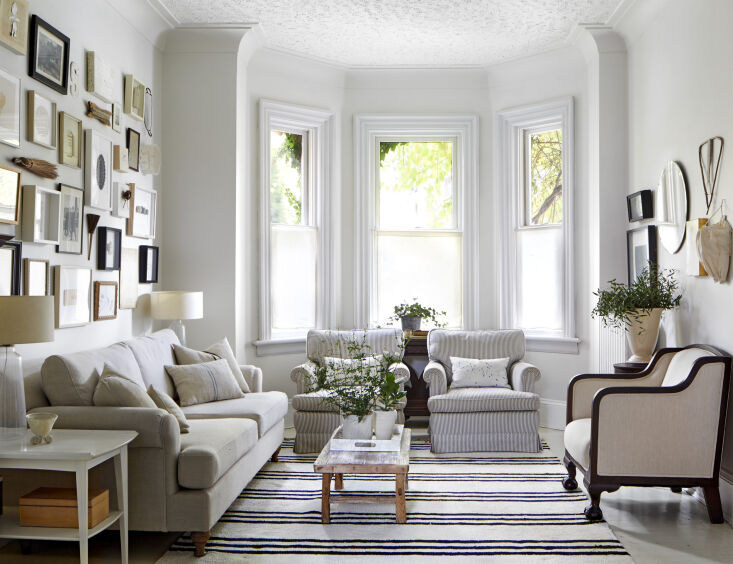
She famously sourced her ticking stripe armchairs from Craigslist, proving that a keen eye can find gold in the digital rough. These were paired with high-quality wool rugs from Saudade, a local Toronto shop known for its Portuguese craftsmanship.
Sourcing Snapshot: The High-Low Mix
| Element | Source | Strategy |
|---|---|---|
| Living Room Seating | Craigslist | High-quality vintage frames found for a fraction of retail. |
| Kitchen Island | IKEA (Birch) | Budget-friendly wood that adds warmth to a white kitchen. |
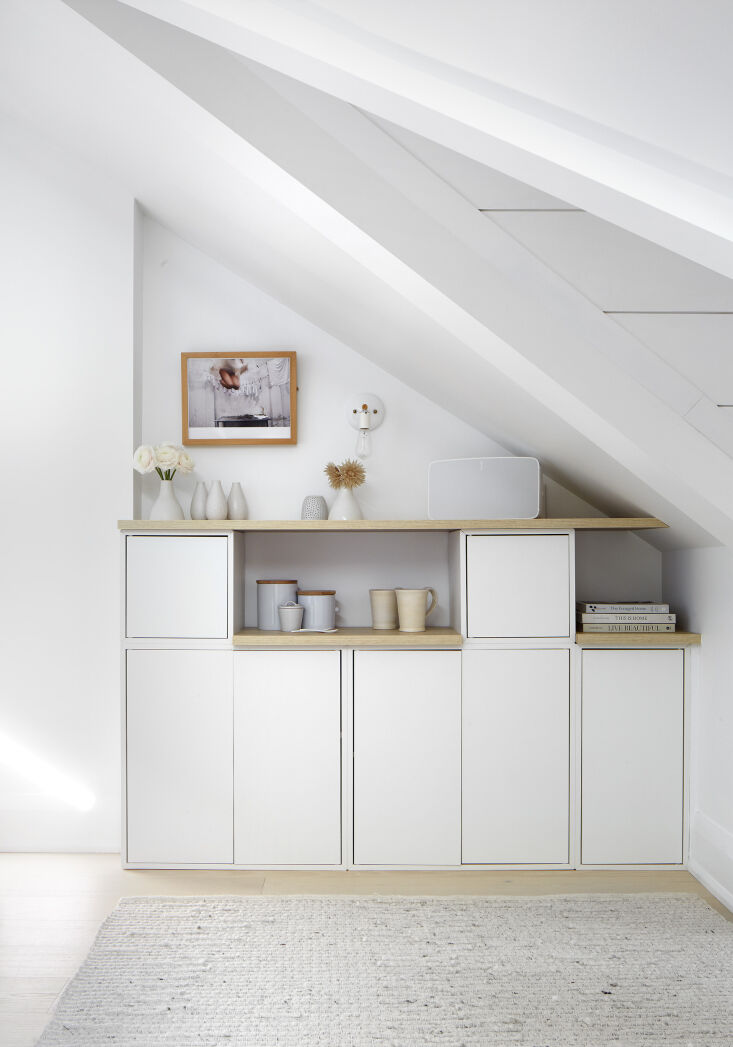
| Storage Solution | IKEA (Nordli) | Using 24 drawers built into bulkheads for a custom-built look. |
| Textiles | Pi’lo | Handmade, local linen and cotton elements for tactile soul. |
| Plumbing Fixtures | Abi Interiors | Sourced from Australia to find specific matte white finishes. |
| Rugs | Saudade | Supporting local artisans for high-traffic texture. |
One of the most impressive "hacks" in the home is found in the third-floor addition. To maximize storage within the sloped bulkheads of the attic space, Shaw installed 24 IKEA Nordli drawers. By integrating them into the architecture, they provide massive storage capacity without the visual clutter of traditional dressers.
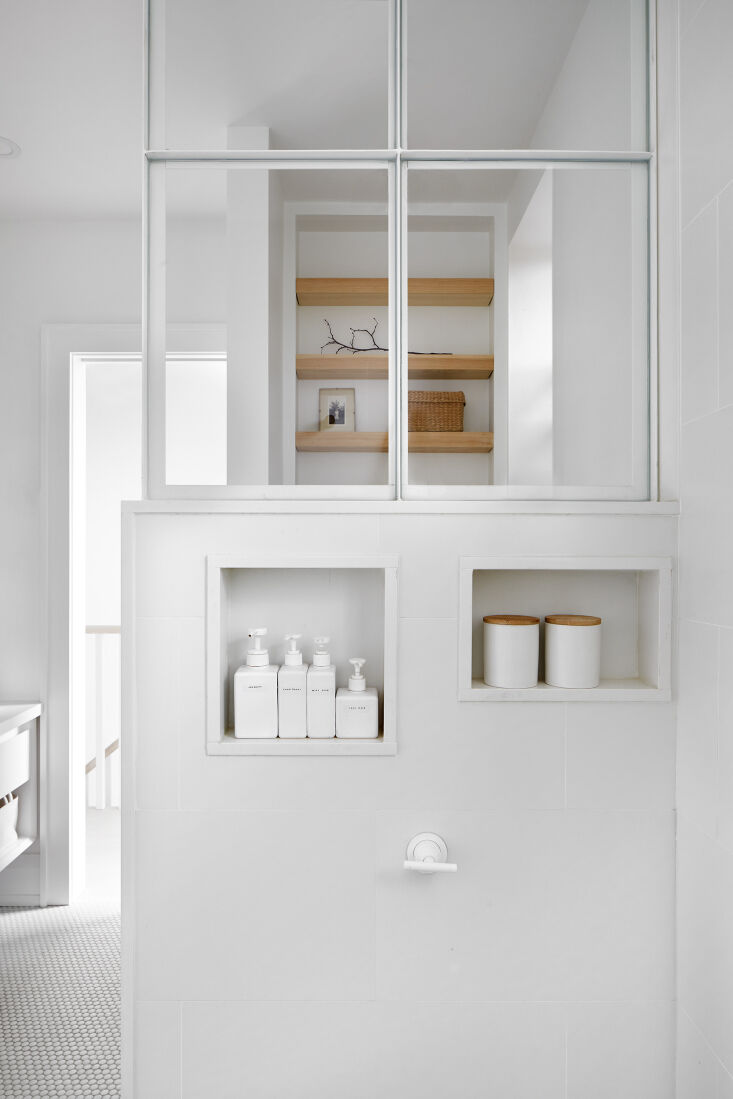
Her commitment to a specific aesthetic even led her across the globe—digitally. Frustrated by the lack of matte white shower fixtures locally, she ordered her hardware from Abi Interiors in Australia. It’s this blend of "find it nearby" and "search the world for the right detail" that gives the home its unique edge.
Designing for 2026: Why Meaning Trumps Perfection
As we look toward future trends, there is a clear shift toward what I call "Gentle Clutter"—the authentic accumulation of a life well-lived. Heather Shaw was ahead of the curve. Her home isn't a museum; it’s a vessel for memories.
Sustainability in her home isn't just about eco-friendly materials; it’s about longevity. By choosing a minimalist foundation and filling it with meaningful objects—like the striped poufs she designed for Pi’lo sitting alongside inherited antiques—she has created a home that won't need a "refresh" in five years. It is sustainable because it is loved.
Lessons from a Two-Decade Journey
Mastering Slow Design requires a shift in perspective. It asks us to view our homes not as a series of problems to be solved quickly, but as a relationship to be nurtured. Heather Shaw’s Toronto sanctuary offers three vital lessons for any modern renovator:
- Prioritize the Invisible: Invest in windows, insulation, and structure before the "pretty" things.
- Embrace the High-Low: Don't be afraid to put an IKEA countertop next to a local artisan's rug. The mix is where the personality lives.
- Let it Evolve: Your home at year 20 should look different than year 1, not because you followed a trend, but because you grew into the space.
In a fast-paced world, perhaps the most radical thing we can do is decelerate.
FAQ
Q: What is the benefit of painting Victorian floors white? A: Victorian homes are often narrow with limited natural light. White-painted floors (like Shaw’s use of Benjamin Moore Opaline) act as a giant reflector, bouncing light upward and making small rooms feel significantly more spacious and airy.
Q: How do I start a 'Slow Design' renovation if my budget is limited? A: Start with a "high-low" strategy. Focus your budget on items you touch every day (like hardware or textiles) and use "hacks" (like IKEA Nordli drawers) for storage. Most importantly, don't feel pressured to finish a room all at once; let it evolve over years.
Q: Why choose 'Baby Seal Black' for a dining room? A: Darker colors create a sense of intimacy and "enclosure." In a dining setting, it minimizes visual distractions from the rest of the house, drawing the eye toward the center of the table and the people gathered there.