2024 has been a year defined by a profound "condition of change." In the world of design, we’ve moved past mere surface-level aesthetics, shifting toward transformations that serve a deeper purpose: sustainability, adaptive reuse, and wellness-driven living. From the towering timber arches of public infrastructure to the intimate, meticulously crafted corners of a mid-century living room, this year’s most stunning before-and-after projects prove that great design is a powerful catalyst for a higher quality of life.
Whether it’s an underused parking garage in Brazil finding new life as a vibrant sanctuary for children or a 1950s Seattle home being rescued from the brink of obsolescence, the common thread of 2024 is the intelligent reimagining of what already exists. As an editor, I’ve watched these trends move from the fringes to the mainstream, where the "dreamy" and the "practical" finally meet.
Let’s dive into the 10 best transformations of 2024 that truly took our breath away.
10. From Parking Lot to Playful Sanctuary: Children’s Studio, Brazil
When we talk about urban renewal, we often think of massive park projects or skyscraper retrofits. However, one of the most notable examples of adaptive reuse in 2024 happened on a much more human scale. The conversion of an underused parking garage into the 'Children’s Studio' by Estúdio Protobox in Brazil stands as a premier example of turning cold, urban infrastructure into a vibrant, educational space.
The "before" was a dark, uninviting concrete box—utilitarian at best, depressing at worst. The "after" is a masterclass in Montessori-based design. Estúdio Protobox utilized flexible partitions and a warm, primary-toned palette to create a sanctuary that fosters autonomy.
Key Innovations:
- Dynamic Zoning: Moveable furniture allows the space to transition from a quiet reading nook to a collaborative art station in minutes.
- Sensory Textures: Soft plywood finishes and tactile wall surfaces replace the harsh concrete of the original structure.
- Natural Light Integration: Strategic use of glass and light-reflective surfaces brings sunshine into a space that was previously starved for it.
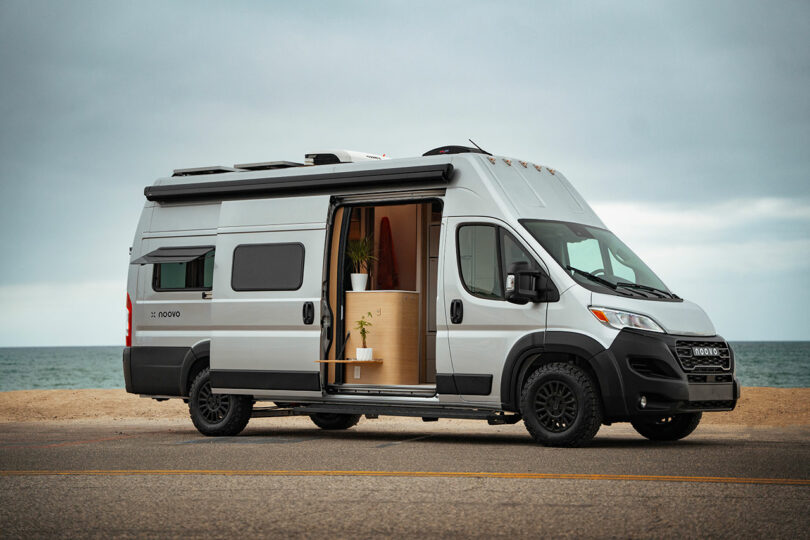
9. The High-Roof Evolution: Noovo Plus Camper Van
The "van life" movement underwent a sophisticated transformation this year. We’ve moved away from the cramped, "slouch-inducing" interiors of early conversions. The Noovo Plus took a traditional low-ceiling chassis and evolved it into a 'Super High Roof' platform, specifically designed for the growing demographic of remote workers and full-time adventurers.
Walking into the "after" of a Noovo Plus feels less like stepping into a vehicle and more like entering a luxury micro-apartment. The interior height allows for a true "home-like" feel, where the design principles of a stationary kitchen—standard counter heights and vertical storage—are applied to a mobile environment.
Pro Tip: When designing for small or mobile spaces, prioritize verticality. Using light-colored wood on the ceiling and high-placed lighting can make even the tightest quarters feel airy and expansive.
8. Retro Reimagined: IKEA Nytillverkad Collection
Transformation isn't always about a physical renovation; sometimes, it’s about a material and cultural update of the past. In 2024, the IKEA Nytillverkad collection took 1960s and 70s archival pieces—originally designed by legends like Karin Mobring and Gillis Lundgren—and updated them for modern sensibilities.
The "before" consisted of vintage blueprints that, while iconic, often featured materials that wouldn't hold up to 21st-century durability standards. The "after" gives us these swoon-worthy silhouettes in updated 2024 color palettes—think deep emeralds, vibrant oranges, and sustainable wood finishes. It’s a perfect example of balancing mid-century spirit with contemporary resilience.
7. The Post-Weight Loss Body Refinement
In a year where wellness and medical advancements dominated the headlines, we saw a significant shift in how people approach personal transformation. The rise of GLP-1 medications led to a new design challenge: body contouring. This year, the focus shifted from simple "weight loss" to "body refinement," utilizing technologies like Renuvion for skin tightening.
The statistics are telling: searches for liposuction surged by 144% in 2024. Consumers are no longer just looking to lose weight; they are seeking to refine the results, treating the body with the same "sculptural" approach an architect might use to finish a building’s facade. It’s about creating a cohesive, balanced "after" that reflects the hard work of the wellness journey.
6. Urban Curb Appeal: The HGTV® Smart Home 2024
Curb appeal is often the most overlooked part of a home’s narrative, but the 2024 HGTV® Smart Home in Atlanta proved it is the vital first chapter. What was once a rundown, nondescript property was transformed into a tech-forward masterpiece. The transformation leaned heavily into "dark modern" aesthetics, featuring a moody exterior contrasted with a lush "living wall."
One of the standout elements of this renovation was the outdoor living space. By using high-performance composite decking—specifically the Trex Transcend Lineage line—the designers created a low-maintenance luxury retreat. It offers the heat-mitigating technology and the refined grain of natural wood without the constant upkeep, proving that sustainable materials can also be high-style.
5. Age-Defying Rejuvenation: The Modern Facelift
Just as we’ve seen a shift in home design toward "preservation over replacement," the world of aesthetic medicine saw a similar evolution in 2024. The transformation of choice for Gen X and Baby Boomers moved away from the "windblown" look of the past toward "deep plane" facelifts.
This technique lifts the underlying tissue rather than just pulling the skin, resulting in a meticulously crafted rejuvenation that looks natural rather than "done." This shift is particularly popular among those seeking to combat collagen depletion post-menopause, mirroring the way we might reinforce the foundation of a historic home before updating its exterior.
4. Architectural Preservation: The Lark House, Seattle
SHED Architecture & Design dominated the 2024 architectural landscape, accounting for an impressive 30% of the year's top 10 most-viewed design transformations. Their standout project, The Lark House, involved the renovation of Al Bumgardner’s 1958 mid-century gem.
The "before" was a house that had lost its voice through decades of disjointed updates. SHED’s "after" is a masterclass in architectural archaeology. They stripped back the clutter to reveal the original post-and-beam structure while integrating modern energy efficiencies.
What Makes It Work:
- Respect for Heritage: Maintaining the original footprint while expanding the "emotional" space through better flow.
- Material Harmony: Using a palette that bridges the gap between the 1950s and the 2020s.
- Indoor-Outdoor Synergy: Maximizing the glass walls that are a hallmark of mid-century modernism.
3. Sustainable Giants: Portland Airport (PDX) Roof Canopy
In 2024, the most significant sustainable building material wasn't a new plastic or a recycled fabric—it was mass timber. This was exemplified on a grand scale by the Portland Airport (PDX) roof canopy.
While concrete has long been the norm for large-scale infrastructure, mass timber emerged as the leading alternative in 2024. The PDX project utilized engineered wood for massive structural support, creating a "dreamy," forest-like atmosphere for travelers. It’s a transformation of public space that feels warm and human-centric rather than cold and industrial.
2. Wellness-Driven Personal Spaces
The home has officially become our primary wellness center. In 2024, we saw a massive move toward designing environments specifically for long-term health behavior change. These transformations emphasized social connectivity and digital detoxification to foster enduring health habits.
A 2024 pilot study on wellness transformations revealed that social network support is a primary driver for long-term lifestyle change, significantly reducing stress levels compared to solo efforts. Consequently, home designs in 2024 shifted away from isolated "home gyms" toward communal wellness "hubs"—think outdoor cold plunges and saunas designed for group use, or kitchens that prioritize social meal prep over hidden utility.
| Feature | Traditional Design | 2024 Wellness Design |
|---|---|---|
| Lighting | Static overhead lights | Circadian-rhythmic smart lighting |
| Materials | Synthetic, high-VOC finishes | Biophilic, organic, breathable materials |
| Space Use | Task-oriented rooms | Multi-sensory "restorative" zones |
1. The Mori House: Mid-Century Meets Japanese Minimalism
The most breathtaking transformation of the year belongs to the Mori House in Portland. This project perfectly encapsulates how mid-century architecture evolved in 2024. The renovation integrated Saul Zaik's original 1963 design with a "Japandi" (Japanese + Scandinavian) minimalism to meet modern functional needs.
The Mori House represents the pinnacle of 2024 design because it doesn't just "fix" an old house; it elevates it. By removing heavy partitions and introducing a Shou Sugi Ban exterior (charred wood), the designers created a home that feels both ancient and futuristic.
Design Highlights:
- The Kitchen Reveal: What was once a dark, walled-off galley is now a light-filled heart of the home, featuring custom white oak cabinetry.
- The Zen Connection: A new central courtyard brings the Japanese principle of Ma (the space between) into the daily flow of the house.
- Textural Depth: The blend of raw concrete, warm wood, and soft linens creates a "swoon-worthy" tactile experience.

FAQ
What is a notable example of adaptive reuse in 2024? The conversion of an underused parking garage into the 'Children’s Studio' by Estúdio Protobox in Brazil stands as a premier example. It demonstrates how urban infrastructure can be transformed into a vibrant, flexible educational space that prioritizes children's autonomy.
How did mid-century architecture evolve in 2024? 2024 saw a resurgence in mid-century renovations that move beyond museum-like preservation. Projects like the Mori House integrated original 1960s designs with Japanese minimalism (Japandi) and modern sustainable materials to meet the functional needs of today's families.
What was the most significant sustainable building material used in 2024? Mass timber emerged as the leading alternative to concrete for large-scale projects. The Portland Airport (PDX) roof canopy is the most significant example, using engineered wood to provide structural support while significantly reducing the carbon footprint of the build.
Ready to Start Your Own Transformation?
Whether you’re looking to refresh a single room or embark on a full-scale renovation, the lessons of 2024 are clear: prioritize sustainability, respect the "bones" of your space, and always design for your own well-being.