Our Top Picks
- The Ultimate All-Rounder: Vipp V1 Modular Kitchen – A freestanding masterpiece that balances industrial durability with the flexibility needed for high-end rental living.
- The Best for Small Spaces: Boffi Minikitchen – The definitive "disappearing" workstation that packs a full culinary suite into a single, mobile cube.
- The Smart Visionary: George Cabinetry 2026 Concept – Redefining the "Social Island" with flush induction, hidden sensors, and sculptural Aqua Fusion Quartzite.
- The Minimalist Tool: Bulthaup b2 – A professional-grade workbench that treats the kitchen as a precision instrument rather than a set of cabinets.
As we move toward 2026, the kitchen is undergoing a profound architectural metamorphosis. It is no longer a room confined by four walls; it is evolving into a warm, intelligent, and sustainable living environment that serves as the home's primary anchor. We are witnessing a shift from static cabinetry toward integrated kitchen units—all-in-one modular workstations that consolidate sinks, cooktops, and storage into a single architectural piece. These units enable a seamless transition between cooking and living areas, allowing the kitchen to perform when needed and recede when the focus shifts to social interaction.
This evolution is driven by a desire for "Quiet Luxury" and "Fluid Geometry." In modern open-concept layouts, the traditional "triangle" layout is being replaced by monolithic blocks that look more like fine furniture than appliances. Whether it’s the "disappearing kitchen" trend (known in Italy as cucine a scomparsa) or the rise of the high-end mobile workbench, the goal is the same: to create a conversation between elegance and authenticity.
The 2026 Trend Pulse: Why Integration is Essential
The numbers tell a compelling story of how we inhabit our homes today. Market data suggests a 35% rise in consumer demand for handleless, integrated cabinetry as open-concept layouts dominate 2026 interior architecture projects. Homeowners are increasingly rejecting the cluttered aesthetic of traditional kitchens in favor of sleek, monolithic surfaces.
Furthermore, industry forecasts predict that 'smart-integrated' kitchen components, including hidden sensor lighting and flush induction plates, will see a 22% growth in adoption by urban developers this year. This is not just about technology for technology's sake; it’s about "Discreet Technology"—innovations that disappear into the material of the kitchen itself.
1. The Disappearing Concept: Boffi Minikitchen & Beyond
The cucine a scomparsa movement is perhaps the most significant shift in urban architecture. By utilizing retractable doors and sliding panels, designers can hide entire culinary zones, allowing the kitchen to blend into the home's architecture when not in use.
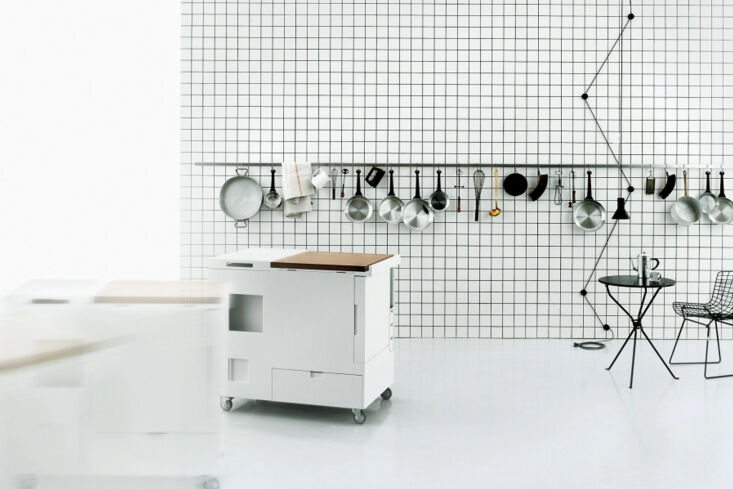
The pioneer of this movement remains the Boffi Minikitchen. Originally designed by Joe Colombo in 1963, this mobile workstation has been reimagined for 2026. It is a self-contained unit on casters, featuring a refrigerator, cooktop, storage, and power outlets. It challenges the very idea that a kitchen must be fixed to a wall.
- Key Architectural Feature: A compact, 0.5-cubic-meter footprint that provides a complete culinary ecosystem without the need for traditional renovations.
2. Rental-Ready Architecture: Vipp V1 Modules
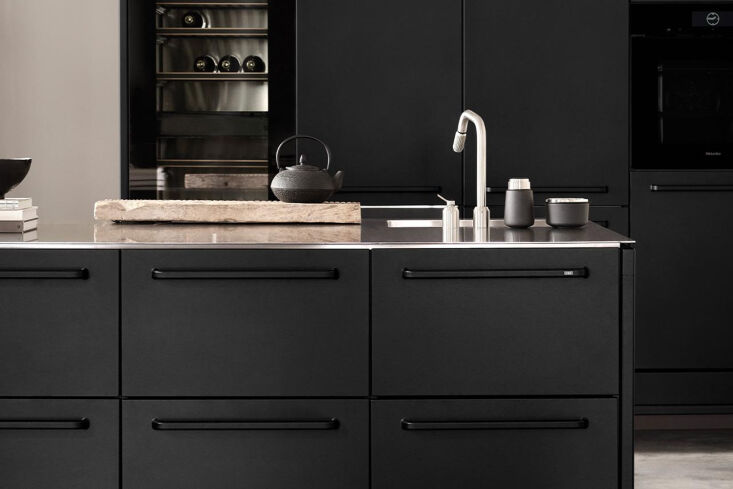
The "Generation Rent" of high-earning professionals is driving a new demand for modular kitchen workstations. Why invest in permanent cabinetry for a property you don't own? The Vipp V1 modules are designed as "furniture for the kitchen."
These freestanding units allow residents to invest in premium kitchen gear and transport the entire setup between properties. Constructed from powder-coated steel with integrated stainless steel sinks and gas hobs, they offer an industrial-chic aesthetic that feels permanent but remains completely mobile.
- Key Architectural Feature: Adjustable floor levelers and a "plug-and-play" installation system that requires only basic water and power connections.
3. The Professional Workbench: Bulthaup b2
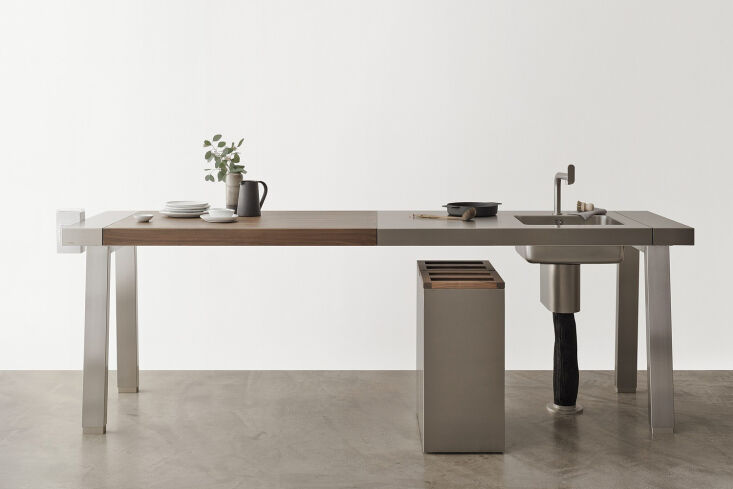
Bulthaup has long been the gold standard for German engineering, and the b2 workbench takes their philosophy to its logical conclusion. It strips the kitchen down to its essentials: a workbench for water and fire, and two "tool cabinets" for everything else.
The b2 creates a "Material Tension" between the warmth of walnut and the clinical precision of brushed aluminum. It’s an architectural statement that views the chef as a craftsman. By separating the prep area from the storage, the kitchen becomes a stage for performance.
- Key Architectural Feature: Strategic use of three widths of sinks and customized worktops that can be swapped based on the user’s specific cooking style.
4. Smart-Integrated Islands: The George Cabinetry 2026 Vision
If Bulthaup is about the workbench, George Cabinetry is about the "Social Island." Their 2026 vision focuses on the island as a sculptural centerpiece. By using Aqua Fusion Quartzite, they create a continuous, monolithic look where the induction plates are flush-mounted and virtually invisible until they are turned on.
This unit integrates hidden sensor lighting that adjusts based on the time of day, and built-in wireless charging stations disguised within the stone. It is the pinnacle of "Smart-Integrated" architecture—where the kitchen feels like a piece of high-end tech wrapped in natural stone.
- Key Architectural Feature: Invisible "Smart-Touch" controls embedded directly into the stone surface, eliminating the need for physical knobs or buttons.
5. Budget Modular Luxury: Ikea Äspinge & Compact Solutions
High-end architectural trends eventually trickle down, and the Ikea Äspinge is a testament to the democratization of integrated design. This unit brings the compact kitchen architecture 2026 trends to an accessible price point.
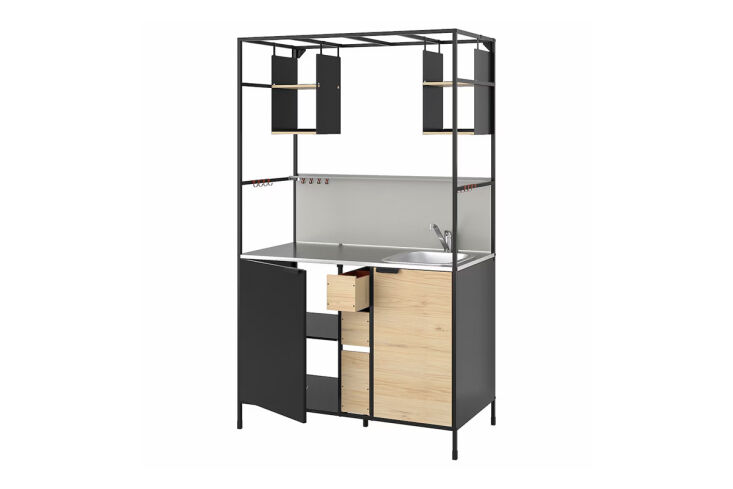
The Äspinge uses a mix of steel and wood to create a lightweight, modular feel. It is particularly effective for micro-apartments or studio conversions where every square inch must be maximized. It proves that a "disappearing" or integrated look doesn't require a six-figure budget—only thoughtful planning.
- Key Architectural Feature: Open shelving combined with a deep, integrated sink basin that doubles as a prep area, maximizing vertical storage.
6. Indoor-Outdoor Fluidity: Lgtek UW-C3 Steel Island
Modern architecture is increasingly blurring the lines between the interior and the patio. The Lgtek UW-C3 is specifically designed for this transition. Made from weather-resistant 316 stainless steel, this integrated island houses a professional hob and sink in a frame that looks just as at home in a sleek living room as it does on a terrace.
The design emphasizes "Architectural Materiality," using metals that will age gracefully over time while providing the durability needed for exposure to the elements.
- Key Architectural Feature: A cantilevered countertop that provides a seamless breakfast bar or cocktail station for outdoor entertaining.
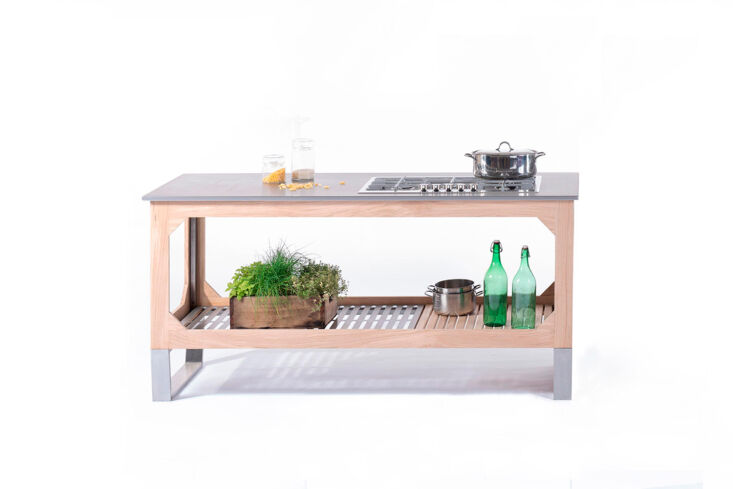
7. The Artisan Workbench: Katrin Arens La Cuisine
For those who find modern minimalism too cold, Katrin Arens offers an "Organic Modern" alternative. Using reclaimed wood salvaged from old barns and villas, she integrates modern plumbing and hobs into artisan-crafted benches.
This approach focuses on "Soft Geometry." The units feel soulful and lived-in, yet they provide the same consolidation of functions as their steel counterparts. It’s a reminder that integration can also be about texture and history.
- Key Architectural Feature: Hand-forged hardware and a "floating" plumbing installation that keeps the artisan wood as the primary focus.
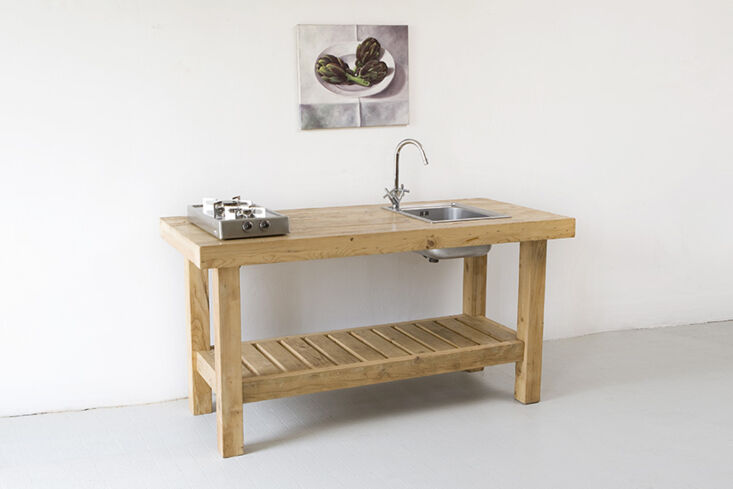
8. High-Performance Modulars: Alpes Inox Island Units
Alpes Inox is the choice for the serious home chef who wants a "race-car style" kitchen. These stainless steel islands are modular masterpieces. You can combine a washing module with a cooking module and a preparation module to create a customized length.
The integration here is about efficiency. Every drawer, sink, and cooktop is consolidated into a single, hygienic block. It’s the ultimate expression of "Performance vs. Social" design—the unit is built for heavy-duty use but looks like a piece of industrial art.
- Key Architectural Feature: Professional-grade 19/10 nickel-chrome stainless steel construction that is virtually indestructible and 100% recyclable.
9. Minimalist Zen: Japanese Toolbox Kitchen Islands
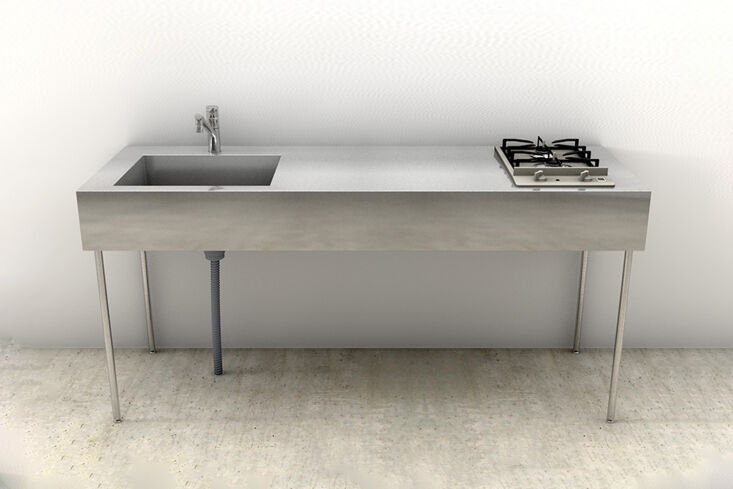
The "Tiny Apartment" movement in Tokyo has birthed some of the most innovative compact kitchen architecture. The Toolbox Kitchen Islands focus on "Discreet Technology" and a incredibly small footprint.
These units often feature minimal kitchen legs, making the floor visible beneath the unit. This architectural trick makes small rooms feel larger. With a single gas hob and a deep, narrow sink, these are the ultimate "Zen" workstations for urban living.
- Key Architectural Feature: A minimalist leg structure that reduces visual weight and simplifies the integration of floor-mounted utilities.
10. The Ultimate Social Hub: Multi-Level Integrated Units
Finally, we are seeing the rise of the "Performance Island" vs. the "Social Island." Modern integrated units are now being designed with split-level surfaces. One level is for the "wet" and "hot" work (the sink and hob), while a raised wooden or stone level serves as a hospitality hub.
These units often integrate beverage stations, wine coolers, and even herb-growing stations directly into the frame. They are designed for the home where the kitchen is the primary entertaining space, allowing the "chef" to stay connected to the "guests" throughout the evening.
- Key Architectural Feature: Integrated induction warming zones on the "social" side to keep tapas and drinks at the perfect temperature for guests.
Modular vs. Fixed: Which Architectural Path is Yours?
Choosing between a fixed integrated kitchen and a modular workstation depends on your long-term living strategy.
| Feature | Fixed Integrated Units (e.g., George Cabinetry) | Modular Workstations (e.g., Vipp, Boffi) |
|---|---|---|
| Customization | Infinite; tailored to the room's exact dimensions. | Limited to set module sizes. |
| Installation | Professional, permanent, requires major plumbing/electric. | "Plug-and-play"; often freestanding. |
| Resale Value | Adds significant value to the property itself. | High resale value for the unit; can be moved. |
| Aesthetic | Seamlessly blends into the walls and floors. | Acts as a standalone furniture "statement." |
Architectural Materials & Finishes for 2026
The trend for 2026 is all about Material Tension. We are moving away from all-white kitchens and toward high-contrast pairings. Expect to see warm walnut wood paired with cold, brushed metal, or porous travertine stone against sleek, tinted glass.
The Resurgence of Earth Tones:
- Sage & Terracotta: Bringing a grounded, biophilic feel to technical workstations.
- Smoked Oak: A sophisticated, darker alternative to traditional walnut.
- Brushed Brass: Used sparingly for integrated taps and "smart" touch points.
FAQ
Are integrated kitchen units more expensive than traditional cabinetry? Initially, the cost of an all-in-one unit can be higher due to the precision engineering and high-grade materials involved. However, when you factor in the reduced costs of labor for installing separate appliances, cabinetry, and countertops, the "all-in-one" solution often becomes more cost-effective for high-end projects.
Can I take a modular kitchen unit with me when I move? Yes! This is the primary benefit of modular workstations like the Vipp V1 or the Boffi Minikitchen. They are designed to be freestanding, meaning they are treated as furniture rather than permanent fixtures. You simply disconnect the water and power lines and transport the unit to your new home.
Is "disappearing" design practical for a family kitchen? Absolutely. The "cucine a scomparsa" trend is perfect for families who use their kitchen as a multi-purpose space for homework, remote work, and socializing. Retractable doors allow you to hide the "mess" of cooking instantly, restoring the room to a clean, architectural living space in seconds.