For decades, the Austin skyline was defined by the stoic, granite-clad giants of the early 1980s—buildings that prioritized corporate prestige over human connection. One such landmark, 816 Congress, stood as a 20-story testament to 1983 architecture: formal, monotone, and somewhat detached from the vibrant street life of the Texas capital. Today, that narrative has shifted. Through a visionary renovation led by IA Interior Architects for Regent Properties, 816 Congress has been reimagined as a hospitality-focused sanctuary. By blending a rugged West Texas desert aesthetic with the eclectic, soulful character of downtown Austin, the project has transformed a traditional office tower into a living urban gateway. This renovation isn't just about fresh paint; it’s a total structural and cultural overhaul featuring a 15th-floor "Amenity Hub," a high-tech golf simulator, and an outdoor terrace that offers some of the most breathtaking views of the Texas State Capitol.
Breaking the Fortress: Reimagining the Entrance
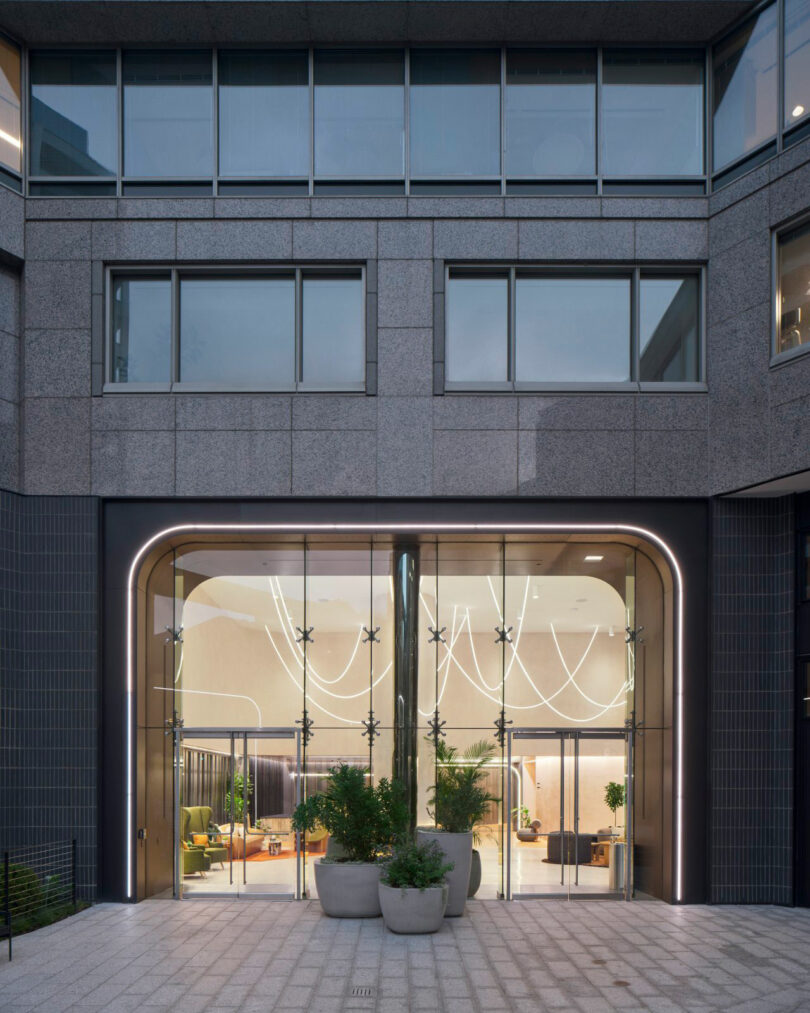
The original footprint of 816 Congress presented a classic architectural challenge: an angular, fortress-like base that felt closed off from the very city it served. The entrance was tucked away, obscured by a heavy colonnade that made the building feel unapproachable to pedestrians. To solve this, IA Interior Architects executed a bold structural move—removing a primary colonnade column to physically open the street front.
The design team introduced the "Black Ribbon" concept, a striking architectural gesture made of hot-rolled steel. This dark, textured material provides a sharp, modern contrast to the original grey granite, drawing the eye toward the entrance. To guide visitors from the bustle of Congress Avenue into the heart of the building, IA installed a sequence of illuminated arches. These arches act as a visual "north star," creating a garden-like transition that feels more like the entrance to a boutique hotel than a traditional corporate lobby.
The Exterior Evolution
- The Colonnade Update: Removal of obstructive pillars to increase transparency and flow.
- The Black Ribbon: A continuous band of hot-rolled steel that unifies the street-level facade.
- Lighting Design: Dynamic, arched light installations that soften the building's angular geometry.
Ivy’s Style Tip: When renovating a space with a "heavy" architectural history, look for ways to introduce transparency. Removing even one structural barrier can completely change the energy of a building, shifting it from "exclusive" to "inclusive."
Interior Design: West Texas Roots and Austin Soul
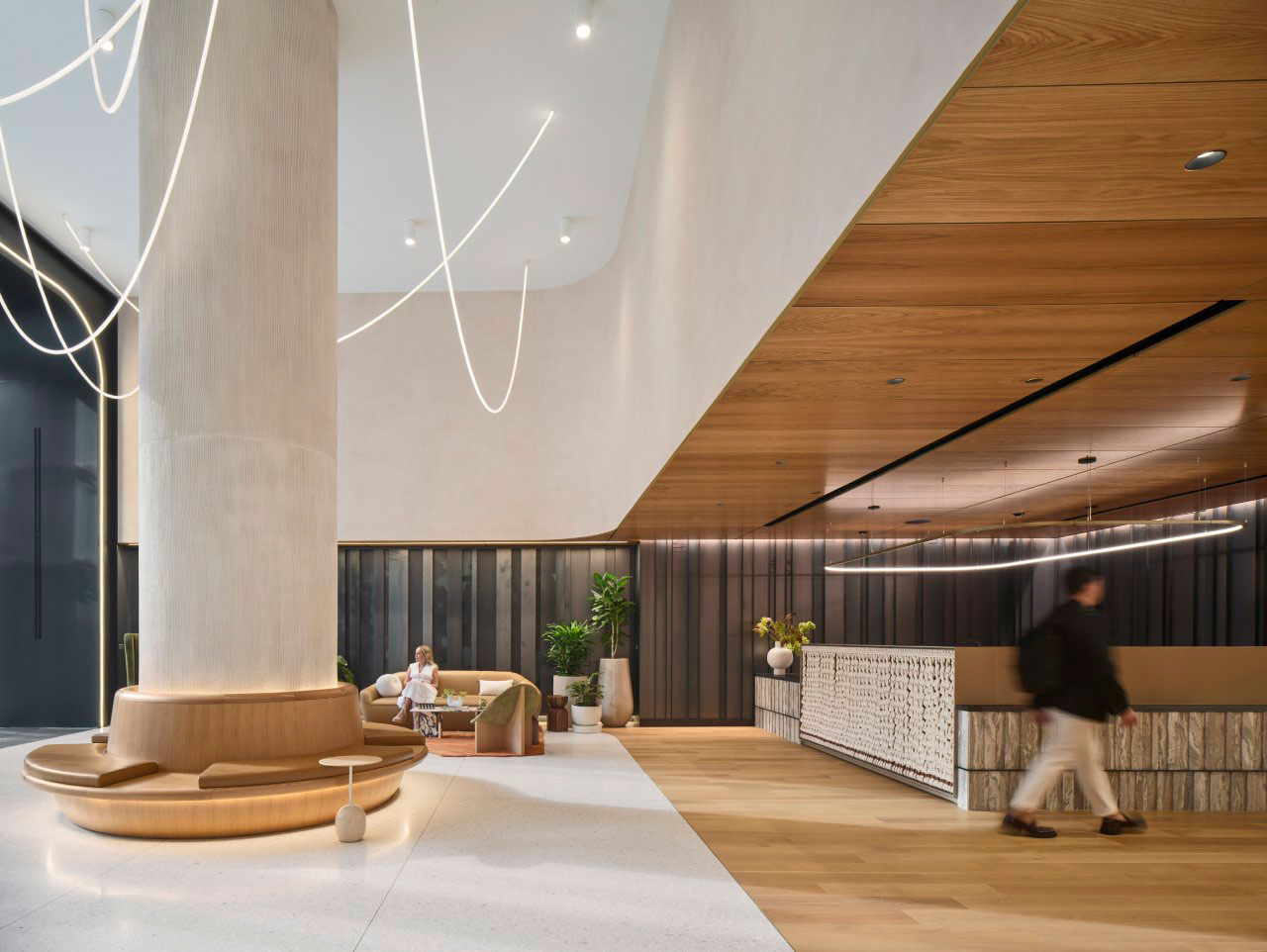
Stepping inside 816 Congress feels like a departure from the concrete jungle and an entry into a curated landscape. As an editor, I am always looking for "sensory layers," and this lobby delivers. The material palette is a love letter to the Texas landscape, featuring raked plaster walls that catch the light, warm wood accents, and custom terrazzo flooring.
The design doesn't just mimic nature; it interprets it through an Austin lens. The "raked" texture of the plaster walls mimics the wind-swept sands of West Texas, while the organic curves of the furniture and reception desk break up the rigid lines of the original 1980s floor plan.
Local Craftsmanship: A Fiber Art Spotlight
One of the most captivating elements of the interior is the custom rope installation by local artist Ellen Bruxvoort. Suspended behind the stone reception desk, the fiber art provides a soft, tactile counterpoint to the hard surfaces of metal and stone.
- Material: Natural cotton and hemp ropes.
- Inspiration: The intricate knots and textures of ranch life, elevated into a sophisticated gallery piece.
- Impact: It anchors the lobby, providing a sense of place that honors Austin’s community of makers.
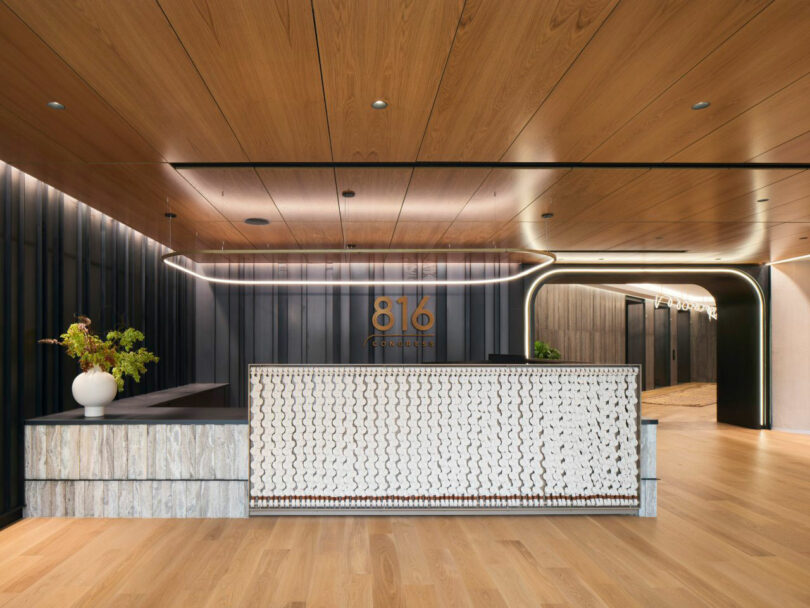
The lighting fixtures in the lobby further enhance this narrative. Large, suspended rings echo the shape of a cowboy’s lasso, but their minimalist execution keeps them firmly in the realm of modern luxury. It’s this balance of "rugged" and "refined" that makes the 816 Congress renovation a standout in the Texas design scene.
The Waterloo Lounge: A New Era of Amenities
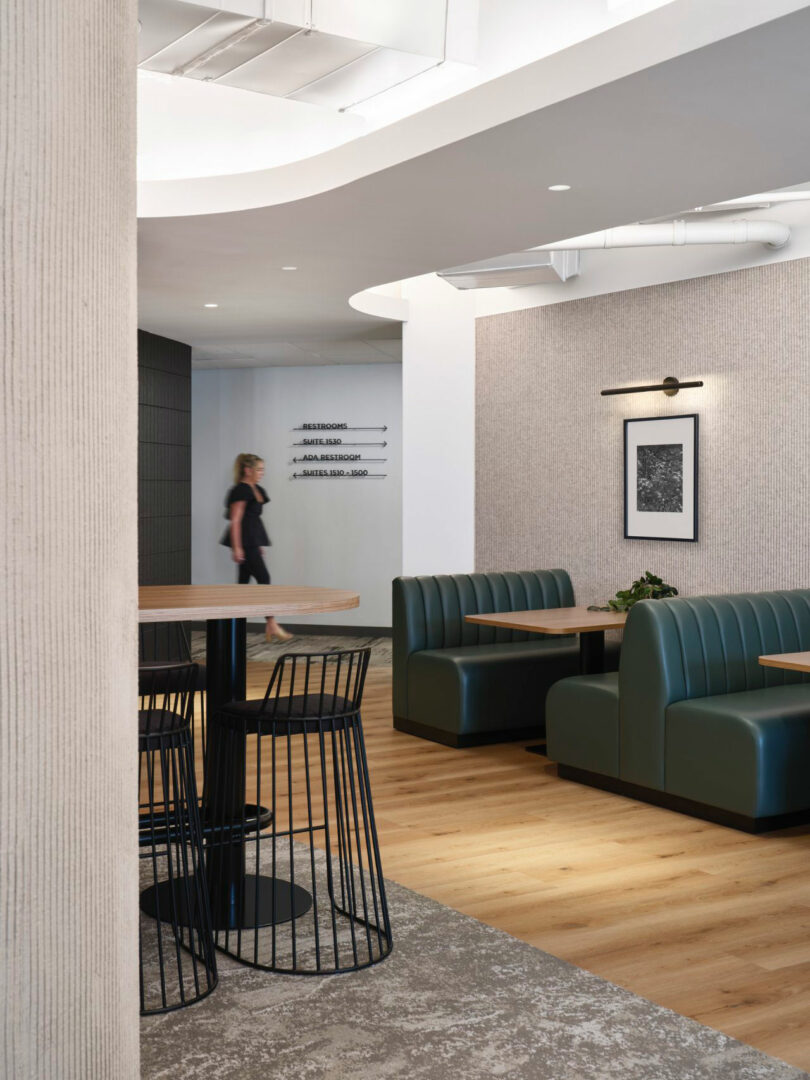
The renovation's crown jewel is undoubtedly the 15th-floor amenity hub, known as the Waterloo Lounge. The name itself is a nod to Austin’s history—Waterloo was the city’s original name before it was renamed in honor of Stephen F. Austin. This space represents the ultimate shift toward "hospitality-centric" office design.
Gone are the days of the dark, cramped breakroom. The Waterloo Lounge is designed as a multi-use ecosystem where tenants can transition seamlessly from deep focus work to social networking.
| Feature | Description |
|---|---|
| The Terrace | An expansive outdoor space with lounge seating and unobstructed views of the State Capitol. |
| Conferencing Center | High-tech meeting rooms equipped with state-of-the-art AV for hybrid collaboration. |
| Zoom Rooms | Sound-proofed, private pods specifically designed for video calls. |
| Coffee Bar | A boutique-style station serving local roasts, doubling as a social hub in the afternoons. |
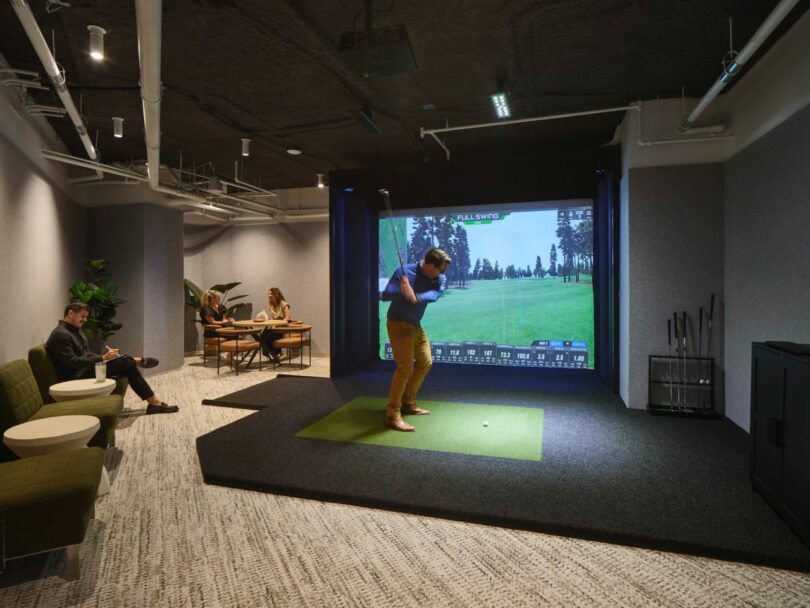
The most talked-about feature, however, is the full-scale golf simulator. In a city like Austin, where work-life balance is a core value, providing a space for recreation within the office building is a powerful tenant draw. It transforms the 15th floor into a destination, encouraging employees to stay in the building rather than seeking out third spaces for leisure.
Austin’s Office Evolution: Why Design Matters Now
The renovation of 816 Congress arrives at a pivotal moment. Austin is currently ranked as the second busiest office development market in the United States. With a massive influx of tech talent and corporate headquarters, the competition for "best-in-class" office space is fierce.
Regent Properties recognized that to stay relevant, they had to move away from the "commodity office" model. The shift toward "eclectic tenant usage" means that a building must cater to a lawyer in a suit just as effectively as a software engineer in a hoodie. By focusing on hospitality, 816 Congress creates a neutral but high-end ground that appeals to everyone.
This strategy is part of a broader "Sun Belt expansion" seen in commercial real estate, where investors are doubling down on cities with high quality-of-life scores. In this new landscape, the office is no longer just a place to work—it’s a "living room" for the city, a place for community engagement, and a tool for talent retention.
Conclusion: A Living Room for Congress Avenue
The transformation of 816 Congress from a 1980s "black box" into a light-filled, texture-rich urban gateway is a masterclass in modern renovation. By prioritizing the human experience—from the way one walks through the front door to the way one enjoys a view of the Capitol—IA Interior Architects and Regent Properties have set a new standard for Austin commercial real estate.
Whether it’s the tactile raked plaster, the local fiber art, or the high-tech golf simulator, every choice at 816 Congress serves a purpose: to make the workday feel a little more like a stay at a luxury resort. As Austin continues to grow, it is thoughtful, design-forward projects like this that will define the city’s next chapter.
FAQ
Who designed the 816 Congress renovation? The renovation was designed by IA Interior Architects, a global firm specializing in workplace design, on behalf of the owner, Regent Properties.
What are the standout amenities at 816 Congress? The building features a 15th-floor amenity hub called the Waterloo Lounge, which includes a full-scale golf simulator, an outdoor terrace with views of the Texas State Capitol, a high-end conferencing center, and boutique coffee services.
How did the entrance change during the renovation? The renovation removed a structural colonnade column to open the street front and added a series of illuminated arches and a "Black Ribbon" of hot-rolled steel to create a more inviting, garden-like entrance from Congress Avenue.