The Verdict
Aman Tokyo is the definitive masterclass in "sky-high minimalism," successfully filtering the chaos of the Otemachi financial district through traditional Japanese spatial philosophy. By elevating the engawa concept 33 floors above the street, it creates an urban sanctuary that feels grounded, earthen, and profoundly silent. It is, quite simply, the benchmark for how modern luxury can reconcile extreme urban density with an uncompromising sense of peace.
In the rarefied air above Tokyo’s skyline, a different kind of luxury takes root. As an editor who has spent a decade dissecting the nuances of interior styling, I’ve found that true "sanctuary" is rarely about what you add to a space; it is about what you have the courage to leave out. At Aman Tokyo, this courage is palpable.
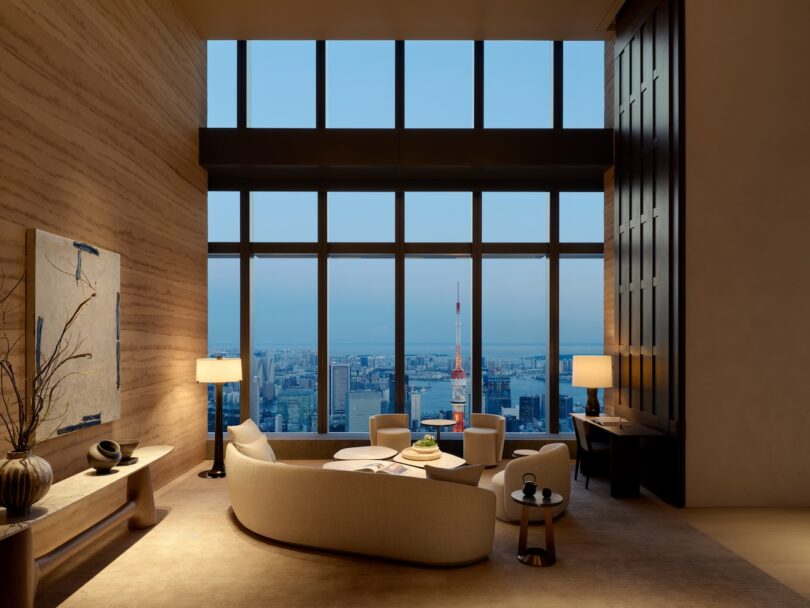
The hotel doesn't merely sit atop the Otemachi Tower; it exists in a state of intentional detachment from the frenetic energy of the streets below. Aman Tokyo reconciles the crushing density of the world’s most populous metropolitan area by utilizing engawa—the traditional Japanese architectural concept of a transitional space—alongside a tactile palette of Washi paper, stone, and camphor wood. It is a vertical retreat where the architecture acts as a filter, allowing the light of the city in while keeping the noise at bay.
The Architecture of Light: The Great Lantern
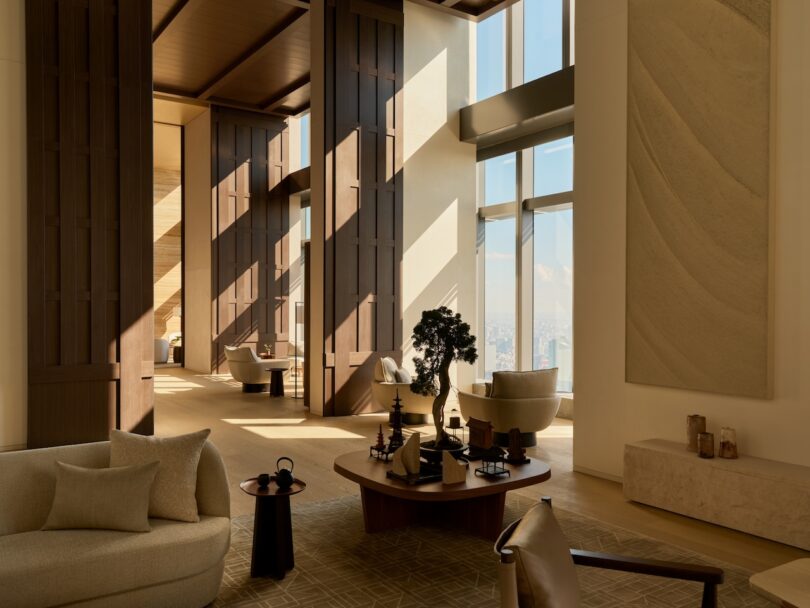
The late Kerry Hill, the visionary architect behind the property, understood that to create serenity in a skyscraper, one must manipulate the very nature of volume. Upon stepping out of the elevator on the 33rd floor, the immediate sensation is one of breathtaking verticality. You aren't just in a lobby; you are standing inside a "Great Lantern."
This central atrium rises 30 meters high, draped in layers of textured, translucent Washi paper. During the day, it diffuses sunlight into a soft, ethereal glow that mimics the interior of a traditional Japanese home. At night, the space transforms into a glowing beacon, reflecting the rhythmic pulses of the city far below.
The design team utilized light as a primary building material. Geometric shadows fall across the basalt floors, creating a sense of movement that feels organic rather than mechanical. In the center of this "lantern" lies the Inner Garden—a serene arrangement of seasonal Ikebana and rock gardens that serves as a quiet reminder of the Zen principles guiding the entire experience.
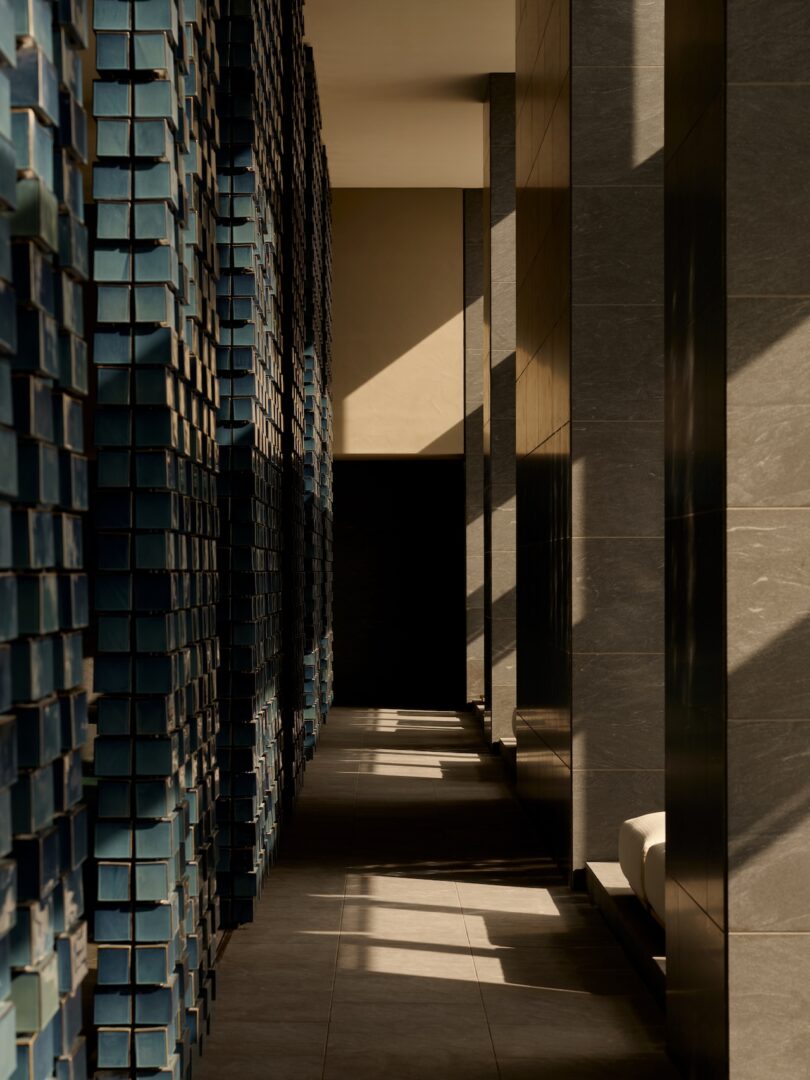
Design Tip: In dense urban living, use "layers" of light. Instead of harsh overhead fixtures, opt for translucent screens or textured shades (like Washi-style paper) to soften the transition between your private space and the outside world.
The Guest Experience: Largest Entry-Level Rooms in Tokyo
In a city where space is the ultimate currency, Aman Tokyo is arguably the most "extravagant" property in the metropolis. It features 84 uniquely designed rooms and suites, with even the entry-level accommodations starting at a staggering 764 square feet.
The layout of these rooms is a masterclass in spatial flow. Rather than dividing the space with heavy walls, Hill used sliding Shoji screens to create a sense of "sunken" living areas. This ensures that the floor-to-ceiling views of the Imperial Palace Gardens and Mount Fuji are never obstructed. Whether you are lounging on the daybed or working at the desk, the horizon is your constant companion.
The centerpiece of every room, however, is the furo. These deep-soaking basalt tubs are positioned strategically by the windows, turning the act of bathing into a ritual of high-altitude contemplation.
| Feature | Specification | Design Impact |
|---|---|---|
| Room Size | From 764 sq. ft. | Redefines "luxury" through generous spatial volume. |
| Primary Materials | Camphor wood, Washi paper, Basalt | Creates a warm, earthbound sensory experience. |
| The Furo Tub | Deep-soaking black stone | Integrates Japanese wellness rituals into the daily stay. |
| Viewpoint | Floor-to-ceiling glass | Connects the guest to the Imperial Palace Gardens. |
Aman Residences Tokyo: A New Standard of Urban Living
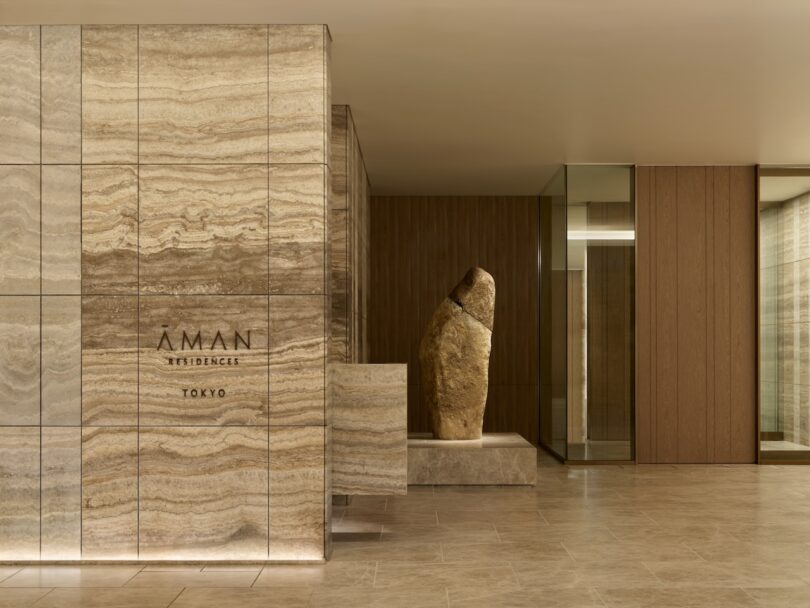
While the hotel is a transient sanctuary, the Aman Residences Tokyo—located atop the Mori JP Tower at Azabudabai Hills—represent a permanent shift in urban design. This project, a collaboration between Pelli Clarke & Partners and the interior maestros Yabu Pushelberg, takes the Aman philosophy and applies it to the domestic sphere.
Positioned at the crown of Japan's tallest residential building, these residences are designed to feel like "homes in the clouds." Yabu Pushelberg moved away from the more austere aesthetics of the hotel to embrace a palette that is muted yet deeply earthbound.
There is a fascinating tension here between weight and weightlessness. While the height suggests a floating existence, the materials—heavy stones, rich woods, and monumental sculptures—keep the resident grounded. It’s a design language that acknowledges the dizzying heights of 21st-century living while providing the psychological security of a mountain retreat.
Wellness and Gastronomy Above the Clouds
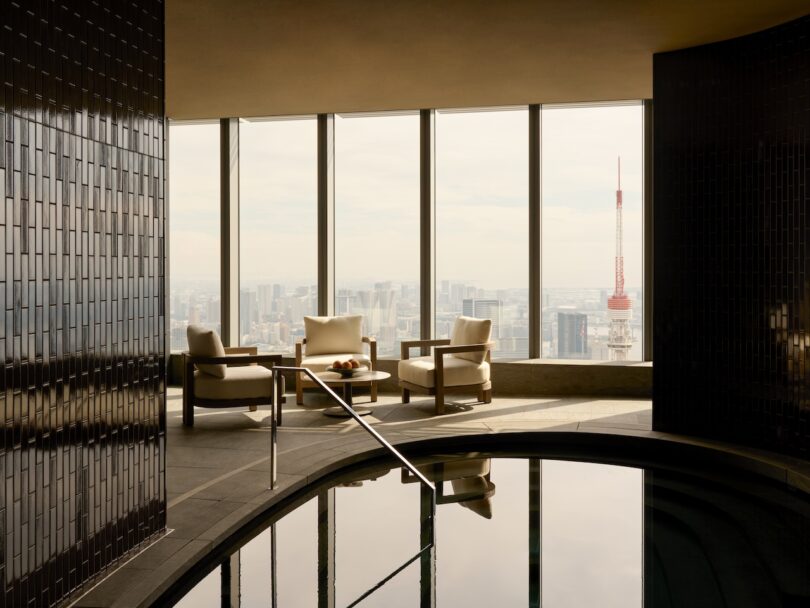
To truly reconcile density with serenity, a space must cater to the body as much as the eye. The Aman Spa is a 2,500-square-meter sanctuary spread across two floors, making it the largest and most comprehensive wellness facility in Tokyo.
The highlight is undoubtedly the 30-meter heated indoor pool. Swimming here feels like gliding through the sky; the water appears to spill directly into the Tokyo skyline. Beyond the pool, the spa incorporates seasonal herbal yakuyu baths and Pilates studios, ensuring that the "urban" part of the urban sanctuary never feels overwhelming.
Dining at Aman Tokyo follows a similar philosophy of restraint and local connection:
- Arva: This Italian dining concept focuses on "forest-to-table" ingredients, bringing a rustic, terrestrial warmth to the 33rd floor.
- Musashi by Aman: An intimate Edomae sushi experience where the chef works with the day’s finest catch from the Toyosu market.
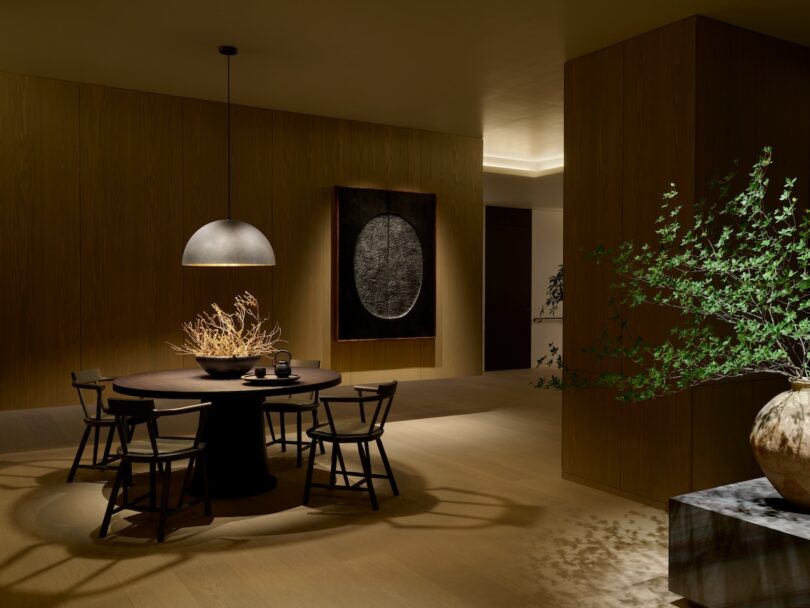
In both venues, the decor is intentionally sparse. The focus remains on the craft of the food and the quietude of the environment, proving that luxury is often most powerful when it whispers.
A Masterclass in Restraint
Aman Tokyo stands as a metaphorical statement on 21st-century luxury. In an era where "more is more" often dominates high-end design, Aman’s commitment to the Japanese principles of restraint is refreshing. It teaches us that the best way to handle the density of a city like Tokyo is not to fight it, but to rise above it and frame it through a lens of natural materials and thoughtful silence.
For the interior design enthusiast, the takeaway is clear: tranquility is achieved through consistency. By sticking to a neutral, earth-mimicking palette and prioritizing the "view" (both literal and metaphorical), Aman Tokyo creates a space where the mind can finally stop racing.
FAQ
How does Aman Tokyo maintain a sense of nature in a skyscraper? The hotel utilizes "The Great Lantern" atrium to maximize natural light and incorporates an "Inner Garden" with rock gardens and Ikebana. Additionally, materials like camphor wood and basalt stone bring organic textures into every room.
What makes the Aman Residences Tokyo different from the hotel? While both share the Aman DNA of peace and privacy, the Residences (located in Mori JP Tower) were designed by Yabu Pushelberg specifically for long-term living, featuring a softer, more "earthbound" material palette and residential-scale amenities.
Is the Aman Spa open to non-hotel guests? Yes, the Aman Spa offers memberships and day treatments for non-guests, providing access to its 2,500-square-meter facilities, including the signature 30-meter pool and Japanese hot baths.