When Anna Jewsbury, the creative force behind the sculptural jewelry and homeware brand Completedworks, looks at a room, she doesn’t just see floorboards and wallpaper. She sees a premise. With a background in Mathematics and Philosophy from Oxford University, Jewsbury approaches interior architecture with the same rigorous clarity one might apply to a complex proof. To her, a successful home is a "beautiful argument"—a space where every element is essential, every line is intentional, and nothing superfluous remains.
This logic-driven philosophy is the heartbeat of her Marylebone residence. A converted 1820s heritage pub, the house is a masterclass in how to balance traditional Georgian proportions with an uncompromisingly modern, industrial sensibility. It is a home that doesn't just shelter its inhabitants; it explains itself through its materials and its flow.
The Transformation: From 1820s Heritage Pub to Modern Sanctuary
The journey of the Marylebone house began in the summer of 2020. Moving between lockdowns, Jewsbury and her husband, author Luke Williams, spent a full year living in the space before swinging a single hammer. This "observation phase" is a hallmark of her logical approach—understanding the light, the drafts, and the natural movement of the house before imposing a new structure upon it.
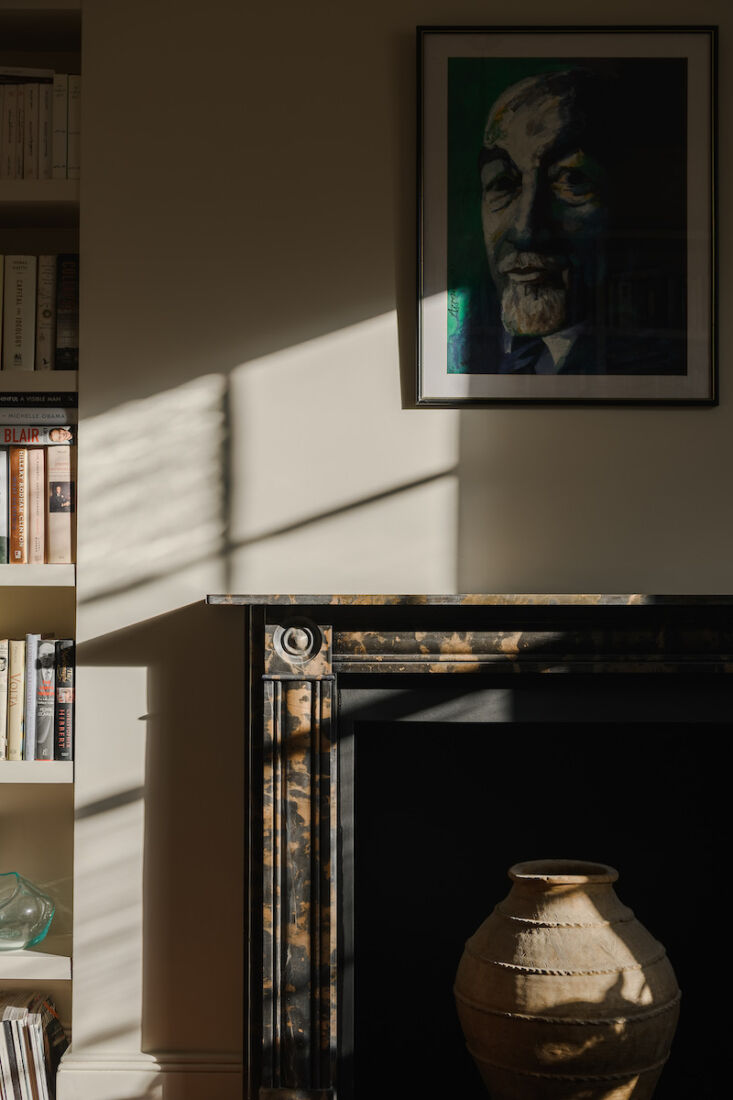
The challenge was significant: transforming a historic three-story pub into a functional family home. The goal wasn't to erase the building's past but to strip it back to its most honest form. This meant preserving the high ceilings and original marble fireplaces while introducing "raw and unfussy" materials that felt contemporary.
The Mathematical Logic of Spatial Flow
In mathematics, the most elegant solution is often the most direct. Jewsbury applied this to the home’s layout, which underwent a comprehensive three-story renovation that resulted in five distinct functional levels.
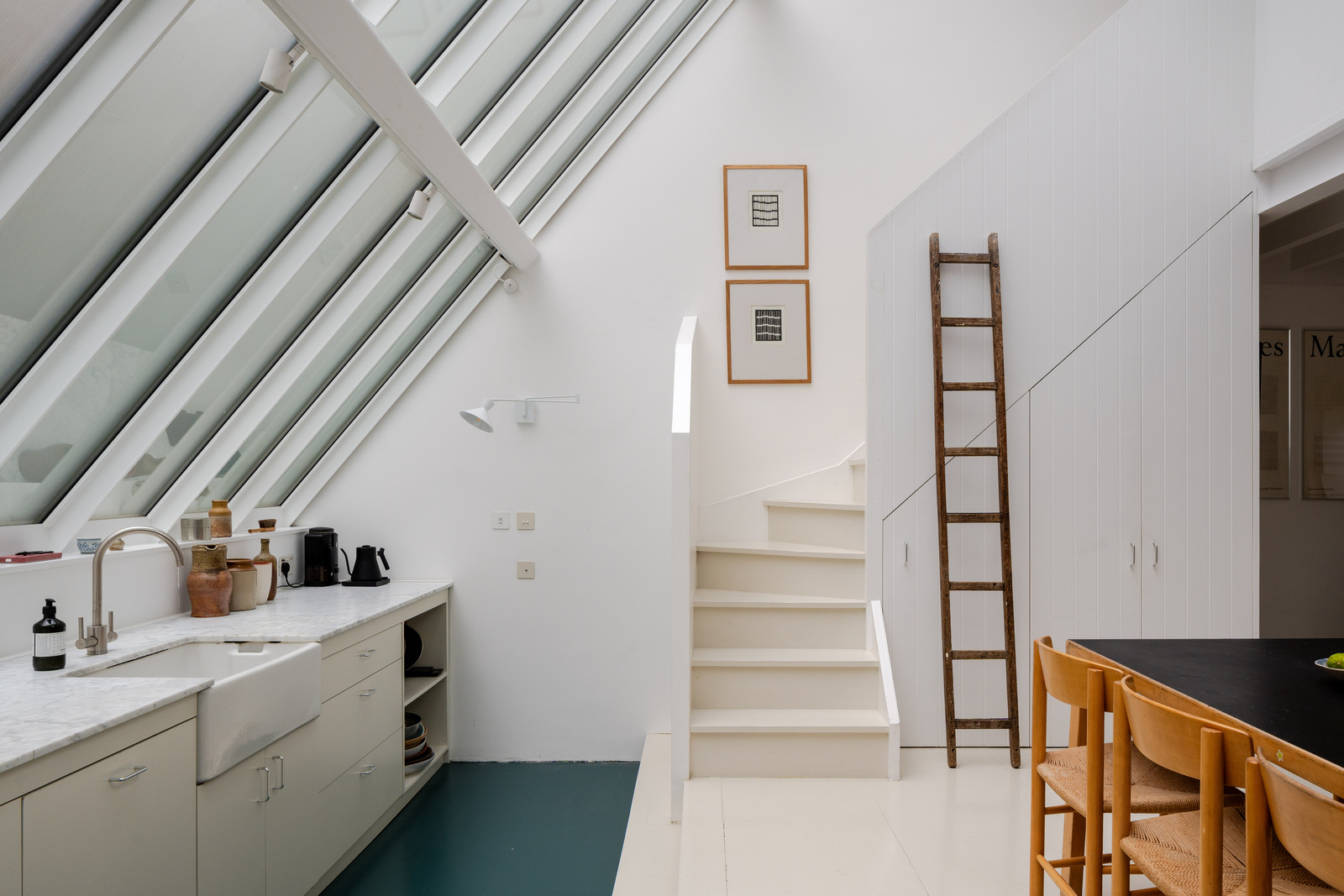
The most profound structural change involved the staircase. Originally tucked away, the basement staircase was moved to the very center of the house. This transformed it into a central column, a vertical spine that anchors the entire residence. By centralizing the movement, Jewsbury optimized the flow between floors, making the transition from the "engine room" in the basement to the private sanctuaries above feel seamless.
To further enhance the sense of verticality, she made a decisive architectural move: removing the fanlights above internal doors. By increasing the height of the doors to meet the ceiling line, she allowed light to travel further into the core of the house and eliminated visual breaks that traditionally segment Georgian rooms.
| Architectural Change | Logical Purpose | Visual Result |
|---|---|---|
| Centralized Staircase | Create a functional "spine" | Improved circulation and symmetry |
| Removing Fanlights | Increase door height | Uninterrupted light and verticality |
| Five-Level Split | Zoning by activity | Clear distinction between work and rest |
Material Contrast: The Industrial and the Organic
If the layout is the logic of the house, the materials are its language. Jewsbury’s interior design is defined by a tension between the hard and the soft, the industrial and the organic.
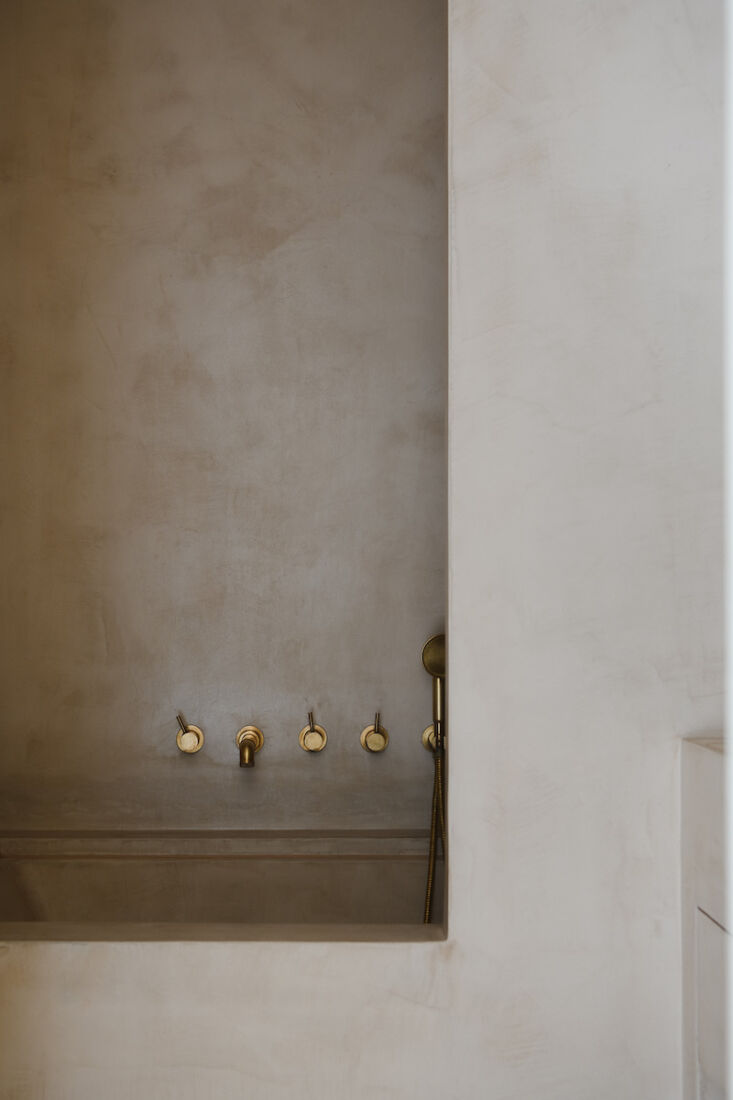
In the bathrooms, Jewsbury sought a "zero visual interruption" aesthetic. This was achieved through a 100% micro-cement application. Unlike traditional tiling, which introduces a grid of grout lines, the micro-cement covers the walls, floors, basins, and even the dividers in a single, continuous sweep. The result is a seamless, plastery finish that feels both ancient and futuristic.
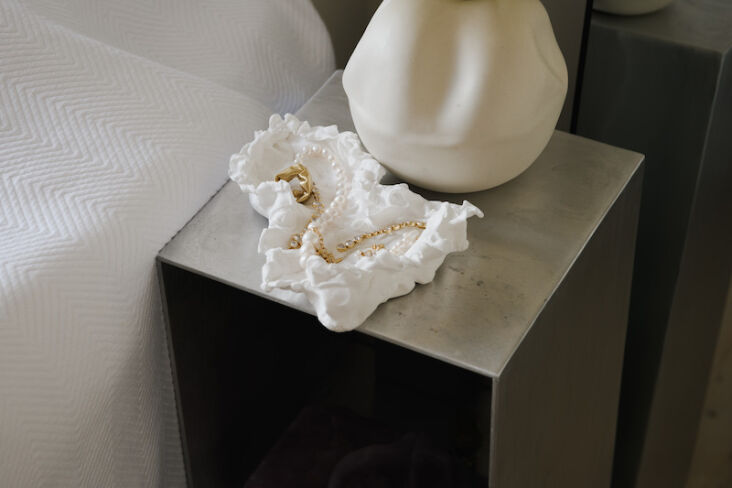
This minimalist rigor extends to the bedrooms and storage areas, where raw aluminum takes center stage. Jewsbury used this industrial material for wardrobe fronts, shelving units, and even bedside tables. It’s a choice that mirrors her jewelry design—taking a material often seen as utilitarian and elevated it through form and context. The cool, reflective surface of the aluminum provides a sharp counterpoint to the off-white, lime-washed walls.
"There is a specific kind of peace found in a space where the materials don't compete for your attention, but rather support the overall logic of the room." — Anna Jewsbury
The 'Engine Room' vs. The Sanctuary
The Marylebone home is zoned with psychological precision. The basement, once used for storing beer barrels, has been reimagined as the "engine room." This cavernous space serves as a mess-friendly studio for creative projects and a cinema room for the family. It is a place for "controlled chaos," where the work of life happens.
In contrast, the ground floor is dedicated to "peaceful entertaining." The kitchen and living areas are kept separate, a logical choice that allows the kitchen to be a place of activity while the living room remains a quiet sanctuary.
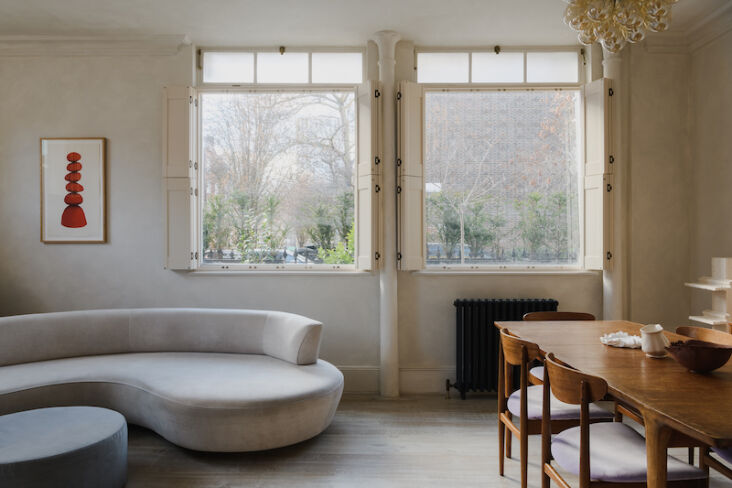
The furniture in these spaces is selected with an "all-or-nothing" sourcing philosophy. Jewsbury prefers to wait years for the perfect piece rather than fill a room with temporary fixes. Many of the home's most striking elements are inherited mid-century pieces, given new life through thoughtful reupholstery. For example, dining chairs were covered in a delicate lilac Kvadrat x Raf Simons fabric, adding a poetic, soft layer to the otherwise mathematical layout.
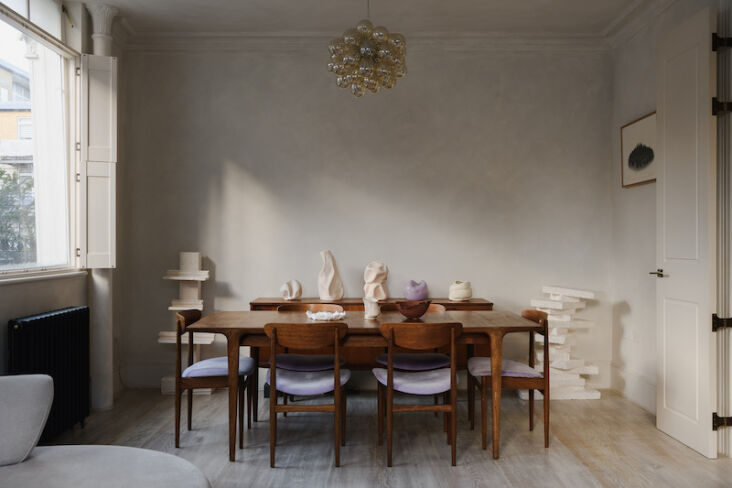
Curating the Collection: Art and Iconic Furniture
Within this logical framework, Jewsbury places "sculptural homeware" that acts as the ornament to the architecture. Much like her jewelry, these pieces—often from her own Completedworks collections—utilize organic, "squeezed" forms that challenge the straight lines of the building.
The home features iconic design pieces that share her commitment to essentialism:
- Faye Toogood Roly Poly Chair: Its chunky, sculptural form provides a playful contrast to the raw aluminum surfaces.
- Gerrit Rietveld Steltman Chairs: A classic of geometric design that reinforces the home's mathematical roots.
- David Nash Drawings: Organic, charcoal-based art that brings a touch of nature into the Marylebone setting.
Sustainability also plays a role in this curation. Jewsbury frequently uses reclaimed marble and clay, ensuring that the beauty of the home is built on materials that are as long-lasting as the logic behind them.
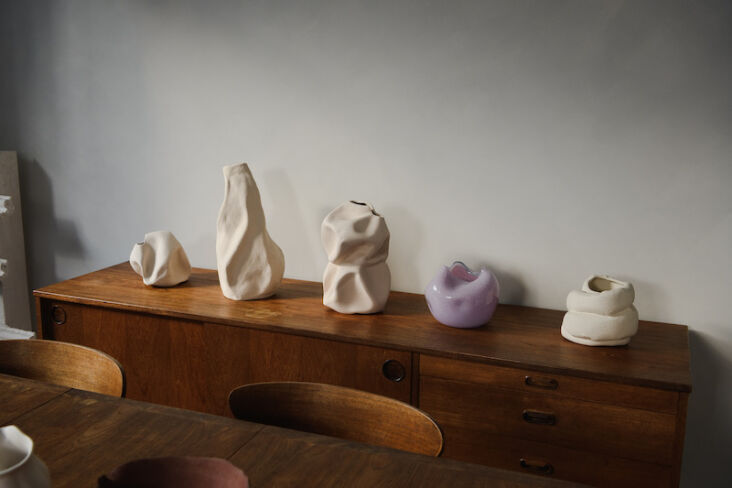
The Scalable Ornament
Ultimately, Anna Jewsbury’s home is a testament to the idea that interior architecture and jewelry making are two ends of the same spectrum. Whether she is designing a gold earring or a three-story renovation, the objective is the same: to find the most logical, beautiful expression of a form.
By stripping away the superfluous and leaning into the "beautiful argument" of her space, Jewsbury has created more than just a house; she has created a physical manifestation of her personal philosophy. It is a place where math, philosophy, and design live in a rare, serene harmony.
FAQ
How does Anna Jewsbury's background in mathematics influence her home design? Jewsbury treats interior design as a logical exercise. She focuses on removing unnecessary elements until only the essential structure remains, creating a space that feels like a "beautiful argument" where every architectural choice is justified by function and flow.
What is the "engine room" in Jewsbury’s Marylebone house? The "engine room" is the converted basement of her former-pub residence. It serves as a multifunctional, "mess-friendly" zone for studios, storage, and a cinema room, keeping the creative chaos of work and play separate from the serene living areas above.
What materials are key to achieving Jewsbury's "minimalist London" look? Key materials include raw aluminum for cabinetry and furniture, micro-cement for seamless bathroom surfaces (achieving "zero visual interruption"), and reclaimed marble. These are often softened with lime-washed walls and high-end textiles like Kvadrat fabrics.