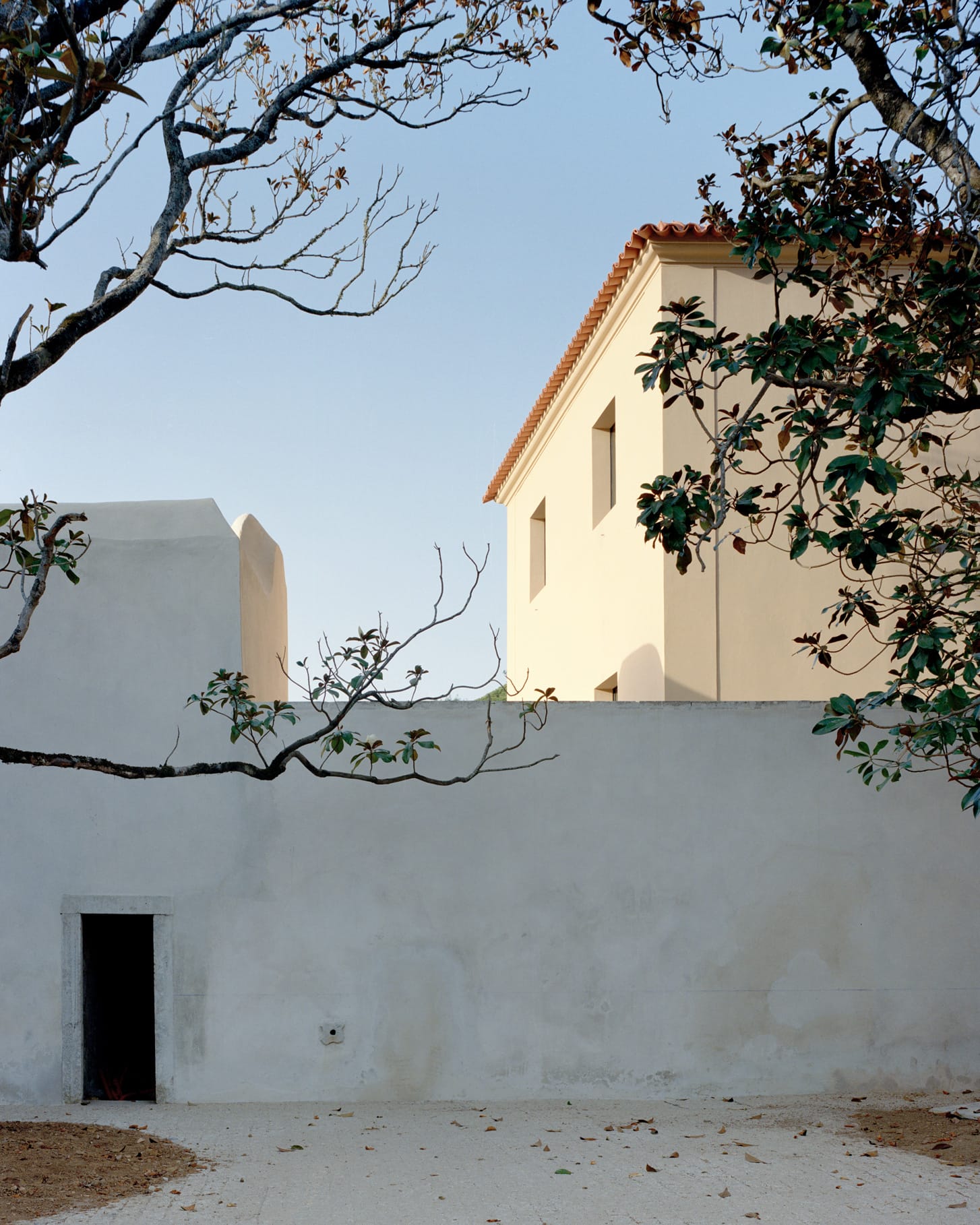
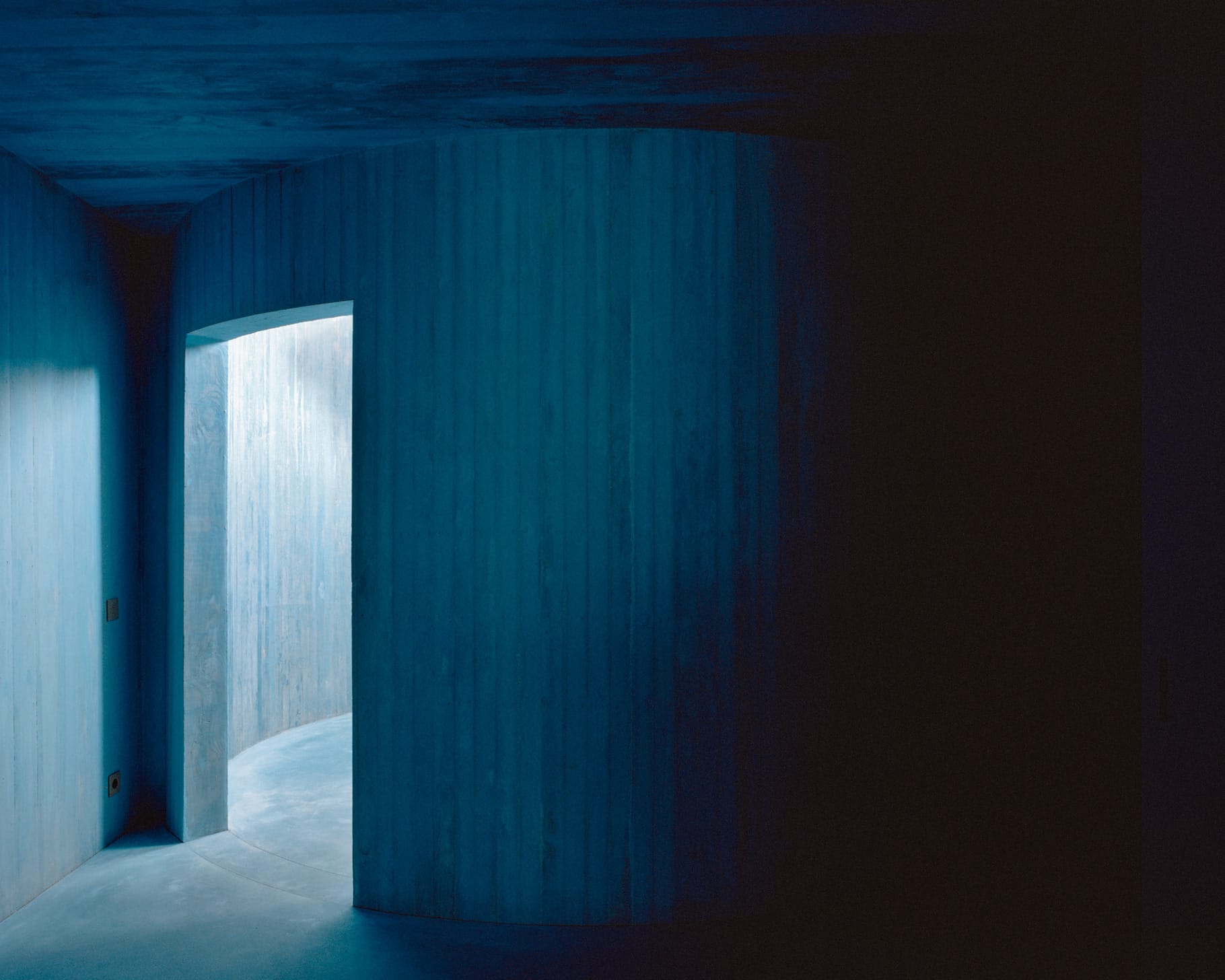
To the casual passerby in the historic hills of Sintra, Portugal, the building known as House II appears much as it has for decades—a weathered, stone-walled volume that once served as a traditional wine cellar. However, step across the threshold, and you are immediately transported from the 19th century into a bold, monochromatic future. Arquitectura-G has performed a feat of architectural surgery here, stripping the interior to its rawest form and inserting a new structural body made entirely of shimmering, blue-pigmented concrete.
This isn't just a renovation; it is a "revelation." By choosing one singular, daring color, the architects have turned a cramped, subterranean space into a light-filled sanctuary that balances the weight of history with the airy possibilities of modern design.
The Heritage Paradox: Exterior Preservation vs. Interior Innovation
The primary challenge of the House II project was rooted in its location. Sintra is a UNESCO World Heritage site, and the local regulations are famously strict. The heritage laws prohibited any modifications to the building's exterior volume, facade, or roofline. For many, such constraints would be a limitation; for Arquitectura-G, it was the ultimate design opportunity.
By committing to a 100% exterior preservation rate, the architects were free to be radically creative within the "blank canvas" of the original stone walls. They stripped away the decaying interior partitions, leaving only the perimeter shell. This created a dramatic tension: the outside remains a humble piece of Portuguese history, while the inside is a high-concept, structural insertion.
The strategy was simple yet profound:
- The Shell: Original stone masonry preserved to maintain the thermal mass and historical context.
- The Core: A new, self-supporting concrete structure built within the stone walls.
- The Result: A complete reconfiguration of the interior layout across three distinct levels without moving a single exterior stone.
The Blue Pigmented Concrete: A Mono-Material Masterclass
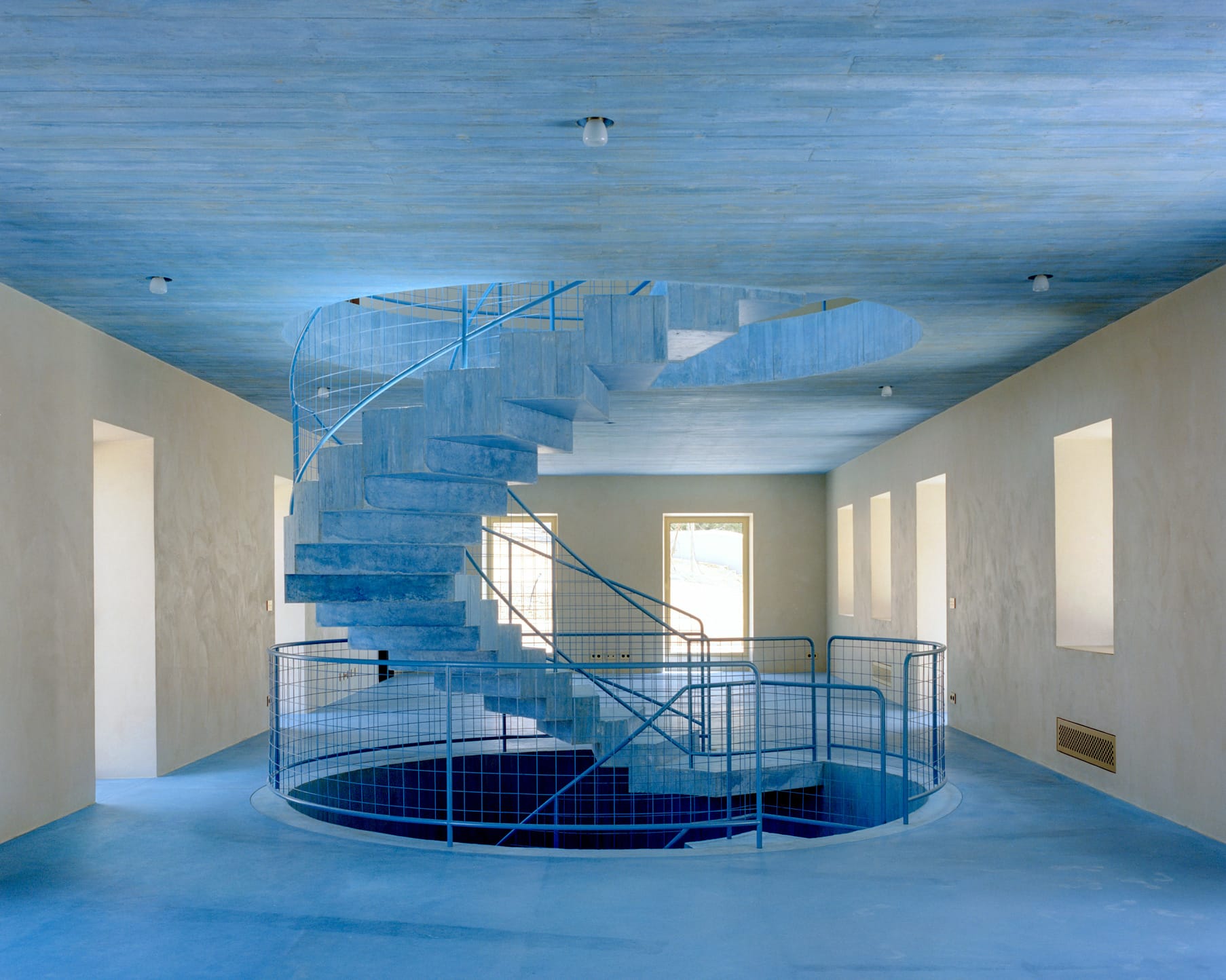
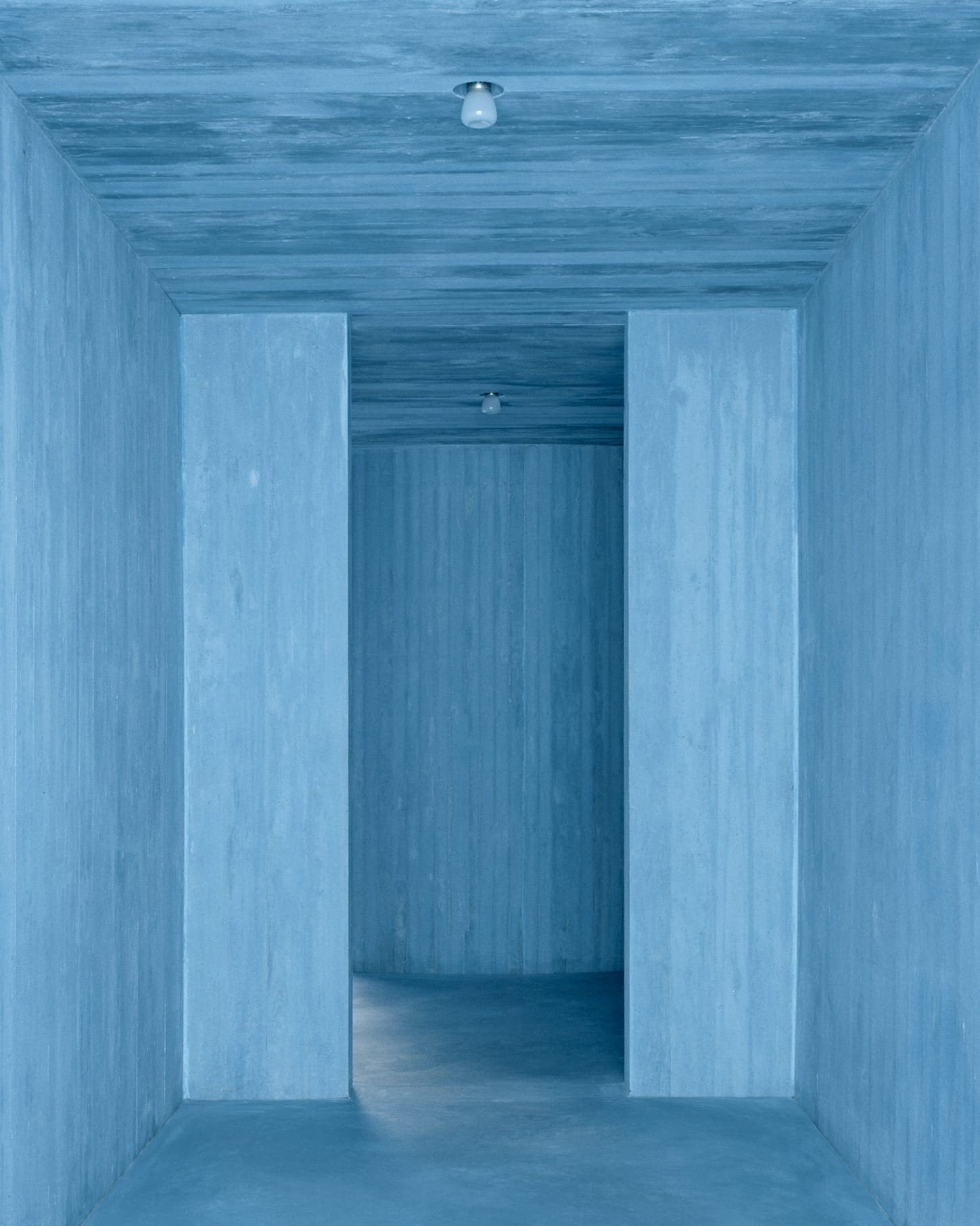
The most striking feature of House II is its commitment to a mono-material palette. While most modern homes rely on a mix of drywall, wood, and tile, Arquitectura-G utilized a singular "structural body." Approximately 90% of the new structural interventions consist of blue-pigmented concrete and matching blue steel elements.
Why blue? In the dim light of a cellar, blue acts as an atmospheric guide. It doesn't fight the shadows; it embraces them, creating a cool, calm environment that feels both subterranean and celestial. The concrete is not just a finish—it is the floor, the ceiling, the stairs, and the very bones of the house.
"The blue concrete serves as both a structural element and a sensory experience. It transforms the utilitarian nature of the cellar into a curated atmosphere where the material itself tells the story of the home’s rebirth." — Ivy Chen
To maintain this visual harmony, the architects integrated:
- Blue Onyx: Used in the bathrooms to provide a luxe, crystalline texture that echoes the concrete's tone.
- Blue Steel: Employed for thin railings and window frames to ensure no other color disrupts the monochromatic flow.
- Matching Grout and Sealants: Ensuring that the transition between materials is almost invisible to the naked eye.
Vertical Flow: The Three-Level Spatial Configuration
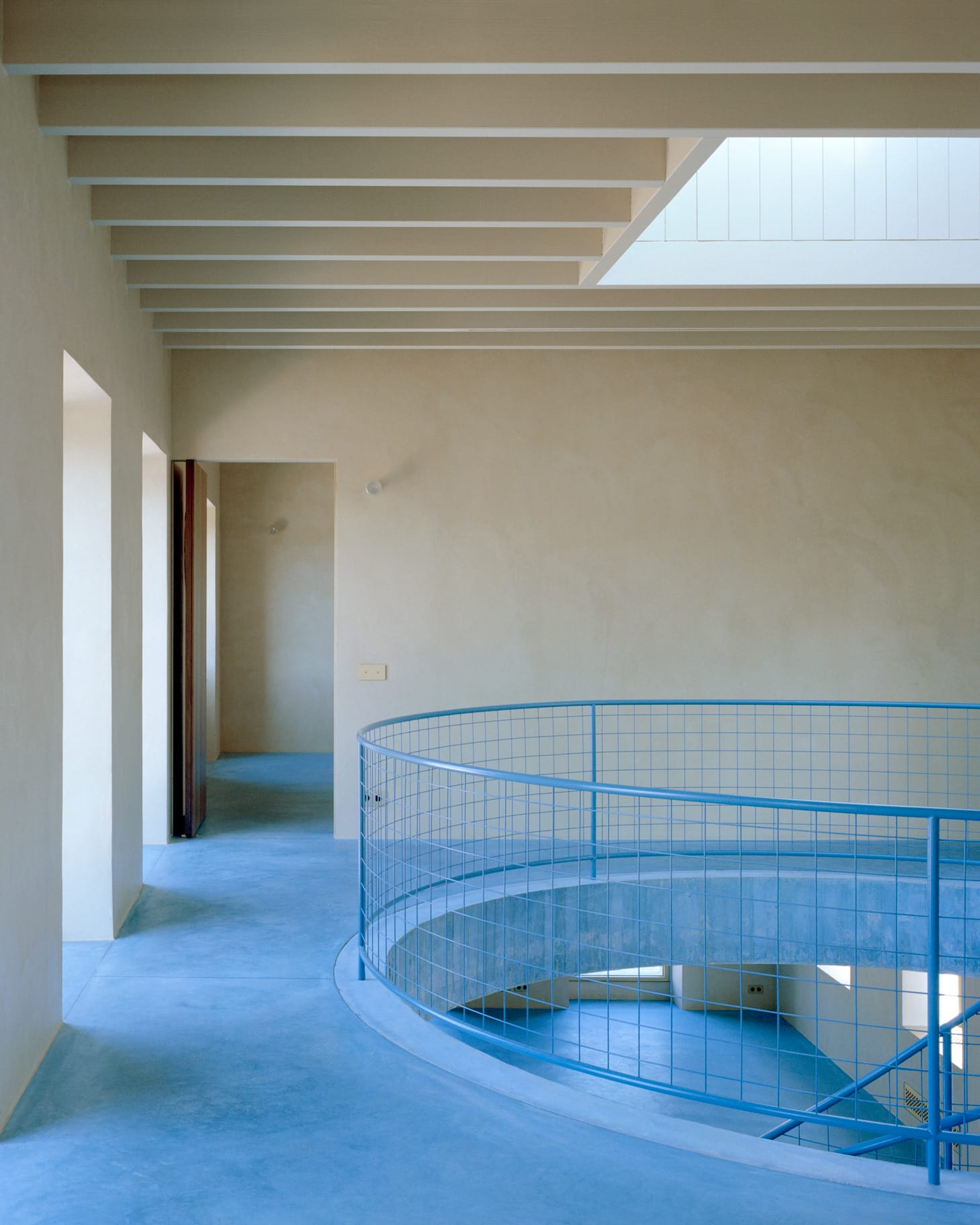
To make the historic cellar livable, the architects reimagined the space vertically. Instead of a series of rooms, they created a sequence of experiences linked by a "sculptural heart"—a central spiral staircase.
- The Basement: This level honors the building's roots. It remains tucked into the earth, maintaining the cool, atmospheric temperature of a cellar. It serves as a quiet retreat, perfect for storage or contemplative lounging.
- The Ground Floor: The social hub of the home. Here, the kitchen, dining, and living spaces wrap around the central concrete core. The open layout allows light to bounce off the blue surfaces, making the relatively small footprint feel expansive.
- The Upper Floor: Dedicated to private quarters. The bedrooms are located here, benefit from the highest point of the structure and a second living area that feels closer to the sky than the earth.
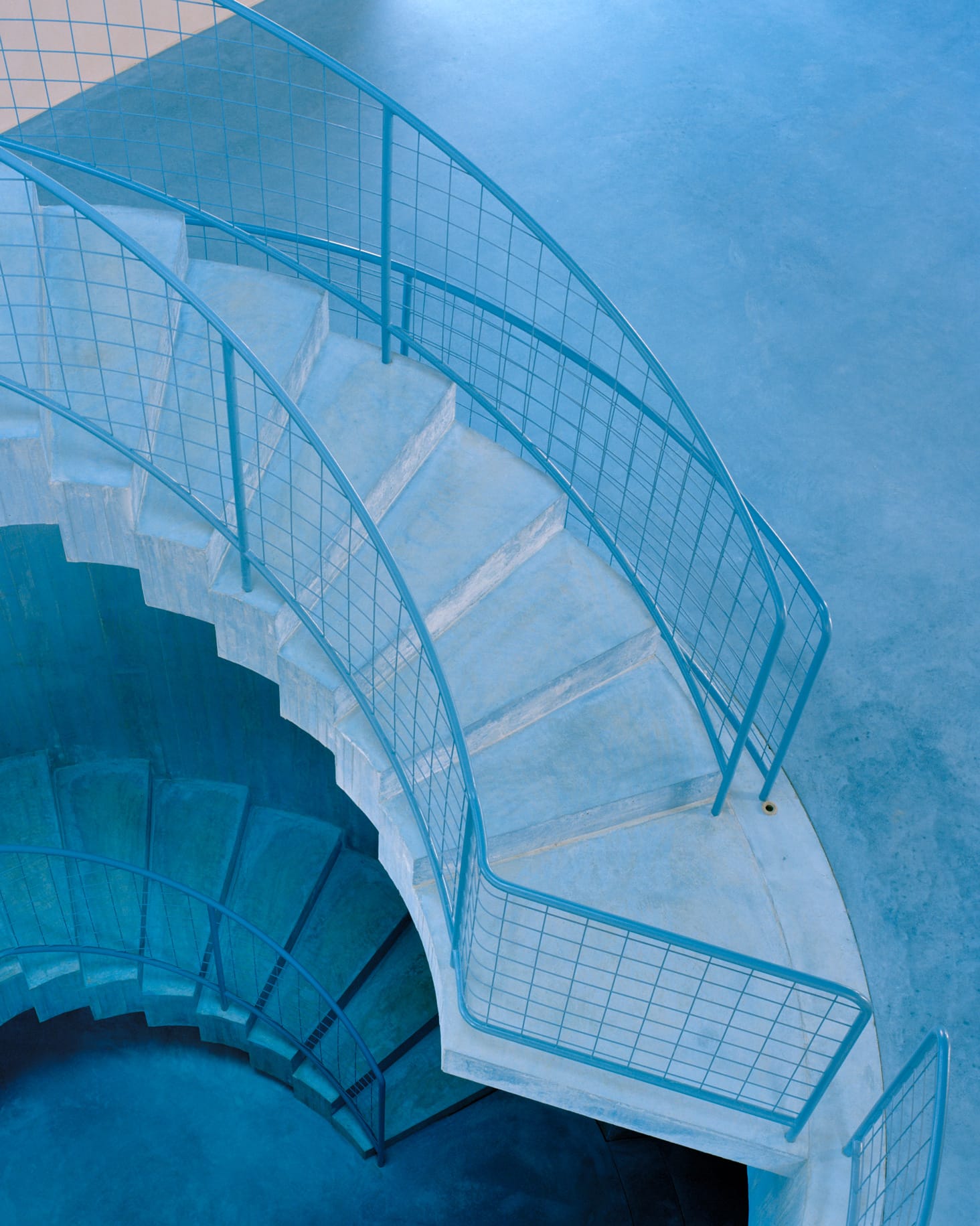
The central spiral staircase is more than just a way to move between floors; it is the project's defining architectural gesture. Its tight, elegant curve cuts through the blue concrete slabs, drawing the eye upward and allowing natural light from the roof to filter down to the lower levels.
Why House II is a Model for Modern Adaptive Reuse
House II is a masterclass in "Preservation with Integration." Rather than trying to make the new parts of the house look old, Arquitectura-G highlighted the difference between the two. This contrast creates a more honest and beautiful living space.
For homeowners and designers, there is a powerful lesson here: Color Drenching. When you find a material or a hue that works, leaning into it completely can simplify a complex renovation. By choosing one strong design call—blue concrete—the architects solved multiple problems at once, creating a unified identity for a house that was previously fragmented and forgotten.
Beyond aesthetics, this project highlights the environmental benefits of adaptive reuse. By extending the life cycle of the original stone building, the architects reduced the need for new demolition waste, proving that the most sustainable home is often the one that already exists.
FAQ
How did the architects bring light into a cellar? Arquitectura-G utilized a vertical opening strategy. By inserting a central staircase and strategically placing skylights in the preserved roof, they created a light well that allows sun to penetrate through all three levels, reflecting off the blue surfaces to brighten the space.
Is blue concrete durable for a residential interior? Yes. Pigmented concrete is an excellent choice for adaptive reuse because it is incredibly durable and requires very little maintenance. In House II, it acts as both the structure and the finish, meaning there are no floorboards to warp or paint to chip.
What is "Adaptive Reuse" in architecture? Adaptive reuse refers to the process of repurposing an existing building for a use other than which it was originally designed. In this case, transforming a 19th-century wine cellar into a high-end modern residence while preserving its historical shell.