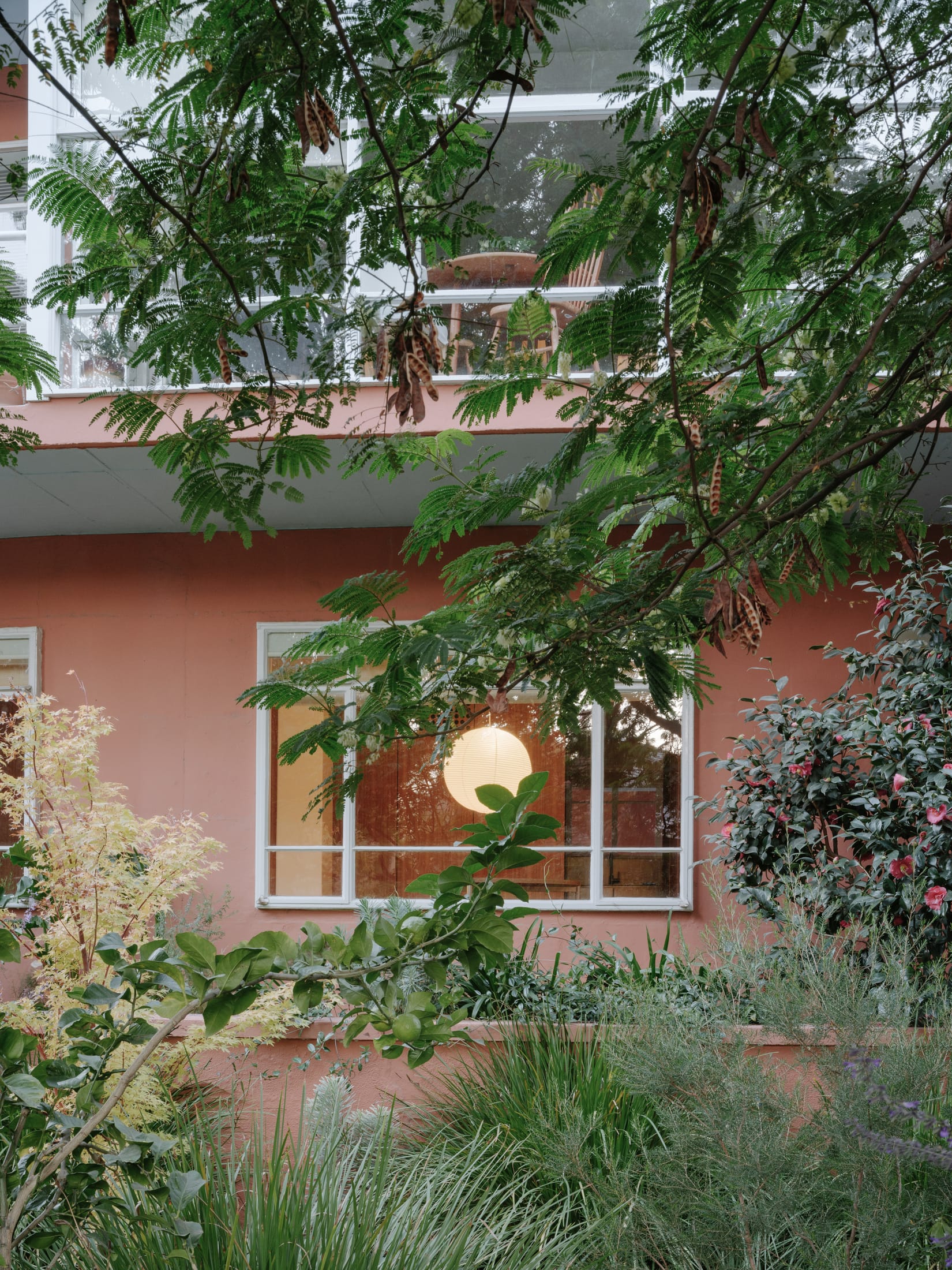
When most people think of Toorak, the mind immediately drifts to grand Victorian mansions, high-wrought iron gates, and sprawling manicured lawns. What they don’t expect is a concrete modernist gem tucked away like a well-kept secret. Caringal Flats, designed in 1951 by architect John William Rivett, is one such rarity—a landmark of three distinct buildings and iconic skybridges that once defined the "New Look" of post-war Melbourne.
For many years, however, the interior of these flats didn't quite match the architectural bravery of the exterior. After decades of unsympathetic alterations, many units became cramped and dark. This is where Ellul Architecture steps in. For their third project within the complex, they were tasked with transforming a ground-floor garden flat into a functional residence and workspace for a musician. The result is a masterclass in how to respect heritage while modernizing for a very specific, creative lifestyle.
Quick Stats
- Location: Toorak, Melbourne
- Project Type: Mid-century modern apartment renovation
- Footprint: 88 Square Meters
- Timeline: 12-week construction process
- Architect: Ellul Architecture
- Builder: Gotze
The Design Challenge: Restoring an 88-Square-Meter Icon
Restoring a landmark isn't just about polishing the floors and painting the walls. It’s about understanding the original "bones" and removing the layers of history that no longer serve a purpose. In this 88-square-meter footprint, the primary challenge was the layout. The original design had been chopped up over the years, leaving the flat feeling disjointed.
The objective was clear: create a home that could breathe. The client, a musician, needed a space that could pivot from a quiet sanctuary to a high-functioning studio. Ellul Architecture didn’t just want to add rooms; they wanted to rationalize the floorplan. I find that in smaller footprints, the best way to create a sense of space is through "intelligent editing"—removing the noise to let the architecture speak.
The Central Intervention: The Blackbutt-Lined Timber Pod
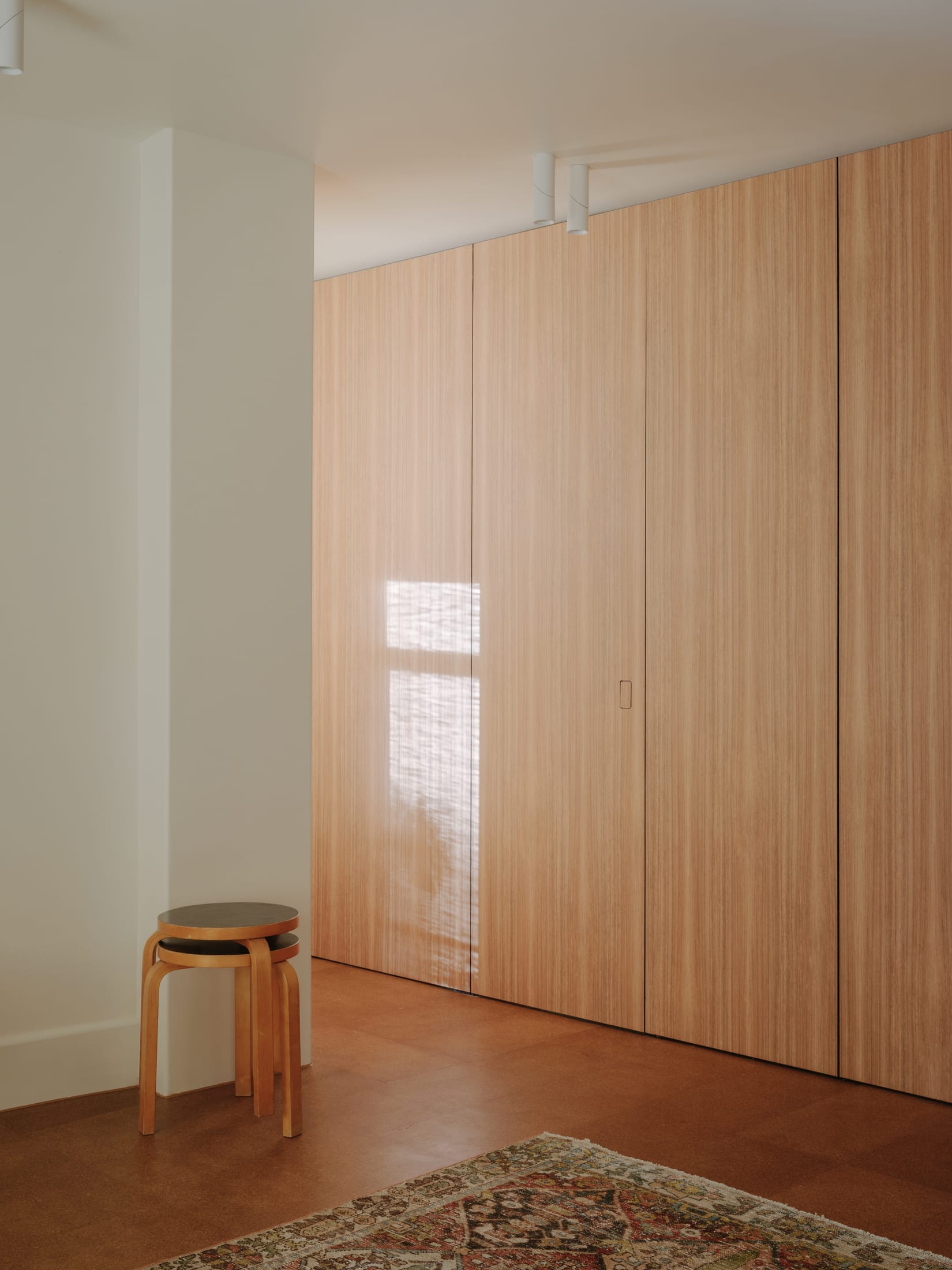
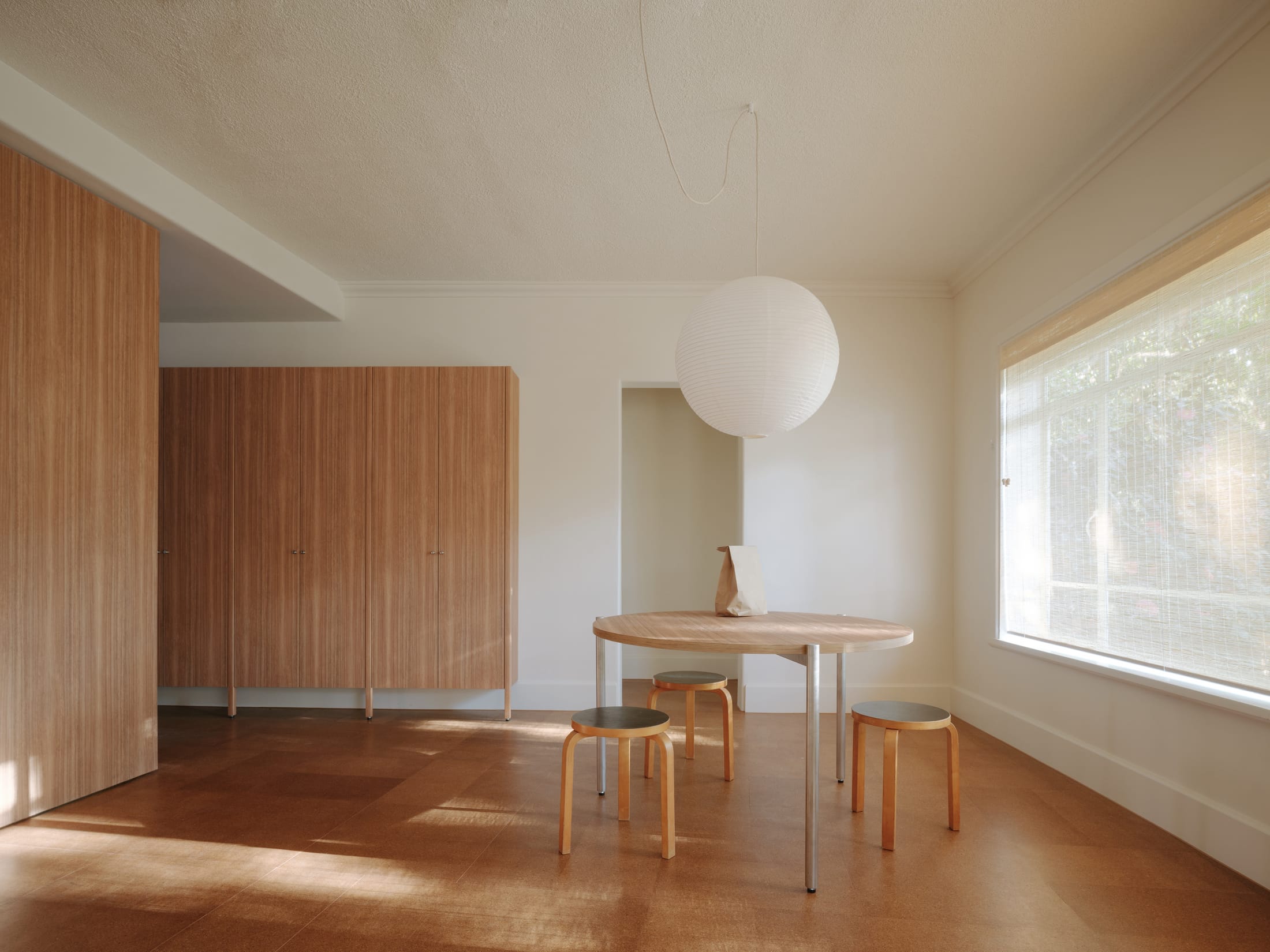
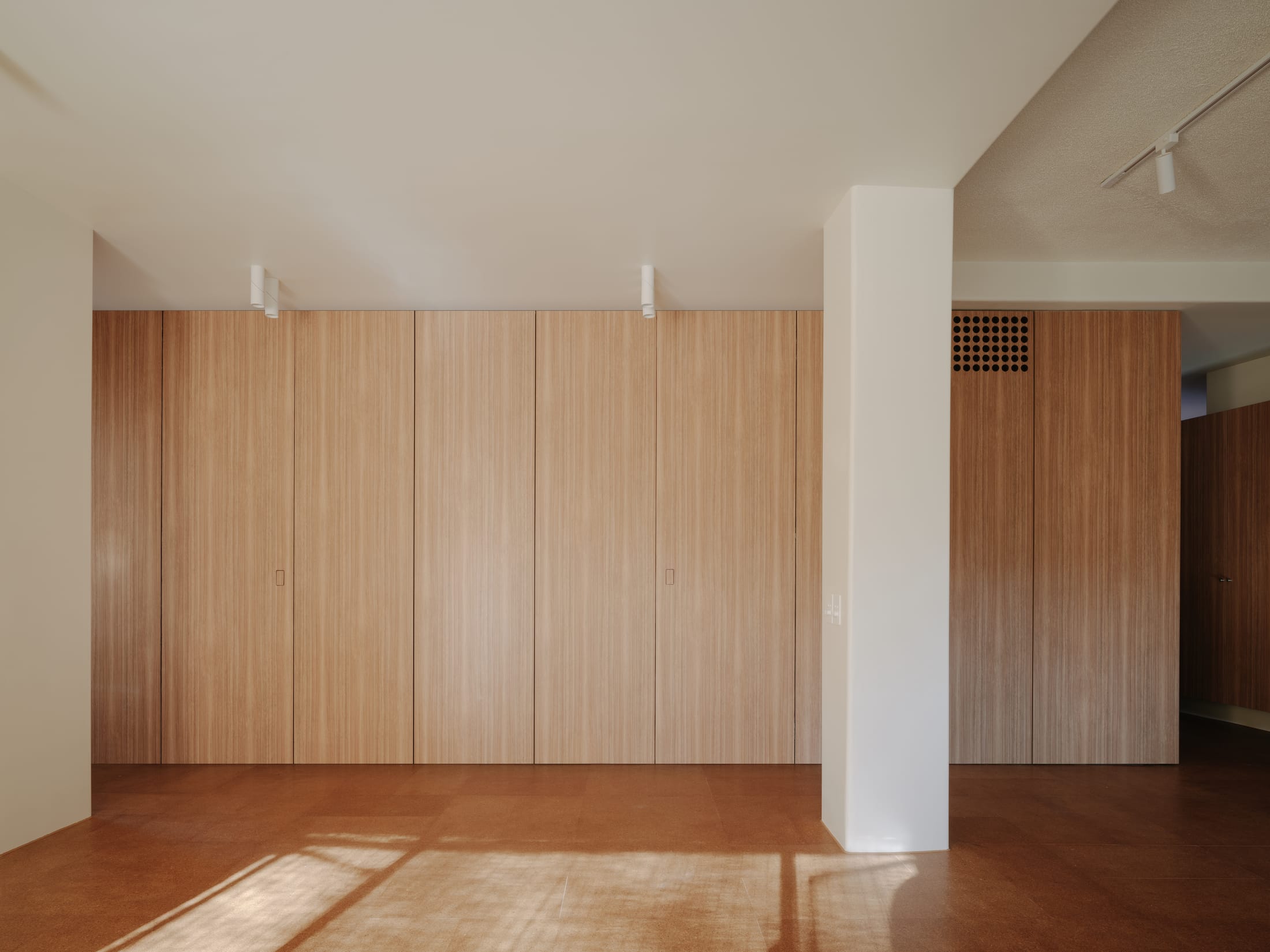
The genius of this renovation lies in a single, transformative insertion: a blackbutt-lined timber pod. This isn't just a stylistic choice; it is the functional heart of the home. By placing this pod centrally, Ellul Architecture successfully organized the entire 88-square-meter floorplan without the need for traditional, light-blocking walls.
The pod serves three critical roles:
- Acoustic Isolation: Vital for a musician, the timber construction helps dampen sound, creating a focused environment for practice.
- Organization: It conceals the apartment’s "mess"—storage, laundry, and services are all tucked away within its warm wooden skin.
- Visual Anchor: While the rest of the apartment is bathed in light, the pod provides a sense of grounding and weight.
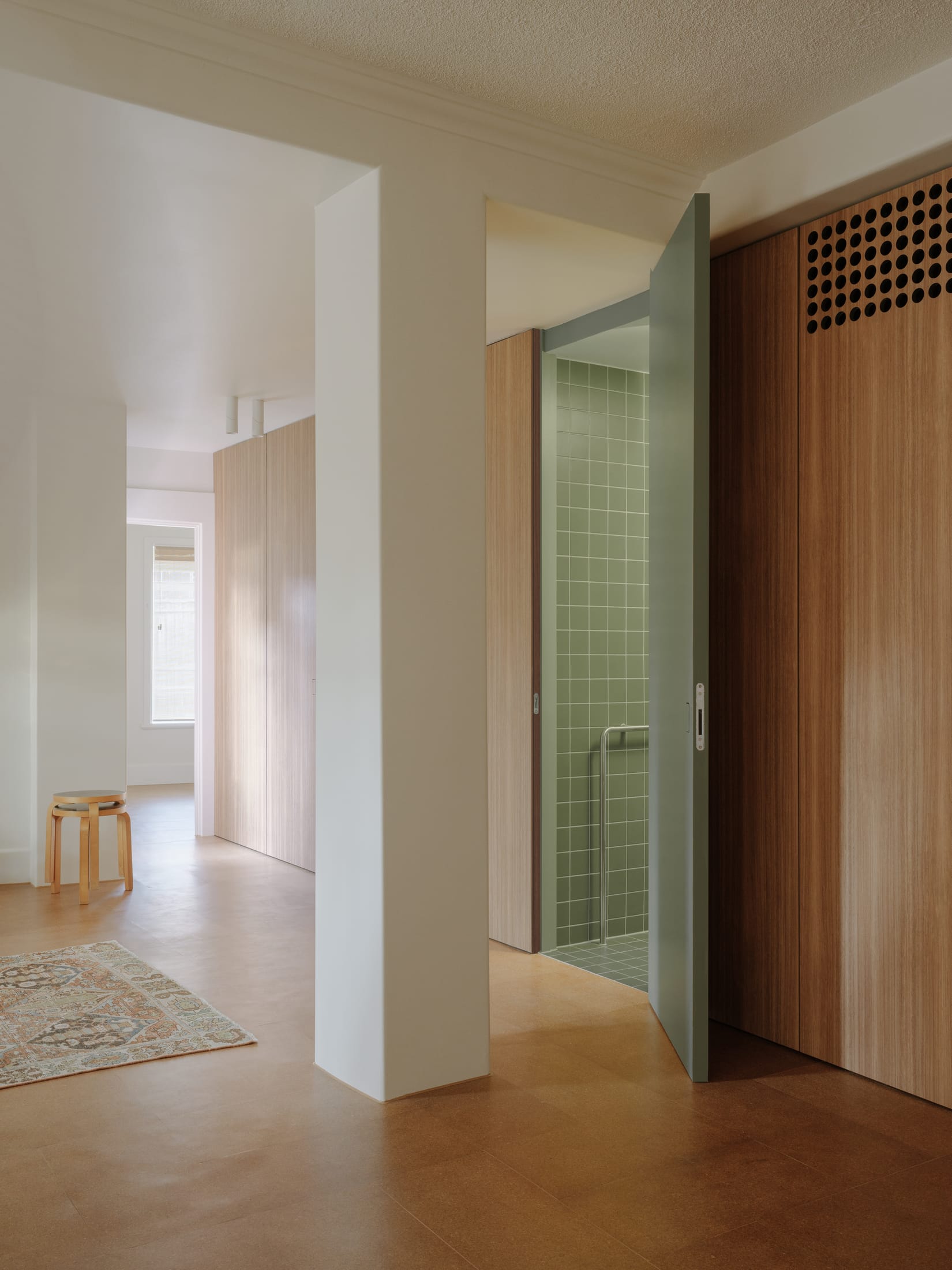
The construction itself was a feat of efficiency. In collaboration with builder Gotze, the entire refurbishment was completed in a streamlined 12-week window. Inside the pod, the palette shifts to earthy green tones, a clever contrast to the airy, light-filled living areas that surround it. It feels like a private sanctuary within a sanctuary.
Interior Palette and Materiality
When it comes to mid-century modern apartment renovations, I often see designers try to do too much. They over-style, over-furnish, and lose the architectural proportions in the process. Ellul Architecture took the opposite approach. They utilized a minimal styling strategy that prioritizes texture and history over decorative "stuff."
The material palette is a thoughtful nod to the 1950s:
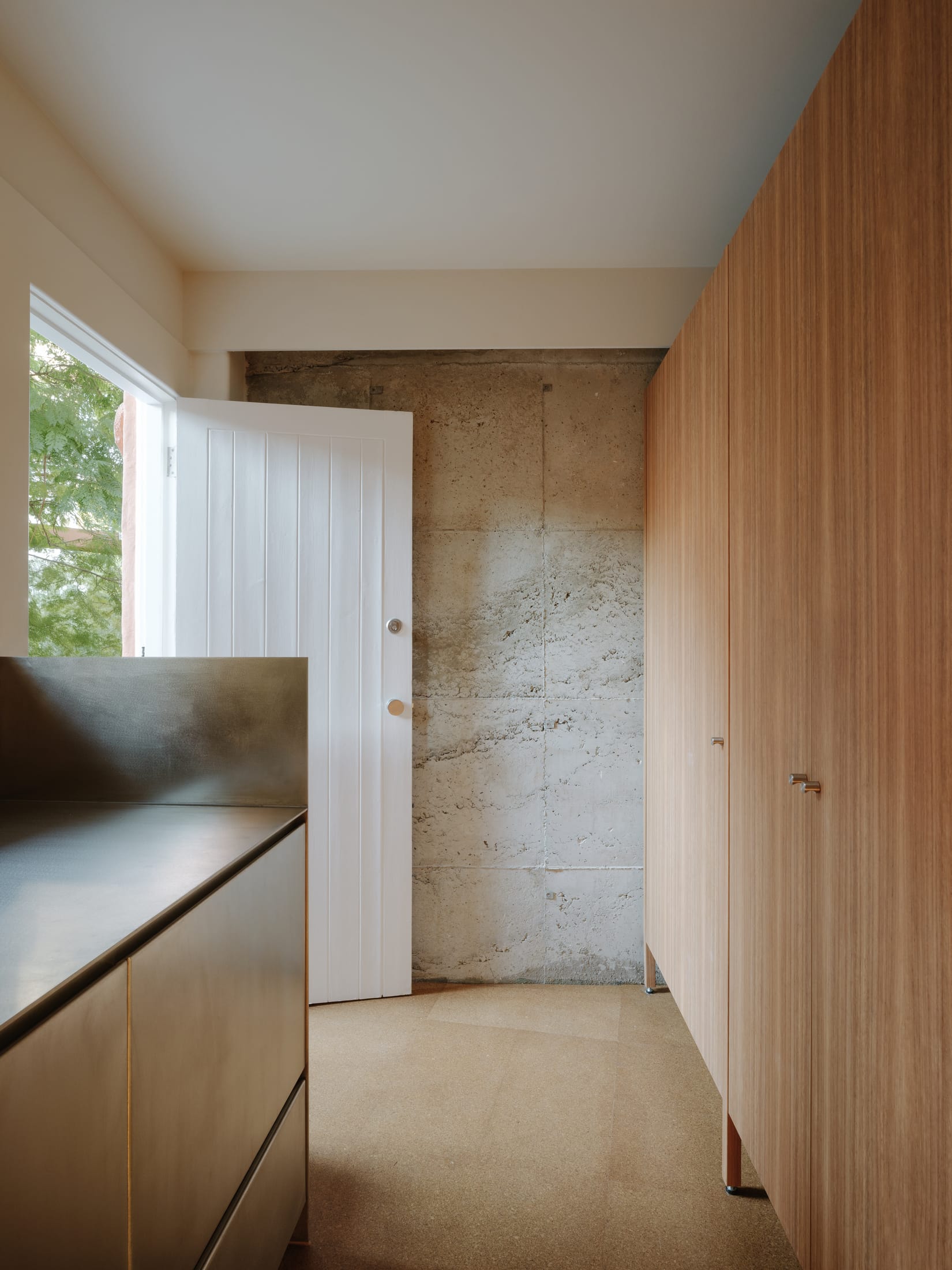
- Cork Flooring: A quintessential mid-century choice, cork was selected for its soft feel underfoot and its natural acoustic properties. It pays homage to the original materials used in the complex while feeling entirely fresh in 2026.
- Aalto Stools: Strategic placement of iconic Alvar Aalto stools emphasizes the design’s heritage roots without making the space feel like a museum.
- Restored Plasterwork: One of my favorite details is the restoration of the original curved plasterwork. These curves are echoed in new bulkheads, creating a seamless conversation between the 1951 structure and the 21st-century updates.
By keeping the palette restrained, the focus remains on the play of light across the timber and the way the garden views are framed by the windows. It’s a quiet, confident luxury.
Mid-Century Modern Principles in 2026
Modernist architecture in Melbourne is having a major "moment," but Caringal Flats reminds us why these principles endure. This project isn't just a trend; it's a living example of functional beauty.
I often tell my readers that the core of MCM design is "honest materials." In this flat, you see that through the visible wood grain of the blackbutt timber, the tactile nature of the cork, and the smooth, organic curves of the walls. Every piece serves a purpose. There is no clutter for the sake of clutter. The furniture is light and often elevated on legs to allow the floor to flow underneath, making the 88 square meters feel significantly larger than its physical dimensions.
Variations in Restoration: The Musician vs. The Artist
What makes Ellul Architecture’s work at Caringal Flats so fascinating is how they tailor their approach to the inhabitant. This project, which we might call the "Musician’s Flat," is defined by its neutral timber-led approach and acoustic focus. It is calm, resonant, and steady.
In contrast, their previous work on the "Artist’s Flat" within the same complex used bold color-blocking and vibrant energy to spark creativity. This comparison highlights a crucial lesson in interior design: a building’s heritage is the stage, but the occupant is the lead actor. Whether it’s supporting "aging in place" for long-term residents or creating a high-tech studio for a young creative, the architecture must adapt.
For the musician, the home needed to be a tool. The timber surfaces don't just look good—they provide the warmth and resonance needed for a high-quality practice environment.
Lessons in Intelligent Editing for Small Spaces
If you are looking to renovate a heritage flat or a small modernist space, take a page from Ellul’s book: prioritize "possibility over prescription."
In the Caringal Flats restoration, the designers didn't fill every corner with built-in furniture. By keeping the styling minimal and the floorplan open, they gave the resident the freedom to use the space however they needed. This "intelligent editing" is actually harder than full-scale styling; it requires the discipline to know when to stop.
The takeaway? Spend your budget on the architectural "bones"—like a central timber pod or high-quality flooring—and let the furniture be the light, flexible layer on top.
FAQ
Why was cork flooring chosen for this renovation? Cork was selected for both its historical relevance to the 1951 era and its functional benefits. For a musician, cork provides excellent acoustic dampening. It is also a sustainable, warm material that complements the blackbutt timber pod.
How does the "pod" help in a small apartment? The timber pod acts as a central organizational hub. Instead of having multiple walls and doors that take up space and block light, the pod houses storage, laundry, and services in one central unit, allowing the rest of the 88-square-meter footprint to remain open and airy.
What is the significance of Caringal Flats in Melbourne? Designed by John William Rivett in 1951, Caringal Flats is a seminal piece of modernist architecture in Toorak. It is famous for its three distinct buildings and the skybridges that connect them, representing a departure from the traditional mansions usually found in the area.
Are you ready to embrace minimal styling in your own home? Whether you're living in a heritage landmark or a modern apartment, the principles of intelligent editing can transform your space. Focus on honest materials and functional layouts to create a home that feels both timeless and personal.