At the corner of Aarhus’s historic 1898 Mejlborg building, where Gothic Renaissance architecture meets the bracing air of the Danish coast, a 600-square-meter sanctuary has quietly redefined the modern kitchen. This is more than a showroom; it is a manifestation of the "Ecology of Home." This design philosophy, pioneered by architects Djernes & Bell, advocates for a low-carbon, bio-inclusive, and regenerative approach to living. By revisiting historic room typologies and celebrating the transformative power of traditional home crafts, they have created a space that feels both timeless and urgently relevant.
As we step inside, the sensory shift is immediate. The air carries the faint, clean scent of timber, and the visual noise of the city fades, replaced by a palette of organic textures and deliberate craftsmanship. In an era where "luxury" is often synonymous with excess, Dinesen and their long-time collaborators Garde Hvalsøe are proposing a different path: one where material integrity and environmental stewardship form the bedrock of the home.
The Aarhus Showroom: A Case Study in Historic Renaissance
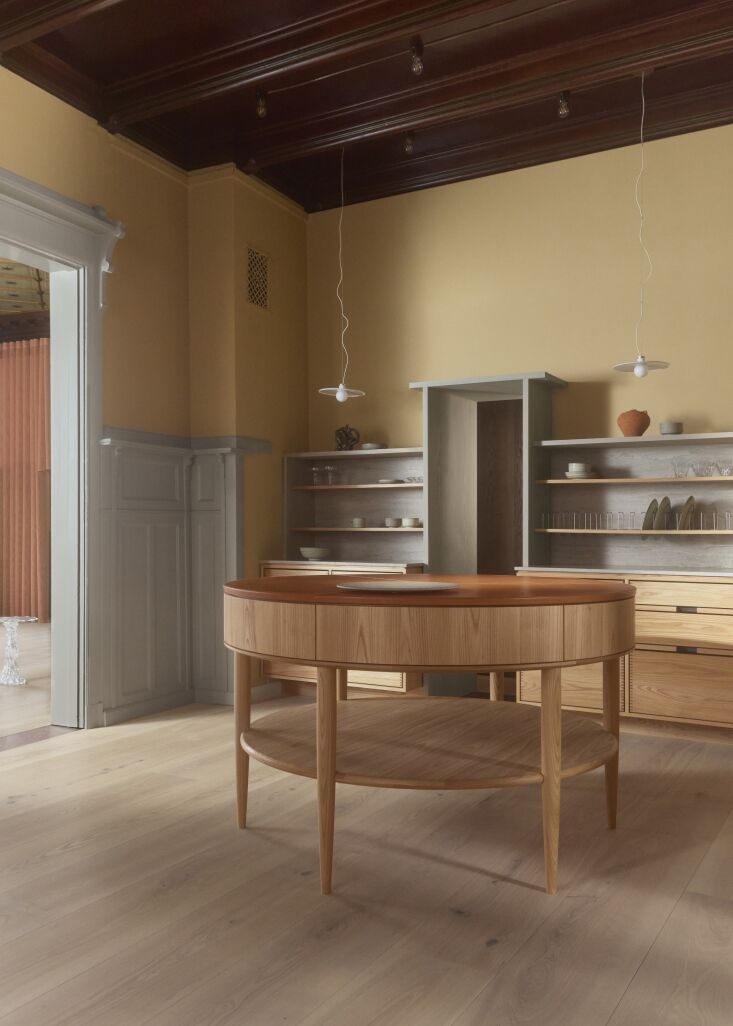
The Aarhus showroom is a masterclass in contextual design. Occupying a storied building that has stood for over 125 years, the space mirrors Dinesen’s own heritage of high-end wood manufacturing. Here, the "Ecology of Home" is brought to life through a series of kitchen and living installations that respect the building’s history while pushing the boundaries of contemporary timber application.
Central to this experience is the Garde Hvalsøe Hoelgaard model, a kitchen that marries the precision of modern cabinetry with the soul of old-growth wood. One of the most striking elements is the robust wall-to-wall plate rack, a concept inspired by the industrial-scale kitchens of Castle Drogo. It serves as a reminder that the most functional objects in our homes can also be the most beautiful when rendered in honest materials.
Ecology of Home: A design concept focusing on low-carbon, bio-inclusive, and regenerative practices, using historic room typologies to showcase the transformative power of traditional home crafts.
The Alchemy of Wood: Dinesen’s Signature Finishes
The magic of a Dinesen kitchen lies in the treatment of the raw material. While many manufacturers mask the natural imperfections of wood, Dinesen has spent more than a century perfecting the art of "listening" to the timber. One of their most sophisticated developments is the Dinesen Ash Oil finish.
This specialized wood treatment is designed to preserve the intricate natural structure of the timber. Rather than sitting on top of the wood like a heavy varnish, the Ash Oil penetrates the grain, introducing subtle grey, cool tones that soften the overall look without sacrificing the wood’s inherent warmth. It is a finish that feels "architectural"—it provides a neutral, serene backdrop that allows the furniture and the people within the room to take center stage.
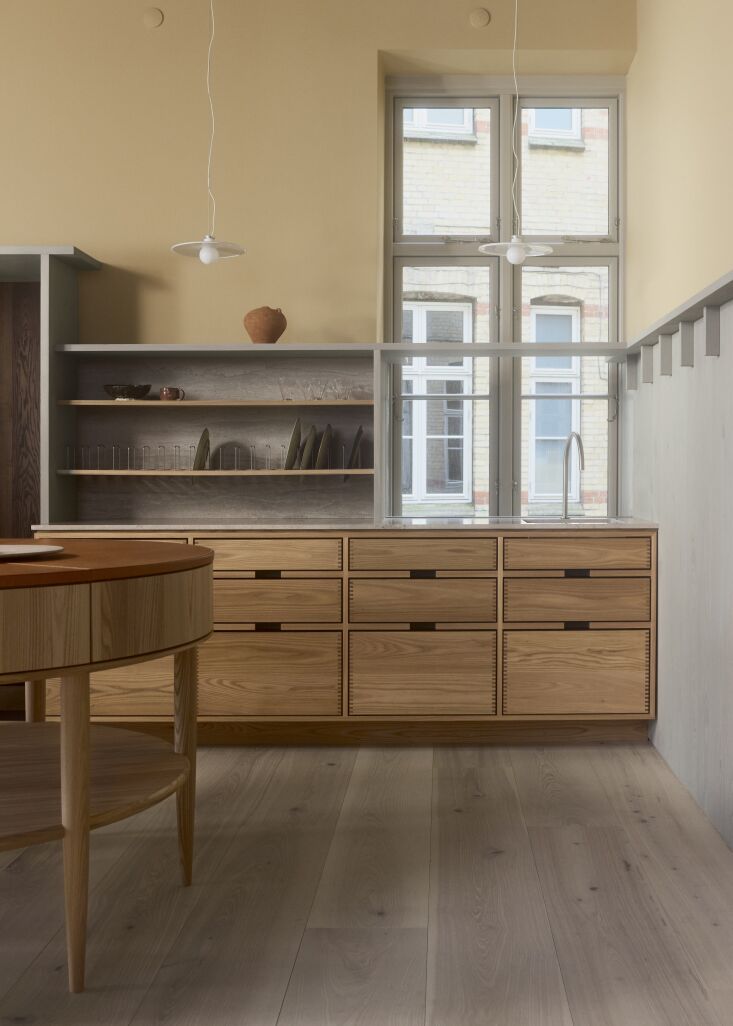
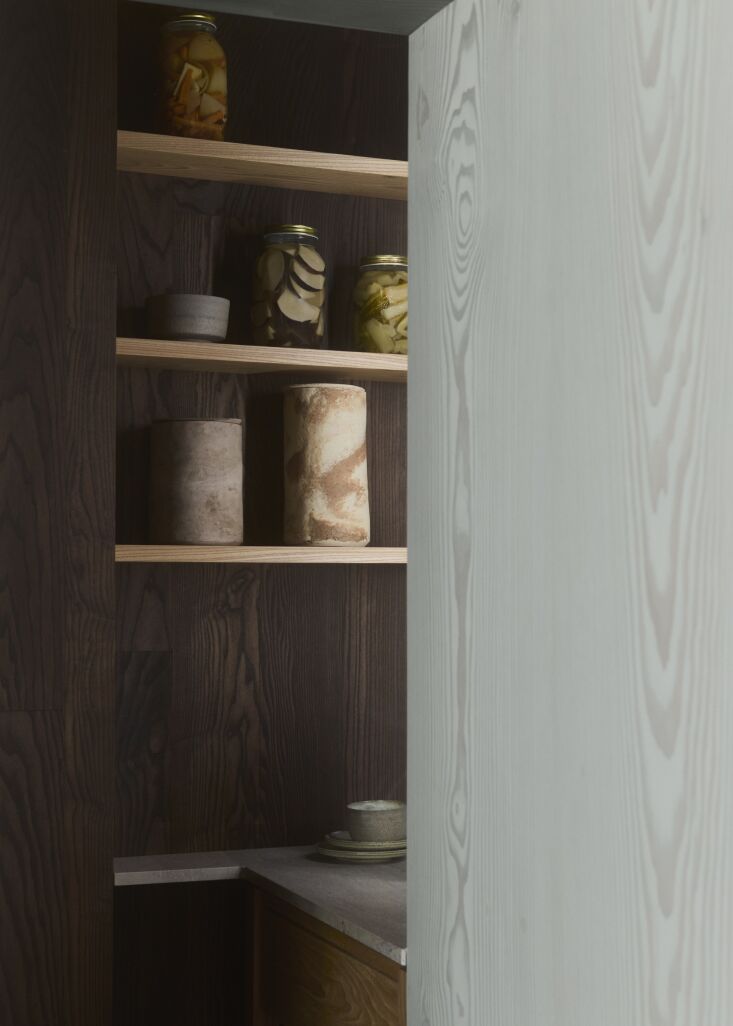
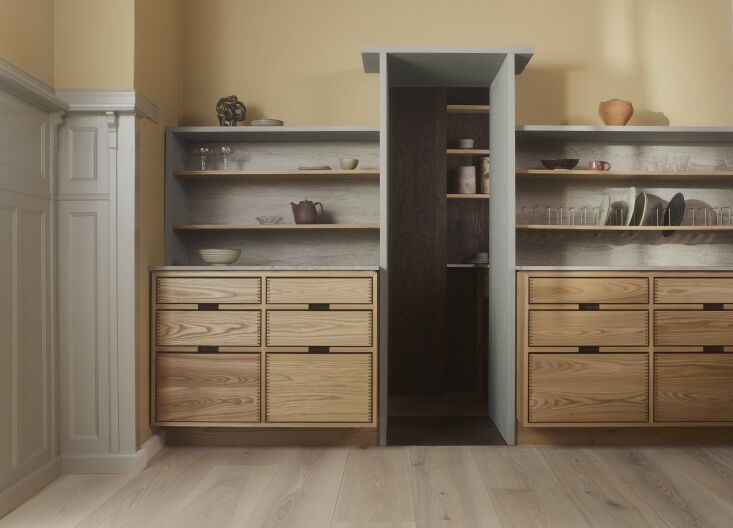
We often see this finish paired with the "Moment" pantry—a bespoke collaboration born from a partnership with the renowned restaurant Moment. This installation features a dark oil ash wood interior and flooring, creating a moody, intimate atmosphere for food preparation and storage. It is the architectural equivalent of a deep exhale.
To balance these timber tones, the Aarhus space utilizes the "File Under Pop" color palette. Shades like "Sahara Sand" and "Mississippi Mud" are applied to walls and architectural transition points, creating a dialogue between the organic timber and the painted surfaces.
Heart Oak: The Soul of the Kitchen
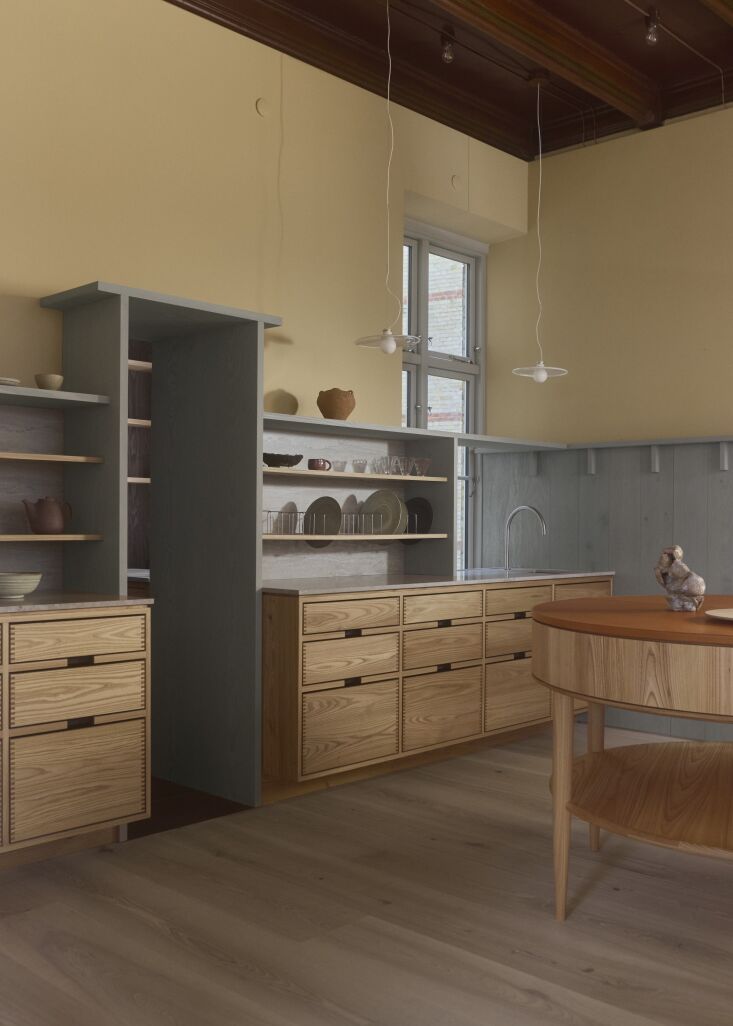
If Ash is the kitchen's breath, Heart Oak is its heartbeat. Milled from the center of large, old-growth trees, Heart Oak is a premium material characterized by its exceptional width and the presence of visible butterfly joints. These joints are not merely decorative; they are a traditional woodworking technique used to stabilize the natural cracks that form as the massive trunk seasons.
In a Garde Hvalsøe kitchen, Heart Oak cabinetry becomes a piece of sculpture. The exceptionally wide boards allow for a continuous grain flow across large surfaces, a feat of engineering and nature that creates a sense of profound stability. We see this material paired with hand-welded brass and natural stone, specifically Portland Taupe Sandstone. The juxtaposition of the rugged, split-oak texture with the smooth, cool stone creates a tactile sophistication that is hard to replicate with synthetic materials.
Sustainable Luxury: The Technical Excellence of Dinesen Layers
Choosing wood for a kitchen involves balancing aesthetics with performance. For 125 years, Dinesen has sourced timber from sustainable European forests, adhering to strict criteria for growth ring density and grain harmony. However, the modern home often presents challenges—namely underfloor heating and fluctuating humidity levels—that can be difficult for solid wood to navigate.
Enter "Dinesen Layers." This three-layer construction provides the structural stability required for modern life while maintaining the appearance of solid planks. By bonding layers of European Oak, Dinesen creates a board that is remarkably resistant to warping and moisture, making it an ideal choice for high-use areas like the kitchen.
Comparison of Dinesen Wood Species
| Property | Heart Oak | European Oak | Douglas Fir |
|---|---|---|---|
| Sourcing | Center of old-growth trees | Sustainable European forests | Sustainable Black Forest/Europe |
| Visual Character | Wide boards, butterfly joints | Harmonious grain, classic | Elegant, long, straight grain |
| Best For | Bespoke cabinetry, statement floors | High-traffic kitchen flooring | Large, open-plan living spaces |
| Hardness | Very High | High | Medium |
| Finish Options | Natural Oil, Dark Oil | White Oil, Ash Oil, Clear | Lye & Soap, White Oil |
While Douglas Fir is perhaps Dinesen’s most famous export—known for its incredible lengths and "Lye and Soap" finish—the Oak and Ash varieties offer a denser, more resilient surface for the rigors of culinary life.
The 2026 Aesthetic: Materials and Functionality
Looking toward the future of interior design, we see a fusion of German engineering precision and Scandinavian organic textures. The 2026 aesthetic is less about "minimalism" and more about "essentialism." It’s the integration of high-performance fixtures, such as John Pawson’s designs for Cocoon or Chipperfield lighting, within a raw, bio-inclusive shell.
We are also seeing the rise of "Anti-Fingerprint 2.0"—matte finishes that offer the tactile softness of velvet but the durability of stone. When these modern technologies are applied to the "Ecology of Home," the result is a kitchen that doesn’t just look good in a photograph, but one that ages gracefully, developing a patina that tells the story of the family that lives within it.
FAQ
What is the difference between Dinesen Douglas and Heart Oak? Dinesen Douglas is sourced from Douglas Fir trees and is known for its light color and long, straight grain, often used in lengths up to 15 meters. Heart Oak is cut from the center of old-growth oak trees, featuring wider boards, darker tones, and characteristic butterfly joints used to stabilize the wood’s natural "cracks."
How do you maintain an Ash Oil finish in a high-use kitchen? The Ash Oil finish is remarkably resilient. For daily cleaning, use a damp cloth with a mild soap specifically designed for oiled wood. To maintain the cool grey tones and protective layer, the wood should be periodically refreshed with Dinesen’s specific Ash Oil maintenance products, which replenish the grain and protect against moisture.
Is Dinesen wood suitable for underfloor heating? Yes, particularly when using the "Dinesen Layers" range. The three-layer engineered construction is specifically designed to handle the temperature fluctuations associated with underfloor heating, providing stability and preventing the wood from expanding or contracting excessively.
In the end, Dinesen and Garde Hvalsøe remind us that the kitchen is more than a place to cook. It is an ecosystem. By choosing materials that are regenerative by nature and historic by design, we aren't just building a room; we are cultivating a sense of belonging. The "Ecology of Home" isn't a trend—it’s a return to the roots of what makes a living space truly vital.