In the heart of Bucharest’s historic center, where the echoes of Interwar Art Deco meet the sharp, glass-clad ambitions of the modern city, a new architectural landmark has quietly redefined the concept of experiential dining. Milló Restaurant is not merely a place to eat; it is a 498-square-metre masterclass in sculptural interior design. Designed by the visionary duo Anda Zota and Elena Viziteu of AÉ02 design studio, Milló stands as a bold testament to how architectural heritage can be surgically fused with futuristic aesthetics.
What makes the Milló Restaurant interior so uniquely captivating? It is the seamless orchestration of a 'volcano of light' sculptural ceiling, intricately mapped geometric terrazzo flooring, and a design language that honors its Art Deco surroundings while pushing toward a sharp, contemporary horizon. For the design-conscious traveler and the professional stylist alike, Milló serves as a living mood board for the architectural lighting trends of 2026.
A New Landmark in Bucharest's Historic Center
To understand Milló, one must first understand its context. The restaurant occupies the ground floor of a contemporary building that sits amidst a neighborhood rich with Art Deco history. The architects at AÉ02 didn't want to create a space that merely sat inside the building; they wanted the building’s very soul to flow through the interior.
The 498-square-metre floor plan is treated as a continuous landscape. There are no harsh partitions here—only shifts in texture, light, and elevation that guide the guest from the sun-drenched windows to the more intimate, high-gloss depths of the dining room. It’s a space that feels both monumental and intensely personal, a feat achieved by treating every surface—from the floor to the ceiling—as a singular piece of sculpture.
The “Volcano of Light”: Redefining Atmospheric Lighting
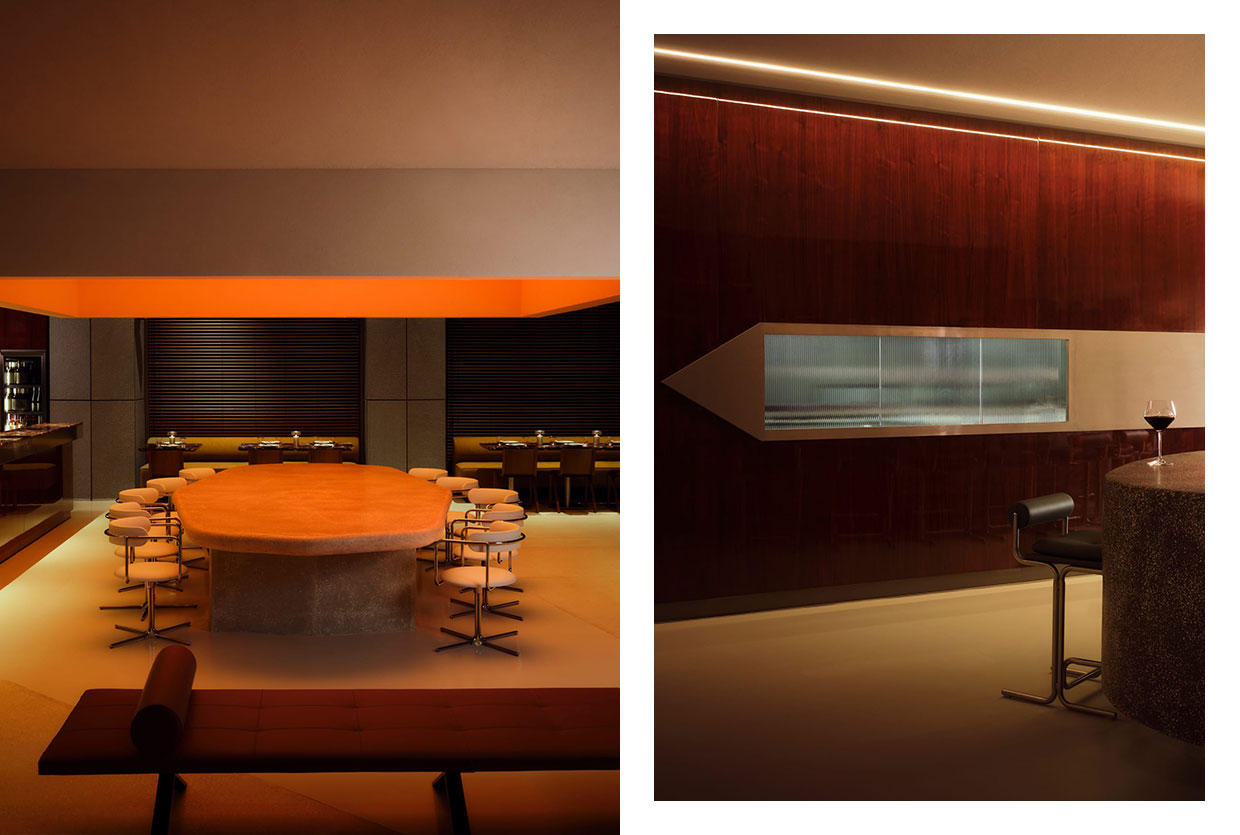
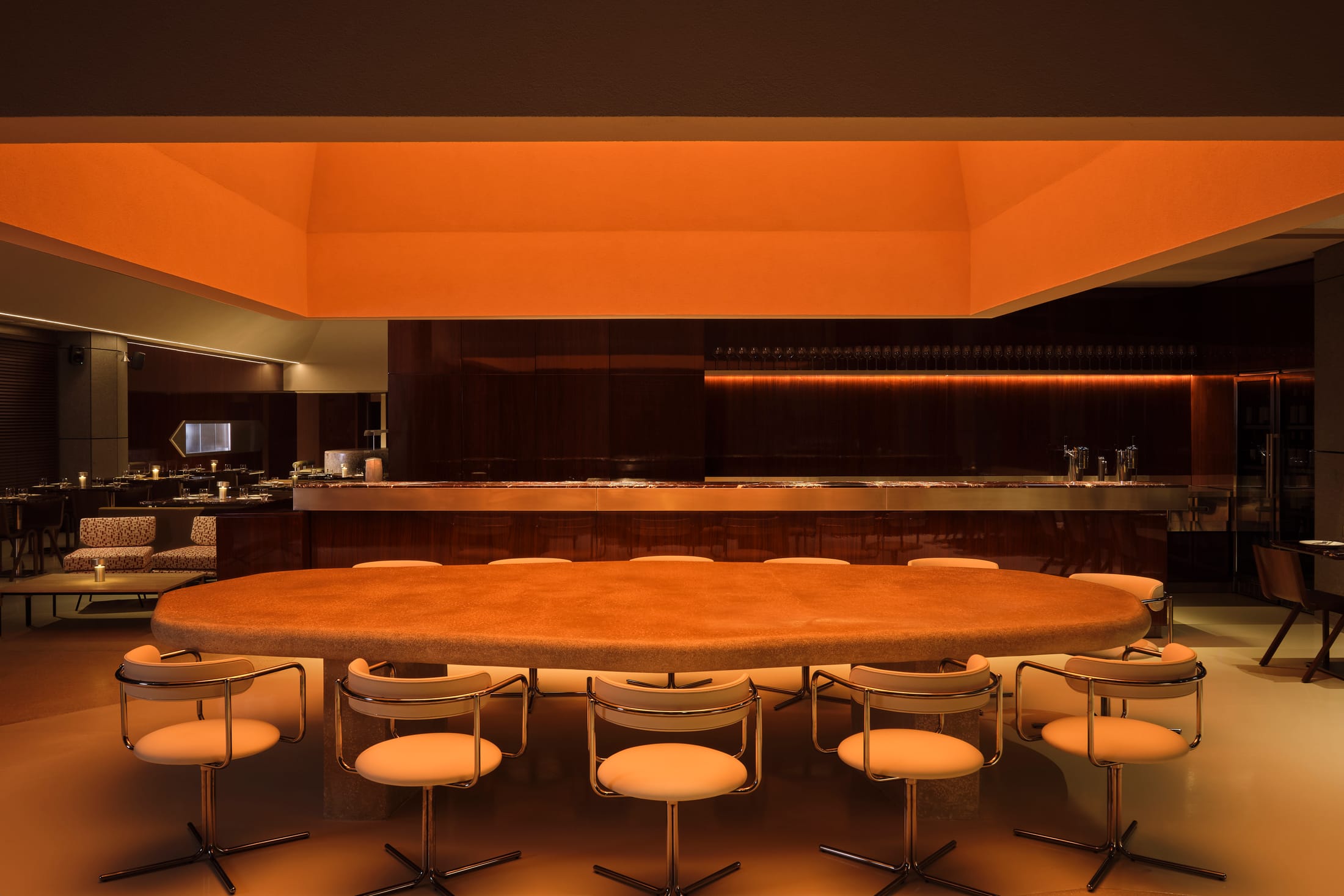
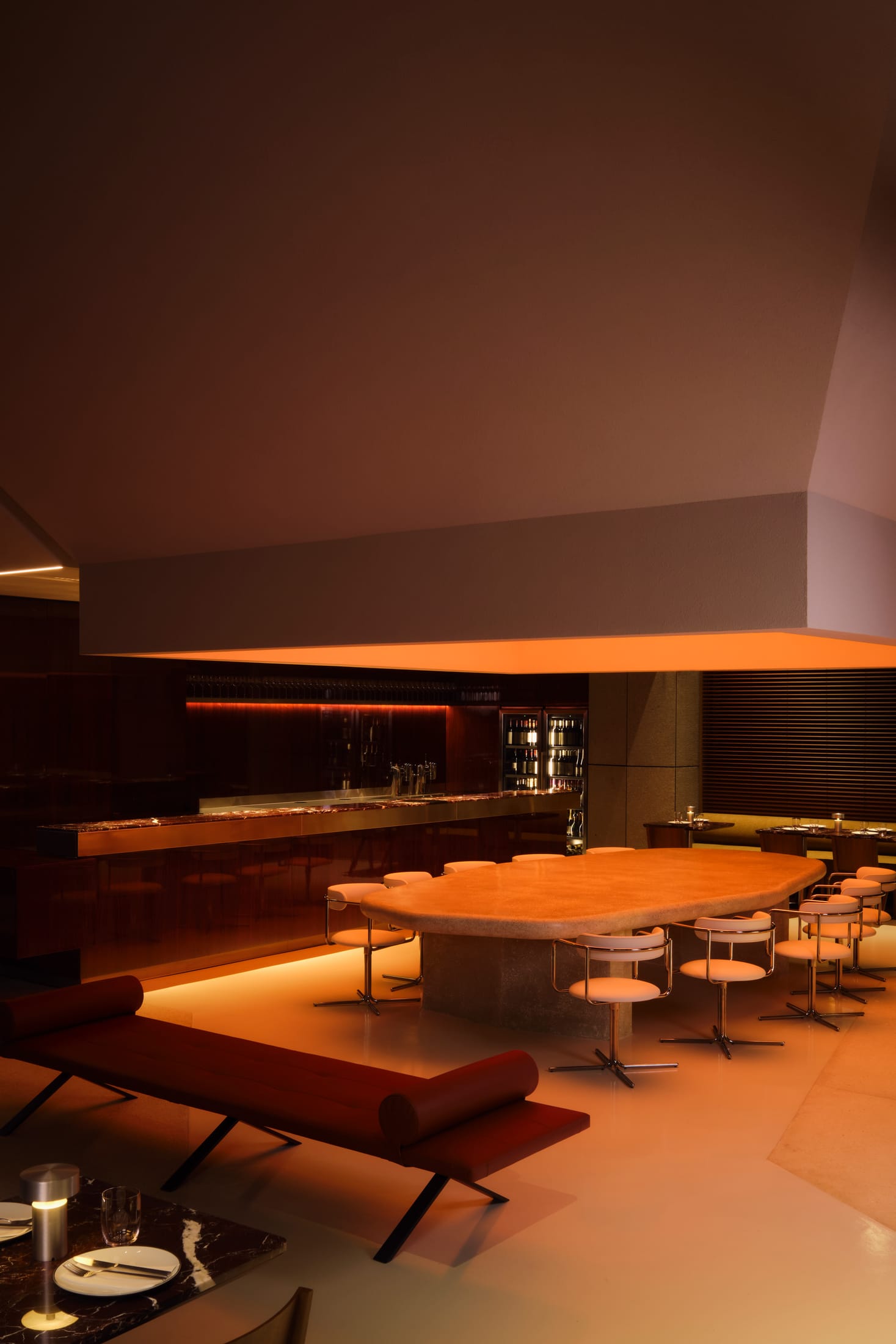
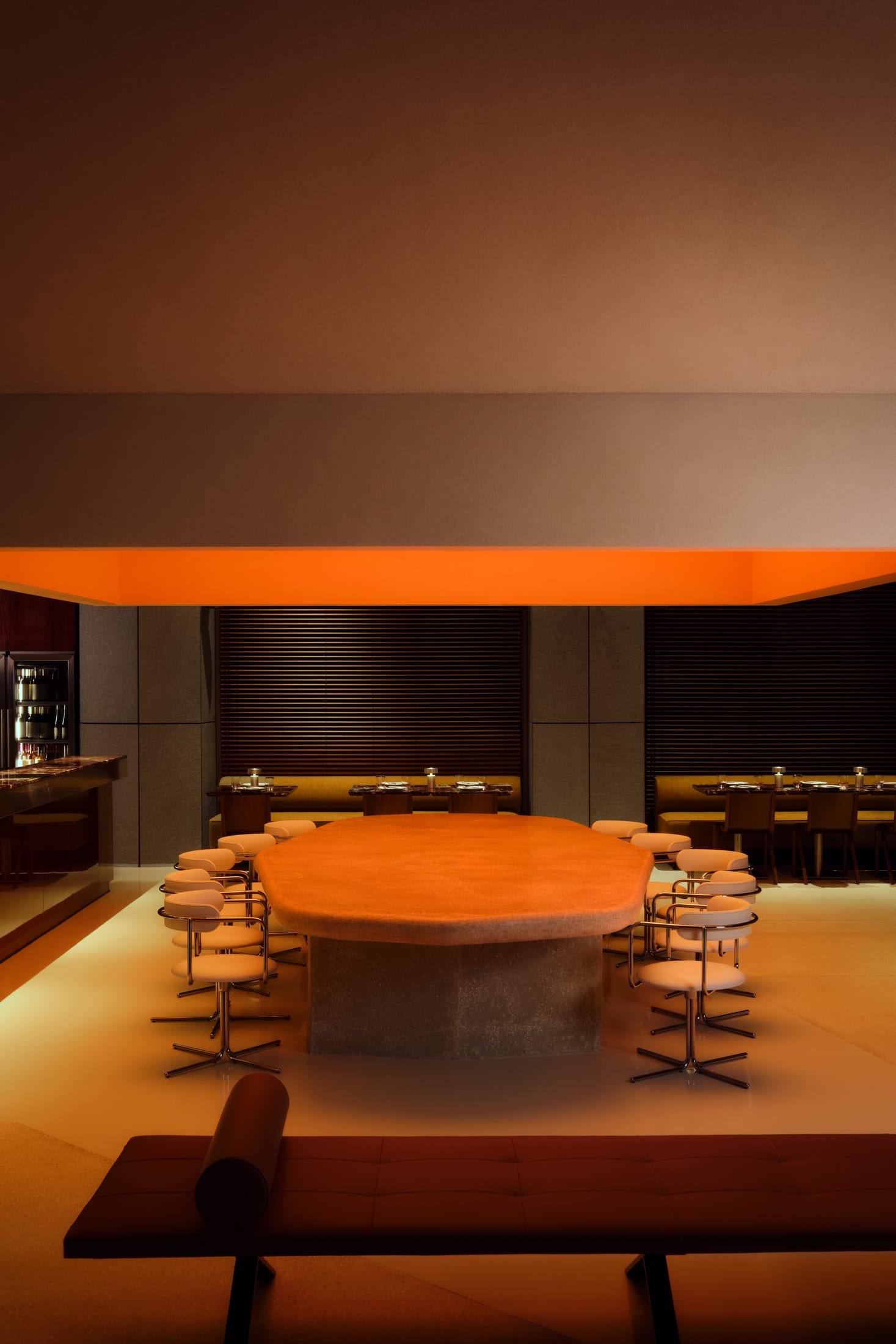
The undeniable pièce de résistance of Milló is the central sculptural ceiling installation, affectionately dubbed the “volcano of light.” This isn't just a lighting fixture; it is a structural intervention that dictates the rhythm of the entire room.
The installation features a dynamic LED spectrum designed to align with human circadian rhythms. In the morning, the light is crisp and energizing; as the sun sets over Bucharest, it transitions into a warm, amber glow that mimics the soft embers of a dying fire.
The impact of this design isn't just aesthetic; it's psychological. Statistics suggest that environments utilizing circadian-aligned lighting can increase evening guest dwell time by up to 20%, as the body naturally relaxes into the shifting warmth of the space. It’s a perfect example of "Emotional Luxury," where the environment anticipates the guest's biological needs.
Material Narrative: From Facade to Floor
One of the most impressive technical feats of the Milló project is the continuity between the building's exterior architecture and its interior skin. The architects integrated over 450 square meters of geometric microcement and cast-in-place terrazzo to create a continuous architectural flow that mirrors the facade’s rhythm.
The floor is a canvas of grey and white geometric patterns, meticulously poured to ensure that the lines of the room lead the eye toward the central "volcano." This use of microcement provides a brutalist, industrial edge that is softened by the organic curves of the furniture and the warmth of the lighting.
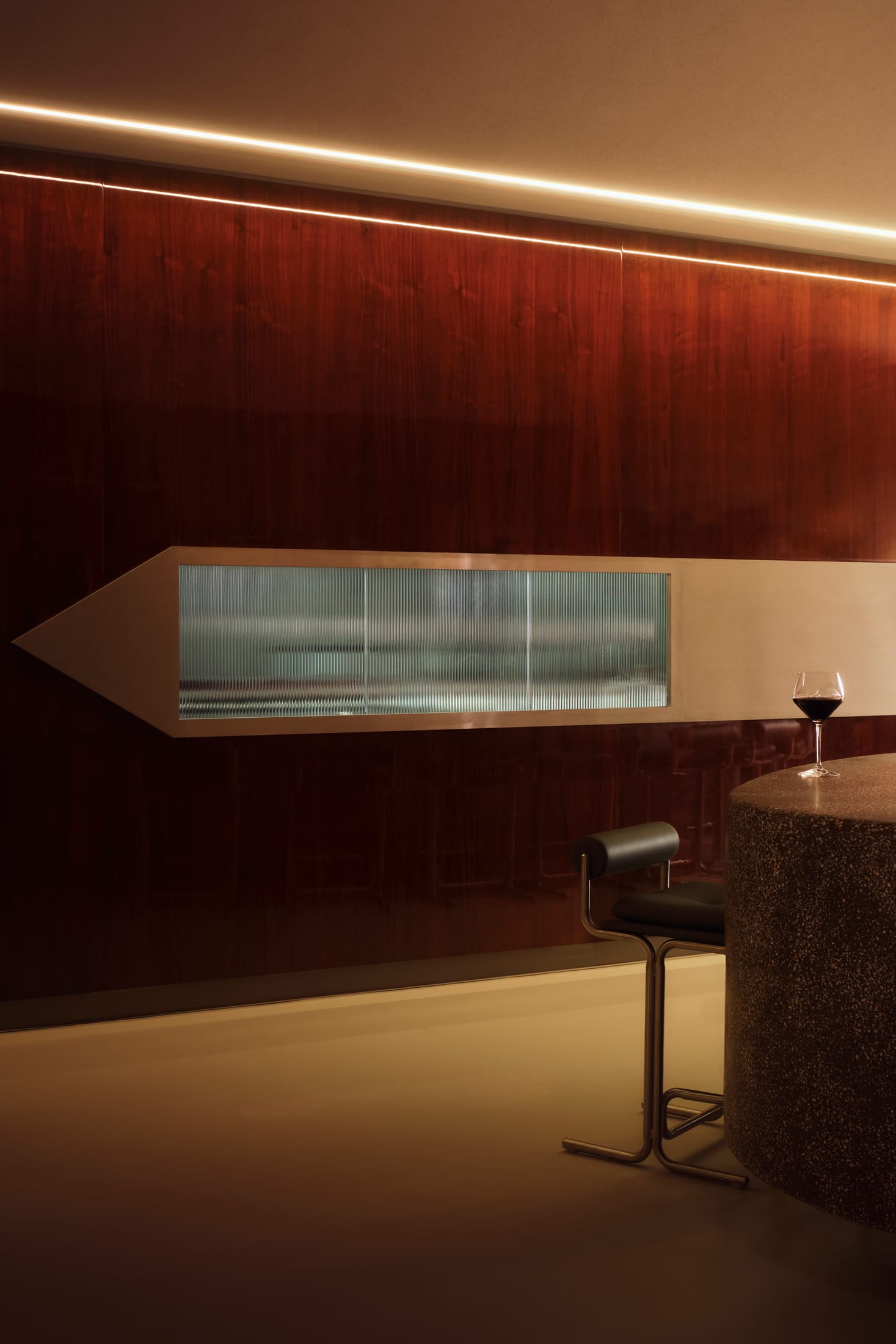
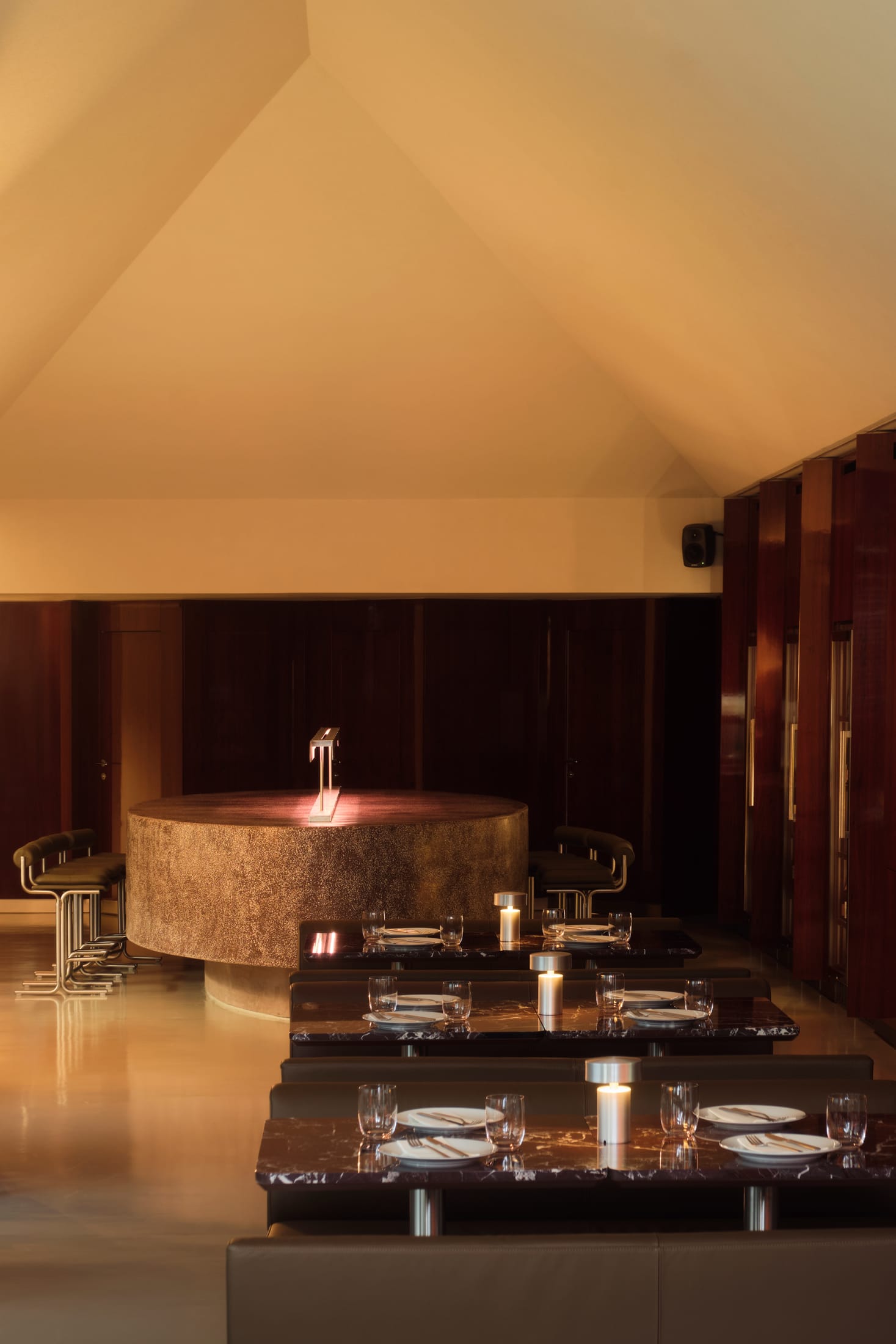
As you move deeper into the space toward the cocktail area, the palette shifts. The cool greys of the main dining room give way to warm reddish pigments and high-gloss wooden walls. This transition creates a "room within a room" feel without the need for physical walls, using color and material density to signal a change in atmosphere—from the "bright and airy" lunch spot to the "intimate and daring" evening lounge.
Sculptural Statements: Aligning Milló with 2026 Design Trends
As we look toward the interior trends of 2026, Milló appears to be a prophetic prototype. We are seeing a move away from the "minimalist-chic" of the last decade toward what I call "Architectural Maximalism"—where the drama comes from the form and the material rather than clutter.
"The future of luxury isn't about what you add to a room; it's about the emotional resonance of the shapes you inhabit." — Ivy Chen
Which 2026 interior trends are visible in Milló?
- Statement Sculptural Lighting: Moving beyond "lamps" to lighting as a structural element.
- Architectural Wood Paneling: The return of high-gloss lacquer and rich, dark wood tones that provide a cinematic backdrop.
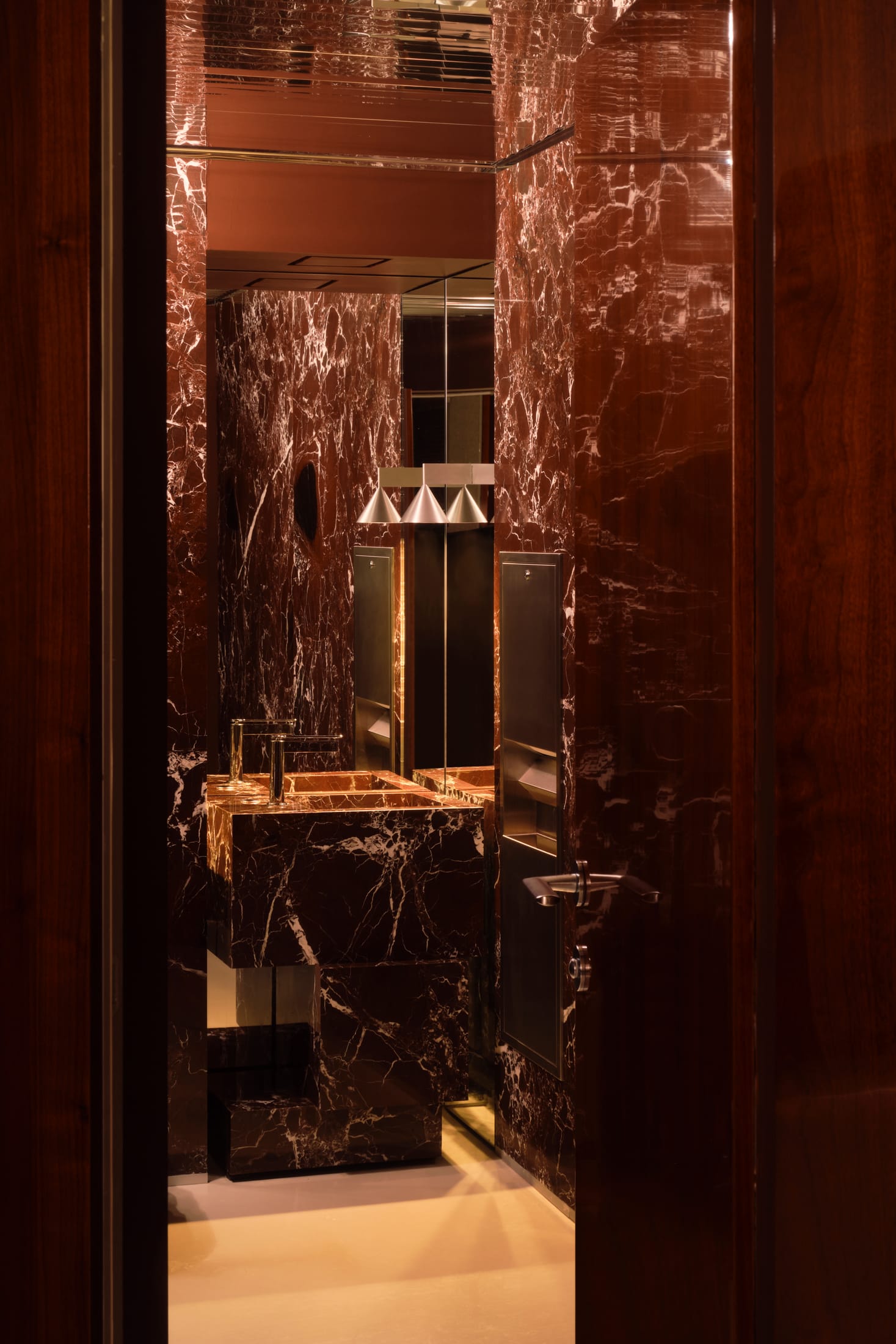
- Warm, Tactile Neutrals: The use of Cherry Levanto marble and reddish microcement pigments to bring "heat" to contemporary spaces.
- The Curve and the Edge: A constant dialogue between sharp, geometric flooring and soft, curvilinear furniture silhouettes.
Collaborative Artistry: The Human Element of Design
What elevates Milló from a "well-designed restaurant" to a "piece of art" is the collaborative effort behind its details. Architects Anda Zota and Elena Viziteu didn't work in a vacuum; they brought in local artists to ensure every corner of the 498-square-metre space felt curated and intentional.
Artist Andrei Arion contributed custom lamp-objects that dot the space, acting as sculptural punctuation marks against the larger "volcano" ceiling. Meanwhile, Piotr Drabowa designed the sideboard lighting, creating a layered glow that ensures no corner of the restaurant feels neglected. These collaborations bring a sense of "human touch" to a space that could otherwise feel overly sharp or clinical.
The Cinematic Experience: Beyond the Dining Table
The bar area at Milló is perhaps its most cinematic zone. Here, the material palette is a study in high-contrast luxury. Cold, reflective stainless steel is paired with the deep, visceral tones of Cherry Levanto marble. This combination is a classic Art Deco trope reinvented for the 2020s—sleek, industrial, yet undeniably opulent.
Hidden within the design is a bespoke DJ booth, allowing the space to transition from a sophisticated dinner environment to a high-energy late-night venue. The sound, much like the light, is integrated into the architecture itself, ensuring that the acoustic experience is as balanced as the visual one.
Even the most utilitarian spaces—the bathrooms—continue the sculptural narrative. In these private chambers, the design team utilized monolithic forms and meticulously placed task lighting to maintain the "volcano" theme, ensuring that the guest's immersion in the Milló aesthetic is never broken.
Conclusion: The Future of Experiential Hospitality Design
Milló Restaurant is a masterclass in how to respect the past while building for the future. By merging the geometric heritage of Bucharest with cutting-edge lighting technology and a bold material palette, AÉ02 has created more than a restaurant; they have created a destination.
As we move toward 2026, the industry will look to spaces like Milló as blueprints. The shift toward sculptural interior design, circadian lighting, and material-driven storytelling isn't just a trend—it's the next evolution of hospitality. Whether you are a designer looking for technical inspiration or a diner seeking a cinematic escape, Milló offers a glimpse into the future of architectural mastery.
FAQ
Who designed the Milló Restaurant in Bucharest? The 498-square-metre space was designed by architects Anda Zota and Elena Viziteu of the AÉ02 design studio. The project also featured collaborative artistic works from Andrei Arion and Piotr Drabowa.
What are the key materials used in the Milló interior? The interior is defined by a blend of grey and white geometric microcement, cast-in-place terrazzo, high-gloss wood paneling, stainless steel, and rich Cherry Levanto marble.
How does the lighting in Milló affect the guest experience? The "volcano of light" ceiling installation uses a dynamic LED spectrum that aligns with circadian rhythms. This shifts the mood of the restaurant from bright and energetic during the day to warm and intimate at night, which can increase guest dwell time by up to 20%.