In 2016, Thomas Bossert and Melissa Rosenbauer performed what many of us only dream of during a particularly grueling Tuesday in the city: they traded the relentless pace of New York for the ancient, pigment-rich soil of Mallorca. This wasn't just a change of scenery; it was a total immersion into a slower, more intentional way of being. They founded Espanyolet, a design practice rooted in the island’s soul, and their most recent project—the transformation of a historic Catalan farmhouse—stands as a masterclass in what I like to call "Architectural Listening."
The farmhouse didn’t need a reinvention; it needed a witness. Before the renovation, the structure was a labyrinth of fragmented updates from the 1960s through the 80s, each decade adding layers of clutter that suffocated the original 18th-century bones. The goal was to strip the building back to its "dirt origins," revealing the raw stone and brick that had held the space together for centuries. By honoring the existing structure while introducing high-performance modern materials, Espanyolet has defined the Modern Mediterranean aesthetic for 2026: a serene, tactile, and deeply sustainable approach to luxury.
Stripping Back to 'Dirt Origins': Unifying the Architecture
One of the greatest challenges in restoring historic Spanish properties is the "staircase effect"—the disjointed floor levels that occur as rooms are added over centuries. This farmhouse was no exception, with fragmented levels that made the floor plan feel like a series of isolated cells rather than a home.
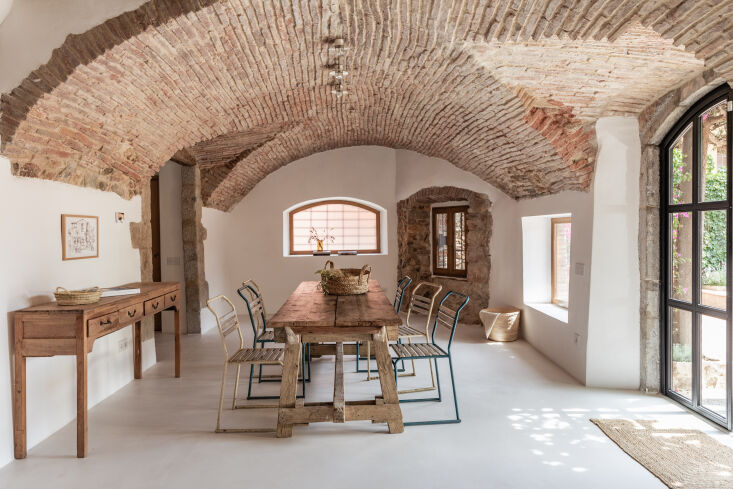
The breakthrough came through a process of radical simplification. Espanyolet opted to strip the interior back to its primary stone elements, removing decades of drywall and faux finishes. To solve the issue of fragmented levels, they utilized a continuous flow of microcement flooring throughout the communal spaces. This single material choice acted as a visual tether, pulling the disparate rooms into a unified, tranquil whole.
While the floors were modernized, the ceiling told a different story. The renovation successfully preserved and restored 100% of the property’s original 18th-century vaulted brick ceilings and stone door frames. This juxtaposition—the smooth, cool expanse of microcement against the textured, sun-baked rhythm of ancient brick—creates a tension that is the hallmark of sophisticated modern design.
The Architectural Restoration at a Glance
| Element | Preservation Status | Modern Intervention |
|---|---|---|
| Vaulted Ceilings | 100% Restored (18th-century brick) | Exposed and cleaned to reveal original patina |
| Flooring | Removed fragmented tiles | Seamless microcement for level unification |
| Door Frames | Original stone frames preserved | Left raw to emphasize the "monastic" feel |
| Floor Plan | Original footprint maintained | Walls removed to create an open-concept flow |
The Signature Wall: Art via Natural Lime Wash
In a typical renovation, walls are treated as a backdrop. In an Espanyolet project, the walls are the protagonist. Melissa and Thomas have become renowned for their mastery of natural pigments, and this farmhouse serves as their largest canvas yet.
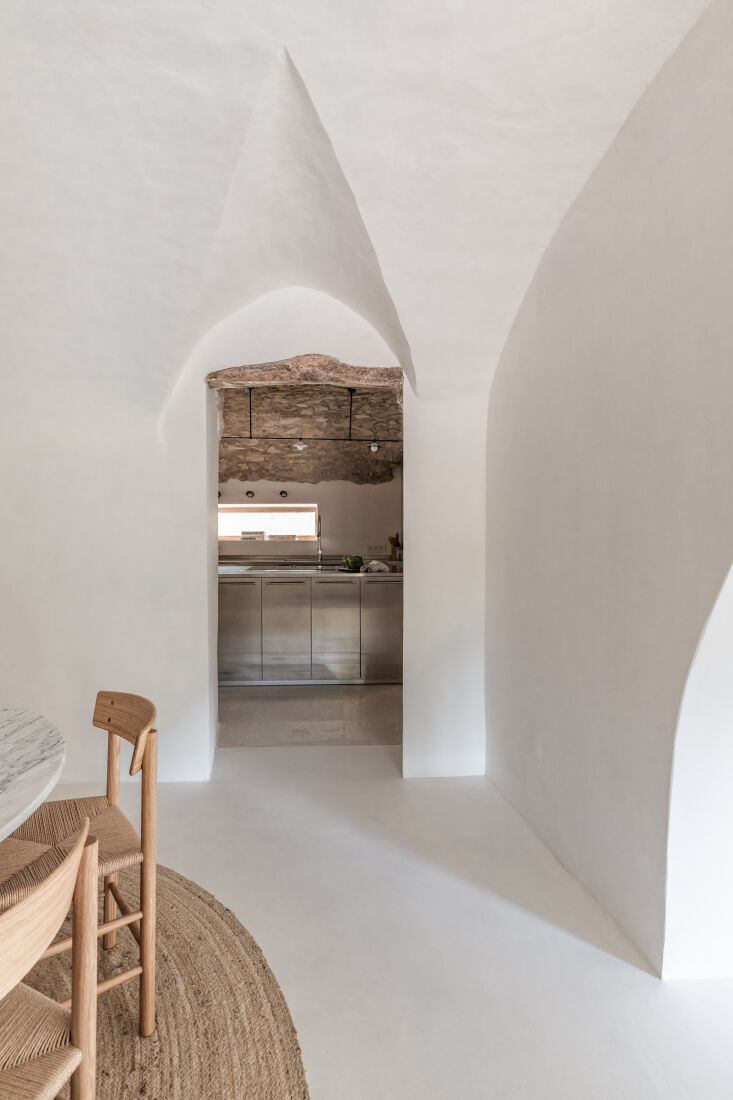
Instead of standard synthetic paints, the project utilized natural lime-based paints and pastes sourced directly from Mallorcan soil. These finishes were applied by local artisans who understand the nuances of the Mediterranean climate. Lime wash is more than just an aesthetic choice; it is a functional one. It is naturally antibacterial, mold-resistant, and "breathes," allowing moisture to pass through the stone walls rather than trapping it.
Across all four bedrooms and communal living spaces, the project achieved a 100% synthetic-free wall finish. The result is a tactile simplicity that changes throughout the day. In the morning light, the walls have a soft, chalky glow; by sunset, they absorb the orange hues of the Balearic sun, creating a "visual ease" that is impossible to replicate with modern chemical paints.
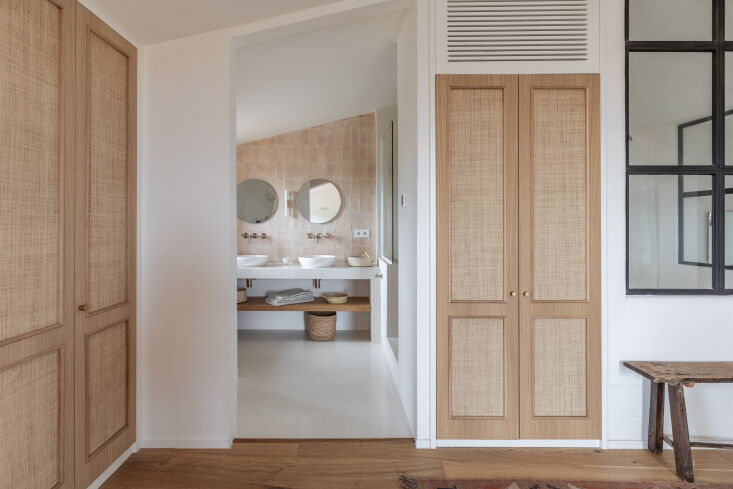
Editor’s Tip: If you’re looking to replicate this look at home on a budget, look for "Roman Clay" or "Lime Wash" finishes. These materials offer that signature mottled texture and matte finish that makes even a new-build apartment feel like it has a history.
The Unexpected Heart: Stainless Steel in a Historic Shell
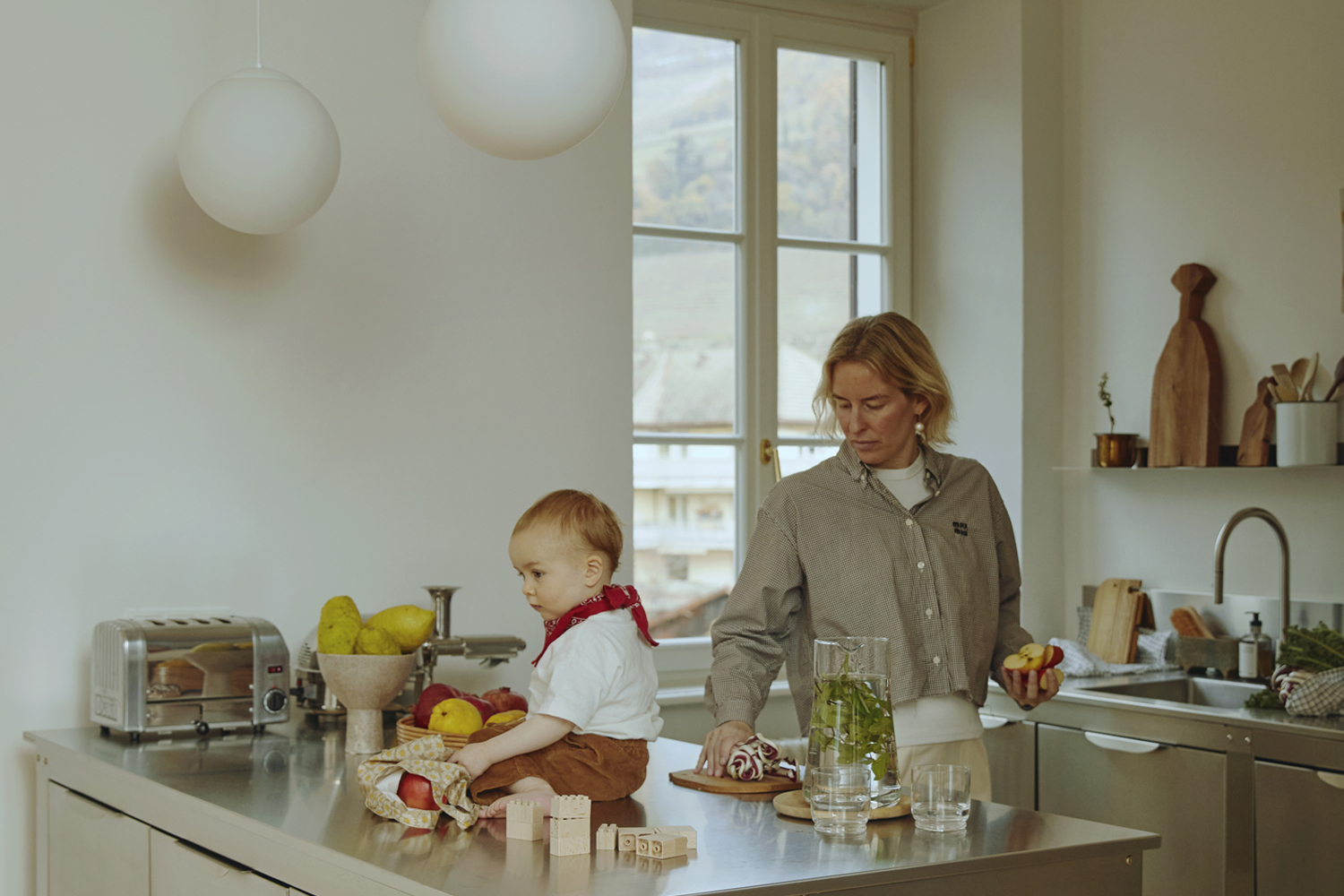
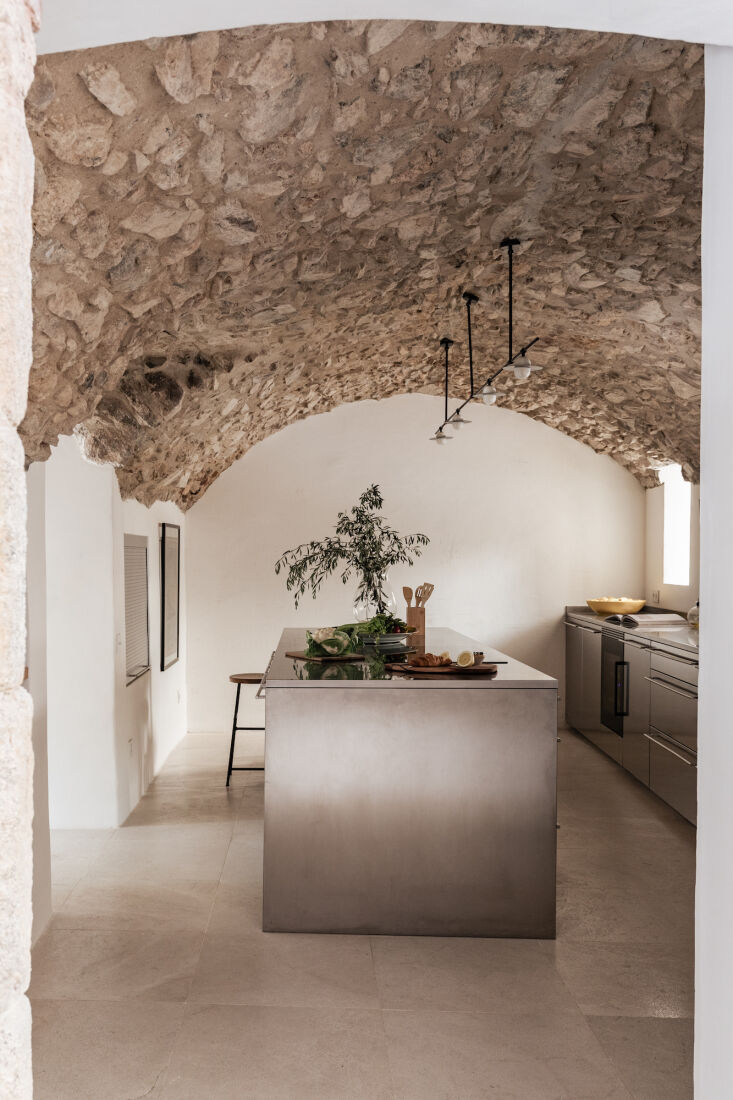
If the walls represent the past, the kitchen is a bold leap into the future. In a move that might surprise traditionalists, Espanyolet integrated a minimalist Santos stainless steel kitchen directly beneath the historic vaulted ceilings.
This choice is a perfect example of Modern Mediterranean style: the juxtaposition of industrial, clean-lined finishes with rustic, hand-hewn textures. The stainless steel reflects the light coming in from the terrace, preventing the kitchen—which is tucked under low arches—from feeling dark or heavy.
Why does this work so well for a 2026 design context? Because it avoids the "theme park" trap of Mediterranean design. It doesn't try to look like a rustic kitchen from 1750; it acknowledges that we live in a modern world, but we choose to do so surrounded by history. The high-shine steel against the matte, dusty brick creates a sensory contrast that feels fresh and incredibly high-end.
Textural Depth: Hand-Painted Textiles and Built-in Comfort
Once the "shell" of the house was perfected, the focus shifted to softness. Thomas and Melissa's background in textiles is evident in every corner. One of the most iconic features of the farmhouse is the Sofa de Obra—a custom, built-in masonry sofa that appears to grow directly out of the microcement floor.
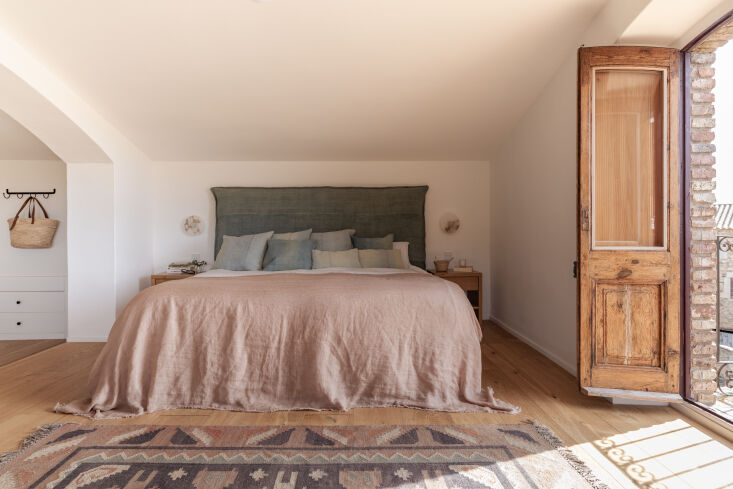
These built-in elements are a staple of Mediterranean vernacular architecture, but Espanyolet has elevated them by layering them with un-dyed vintage linen and hand-painted pillows. The color palette throughout the home is inspired by the landscape: "Verde de la Empordà" (a deep, dusty green), scorched earth browns, and the pale cream of Mallorcan stone.

In the bedrooms, the "slow design" philosophy continues. Custom headboards were designed to be tactile and grounding, often using the same lime-wash pigments found on the walls to create a monochromatic, cocoon-like effect. These aren't just decorative items; they are heirloom pieces designed to age alongside the house.
Defining Modern Mediterranean for 2026
We often see "Mediterranean" used to describe a cluttered, maximalist look filled with colorful tiles and wrought iron. But Espanyolet’s rebirth of this Catalan farmhouse points toward a different definition.
Modern Mediterranean style in this renovation is defined by:
- The Mix: Pairing rustic vintage linen and exposed 18th-century brick with industrial, minimalist finishes like stainless steel and microcement.
- Architectural Clarity: Removing the "noise" of mid-century renovations to let the original arches and stone frames breathe.
- Material Honesty: A commitment to 100% synthetic-free finishes, prioritizing health and environmental harmony over convenience.
- Slow Living: Built-in furniture (Sofa de Obra) that encourages stillness and conversation rather than the constant rearrangement of mass-produced furniture.
Seamless Living: The Outdoor Connection
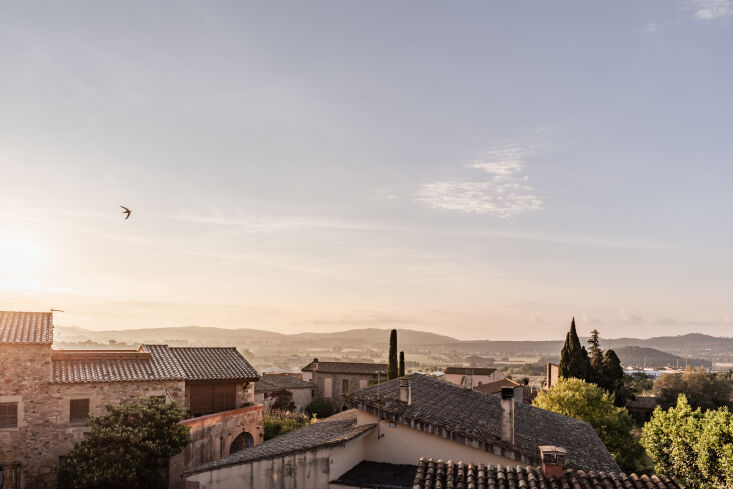
The final layer of this transformation is the seamless transition between the interior's muted tones and the vibrant Mallorca landscape. The renovation didn't stop at the walls; it extended into the garden, where an outdoor kitchen was built around a decades-old grapevine.
The pool area, often a point of contention in historic renovations, was anchored by using vintage stone cut to size. This ensures the pool feels like a natural spring that has always existed on the property, rather than a modern insertion. By mirroring the interior's palette—using the same stone and lime-based textures—the entire property feels like a singular, breathing organism.
FAQ
How can I achieve the "Espanyolet look" without a full renovation? Focus on the walls and the textiles. Swap out your standard paint for a lime wash finish to create depth and texture. Then, introduce un-dyed vintage linens in a muted, earthy palette. The goal is to create a "monastic" feel that emphasizes quality over quantity.
Are lime-wash walls practical for a family home? Actually, yes. While they have a delicate, matte appearance, lime wash is naturally high in pH, making it resistant to mold and bacteria. Small scuffs can often be touched up easily, and because the finish is variegated by nature, "perfection" is never the goal—which is very forgiving for a busy household.
Why use stainless steel in a farmhouse? Stainless steel is durable, hygienic, and offers a sharp visual contrast to old stone. In a historic renovation, it acts as a "bridge" to the present, ensuring the home feels like a functional modern residence rather than a museum.
The rebirth of this Catalan farmhouse is a reminder that the most beautiful homes aren't built from a catalog. They are revealed through a process of stripping away the unnecessary and honoring the materials that have stood the test of time. It is a leap of faith that has resulted in a sanctuary of silence, texture, and light.