Walking through the 7th arrondissement, specifically along the Rue de Bourgogne, one is struck by the rhythmic uniformity of the stone facades that define Paris. Yet, behind these heavy oak doors lies a new movement in interior styling. As an editor, I’ve seen countless "modernized" apartments, but the most successful ones don't fight their history—they dialogue with it. To balance Haussmannian roots with modern design, the secret lies in preserving historical elements like herringbone parquet and ornate moldings while introducing natural materials such as travertine and rattan to add a tactile, grounding warmth.
When selecting travertine for a Haussmannian space, one draws upon both geological history and contemporary luxury. It is a material that feels as though it was always meant to be there, bridging the gap between the classic limestone of the Parisian exterior and a modern, airy interior aesthetic.
The Haussmannian Canvas: Understanding the Heritage
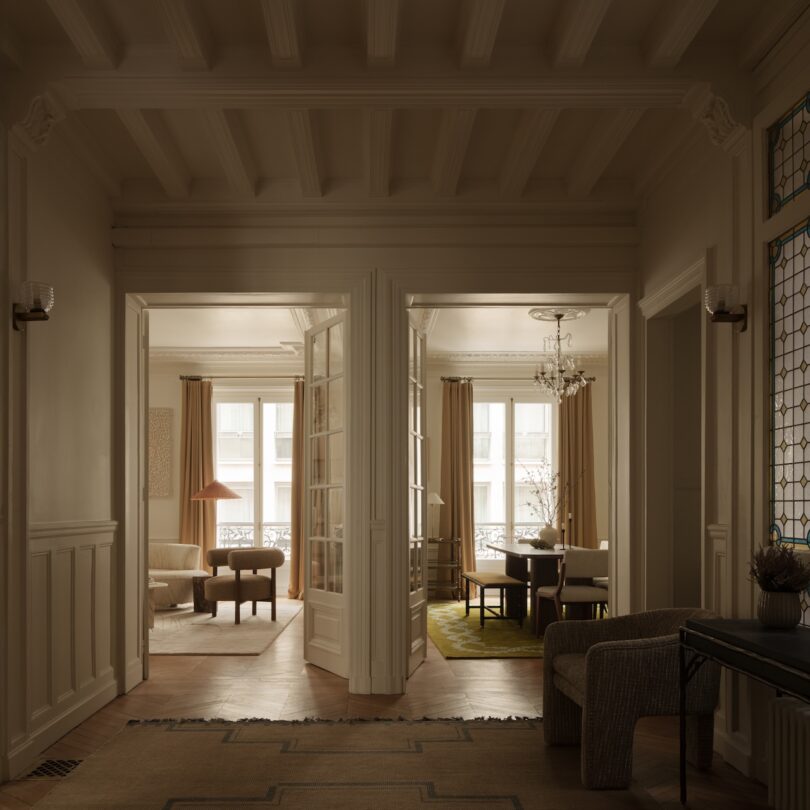
Before we introduce a single slab of stone, we must respect the "historical bones" of the space. A Haussmannian apartment is characterized by its rigid hierarchy: the grand salon for entertaining, the petit salon for intimacy, and the long corridors that connect them. The architectural evolution from the Second Empire to today’s "Eclecticism" means we are working with high ceilings—often 2.6 meters or more—and an abundance of decorative plasterwork.
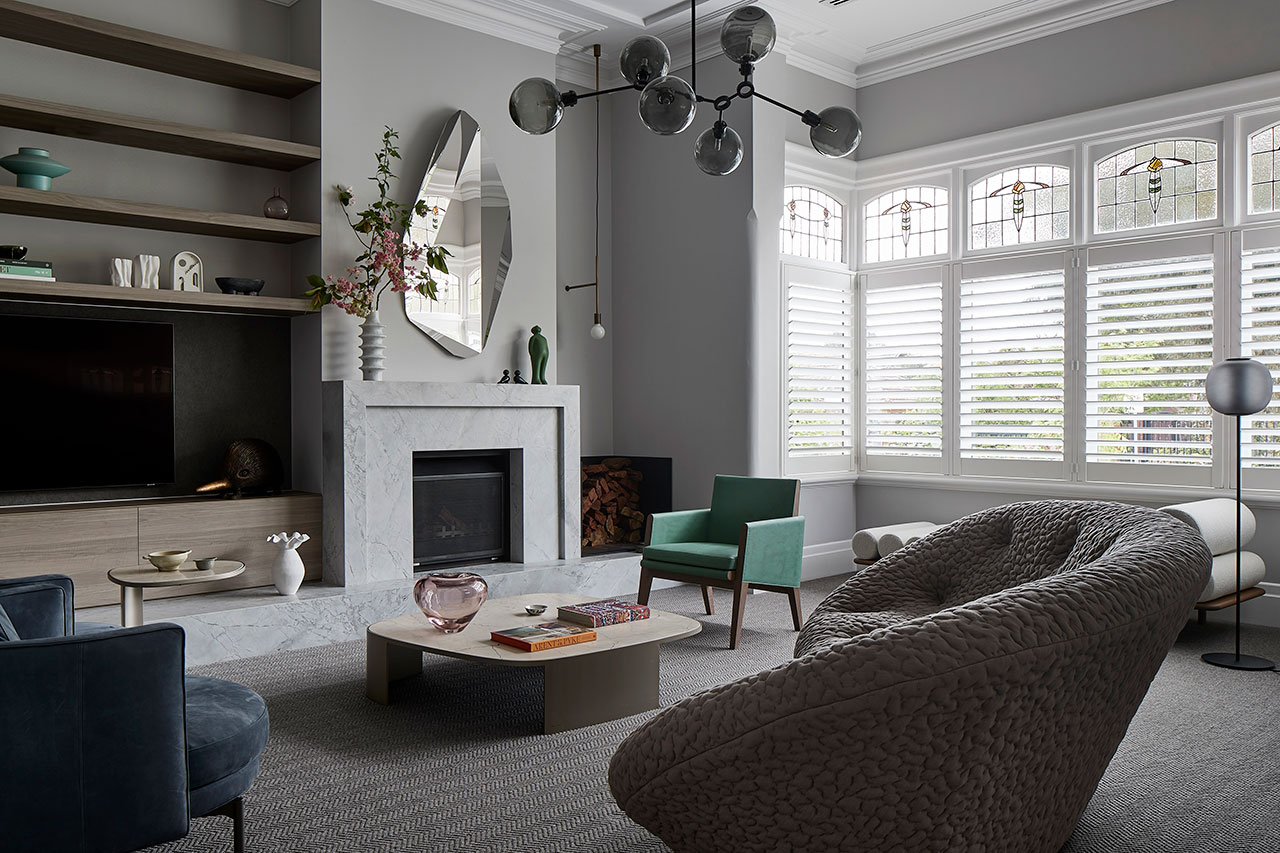
Renovating these spaces requires what I call "surgical interventions." Rather than a total overhaul that strips the soul of the apartment, the goal is to enhance the existing features. This means meticulously restoring the ornate moldings and the marble fireplaces, which often serve as the focal point of the room.
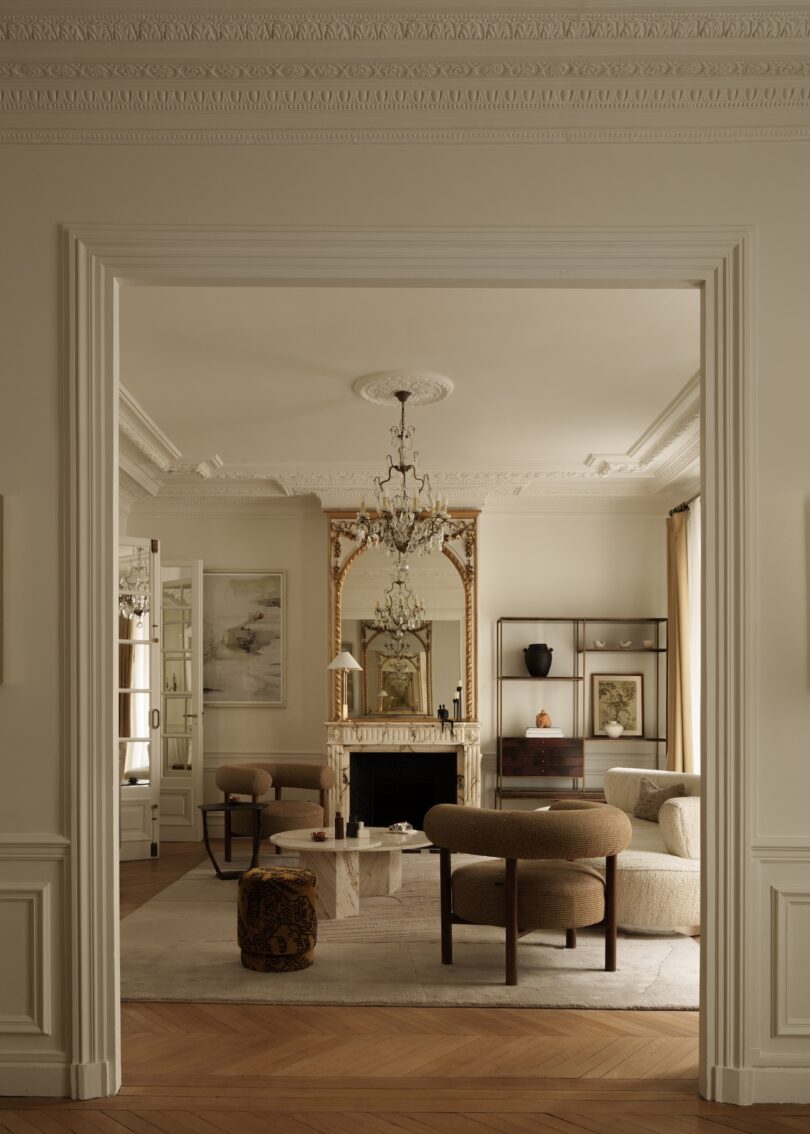
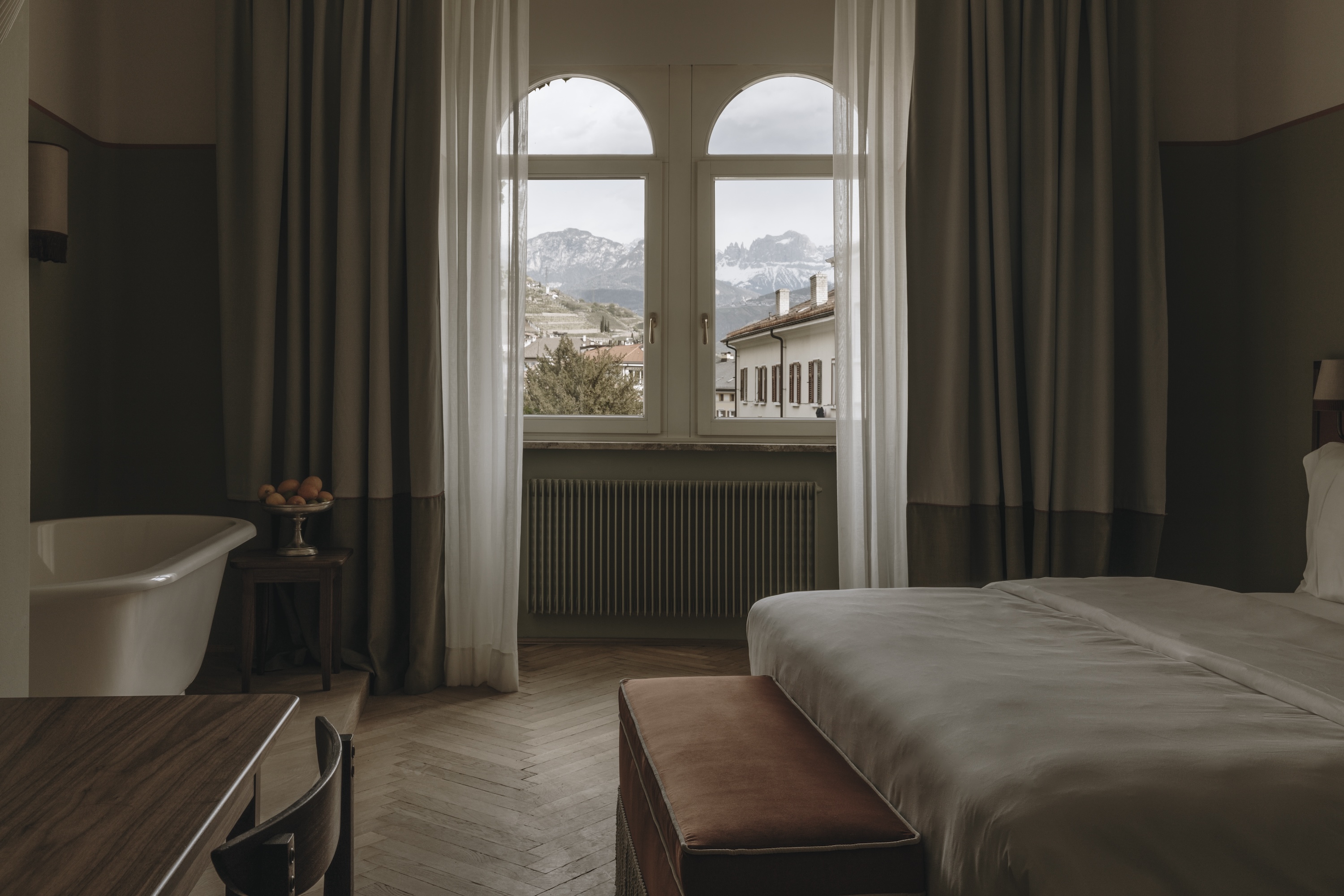
The preservation of the point de Hongrie (herringbone) parquet is non-negotiable. Its honey-toned wood provides the necessary warmth to balance the cooler whites of the walls and the raw textures of modern stone furniture.
Why Travertine? The Bridge Between Eras
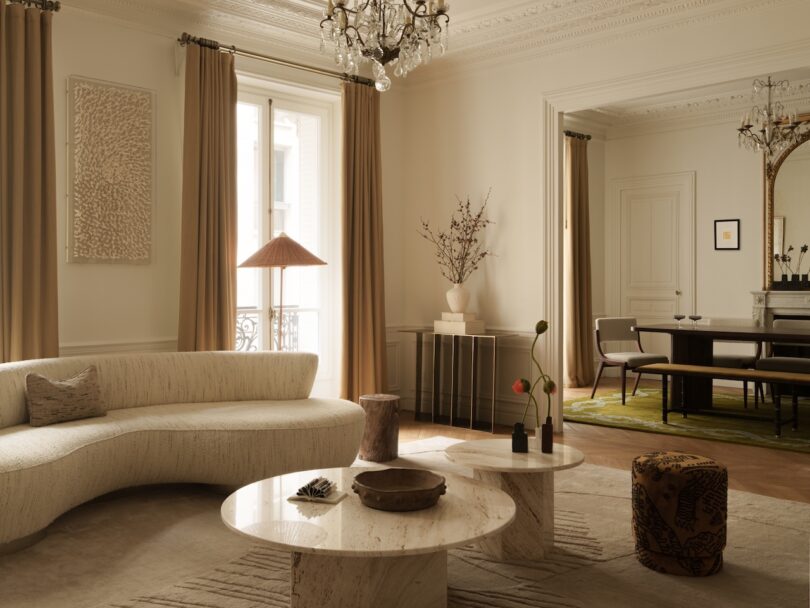
Why has travertine become the darling of Parisian contemporary furniture trends? The answer is rooted in its texture. Travertine’s geological history and neutral tones bridge the gap between classic stone facades and contemporary interior aesthetics. Unlike polished marble, which can feel formal and occasionally cold, travertine offers a "Soft Texture" effect.
In a high-end Parisian renovation, we typically classify stones into grades. Class II and III limestones, like travertine, are ideal for Parisian flooring and bathrooms because of their durability and porous, organic appearance. When you place a monolithic travertine coffee table in a room with 19th-century crown molding, you create a tension that feels both ancient and cutting-edge.
Editor’s Tip: Look for "filled" travertine for high-traffic surfaces like dining tables to prevent staining, but leave vertical surfaces "unfilled" to appreciate the stone’s natural, pitted character.
Design Strategy: The 'Collected' Look
A successful Parisian interior strategy is never about matching sets. It is about a "careless" and layered look that feels collected over generations. To achieve this, we combine contemporary art and minimalist stone furniture with inherited vintage pieces.
This approach was beautifully executed in the Olga Ashby Paris project, where symmetry was intentionally ignored to achieve a vibrant, lived-in atmosphere. To replicate this "Material Alchemy," consider the following palette:
- Foundation: White walls (try Skimming Stone by Farrow & Ball) and restored oak parquet.
- The Stone: A primary travertine piece, such as a sculptural plinth or a custom-carved kitchen island.
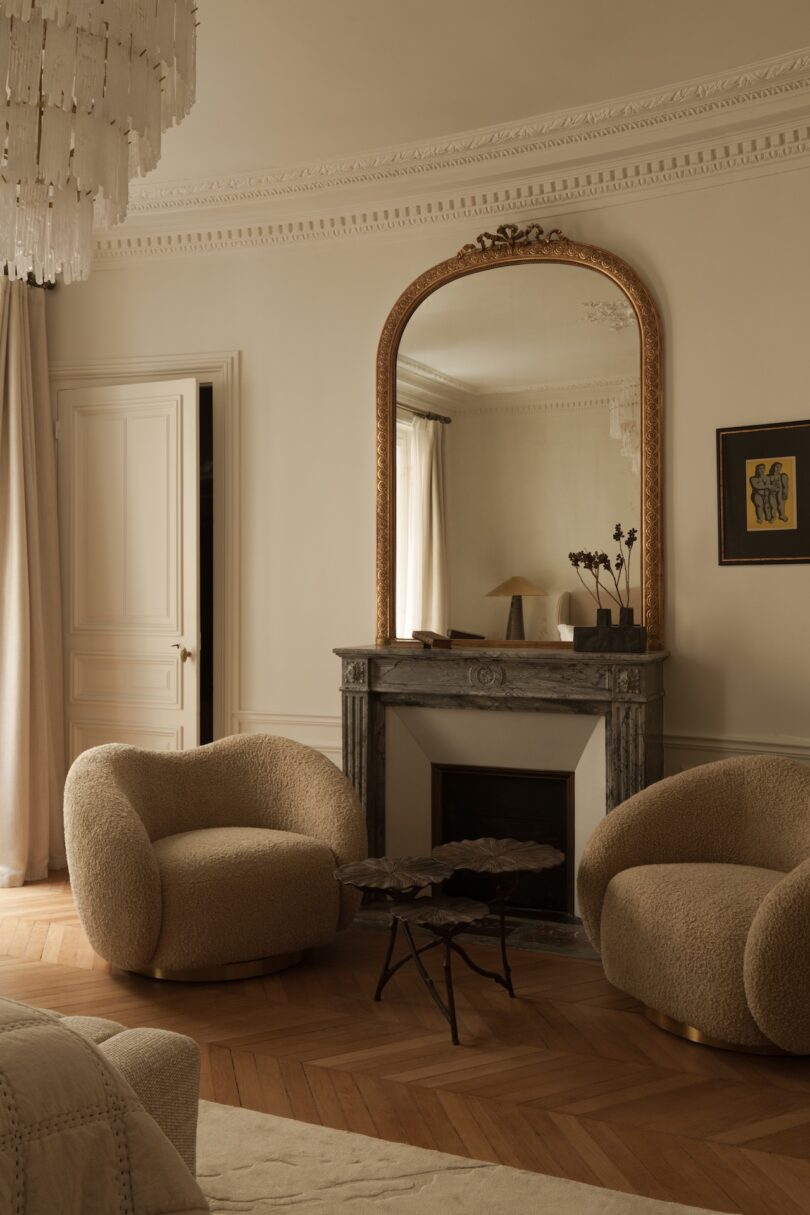
- The Softness: Bouclé fabrics on rounded sofas and linen drapes that pool slightly on the floor.
- The Contrast: Dark wood (walnut or charred oak) and woven rattan to add a rustic, artisanal touch.
Beyond the stone, the upholstery program features tactile experiences. The rough grain of the travertine is offset by the cloud-like softness of a bouclé armchair, creating a space that appeals to the sense of touch as much as the eye.
The Logistics of Transformation
Bringing these two worlds together is an investment in both time and capital. High-end Parisian apartment renovations typically require a 10-month timeline to ensure meticulous material sourcing and the careful restoration of historical features. You cannot rush the drying of plaster or the hand-sanding of century-old wood.
From a financial perspective, you should budget for a premium experience. In the current market, costs for a full-scale renovation featuring high-quality natural stone and modern utility upgrades range from €1,550 to €2,000 per m².
Technical Snapshot: The Investment
| Feature | Timeline | Estimated Cost (per m²) |
|---|---|---|
| Structural Restoration | 3-4 Months | €400 - €600 |
| Stone Sourcing & Fitting | 2 Months | €500 - €800 |
| Final Styling & Finishes | 2-3 Months | €650+ |
The priority during these 10 months is often technical: upgrading electrical and plumbing systems and improving thermal insulation. The challenge is doing so without losing the precious moldings. It is a dance of surgical precision, hiding modern comforts behind 19th-century aesthetics.
2026 Trends: Marble and Travertine Combinations
Looking forward to 2026, we are seeing a shift toward "Modern and Natural Harmony." Designers are moving away from using a single type of stone and instead mixing marble countertops with travertine wall coverings. This creates a tonal depth that feels more sophisticated than a monochromatic look.
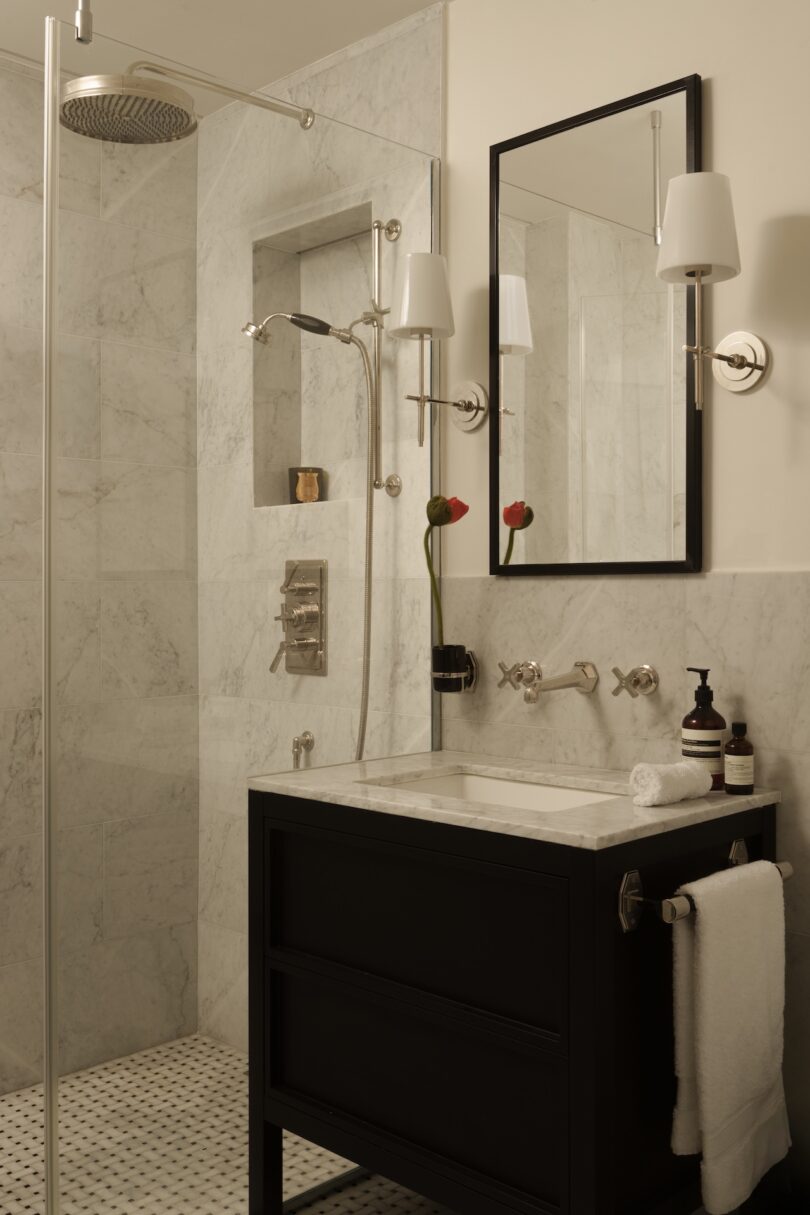
The "Trend Area" of the moment is undoubtedly the bathroom. We are seeing a move toward transforming the bathroom into a "stone sanctuary." This involves using full-height stone cladding—often in travertine—to create a monolithic, peaceful effect that mimics a natural cave or a Roman bath.
- Monolithic Tables: Large, heavy dining tables carved from a single block of travertine.
- Sculptural Vases: Small stone accessories that act as miniature pieces of architecture on a mantelpiece.
- Mixed Textures: Combining the matte finish of travertine with the high-gloss shine of a dark marble backsplash.
Conclusion: Future-Proofing Parisian Elegance
The synergy between natural stone and Haussmannian architecture is more than just a passing trend; it is a way to future-proof the elegance of these historic homes. By choosing sustainable, eco-friendly natural materials like travertine, we are honoring the heritage of the building while making it habitable for a modern lifestyle.
Ultimately, the goal is to create a home that feels both grounded in its history and light enough for contemporary living. It’s about that perfect Parisian balance—where every piece of stone and every curve of molding tells a story of both the past and the present.
FAQ
Is travertine too heavy for older Haussmannian apartment floors? While travertine is a dense stone, most Haussmannian buildings are structurally robust enough to handle stone furniture and bathroom cladding. However, for exceptionally large monolithic pieces or full-stone flooring, a structural engineer should always verify the floor load capacity, especially in older "timber-framed" sections of the building.
How do I maintain travertine to ensure it lasts as long as my apartment? Travertine is porous, so it must be sealed upon installation to prevent liquid absorption. Use pH-neutral cleaners and avoid acidic substances like lemon or vinegar. With proper sealing every 1-2 years, travertine will age beautifully, developing a slight patina that adds to its character.
Can I mix different types of wood with my travertine furniture? Absolutely. In fact, mixing wood species is key to the "collected" look. The light, porous nature of travertine pairs exceptionally well with the dark, rich tones of walnut or the warmth of honey-toned oak parquet. The contrast in grain and texture creates visual interest and prevents the room from feeling like a showroom.