Quick Facts
- Location: Wedgwood Neighborhood, Seattle, WA
- Original Era: 1970s Split-Level
- Architect: Best Practice Architecture
- Core Challenge: Reclaiming "lost" interior space and increasing natural light without expanding the footprint.
- Standout Feature: A custom-built wooden "service core" that replaces traditional walls and central staircases.
- Sustainability Win: Improved thermal performance through high-efficiency glazing and natural timber cladding.
For a long time, the 1970s home was the "awkward middle child" of the architectural world. Caught between the mid-century modern elegance of the 50s and the sprawling open-concept mansions of the 90s, 70s houses were often dismissed as drab, dark, and cluttered with questionable trends like avocado-green bathrooms and heavy Artex ceilings. However, as an interior design editor, I’ve seen a significant shift in perspective. We are rediscovering the "hidden value" of these homes: their generous volumes, wide facades, and experimental layouts that offer an "inverse Tardis" effect—feeling much larger than they appear from the curb.
The Wedge(wood) House remodel in Seattle serves as a masterclass in this transformation. By working with Best Practice Architecture, the homeowners didn't just "fix up" an old house; they stripped away the era’s limitations to reveal a serene, light-filled sanctuary that perfectly balances 70s soul with 21st-century fluidity.
Identifying the Hallmarks: What to Keep and What to Change
Before swinging a sledgehammer, it’s crucial to distinguish between what makes a 70s house "dated" and what makes it "characterful." The goal of modernizing a 1970s house isn't to erase its history, but to refine it.
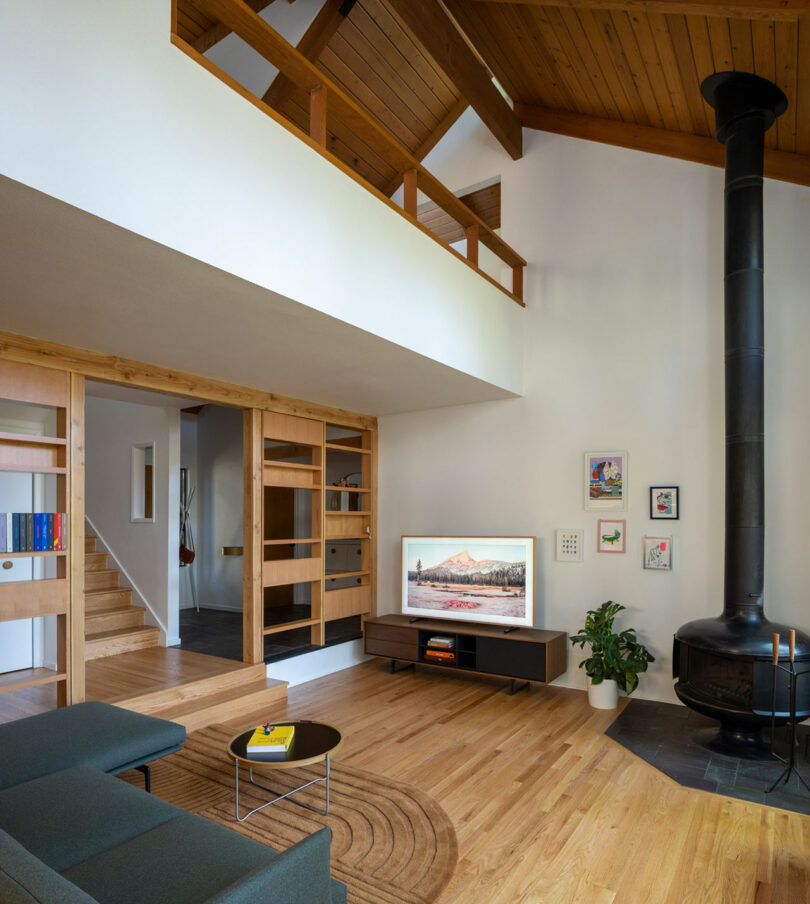
So, what are the best 1970s features to preserve? Key architectural elements such as sunken living rooms (the iconic "conversation pit"), vintage wood-burning stoves, large window openings, and internal timber cladding are absolutely worth retaining. These features provide a tactile warmth and structural interest that modern "white box" constructions often lack. In the Wedgwood House, the designers leaned into the earthy, wood-heavy palette of the original era but elevated it with cleaner lines and premium finishes.
The "change" list usually starts with the layout. 1970s homes were notorious for having large footprints but "choppy" interiors. Central staircases and oversized cupboards often blocked the flow of light and movement. By identifying these bottlenecks, you can unlock the home's true potential.
Interior Reconfiguration: Fluidity and Light
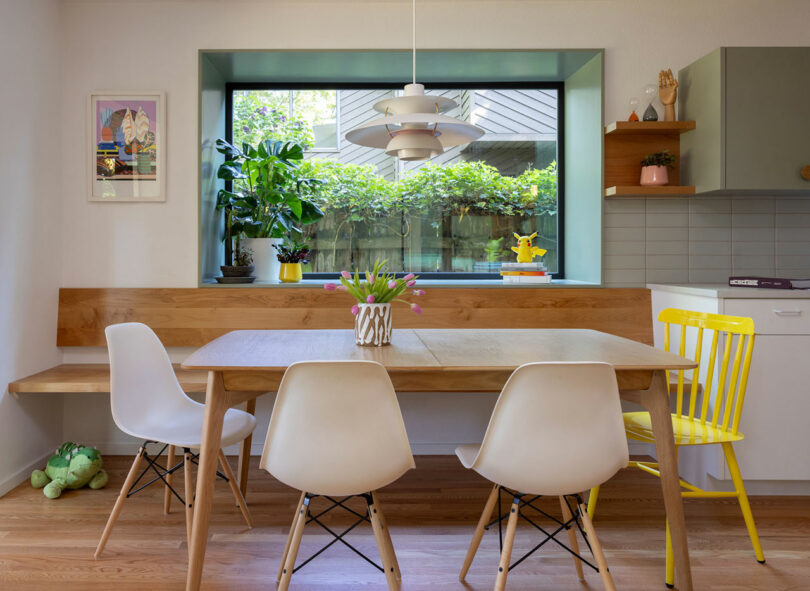
How exactly can you modernize a 1970s house? The secret lies in the "spatial intervention." Instead of simply moving walls, think about how the house functions. Most 70s layouts focused on opening the enclosed kitchen to create a fluid connection with dining areas. In the Wedge(wood) House, this meant removing the traditional central staircase and bulky storage units.
Statistics show that removing central cupboards and staircases in 1970s layouts can increase habitable open-plan space by up to 18% without adding a single square foot to the home’s footprint.
Best Practice Architecture replaced these obstacles with a custom-built wooden "service core." This ingenious design serves multiple purposes: it houses the new staircase, kitchen cabinetry, and storage, all while acting as a sculptural element that guides people through the house. By replacing partial-height walls with custom shelving and built-in seating, the home feels exponentially more spacious.
Editor’s Tip: When opening up a 70s floor plan, use "zones" instead of rooms. Use different floor levels or built-in furniture to define where the kitchen ends and the lounge begins without closing off the sightlines.
Structural and Safety Essentials: The Not-So-Pretty Part
While we all love picking out paint colors and marble tiles, renovating 1970s architecture requires a serious look at the "bones." This decade was a transition period for building materials, meaning there are a few hidden traps for the unwary:
- Asbestos Surveys: It’s vital to check for asbestos in insulation boards, vinyl floor tiles, and Artex ceilings before any demolition begins.
- Flimsy Partition Walls: Many 70s homes used thin stud walls that offer poor acoustic insulation. Modernizing often involves strengthening these walls or replacing them with high-density materials to ensure privacy.
- Thermal Efficiency: The aluminum-framed windows of the 70s are notorious heat-leaks. Upgrading to high-performance, thermal-break frames is the single best investment for both comfort and energy bills.
| Feature | 1970s Original | Modern Upgrade |
|---|---|---|
| Windows | Single-glazed aluminum | Triple-glazed wood/metal composite |
| Heating | Electric baseboard or old gas | Underfloor heating & smart thermostats |
| Insulation | Minimal or fiberglass | Spray foam or mineral wool |
| Internal Walls | Thin plasterboard | Acoustic-grade stud walls |
Enhancing Kerb Appeal: The Exterior Transformation
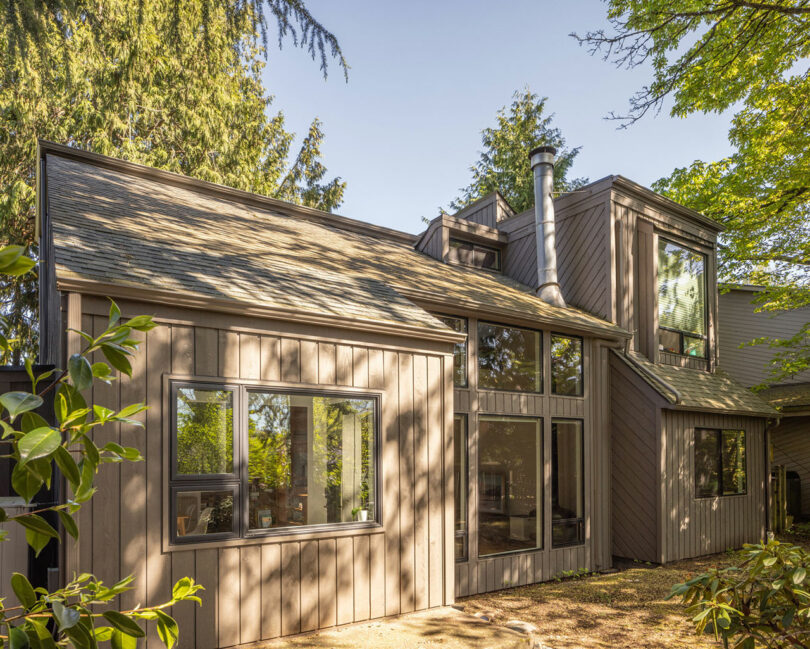
The exterior of a 70s home often suffers from a "heavy" look—brown bricks, plastic cladding, and uninspiring entryways. So, how do you improve the exterior of a 1970s home? Updating the facade with modern materials like untreated timber, metal, or larch-clad extensions can significantly boost curb appeal while improving the building's thermal performance.
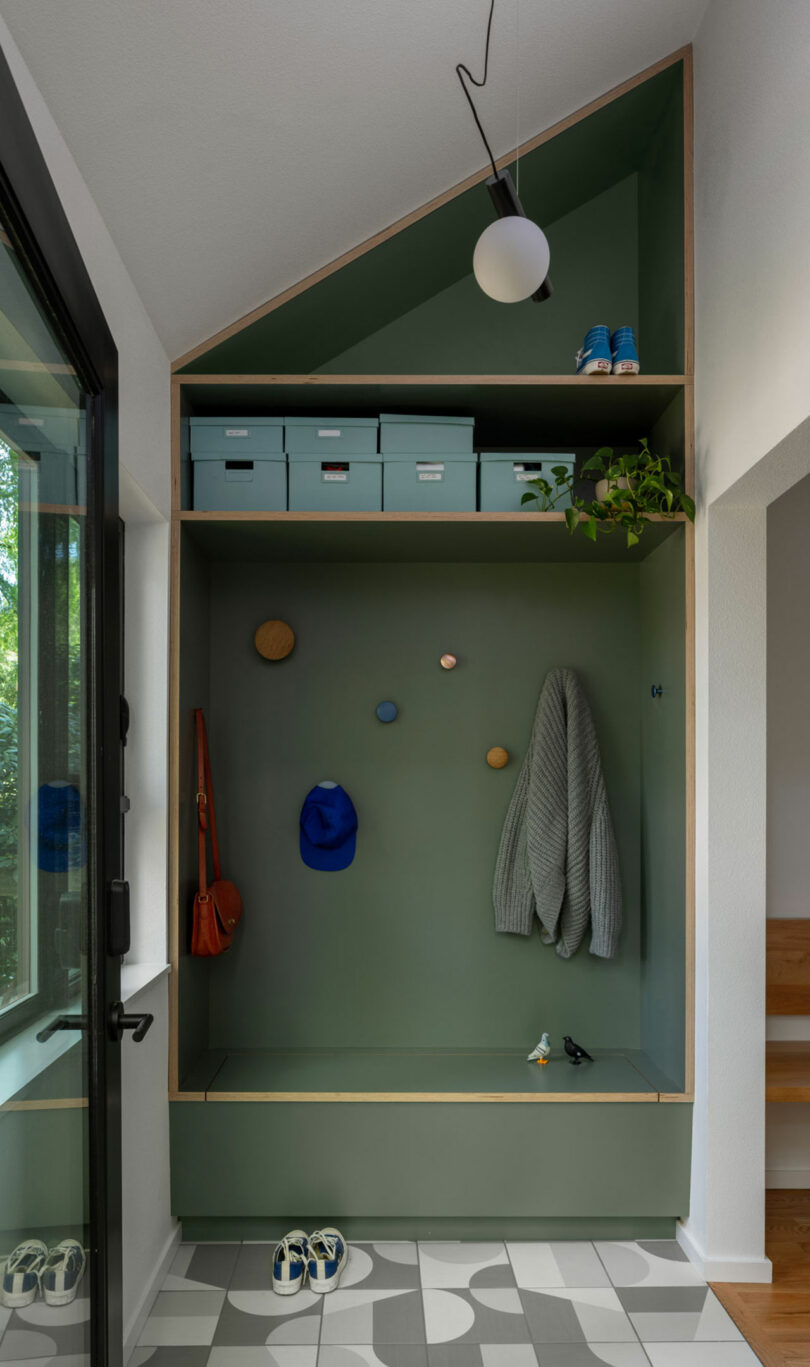
In the Wedge(wood) House, the transformation of the entryway was particularly impactful. Seattle’s "Rainy City" climate demands practicality. The designers converted the underutilized, dark porch into a bright, functional mudroom. This simple change creates a transition zone that protects the interior from the elements while providing essential storage for coats and boots.
Beyond the entryway, the roofline offers another opportunity. Many 70s homes feature flat or low-pitched roofs. These are perfect candidates for green roof conversions or the installation of sleek skylights and solar panels.
Maximizing Natural Light in Private Spaces
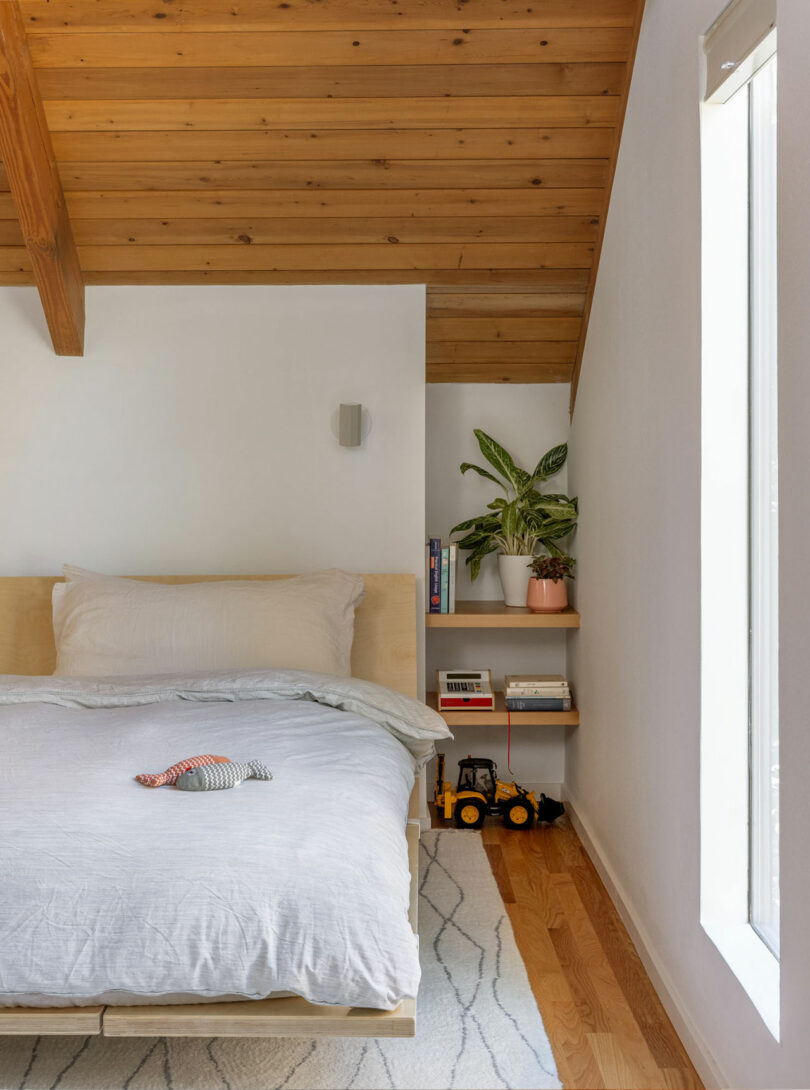
One of the most impressive feats of the Wedge(wood) House remodel was the transformation of the upper level. Originally, the primary suite felt disconnected and dimly lit. By reconfiguring the "Great Room" logic and applying it to the bedrooms, the architects were able to create a sense of sanctuary.
Statistical data from the project reveals that the Wedge(wood) House remodel successfully increased natural light penetration in the primary suite by 40% through the strategic use of clerestory windows. These windows—placed high on the wall—allow light to flood the room without sacrificing privacy from neighbors.
By removing the tops of dividing walls and leaving the ceiling joists exposed, the designers also enhanced the "tree-top" views. Waking up in a room where you can see the sky and the surrounding greenery completely changes the mood of the home, shifting it from a "closed-off box" to a "perch in the woods."
Practical Guide: Your Renovation Roadmap
If you’re looking at a 70s property and wondering where to start, here is a roadmap to guide your vision:
- Initial Consultation: Don't just hire a contractor. Work with an architect or a design-build firm that understands the specific structural quirks of 70s buildings. They can help you identify which walls are load-bearing and where the "hidden" space is buried.
- Planning & Permits: While many internal changes don't require planning permission, any extensions or major changes to the facade (especially in historic neighborhoods) will.
- Integrating Tech: Modernizing a 70s house is the perfect time to go "smart." Install sensor-based lighting in hallways and integrated smart thermostats to manage the larger volumes of air in open-plan spaces.
- Material Selection: Balance the "vintage" feel with modern textures. Think matte black fixtures against warm oak, or concrete floors paired with the original wood-burning stove.
The Wedge(wood) House is proof that you don't need to demolish a 70s home to make it modern. By respecting the original volume and "leaning in" to the wood-centric aesthetic, Best Practice Architecture created a home that feels both nostalgic and cutting-edge. It’s about seeing past the dated finishes to the soaring spaces beneath.
FAQ
Q: Is it more expensive to remodel a 70s house than a newer home? A: Not necessarily. While you may face costs related to asbestos removal or upgrading insulation, 70s homes often have simpler footprints and more "honest" construction than houses built in the 80s or 90s, making them easier to reconfigure.
Q: Can I keep my 1970s wood paneling and still make it look modern? A: Absolutely! The key is contrast. If you have original dark wood paneling, balance it with light-colored flooring, modern minimalist furniture, and plenty of natural light. Often, a light sanding and a matte clear coat can refresh old timber without losing its soul.
Q: How do I deal with a sunken living room? A: Sunken living rooms are currently having a huge revival in high-end design. Instead of filling it in, consider modernizing it with custom-built wrap-around seating and updated upholstery. It creates a cozy, communal focal point that modern open-plan homes often lack.