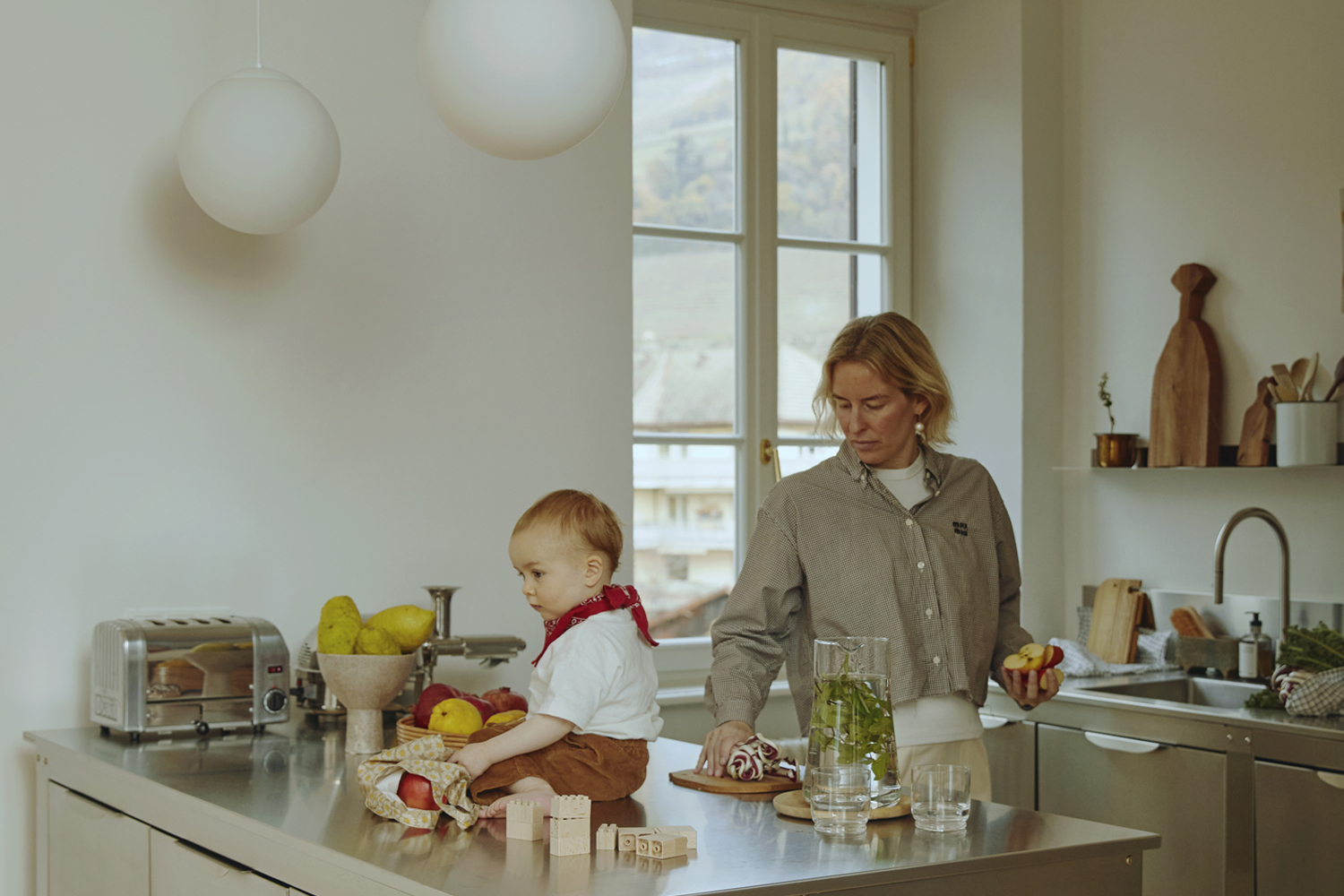
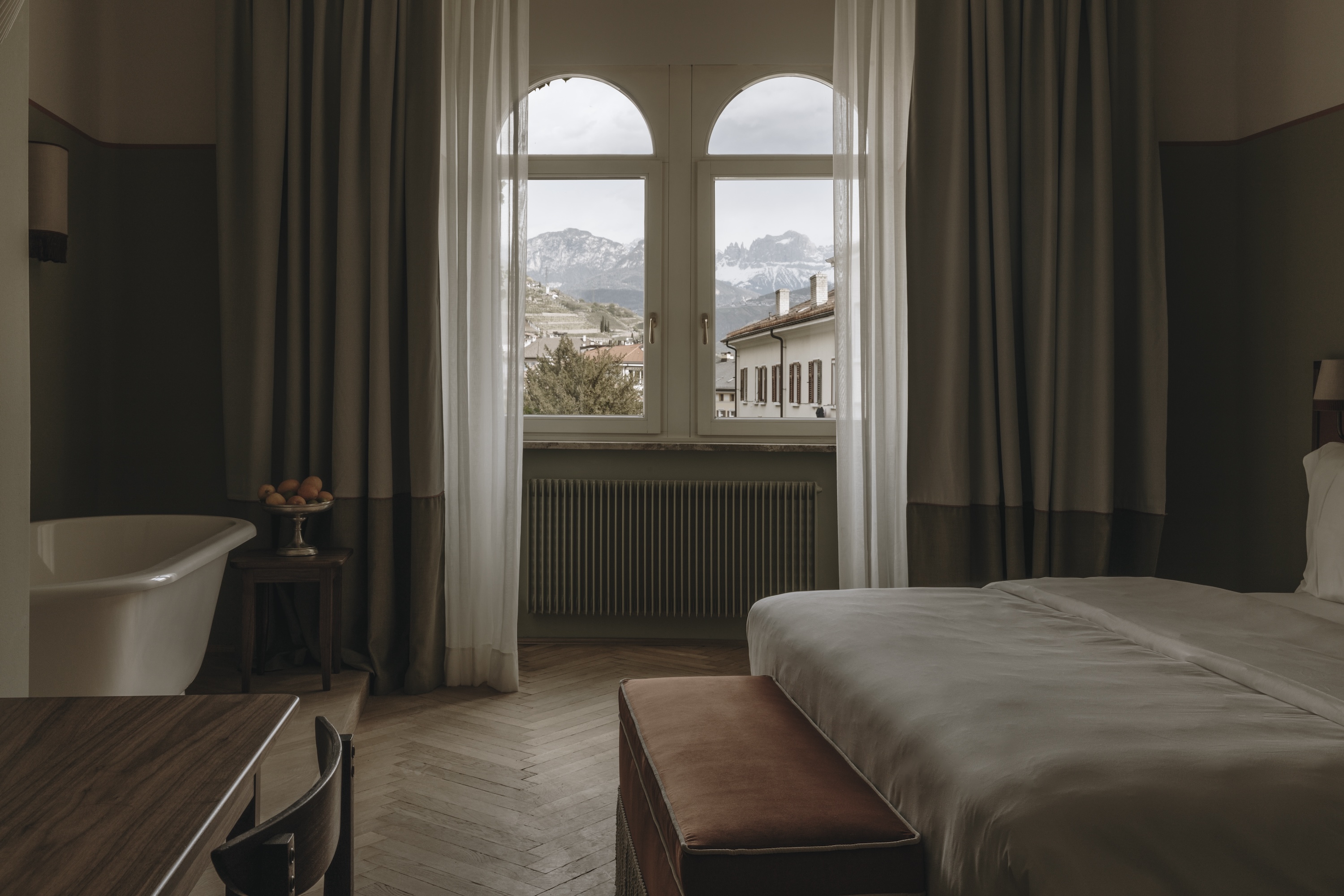
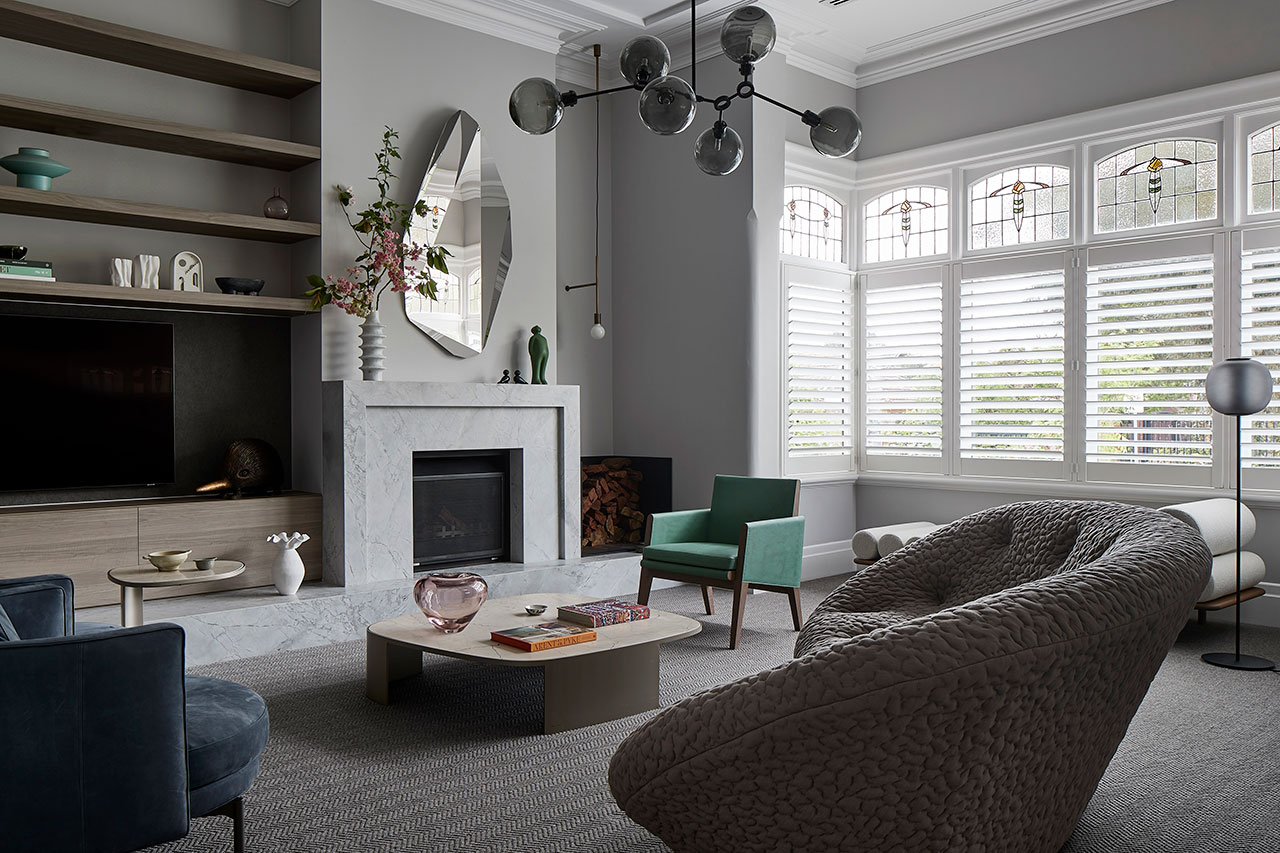
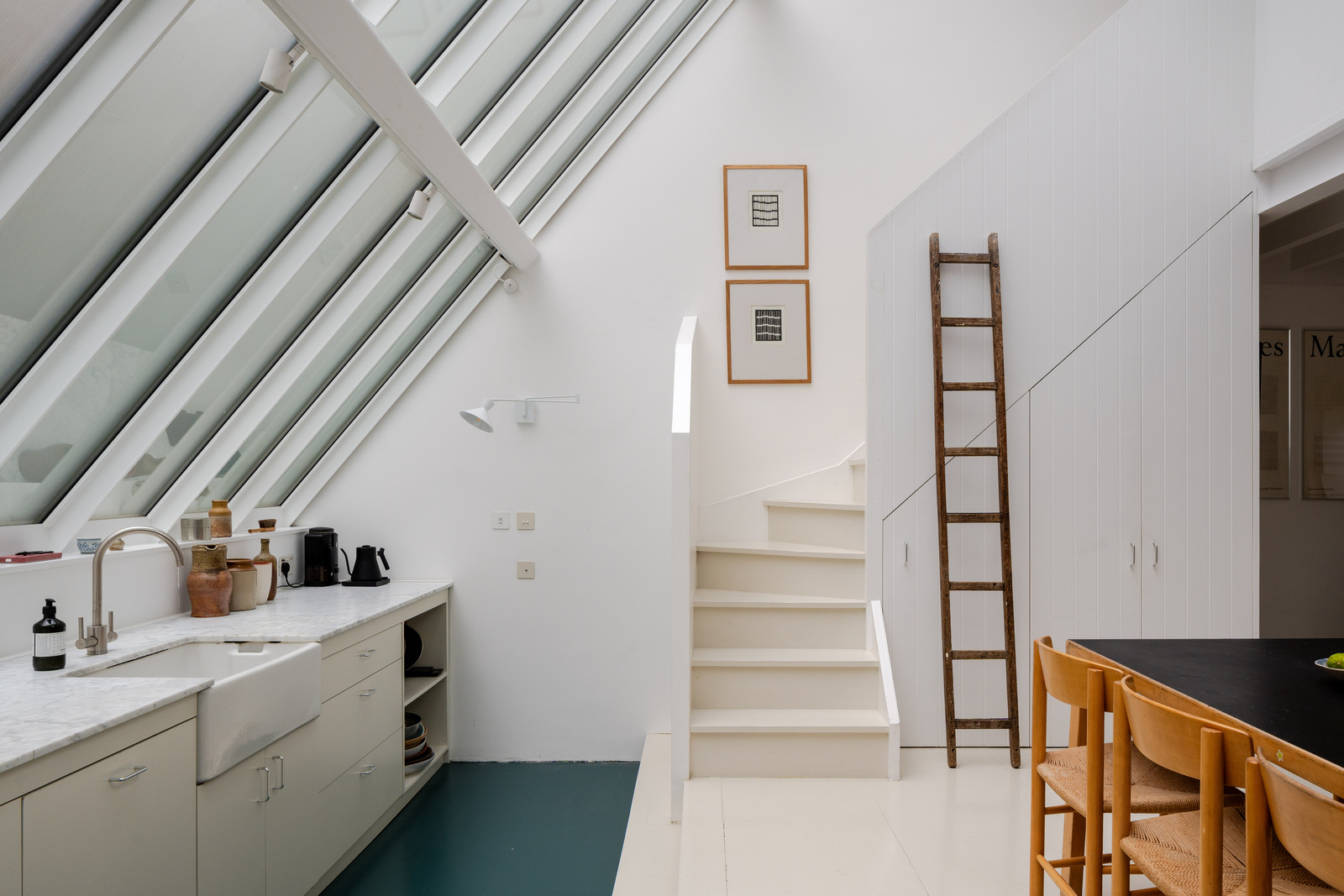
There is a specific kind of magic found in the streets of Montpellier—a city where medieval alleyways suddenly give way to the stately grandeur of the 19th-century Maison de Maître. These "Master’s Houses" are the architectural soul of Southern France, characterized by their symmetrical facades, high ceilings, and grand stone staircases. However, for the modern family, these historic gems often present a living paradox: they are breathtakingly beautiful but functionally fragmented, with rigid layouts that feel disconnected from the flow of contemporary life.
The challenge of modernizing a Montpellier Maison de Maître lies in a delicate balancing act. How do you breathe fresh air into a 120-square-meter historic footprint without erasing its heritage? The answer, as demonstrated in this stunning restoration, lies in unifying fragmented ground floor volumes into a 100% open-plan living space while meticulously preserving original details like plaster moldings and stone masonry. By stripping away the internal walls that once dictated a formal, segregated lifestyle, the renovation invites natural light to dance across the home, creating a dialogue between the weight of history and the lightness of modern design.
The Architect’s Vision: Pauline Percheron’s Approach
To navigate the complexities of such a transformation, the owners turned to Pauline Percheron, an architect whose practice is rooted in Saint-Georges-d’Orques. A graduate of the prestigious La Cambre school in Brussels, Percheron brings a refined, European sensibility to the Languedoc-Roussillon region. Her task was ambitious: to take a 120-square-meter ground floor—previously a series of dark, enclosed rooms—and turn it into a singular, fluid environment.
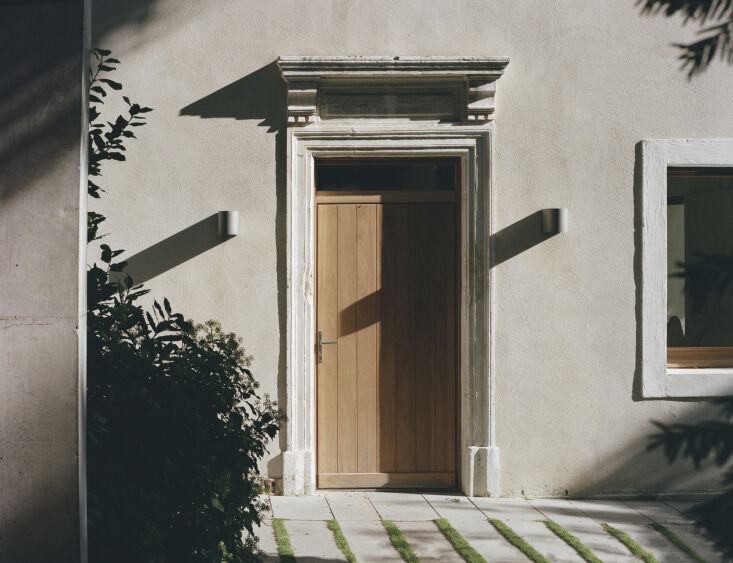
Percheron’s approach was not to fight the building’s history but to celebrate it through contrast. She envisioned a home where the heavy stone walls served as a gallery for modern life. By removing non-structural partitions, she optimized the 120-square-meter footprint to transition from a claustrophobic 19th-century plan to a 100% open-plan living area. This structural bravery allowed the garden to finally become a visual extension of the living room, a luxury the original inhabitants of the Maison de Maître rarely prioritized.
Preserving the Heritage: What Stays
In a restoration of this caliber, what you choose not to change is just as important as what you demolish. The goal was never to create a "new" house, but to reveal the best version of the old one. We often see renovations that "over-clean" the history out of a space; here, the original plaster moldings were painstakingly restored, and the traditional window frames were kept to maintain the rhythmic pattern of the facade.
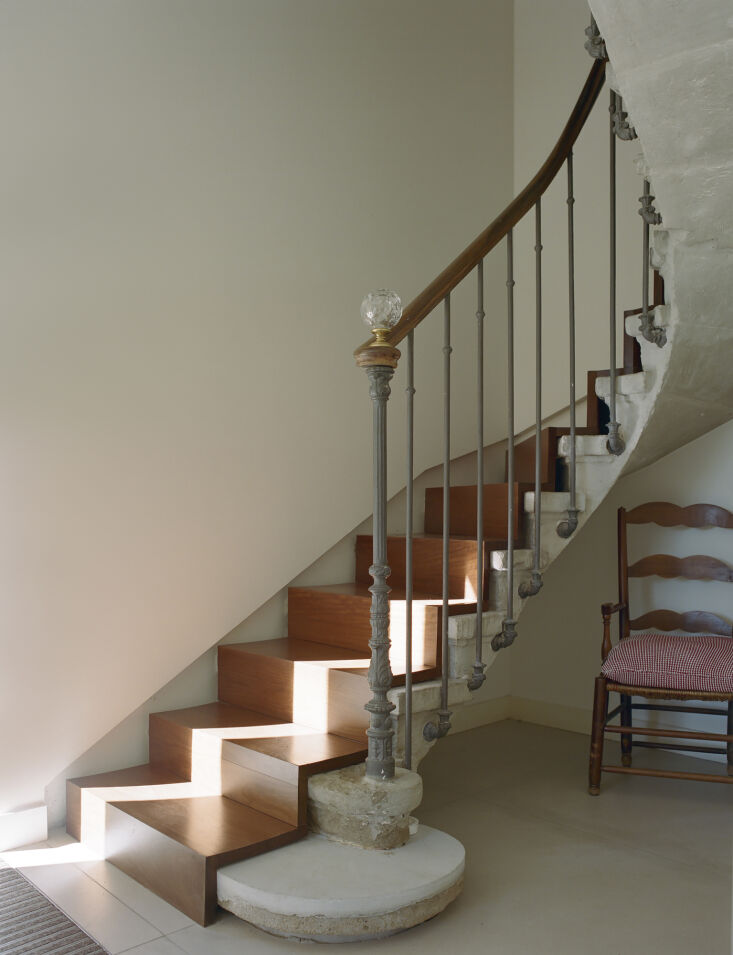
The true showstopper, however, is the grand stone staircase. In many historic homes, these stairs are worn, slippery, or simply don't meet modern safety codes for a family with children. Instead of replacing the stone, Percheron designed a custom wooden "carpet" runner. This clever intervention provides a warm, slip-resistant surface while allowing the original stone treads to remain visible at the edges, honoring the thousands of footsteps that came before.
Infusing Modernity: Design Icons and Materiality
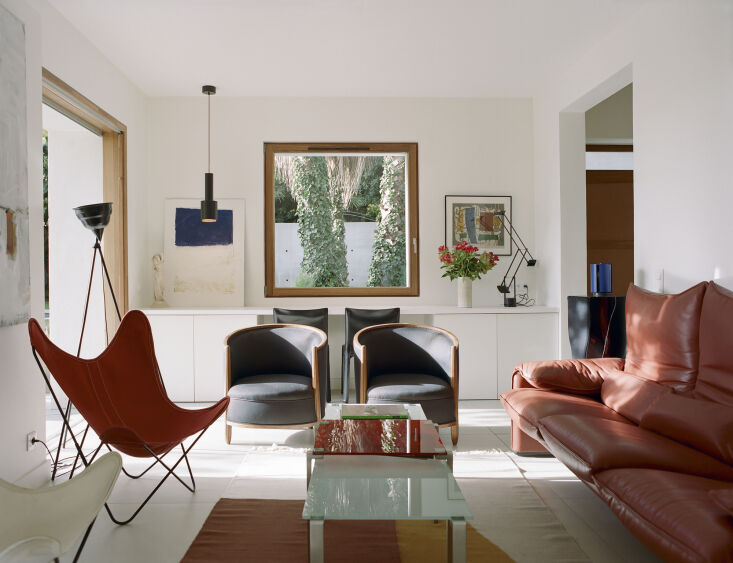
With the structural "bones" of the house cleared and the heritage features secured, the interior design becomes a curated play of textures and iconic forms. The project successfully integrated legendary 20th-century design pieces from over five different master designers, creating an atmosphere that feels more like an intentional collection than a showroom.
In the living area, the furniture choices anchor the high-ceilinged rooms:
- The Seating: A 1973 Maralunga sofa by Vico Magistretti offers a low profile that doesn't compete with the wall moldings.
- The Lighting: Alvar Aalto’s organic pendants provide soft, diffused light that warms the cool stone walls.
- The Storage: Charlotte Perriand-inspired shelving adds a rhythmic, modernist touch to the perimeter.
- The Classics: Subtle nods to Le Corbusier appear in the clean lines and functionalist philosophy of the space.
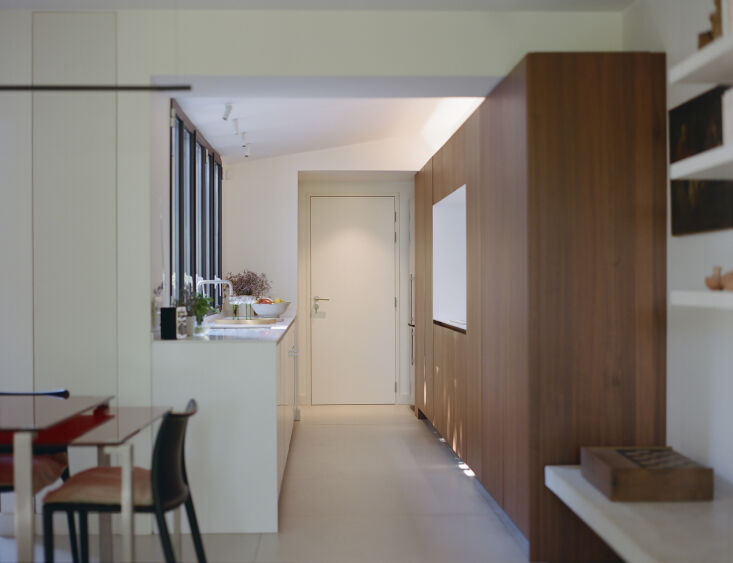
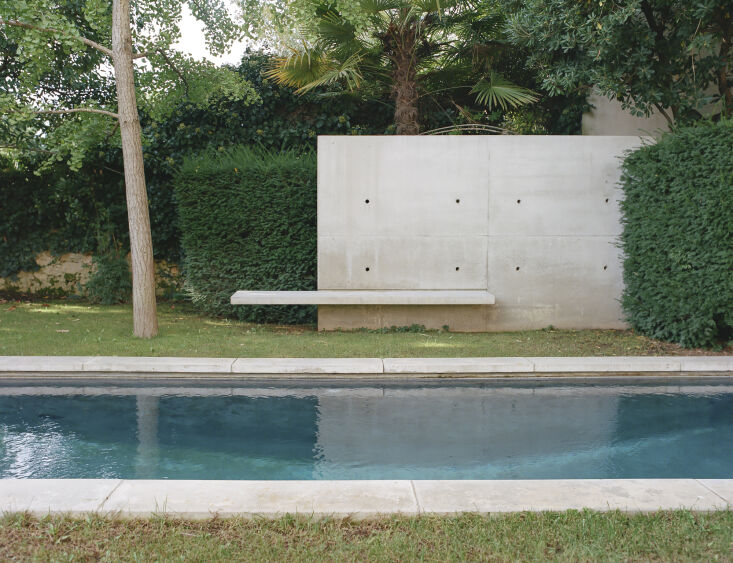
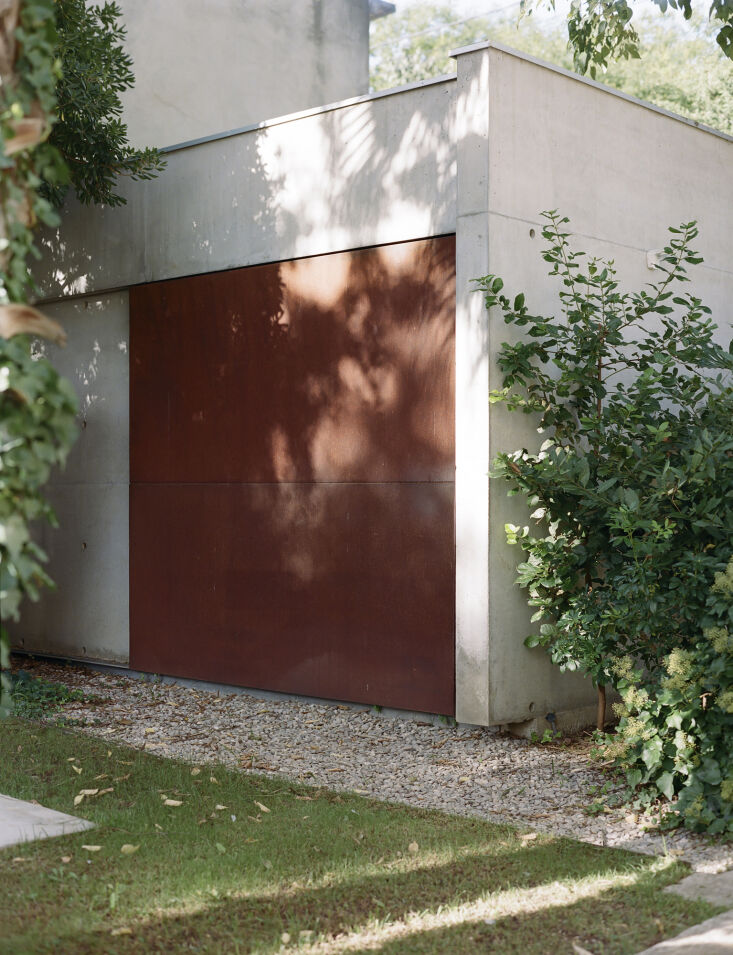
The kitchen, often the most difficult room to integrate into a historic open plan, was treated as a piece of high-end furniture rather than a utility zone. Using exotic wood cabinetry, Percheron created a warm, sculptural block that defines the cooking area without the need for walls. This materiality extends to the outdoors, where Corten steel doors for the outbuildings and concrete pool coping (treated to mimic the local stone) create a cohesive palette that feels both industrial and timeless.
Navigating Legal and Technical Hurdles in Montpellier
Renovating in the heart of Montpellier is not merely a design challenge; it is a bureaucratic one. Most historic homes in the city fall under protected zones, meaning any exterior modification—and often significant interior ones—must be approved by the Architects of Historic Buildings (ABF).
The ABF ensures architectural continuity, ensuring that modern interventions do not clash with the city’s heritage. In this project, the integration of a swimming pool was a sensitive point. To gain approval, the materials had to harmonize perfectly with the existing environment. This led to the selection of a specific concrete coping that was color-matched to the region's natural limestone, proving that modern luxury can indeed coexist with strict conservation laws.
Beyond aesthetics, the technical upgrades were Herculean. Historic homes of this era typically suffer from:
- Outdated Plumbing: Replacing lead and galvanized pipes is a non-negotiable for health and water pressure.
- Thermal Inefficiency: Historic windows can account for up to 30% of a home's heat loss. Here, the challenge was upgrading to high-performance glazing while retaining the original thin-profile wooden frames.
- Dampness: Stone walls need to "breathe," so modern insulation must be applied carefully to avoid trapping moisture.
Efficiency and Sustainability: A Hidden Layer
Modernizing a Maison de Maître is also an exercise in future-proofing. Beyond the visual transformation, the renovation addressed the "invisible" comfort of the home. In high-ceilinged rooms, sound often bounces uncomfortably; Percheron utilized strategic soft furnishings and acoustic treatments hidden behind the cabinetry to dampen the echo.
Thermal comfort was achieved through a mix of underfloor heating—ideal for the large stone-tiled areas—and discreetly integrated climate control. The result is a home that remains cool in the sweltering Montpellier summer and cozy in the winter, all while maintaining the thermal mass benefits of its original 19th-century construction.
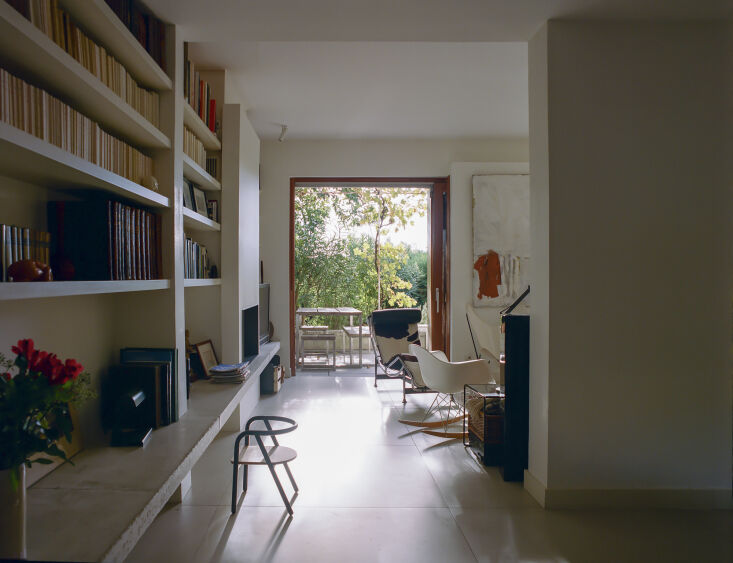
A particularly poetic design choice is the concrete bench that serves as a physical thread throughout the ground floor. It begins as a bookshelf in the interior, then pierces the glass threshold to become a garden seat, effectively blurring the line between the protected interior and the Mediterranean outdoors.
Conclusion: The Dialogue Between Past and Present
The success of the 120-square-meter Montpellier restoration lies in its refusal to choose between history and modernity. By leaning into the expertise of an architect like Pauline Percheron, the owners were able to navigate the "Maison de Maître"'s rigid past to find a flexible, light-filled future.
From the industrial edge of the Corten steel outbuilding doors to the mid-century icons sitting beneath 19th-century plasterwork, the home is a testament to context-sensitive design. It reminds us that "modernizing" isn't about erasing what came before—it’s about writing the next chapter of the story.
FAQ
Q: Can I remove all the internal walls in a Maison de Maître? A: Not always. While many internal walls are non-structural partitions, others may be supporting the massive weight of the stone floors above. Always consult a structural engineer and an architect like Pauline Percheron before demolition.
Q: How much does an ABF-approved renovation cost? A: Renovations in protected zones typically cost 15-25% more due to the requirement for specific materials (like lime-based mortars or custom-profile windows) and the potential for longer permit lead times.
Q: Is it possible to make a historic home energy efficient? A: Yes. While you may never reach "Passive House" standards without destroying the heritage character, you can achieve significant gains (up to 40-50% improvement) through attic insulation, high-performance window restoration, and modern heat pump systems.