For decades, the office was a container—a rigid, fluorescent-lit box designed to fit as many people into as many desks as possible. But as we move toward 2026, the architecture of work is undergoing a radical metamorphosis. We are witnessing the death of the monolithic headquarters and the birth of the workplace ecosystem. This shift isn't just about aesthetics; it’s about a fundamental reimagining of why we gather. In the modern era, a workspace must do more than provide a desk; it must "earn the commute" by offering an environment that fosters intimacy, community, and the kind of spontaneous natural dialogue that a Zoom window simply cannot replicate.
The leading office architecture trends for 2026 center on two major shifts: the transition from centralized "mega-offices" to decentralized "hub-and-spoke" ecosystems and the universal adoption of Activity-Based Working (ABW). By 2026, it is projected that 85% of high-growth creative firms will have replaced traditional desk-row layouts with ABW zones. These environments prioritize human-centricity, moving away from "fitting people in" and toward "optimizing interaction."
Case Study: Mouthwash Studio’s ‘Cabinet of Curiosities’
In the heart of Los Angeles’ Chinatown, Aunt Studio has unveiled a project that serves as a manifesto for this new era: the Mouthwash Studio HQ. Eschewing the cold, industrial tropes of many creative agencies, the design team drew inspiration from Sir John Soane’s Museum in London. The result is a space that feels less like a corporate office and more like a curated "Cabinet of Curiosities."
The concept is rooted in the idea that a workspace should be a collection of moments rather than a sea of workstations. This "small and cozy" strategy is part of why creative firms are pivoting toward ABW layouts. By breaking a large floor plan into smaller, domestic-scaled environments, Aunt Studio has created a place where employees feel grounded rather than lost in a sea of drywall.
One of the most striking elements of the Mouthwash HQ is how it utilizes local design to create a sense of place. Rather than ordering generic furniture from a global catalog, the space functions as a living gallery, featuring curated installations from over 10 local Los Angeles artists. This approach grounds the professional environment in the local culture, ensuring the office feels like an extension of the neighborhood rather than a sterile interloper.
Redefining Zones: The Domestic Workspace Model
What exactly defines a "domestic workspace"? At its core, it is the intentional replacement of corporate sterility with residential-inspired elements. Think living rooms instead of lobbies, dining areas instead of breakrooms, and curated art instead of motivational posters. The goal is to foster intimacy and creativity through a sense of belonging.
The Living Room: The Soft Landing
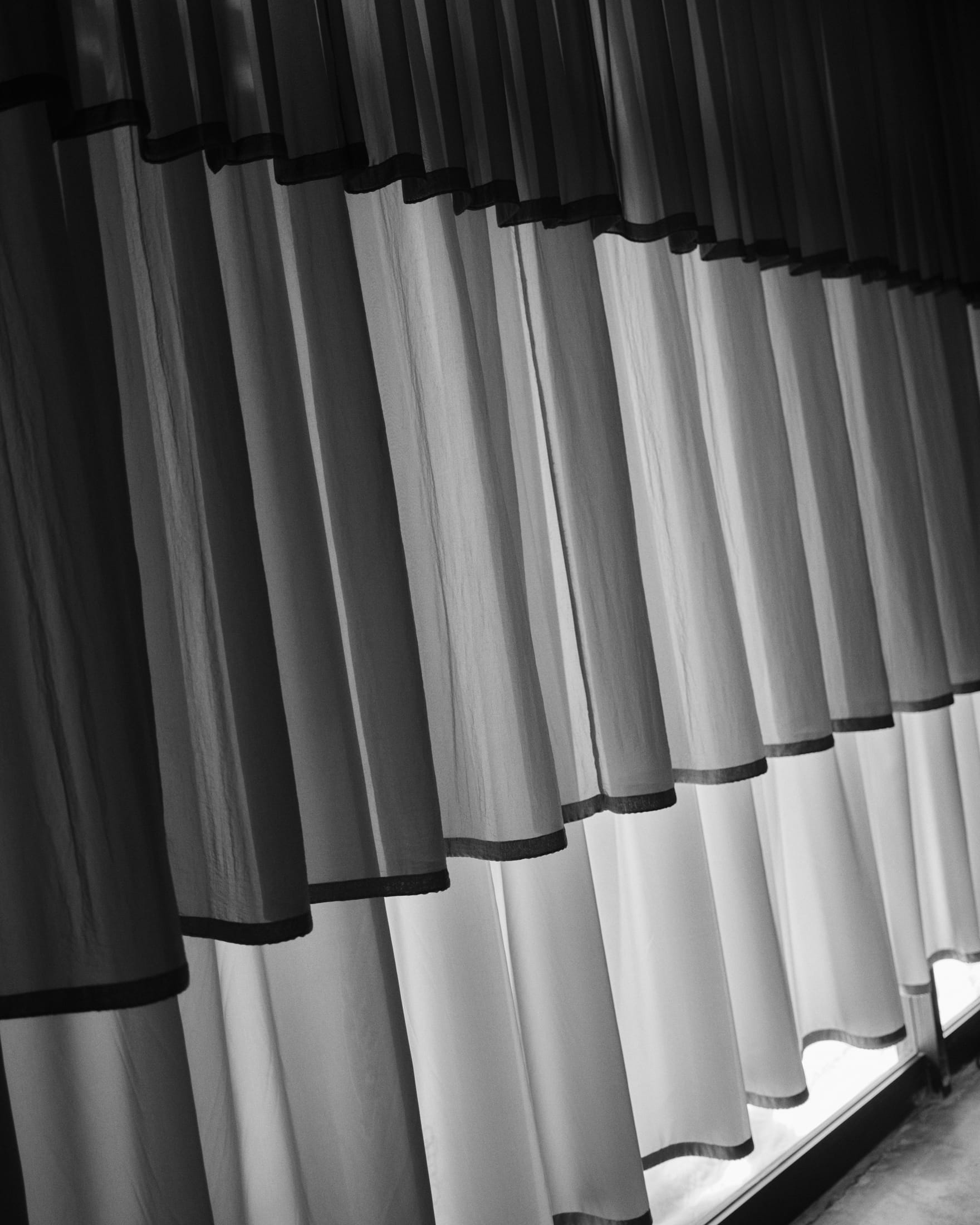
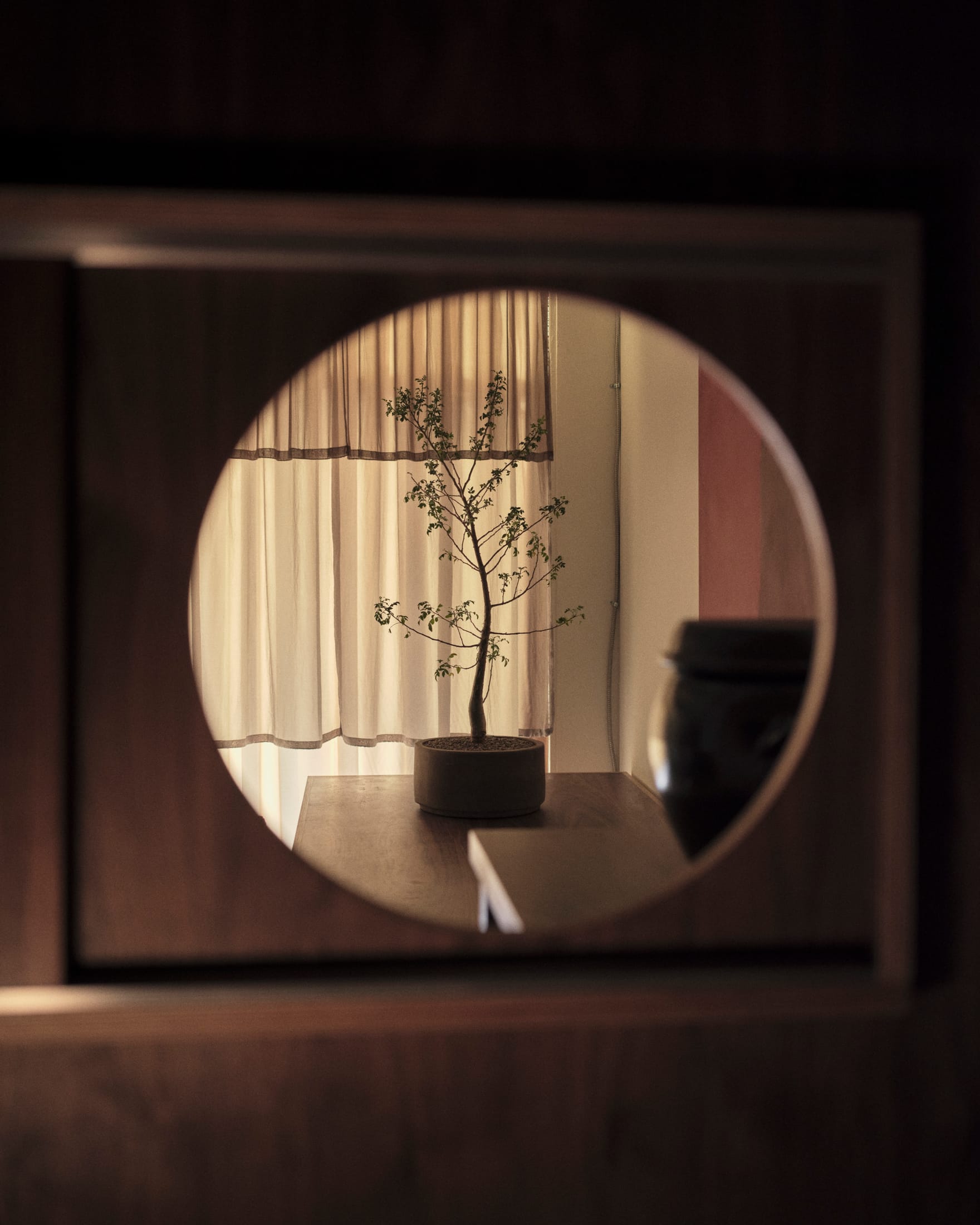
In the Mouthwash HQ, the entrance isn't a reception desk; it's a "Living Room." Here, the "Layered Eye Curtain"—a signature architectural detail—filters light and creates a soft, tactile boundary between the outside world and the creative sanctuary within. The furniture is chosen for its comfort and immediate visual warmth, signaling to both employees and clients that this is a space for human connection first and production second.
The Dining & Kitchen: Immersive Interaction
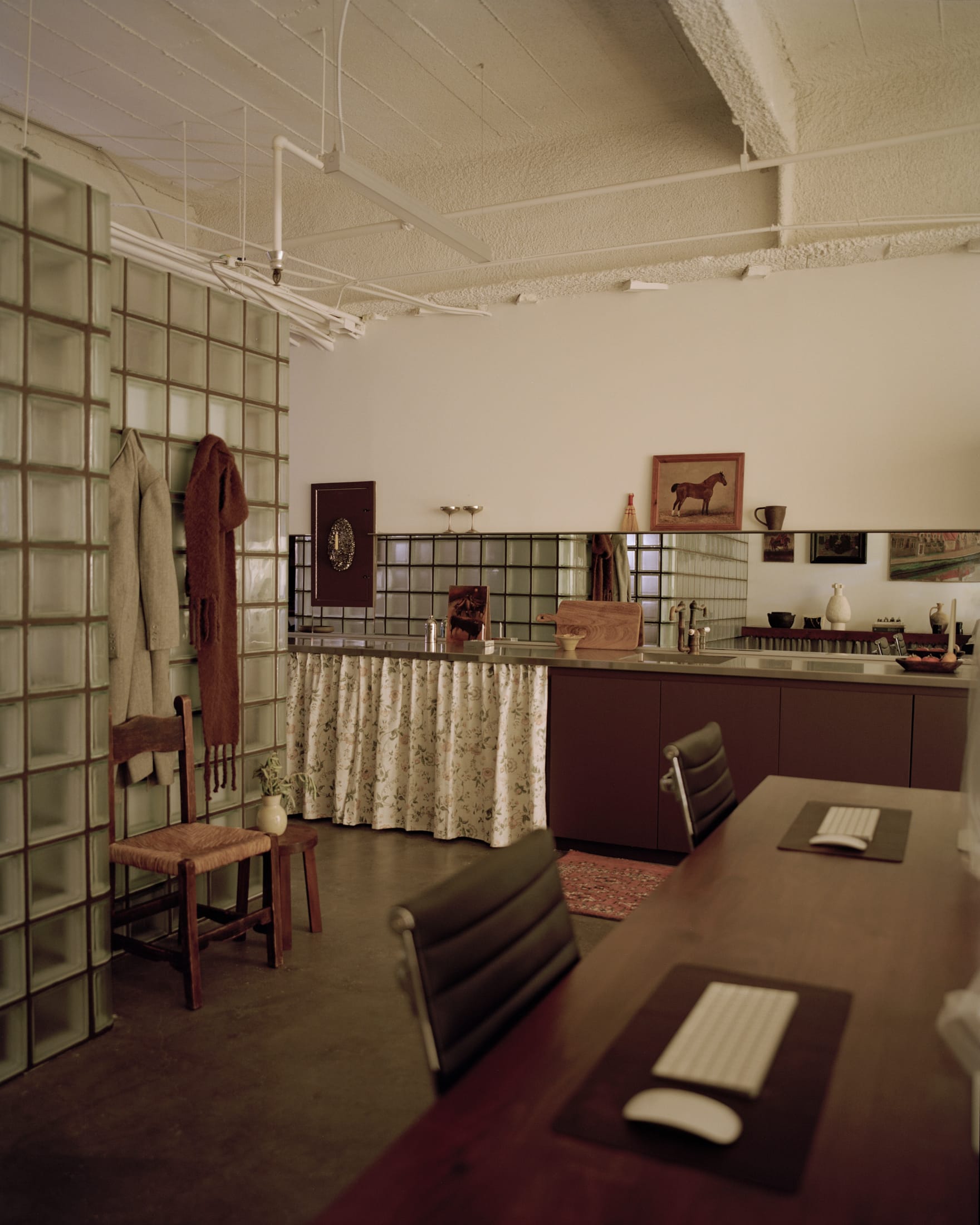
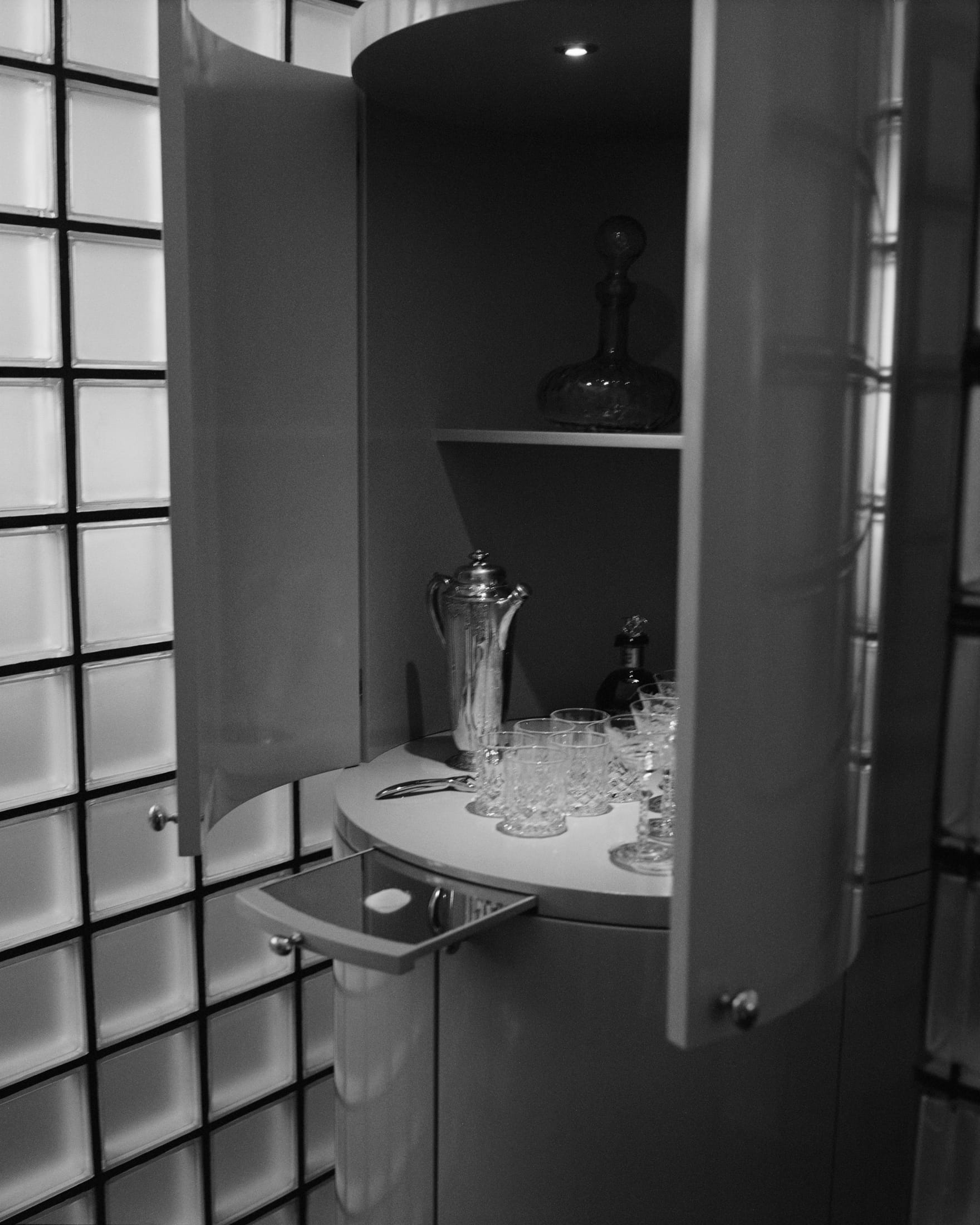
If the Living Room is the heart of the office, the Kitchen and Dining area is its social engine. Aunt Studio utilized glass blocks and mirrored walls to create a sense of social immersion and transparency. The glass blocks allow light to permeate the space while providing a blurred, cinematic view of activity, encouraging a feeling of togetherness without the distraction of a fully open plan. It’s a space designed for the long lunch, the impromptu brainstorm, and the collective "winding down" at the end of the day.

The Phone Booth: Privacy as Infrastructure
In an ABW layout, privacy is not an afterthought; it is essential infrastructure. To balance the social nature of the "Living Room" and "Dining Area," Aunt Studio designed custom walnut bleachers and joinery that serve as an audible and visual retreat. These "phone booths" and quiet nooks provide the necessary friction-less transition from collaborative energy to deep, focused work. The choice of walnut adds a rich, tactile materiality that feels permanent and grounding, contrasting with the ephemeral nature of digital work.
The Hub-and-Spoke Revolution: Decentralization in 2026
The Mouthwash HQ is a perfect example of a "Hub"—a cultural beacon where the brand identity is distilled into physical form. However, the broader trend for 2026 is the "Hub-and-Spoke" model. In this decentralized ecosystem, the main office (the Hub) is used for culture-building, client meetings, and high-intensity collaboration, while the "Spokes" (satellite offices, co-working spaces, or the home) are used for individual execution.
This model is not just a lifestyle choice; it’s a strategic fiscal move. Decentralized models are estimated to reduce corporate real estate square-footage overhead by up to 40% while simultaneously increasing human-centric well-being scores. When employees aren't forced to commute to a central monolith every day, their autonomy increases, and the time they do spend at the "Hub" becomes more meaningful.
Technology That Disappears
For this ecosystem to work, technology must become invisible. We are moving away from messy cables and clunky monitors toward a world of "disappearing tech." In the 2026 office, sensors, smart lighting, and frictionless booking systems are integrated into the architecture itself.
At Mouthwash Studio, the tech doesn't scream for attention. Instead, it supports the tactile environment, allowing the curated objects and local art to take center stage. The lighting adjusts to the circadian rhythm of the employees, and the acoustics are tuned to allow for both vibrant conversation and pin-drop silence.
Human-Centricity and the Prevention of ‘Quiet Cracking’
Designers in 2026 are increasingly focused on "neuroarchitecture"—the study of how the built environment affects our brain and nervous system. The goal is to prevent "quiet cracking," a term for the slow-burn exhaustion caused by poorly designed, over-stimulating, or socially isolating workspaces.
Gen Z, who will make up a significant portion of the workforce by 2026, are driving this demand for mental health-conscious design. They expect a workplace that reflects their values: inclusivity, transparency, and a genuine commitment to well-being. This means moving beyond "perks" like ping-pong tables and toward "well-tech"—integrated stress-tracking features within the office environment and spaces specifically designed for sensory decompression.
| Feature | Traditional Corporate (Pre-2020) | Human-Centric Office (2026) |
|---|---|---|
| Primary Goal | Occupancy & Efficiency | Interaction & Well-being |
| Layout | Fixed Desks / Open Plan | Activity-Based Working (ABW) |
| Aesthetic | Neutral, Corporate, Brand-Heavy | Domestic, Tactile, Curated |
| Technology | Visible & Dominant | Invisible & Frictionless |
| Well-being | Basic HVAC & Perks | Neuroarchitecture & Well-tech |
Sustainability: From Marketing Label to Technical Imperative
Finally, the office of 2026 must be as kind to the planet as it is to its inhabitants. We are seeing a shift from sustainability as a marketing "greenwash" to a technical imperative. The nZEB (near-zero-energy-efficient) standard is becoming the baseline for new builds, and certifications like LEED, WELL, and B Corp are the common language of responsible design.
In the Mouthwash HQ and similar forward-thinking projects, this is reflected in the use of circular materials. "Technical wood"—engineered timber that is both high-performance and carbon-sequestering—is replacing traditional steel and concrete. Furniture is selected based on its "long-life" potential, with a focus on repairable, modular designs that can evolve with the firm.
The future of the office isn't about the desk; it's about the soul of the company. As Aunt Studio has demonstrated, when we treat the workspace as a curated home for creativity, we create more than just a place to work—we create a community where people actually want to be.
FAQ
1. What is Activity-Based Working (ABW), and why is it trending? ABW is a design philosophy that provides employees with a variety of settings tailored to different tasks—such as quiet zones for deep work, lounge areas for casual chats, and tech-equipped rooms for collaboration. It’s trending because it acknowledges that "one desk fits all" is no longer effective in a hybrid work world, fostering higher productivity and engagement.
2. How can a small business implement "domestic workspace" design on a budget? You don't need a custom build-out to embrace this trend. Start by swapping "office" lighting for warm-toned lamps, introducing indoor plants to improve air quality and mood, and creating a "soft zone" with a rug and comfortable seating for informal meetings. Prioritizing local art or thrifted, high-quality furniture can also add the "curated" feel of a domestic space.
3. What does "Hub-and-Spoke" mean for the average employee? For employees, it means more flexibility. You might work from a "spoke" (home or a local coffee shop) three days a week for focused tasks, and head to the "hub" (the main office) two days a week for team meetings, cultural events, and social connection. It reduces commute fatigue while maintaining a sense of belonging to the company culture.