Our Top Picks
The Dome at Desa Potato Head represents the pinnacle of sustainable retro-futurism, proving that 1960s-inspired geometry can thrive within a 100% circular economy. By blending a 98% material reuse rate with a hyper-local organic supply chain, OMA has created a blueprint for how luxury and environmental urgency can coexist.
Introduction: Can Futurism Be Eco-Friendly?
When we think of "futurism" in architecture, our minds often drift toward gleaming chrome, massive glass facades, and energy-hungry climate control systems. It is a genre of design that historically looked forward by leaving the natural world behind. But as we navigate the mid-2020s, the definition of the "future" has shifted. We are no longer looking for an escape from the planet; we are looking for a way to stay on it.
This brings us to the "Dome" at Desa Potato Head in Seminyak, Bali. Designed by the world-renowned architecture firm OMA (Office for Metropolitan Architecture), this space asks a provocative question: Can retro-futurism be sustainable?
As an editor focused on energy-efficient solutions and sustainable materials, I’ve seen countless projects claim the "eco-friendly" label. However, OMA’s Dome demonstrates that true sustainability is more than just solar panels or a few potted plants. It is found in the circular economy, the reuse of 98% of existing materials, and a 100% local organic supply chain. This is "Contextual Modernism"—a philosophy that celebrates the imperfections of the past to build a more resilient future.
The Architectural Vision: Neotenic Geometry Meets Bali
The architectural inspiration for the Dome is rooted in the work of Buckminster Fuller, specifically his "Dome Home." Fuller was a pioneer of geodesic design, believing that the dome was the most efficient way to enclose space using the least amount of material. In Bali, OMA has taken this mid-century vision and softened it, creating what we call "neotenic geometry."
Neoteny refers to the retention of juvenile features in adulthood—think of the rounded, soft edges of a Volkswagon Beetle or a plush armchair. In the Dome, this manifests as:
- Cylindrical forms: Instead of harsh right angles, the space flows through curved walls and arched entries.
- Cistern-like spaces: The interior feels like an ancient, protected chamber, yet it is bathed in modern sensibilities.
- Organically-shaped skylights: Large circular openings in the roof allow natural light to flood the space, reducing the need for artificial lighting during the day.
By blending these futuristic shapes with the natural textures of Bali, the design avoids the sterile feeling of traditional modernism. Instead, it feels grounded, ancient, and remarkably "human."
Materiality: The Circular Economy in Practice
For those of us obsessed with sustainable materials, the Dome is a masterclass in the circular economy. OMA didn't just build a new structure; they reimagined what was already there.
"Sustainability isn't about what you add to a project; it's about what you refuse to throw away."
In their broader structural redevelopment of the site, OMA achieved a staggering 98% reuse rate of existing materials. This means that almost every piece of concrete, steel, and stone from previous iterations of the site was crushed, repurposed, or integrated into the new design.
Material Breakdown: At a Glance
| Material | Origin/Sustainability Factor | Visual/Functional Impact |
|---|---|---|
| Flooring | Aquamarine blue epoxy | Reflects the oceanic context; durable and easy to maintain. |
| Furniture | Reclaimed wood & recycled plastic | Provides a "warm" tactile contrast to the cool floors. |
| Rugs | Upcycled fabric remnants | Softens acoustics and adds a layer of vintage comfort. |
| Walls | Locally sourced brick and lime wash | Low-carbon footprint; allows the building to "breathe." |
The use of reclaimed furniture and upcycled wood is particularly important. In a tropical climate like Bali’s, using new timber often contributes to deforestation. By sourcing wood from demolished buildings or sustainable plantations, OMA ensures the interior has a history and a soul. The aquamarine blue epoxy floors act as a visual bridge between the interior and the nearby Indian Ocean, grounding the "space-age" dome in its geographical reality.
The Sensory Interior: Sound, Light, and Touch
Sustainability is often measured in carbon, but in the Lucas Reed philosophy, it is also measured in wellness. A space that is energy-efficient but miserable to live in is not truly sustainable because it will eventually be abandoned or remodeled.
The Dome is designed for the senses:
- Acoustic Excellence: To combat the echo often found in circular buildings, OMA used upcycled rugs and textured wall finishes. The centerpiece is a set of vintage-inspired JBL speaker stacks, where vinyl DJ sets provide a warm, analog soundscape that complements the retro-futuristic vibe.
- The Play of Light: The skylights are positioned to track the sun’s movement, creating shifting shadows throughout the day. This connects diners to the rhythm of the day, a key tenet of biophilic design.
- Celebrating Imperfection: Unlike the plastic-heavy futurism of the 1960s, the Dome embraces "tactile nature." You can see the grain in the wood and the slight variations in the lime-washed walls. As the design team noted, they decided to "celebrate these imperfections rather than hide them."
Culinary Sustainability: A 100% Local Supply Chain
The sustainability of the Dome doesn't stop at the walls. It extends to the plate. Chef Diego Recarte has crafted a menu that is described as "refined and rugged," and it serves as the functional heart of the building's philosophy.
To minimize the carbon footprint of the dining experience, the Dome operates on a 100% local organic supply chain. This is a massive logistical undertaking. It involves:
- Direct Partnerships: Working directly with Balinese farmers to source heirloom vegetables and organic grains.
- Biodynamic Wines: The wine list focuses on natural, biodynamic bottles that avoid synthetic pesticides and emphasize soil health.
- Zero-Waste Prep: Following the broader "Potato Head" mandate, the kitchen aims for zero waste, repurposing food scraps into compost for the very farms that supply them.
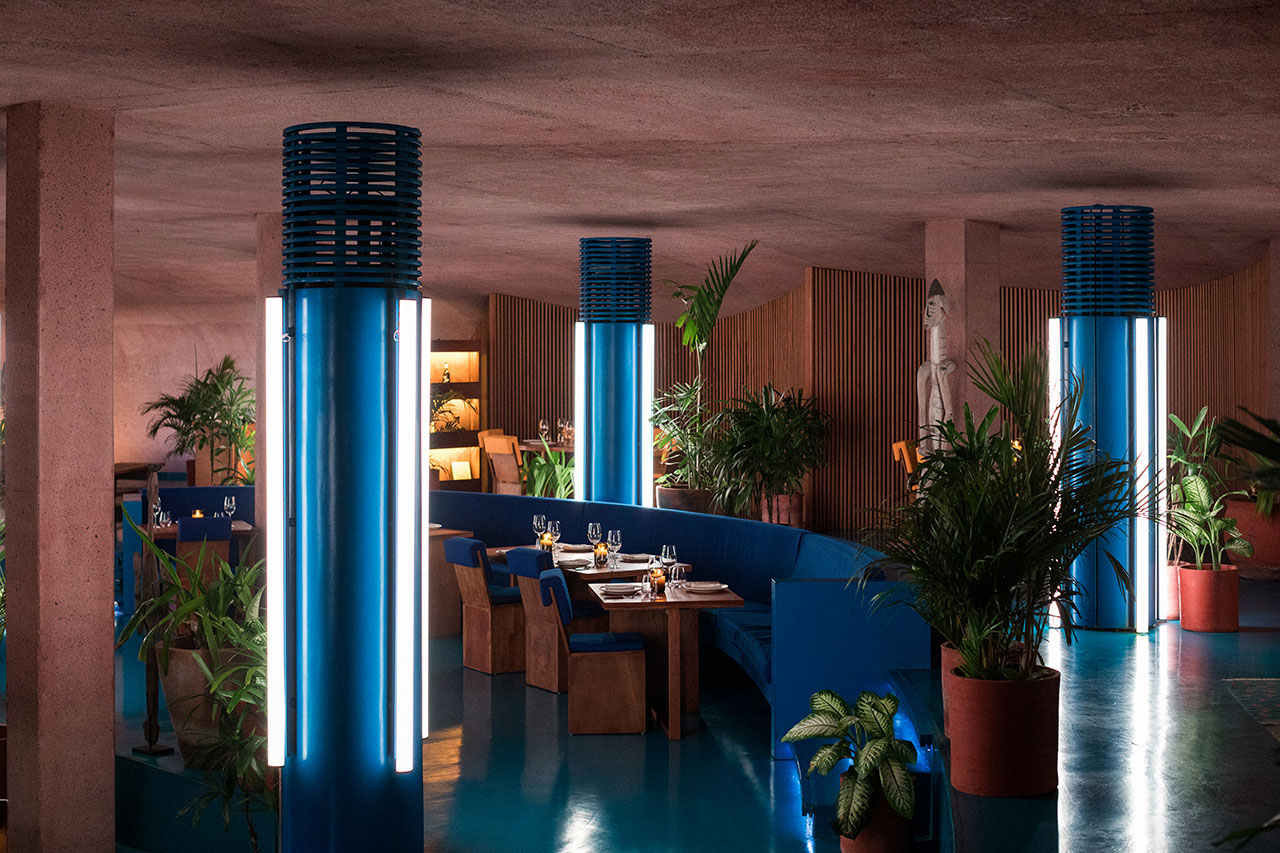
This "Philosophy-to-Table" bridge ensures that the experience of being in the Dome is consistent. You aren't just sitting in a sustainable building; you are participating in a sustainable ecosystem.
Contextual Modernism: The Future of Global Design Trends
The Dome is a prime example of a trend we’ve been tracking for 2026: Heritage meets Future. It’s the idea that we can use advanced architectural technology to honor local traditions and materials.
For the modern homeowner or renter, the lessons from the Dome are clear:
- Invest in Material Longevity: Choose materials that age with character (like wood and stone) rather than those that simply degrade (like cheap plastics).
- Prioritize the "Shell": Focus on natural lighting and airflow to reduce energy consumption.
- Source Locally: Whether it’s your furniture or your Friday night dinner, reducing the miles your goods travel is the most effective way to lower your personal carbon footprint.
The Dome at Desa Potato Head isn't just a restaurant; it’s a "live storytelling" opportunity. It tells the story of a world where we don't have to choose between the excitement of the future and the protection of our planet.
FAQ
How does OMA’s Dome achieve its 98% material reuse rate? The 98% rate refers to the broader structural redevelopment of the Desa Potato Head site. This was achieved by crushing old concrete to use as aggregate for new structures, salvaging timber for furniture, and repurposing industrial materials into architectural features rather than sending them to landfills.
What is "Sustainable Retro-Futurism"? It is a design movement that takes the optimistic, geometric aesthetic of 20th-century futurism (like domes and curves) and rebuilds it using 21st-century environmental standards, such as circular material use and carbon-neutral supply chains.
Can I implement these design elements in my own home? Absolutely. You can adopt "sustainable retro-futurism" by sourcing vintage mid-century furniture (reclaimed), using natural lime-wash paints instead of synthetic ones, and maximizing natural light through skylights or strategically placed mirrors.
Ready to Live More Sustainably?
The Dome shows us that the future is circular, tactile, and deeply rooted in the local community. If you're looking to upgrade your own living space with energy-efficient solutions or eco-friendly materials, start with the "why" before the "what."