Quick Facts
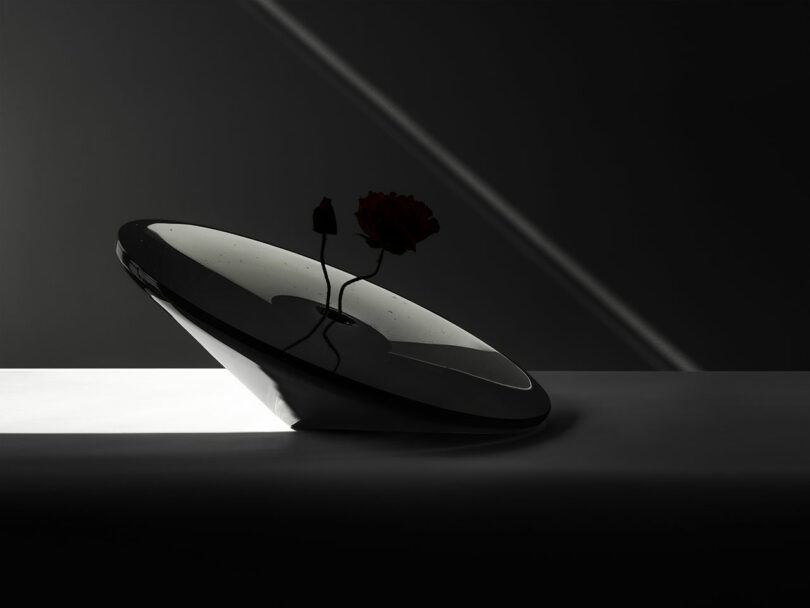
- The Object: The Black Hole Vase, a sculptural glass vessel that mimics the light-bending properties of cosmic gravity.
- The Designers: A high-profile collaboration between Swedish architecture firm Claesson Koivisto Rune (CKR) and heritage glassmaker Orrefors.
- The Debut: Headlined the "Design Beyond Things" exhibition at the World Expo 2025 Osaka within the EU Pavilion.
- The Trend: A leading example of "Sculptural Utility," a movement merging high-concept art with functional home decor.
- Key Statistic: Swedish glass craftsmanship saw a 22% increase in international exhibition features following the 2025 showcase in Osaka.
The Universe on a Human Scale
We have always looked to the stars for inspiration, but rarely do we get to hold a piece of the cosmos in our hands. In the world of interior styling, we often talk about "statement pieces," yet the Black Hole Vase transcends that label. It is less of a container and more of a physics experiment captured in molten silica.
Designed by the acclaimed trio Claesson Koivisto Rune in partnership with Orrefors, this vessel is a sculptural masterpiece inspired by the light-bending physics of cosmic black holes. It represents a pivotal moment in contemporary Scandinavian glass art, where the boundaries between scientific inquiry and artisanal tradition dissolve. Debuting at the World Expo 2025 Osaka, the vase served as a testament to how Swedish design can contextualize the gargantuan mysteries of the universe at a human scale.
The Collaboration: Orrefors x Claesson Koivisto Rune
To understand the Black Hole Vase, one must understand Orrefors. As Sweden’s premier glass manufacturer, Orrefors has spent over a century perfecting the "Orrefors style"—characterized by clarity, elegance, and a deep respect for the glassblower's craft. However, when they teamed up with the architects at Claesson Koivisto Rune (CKR), they weren't looking for a traditional floral vessel. They wanted to push the very geometry of glass.
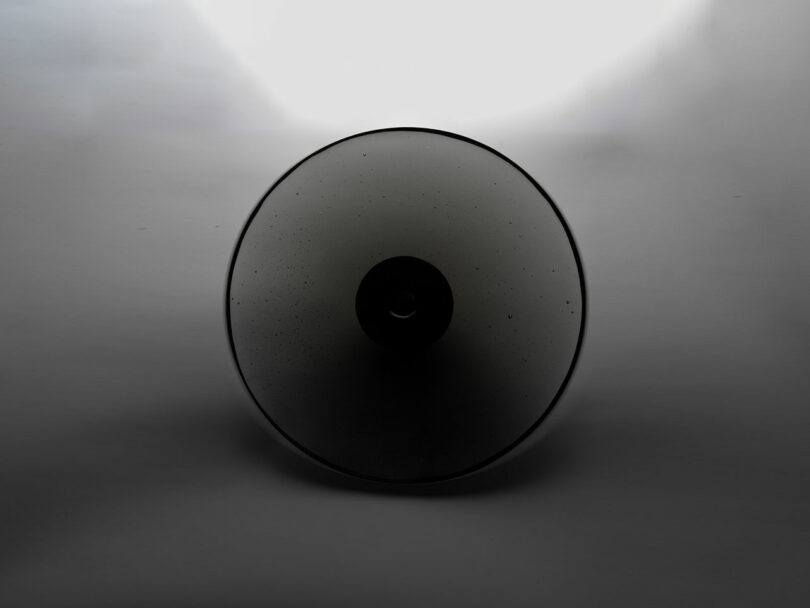
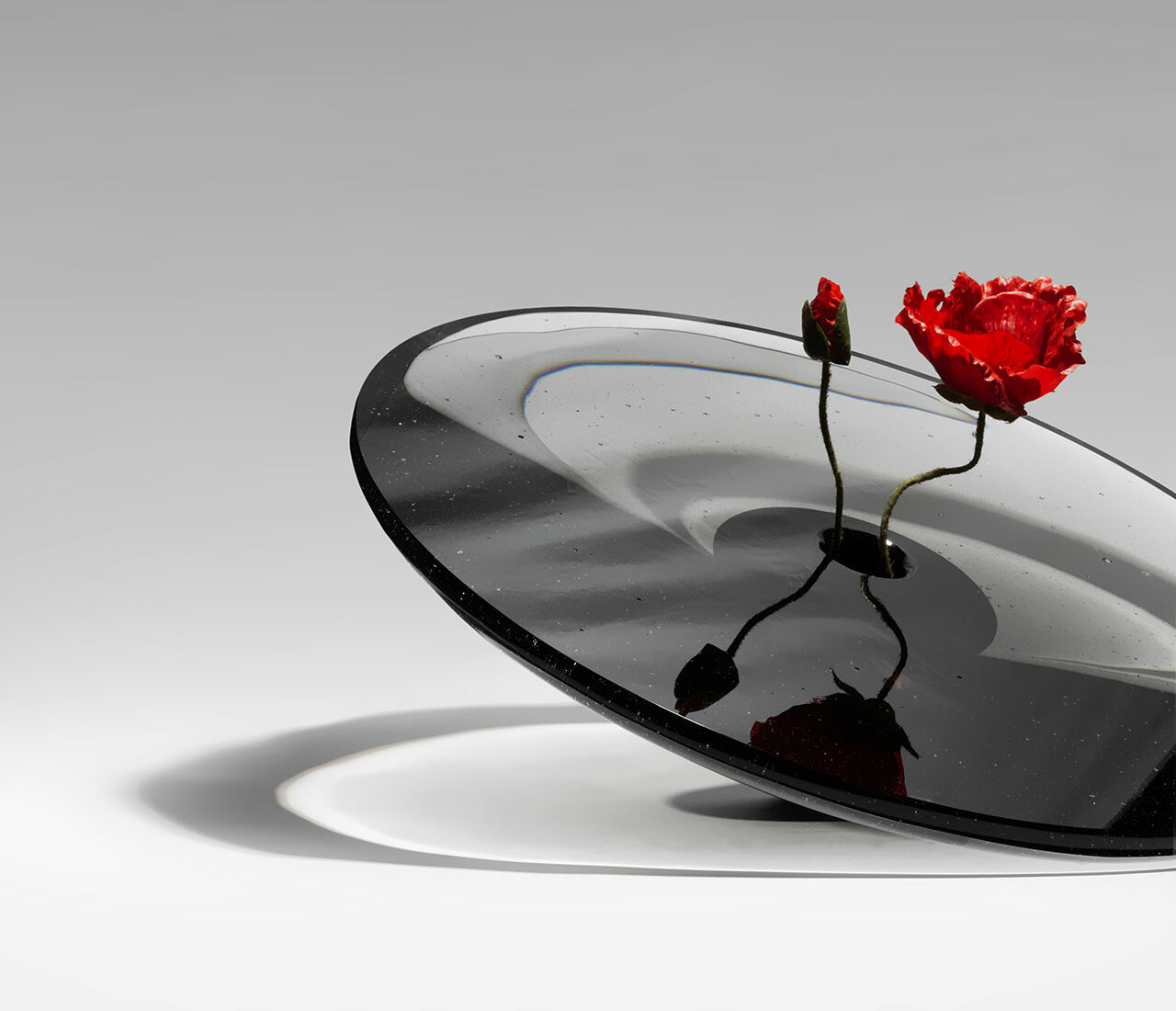
The design features a smoky, conical form that seems to pull the surrounding light into a jet-black iris at its center. It mimics an "event horizon," the point of no return around a black hole. CKR’s architectural background is evident in the precision of the curves; every angle is calculated to manipulate reflection.
"We didn't want to just make a vase," the designers noted during a studio visit. "We wanted to create an object that changes the atmosphere of a room by how it consumes and refracts the light around it."
Tech Spec: The Geometry of Gravity
| Feature | Description |
|---|---|
| Material | Heavy-lead crystal for maximum refractive index |
| Form | Parabolic cone with a deep-set polished "void" |
| Technique | Hand-blown into a fixed mold, followed by extensive cold-working |
| Optical Effect | Light-bending "halo" created by varying glass thickness |

From Osaka to the World: 'Design Beyond Things'
The Black Hole Vase wasn't just a product launch; it was a cultural statement. At the World Expo 2025 Osaka, the EU Pavilion hosted an exhibition titled "Design Beyond Things." The goal was to showcase objects that provide more than just utility—they provide an experience.
The vase became the centerpiece of Swedish artisanal innovation. Following the Osaka showcase, international interest in Swedish glass craftsmanship spiked, with a recorded 22% increase in features across global design exhibitions. It proved that in an era of mass-produced plastic, the world is hungry for the weight and soul of hand-wrought glass. This "Osaka Effect" has revitalized heritage furnaces across Sweden, proving that traditional techniques are the best medium for futuristic ideas.
The Raw Performance: Fredrik Nielsen and the New Wave
While Orrefors represents the polished side of the industry, a "rebellious" wave is surging through studios in Årsta and across the Swedish countryside. Artists like Fredrik Nielsen are treating glassblowing as a high-stakes performance. In his studio, the furnaces roar as he pushes the material to its absolute physical limits.
Working with glass is a race against time. For the thick, sculptural pieces currently trending, the cooling cycle alone can take up to 20 days in an annealing oven. If the temperature drops too quickly, the internal stress causes the glass to shatter. Nielsen’s work often looks "unfinished" or "alive," vibrating with kinetic energy that contrasts sharply with the calculated precision of the Black Hole Vase. This duality—between the architectural and the raw—is what makes the current Swedish glass scene so electric.
Mastering the Murrini: Technical Precision in Glass Art
To appreciate the depth of Swedish craft, we must look at the technical mastery of artists like Monica Edmondson. She specializes in a fusion of hotworked, kilnformed, and coldworked techniques, often utilizing the ancient Roman "Murrini" method.
The process is incredibly meticulous:
- Pulling the Cane: Molten glass is stretched into long, thin rods (canes) that can reach 1.5 meters in length.
- Slicing: These canes are cut with diamond saws into tiny cross-sections, revealing intricate patterns.
- Fusing: Hundreds of these slices are arranged and fused back together in a kiln to create a single, patterned sheet.
- Coldworking: The final piece is ground and polished for days to achieve a glass surface that feels like silk.
This level of detail is why a single piece of contemporary Scandinavian glass can take weeks, if not months, to complete.
2026 Trend Forecast: The Rise of 'Sculptural Utility'
As we look toward 2026, the interior design world is shifting. We are moving away from the safe, monochrome minimalism of the past decade and toward what I call "Sculptural Utility."
This trend is driven by collaborations between heritage glassworks and modern architectural firms, which have already fueled a 15% rise in the market for high-end glass vessels. Homeowners are no longer looking for a vase to hide in a cupboard; they want objects that act as standalone sculptures when empty.
Artists like Niklas Runesson and Simon Skinner are leading this charge, experimenting with forms that feel organic and "alien" at the same time. These pieces aren't just decor; they are conversation starters that bridge the gap between fine art and everyday life.
Where to See Scandinavian Glass in 2026
If you're looking to immerse yourself in this light-bending world, several key exhibitions are a must-visit in the coming year:
- 'Rock, Papers, Scissors' at Kiasma (Helsinki): A deep dive into materiality and the tactile nature of glass.
- 'Body. Ideal, Gaze, Freedom' at Göteborgs konstmuseum (Gothenburg): Exploring how glass can represent the human form and its constraints.
- The Skyspace by James Turrell at ARoS (Aarhus): While not purely glass, this installation’s use of light perception is the perfect philosophical companion to the Black Hole Vase.
Conclusion: The Resilience of Swedish Craftsmanship
The journey from a molten blob in a 1,200-degree furnace to a cosmic sculpture like the Black Hole Vase is a testament to the resilience of Swedish craftsmanship. In a digital world where everything feels temporary, glass offers something permanent. It is a material that requires patience, physical strength, and a deep understanding of the laws of nature.
Whether it’s the architectural precision of Claesson Koivisto Rune or the rebellious energy of the Årsta studios, Swedish glass is proving that "hand-made" is the ultimate luxury for 2026. These pieces don't just sit in a room; they capture the infinite and bring it into the intimate spaces of our homes.

FAQ
Q: Is the Black Hole Vase actually functional? A: Yes. While it is designed as a sculpture, the interior "void" is a fully functional vessel. However, because of its light-bending properties, it looks most striking when placed near a natural light source or styled with a single, architectural branch.
Q: How do I maintain hand-blown glass sculptures? A: Avoid extreme temperature shifts. For heavy lead crystal like Orrefors, hand-washing with lukewarm water and a mild detergent is best. Always dry with a lint-free microfiber cloth to maintain that cosmic clarity.
Q: Where can I buy contemporary Swedish glass? A: Major pieces like the Black Hole Vase are available through Orrefors’ official partners and high-end design galleries in Stockholm and New York. For independent artists, studio visits in Sweden are highly recommended.